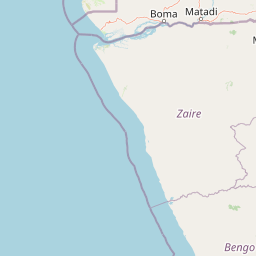
Discover the mapped boundaries and estuarine environment of this vital national park.
Mangroves National Park represents a crucial protected landscape within the Democratic Republic of the Congo, offering significant opportunities for geographic exploration. Situated in the vital Congo River delta, this national park protects a unique estuarine environment and vital wetland habitats. Users can explore its specific mapped boundaries, understand its place within the regional geography of Central Africa, and gain insight into its ecological significance through an atlas-driven lens.
Mangroves National Park
National park
Structured park overview, official facts, and landscape profile for Mangroves National Park
Geography guide, regional context, and park location map for Mangroves National Park
The Democratic Republic of the Congo is a Central African country bordered by the Republic of the Congo, Angola, Zambia, Tanzania, Uganda, Rwanda, Burundi, and the Central African Republic, with a small Atlantic coastline. It occupies the Congo Basin, one of the world's largest tropical rainforest regions. French is the official language, though over 200 indigenous languages are spoken. Kinshasa is the capital and largest city.
The DRC occupies a central position in Central Africa, bordering the Republic of the Congo and the South Atlantic Ocean to the west, the Central African Republic and South Sudan to the north, Uganda, Rwanda, Burundi, and Tanzania to the east (across Lake Tanganyika), and Zambia and Angola to the south. The country's terrain is dominated by the Congo Basin, a vast lowland plain covered in equatorial rainforest, while the eastern and southeastern regions feature highlands and mountains including the Albertine Rift.
Common questions about visiting, size, designation, and location context for Mangroves National Park
Deepen your exploration by continuing the structured search for national parks and protected areas worldwide. Utilize the comprehensive filtering capabilities to compare different conservation landscapes and refine your understanding of global park geography. Discover more about the distribution and characteristics of protected natural areas.