
Mori Atlas logo
Nature reserveMarkakol Nature Reserve

A high-altitude tectonic basin defined by alpine meadows, glacial lakes, and taiga forests

Markakol Nature Reserve: Mapped Protected Landscapes in the Southern Altai of East Kazakhstan

(Markakol State Nature Reserve)

Markakol Nature Reserve safeguards one of the most biologically distinct freshwater systems in the Southern Altai mountains of East Kazakhstan. The protected territory encompasses a dramatic vertical landscape, transitioning from alpine tundra and rocky summits above 3,000 meters down through dense taiga forests to the pristine waters of Lake Markakol. This tectonic basin serves as a vital confluence for Siberian taiga and Central Asian steppe biogeography, preserving critical aquatic and forest habitats.

mountain reservealpine laketaigahigh mountainsSouthern AltaiKazakhstan
A graphic illustration of a mountainous landscape featuring a flowing stream, evergreen trees, and stylized purple mountains under a soft sunset sky.

Markakol Nature Reserve

Nature reserve

Park overview

Structured park overview, official facts, and landscape profile for Markakol Nature Reserve

Markakol Nature Reserve park facts, protected area profile, and essential visitor context

Review the core facts for Markakol Nature Reserve, including designation, size, terrain, visitor scale, habitats, and operating context in one park-focused overview.

About Markakol Nature Reserve

The Markakol Nature Reserve is a state-level strict nature reserve in the eastern corner of Kazakhstan, established to conserve the natural systems of the Southern Altai. It encompasses the catchment and surroundings of Lake Markakol, the second-largest lake in Kazakhstan and one of the most pristine high-mountain lakes in Central Asia. The reserve's boundaries wrap around the lake's shoreline and extend into the surrounding ridges, including the peaks of the Kurchum Range to the north and the Azutau Range to the south.

The reserve was created to protect not only the lake itself but also its tributaries, which serve as critical spawning grounds for native fish species. The Markakol landscape is notable for the way it compresses a wide range of ecological zones into a relatively small area. Steppe elements lie near taiga forests, and dense coniferous forests give way within a short distance to high-mountain tundra and nival landscapes above 3,000 meters.

As a strict nature reserve, Markakol is part of a select group of Kazakhstan's protected areas designed primarily for scientific study and ecosystem preservation. Its combination of clean glacial waters, intact vegetation belts, and significant wildlife populations gives it a particular value for research into the natural history of the Kazakh Altai. The reserve also carries cultural significance, as the lake and its surroundings inspired literary descriptions by Kazakh writer Zh. Aimautov in his novel 'Akbelek'.

Quick facts and research context for Markakol Nature Reserve

The reserve was established on 4 August 1976 and is administered by the Committee of Forestry and Animal World of Kazakhstan's Ministry of Agriculture. It falls within the IUCN Category Ia as a strict nature reserve.

Its territory sits in the Kurchum district of East Kazakhstan Region, centered on Lake Markakol at approximately 1,450 meters elevation, with surrounding peaks rising above 3,300 meters. The reserve encompasses taiga, mountain forest, subalpine, alpine meadow, and mountain tundra zones.

The reserve is recognized as the sixth state nature reserve created in Kazakhstan and is one of the country's coldest inhabited regions, with winter temperatures that can drop dramatically below freezing.

Protection and recognition

Documented terrestrial protection scope and historical designation data

Markakol Nature Reserve Protection Status and Designation History

Markakol Nature Reserve maintains a documented terrestrial protection status established in 2007. Official records outline the designation history and management scope without additional international recognition sources.

Protection details

Protection scope
Terrestrial
Designated year
2007
Transboundary protection
No
Park context

Deeper park guide and search-rich context for Markakol Nature Reserve

Markakol Nature Reserve history, landscape, wildlife, and travel context

Explore Markakol Nature Reserve through its history, landscape character, ecosystems, wildlife, conservation priorities, cultural context, and seasonal travel timing in a structured park guide built for atlas discovery and search intent.

Why Markakol Nature Reserve stands out

Markakol is best known for protecting the natural complex around Lake Markakol, a high-altitude tectonic lake widely regarded as one of the purest water bodies in Central Asia. The reserve combines taiga forests, subalpine and alpine meadows, mountain tundra, and a glacial lake ecosystem within the Southern Altai. It is also distinguished by its local fish populations, including endemic subspecies of lenok, grayling, and minnow-like species that have made the lake a center of scientific and conservation interest. The area's position at the meeting point of steppe, Central Asian, and Siberian biogeographic influences gives it a distinctive and varied flora and fauna.
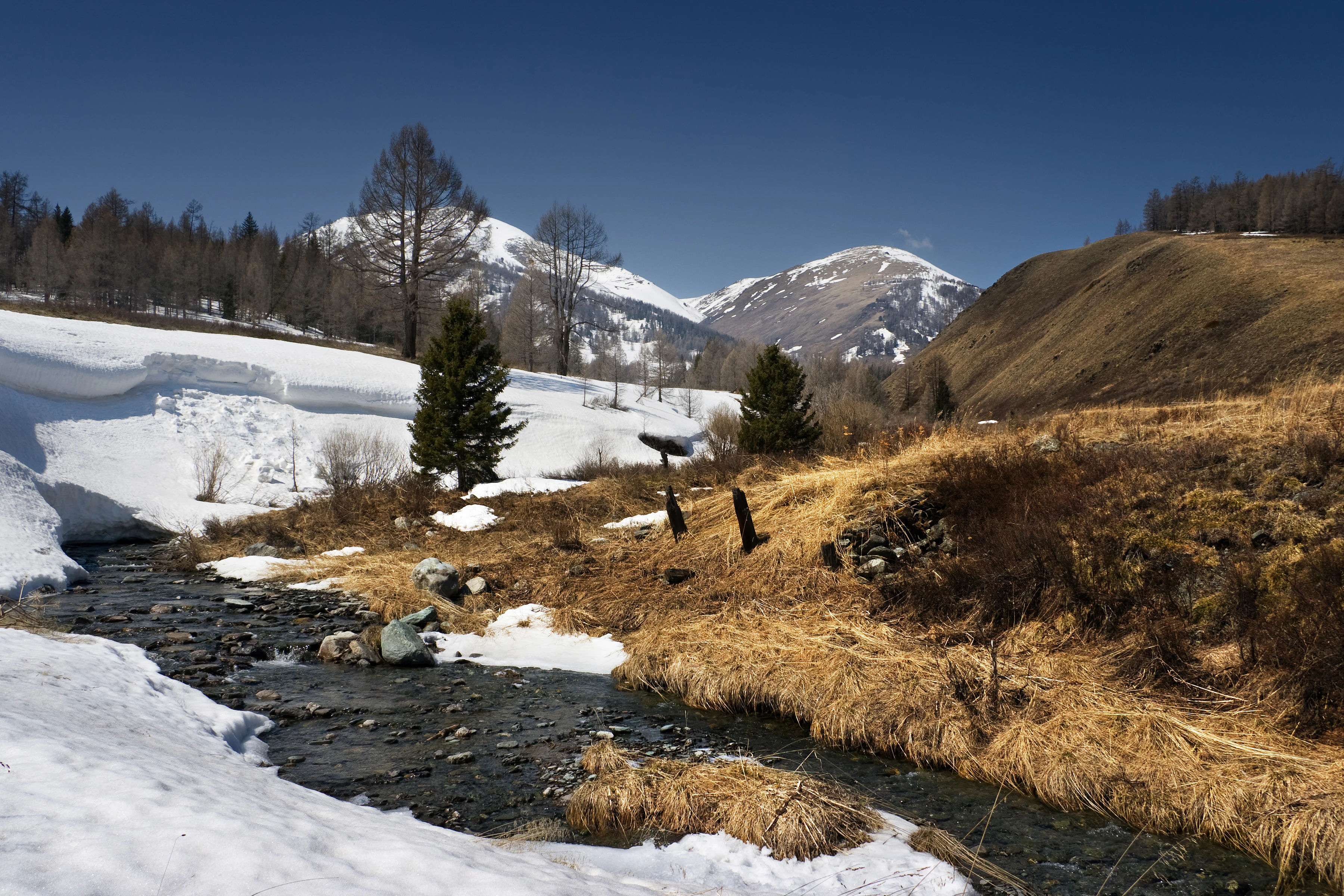
A clear stream flows through a valley with patches of remaining winter snow, dry golden grasses, and evergreen trees, with snow-capped mountain peaks in the background.
A mountain stream flowing through a partially snow-covered valley in the Altai Mountains.

Markakol Nature Reserve history and protected-area timeline

The Markakol Nature Reserve was officially established on 4 August 1976, becoming the sixth state nature reserve created in the Kazakh Soviet Socialist Republic. Its creation reflected a growing recognition of the ecological importance of Lake Markakol and the surrounding Southern Altai ecosystems, particularly their role as spawning grounds for native fish and refuge for taiga wildlife.

The reserve's initial territory covered around 71,000 hectares, but by a 2007 government resolution its area was significantly extended to more than 102,000 hectares. This expansion strengthened protection for the lake's catchment, surrounding forest belts, and key tributaries used by spawning fish.

Over the decades the reserve has built up a small but persistent research presence, including a nature museum that has operated since 1980 to support environmental education for local communities, students, and visitors. The institution remains under Kazakhstan's Ministry of Agriculture, continuing its focus on ecosystem monitoring and the protection of rare and endangered species.

Markakol Nature Reserve landscape and geographic character

The landscape of the Markakol Nature Reserve is shaped by its position in a tectonic depression surrounded by major Altai ridges. Lake Markakol itself lies at an elevation of about 1,449 meters, nestled between the Kurchum Range to the north and the Azutau Range to the south. The highest point in the reserve reaches above 3,300 meters at AkSu-Bas peak, with deeply cut valleys, cirques, and rocky summits shaping the surrounding ridges.

The lakeshore varies significantly from one side to another. The southern and southeastern coast is steep and narrow, pressed close by the cliffs of Azutau, while the northern and western shores spread out into wider lowlands and shallow bays. Dozens of rivers and streams descend from the surrounding mountains into the lake, and a single river, the Kalzhyr, carries the lake's outflow toward the broader Irtysh basin.

Above the lake, the reserve climbs through a layered sequence of forest, meadow, tundra, and bare rock landscapes. Steep slopes with kurum boulder fields feed streams that plunge down toward the lake, and small alpine lakes are scattered among the high ridges of the Kurchum Range. The combination of rugged peaks, glacial valleys, and forested slopes gives Markakol its dramatic and varied mountain scenery.
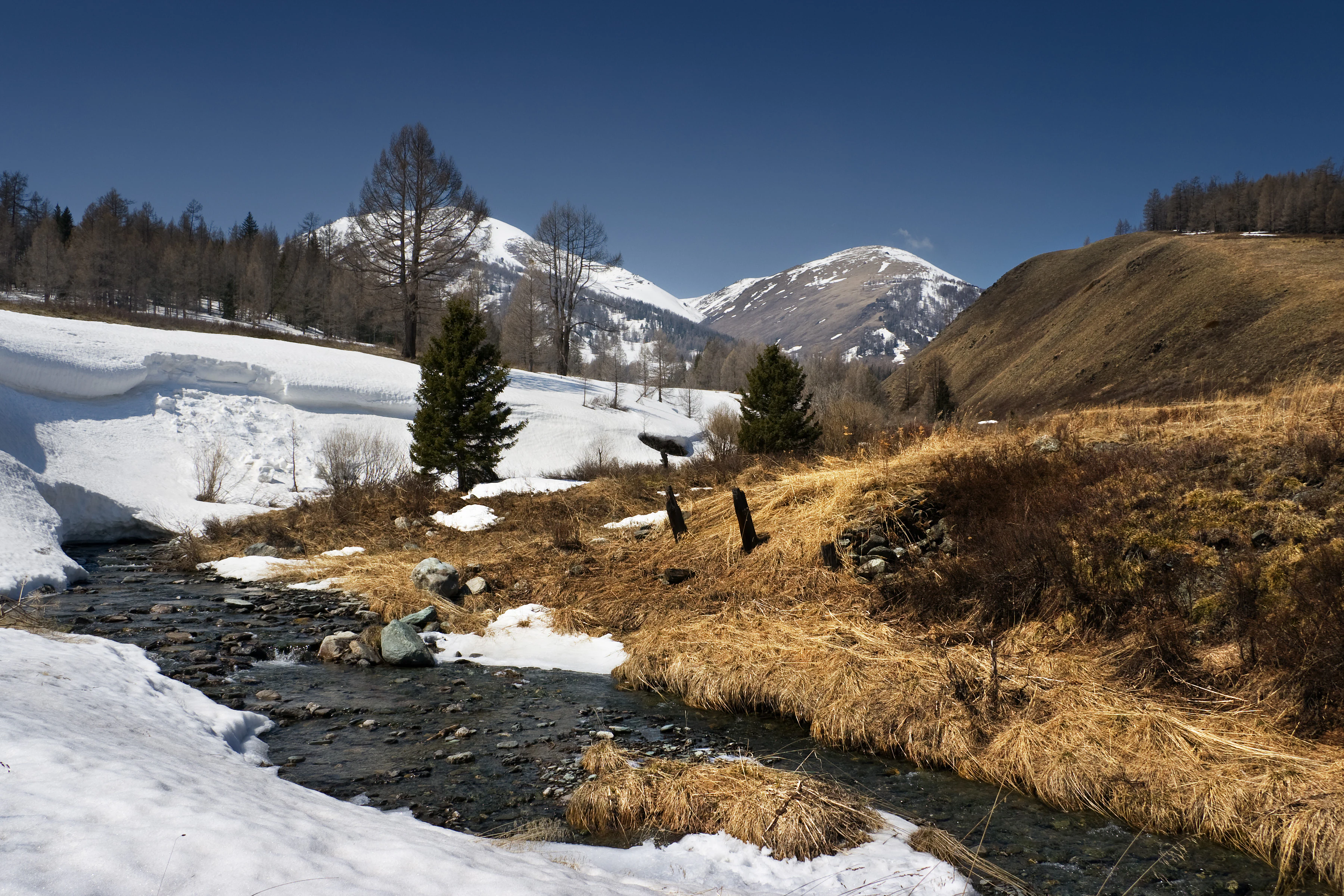
A clear, shallow river flows through a valley with patches of snow remaining on the banks, surrounded by dry golden grasses and dark coniferous trees, with snow-capped mountain peaks in the distance under a clear deep blue sky.
The Kara-Koba River flowing through the alpine landscape of Markakol Nature Reserve during the transition between winter and spring.

Markakol Nature Reserve ecosystems, habitats, and plant life

The reserve's natural character is defined by a striking vertical zonation. From the lake shore at roughly 1,450 meters, vegetation climbs through meadow-steppe, mountain taiga, subalpine, alpine meadow, and mountain tundra belts, reaching nival landscapes above 3,000 meters. Five major altitudinal vegetation zones are recognized within the reserve.

Forests are dominated by Siberian fir, which forms extensive fir-dominated stands on north- and west-facing slopes, mixed with spruce, birch, aspen, and occasional Siberian pine. Above the tree line, subalpine grasslands give way to low alpine meadows, cushion-plant communities, dwarf birch and willow thickets, and rocky tundra dotted with juniper. The reserve harbors more than 1,000 species of higher plants, including rare and locally endemic species such as Altai rhubarb, Altai onion, Altai tulip, and the medicinal rhodiola known locally as golden root.

A distinctive feature of the reserve's nature is the convergence of southern steppe, Central Asian semi-desert, and southern Siberian taiga influences, which together have produced an unusually rich and layered flora. The lake itself is one of the purest in Central Asia, with ultra-fresh, soft, slightly acidic water classified as bicarbonate-calcium type.
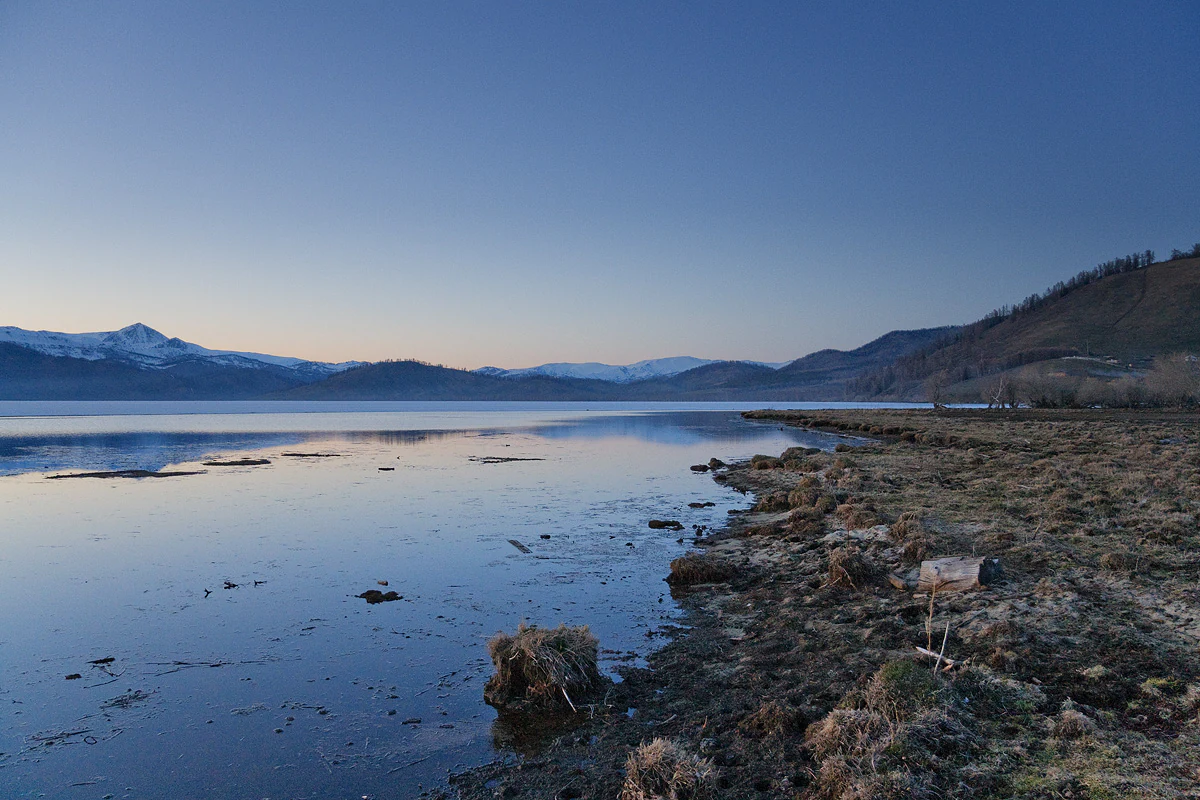
A calm, reflective lake with a shoreline of low, sparse vegetation in the foreground and snow-dusted mountain ridges visible under a clear, cool-toned sky.
A serene view of Lake Markakol during the golden hour, featuring tranquil waters and distant snow-capped mountains.

Markakol Nature Reserve wildlife and species highlights

The reserve supports a rich and varied fauna shaped by its position at the meeting point of major biogeographic regions. It is home to around 55 mammal species, including typical Altai taiga inhabitants such as brown bear, moose, Siberian roe deer, red deer (maral), wild boar, wolf, wolverine, ermine, least weasel, kolinsky, mountain weasel, badger, otter, and Sable. American mink, introduced in earlier decades, has become an established resident along lake tributaries.

Siberian ibex inhabit the rocky crags of the Kurchum Range, while lynx roam the forested valleys. Snow leopard visits have occasionally been recorded, marking the reserve as part of the broader southern range of this rare cat. Moose and red deer populations have recovered since the reserve's establishment, and a growing number now remain in the area through winter instead of migrating.

The birdlife is exceptional, with about 248 of the roughly 280 bird species recorded in the Southern Altai found within the reserve. Black stork breed in forested valleys, while wetlands around the lake attract waders, cranes, ducks, and a wide variety of passerines. Raptors include golden eagle, white-tailed eagle, black kite, goshawk, sparrowhawk, osprey, buzzard, and several owl species. The lake also hosts Kazakhstan Red Book species such as the relict gull. Native fishfauna is highly distinctive, with several endemic subspecies including a local form of lenok, Siberian grayling, minnow-like species, and a small bottom-dwelling form unique to the lake.
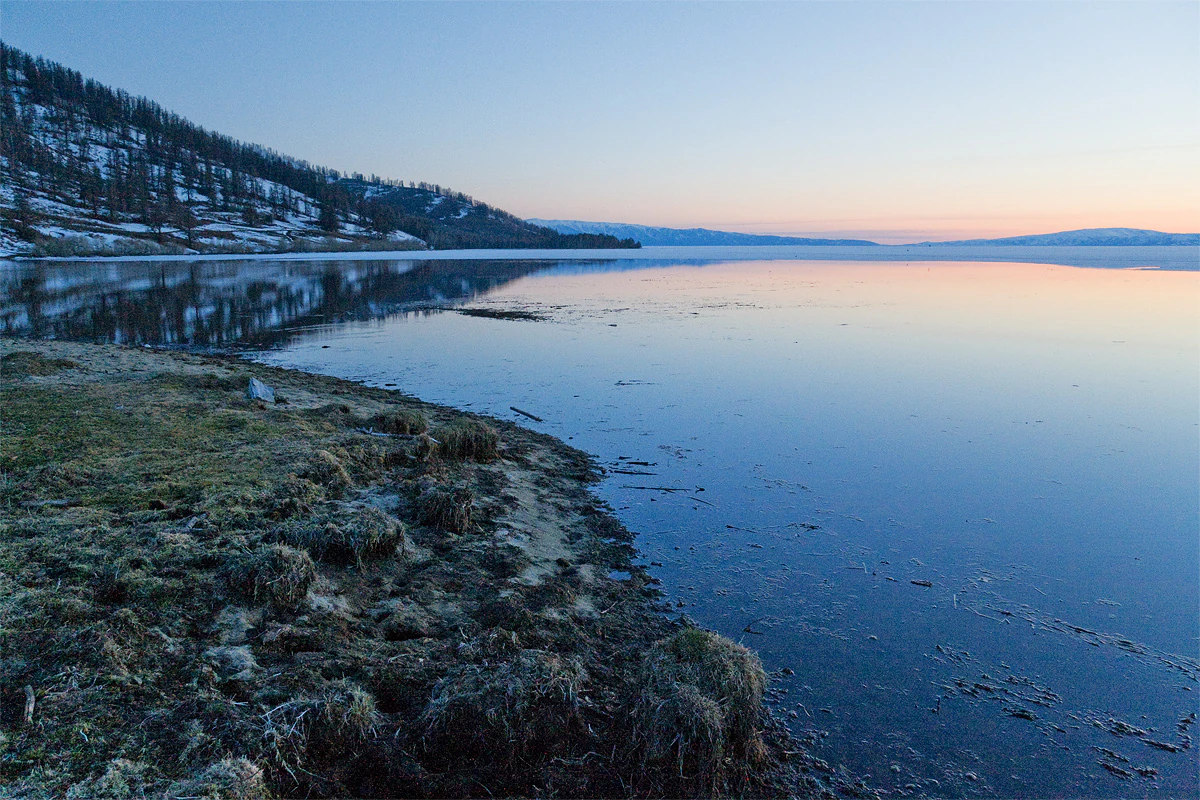
A peaceful, wide landscape view of Lake Markakol at dusk, with snow-dusted hills in the background reflected in the calm, dark blue water of the lake. The foreground features a rugged, grassy shoreline.
Calm sunset view over the shores of Lake Markakol within Markakol Nature Reserve.

Markakol Nature Reserve conservation status and protection priorities

Markakol's conservation significance lies in its role as a refugium for the natural complexes of the Southern Altai, a region where Central Asian, Kazakh steppe, and Siberian taica ecosystems converge. The reserve protects the water purity and ecological integrity of Lake Markakol itself, one of the cleanest freshwater bodies in Kazakhstan, with visibility reaching five to nine meters and virtually no chlorinated organic pesticides detected in its waters.

By preserving extensive fir and spruce taiga, subalpine meadows, mountain tundra, and lake wetland habitats within a single protected area, the reserve safeguards a vertical ecological cross-section that would otherwise be vulnerable to logging, grazing, and agricultural pressure. Native fish subspecies and the spawning tributaries of the lake are particularly important conservation targets, as uncontrolled fishing in past decades led to sharp declines in key populations.

The reserve's staff actively monitor spawning grounds, guard critical river stretches during spawning season, maintain feeding stations for ungulates in winter, and conduct environmental outreach through its on-site nature museum. The expanding buffer zone around the reserve reflects continued effort to shield the lake and its tributaries from agricultural runoff and poaching pressure that have historically threatened its unique aquatic communities.

Markakol Nature Reserve cultural meaning and human context

The Markakol region carries a notable cultural resonance within Kazakh literary and local identity. The Kazakh writer Zh. Aimautov drew particular inspiration from the lake and its surroundings, describing the area's natural beauty in his novel 'Akbelek'. The lake is sometimes referred to as the 'pearl' of the region, reflecting its place in local imagination.

For surrounding communities, including those living in villages such as Urunkhaika near the reserve's central estate, the area has long been a place of subsistence fishing, hunting, and seasonal pastoralism. Traditional land uses continue to shape relations between local residents and the protected area, and part of the reserve's work involves engaging these communities through environmental education and outreach.
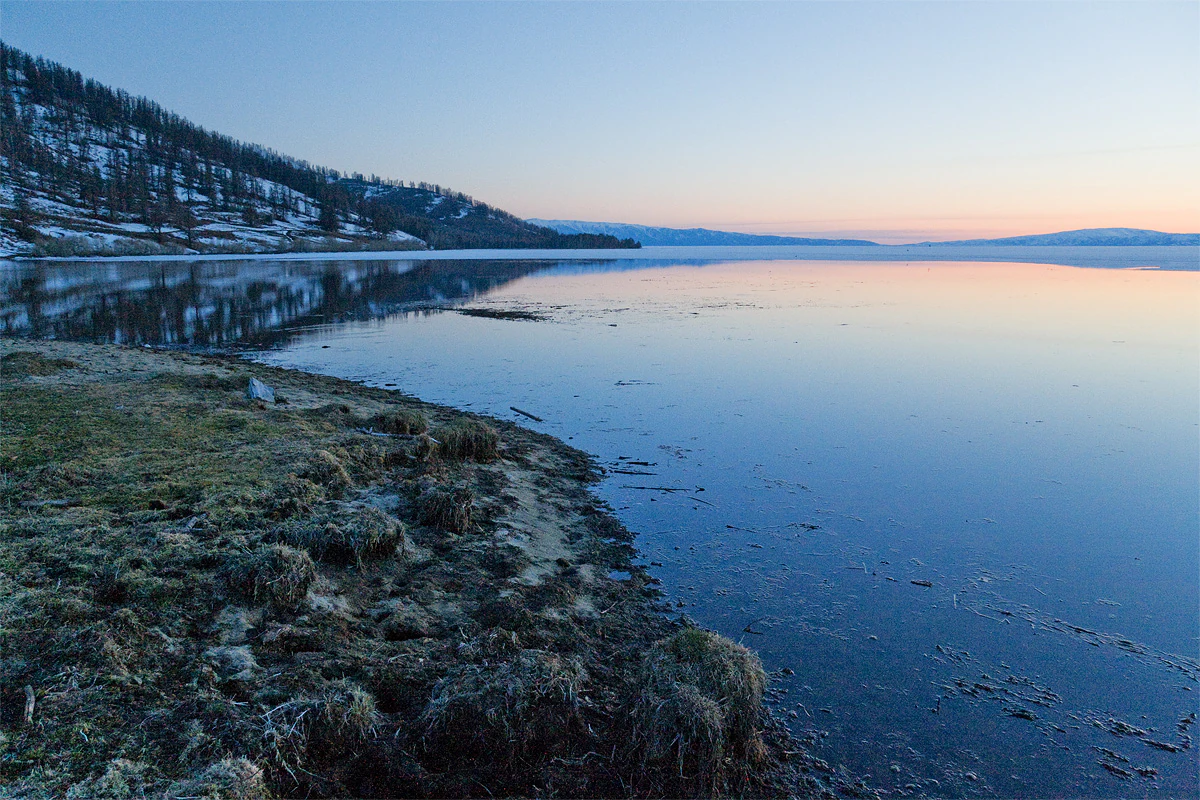
A wide angle shot of Lake Markakol at dusk; the calm, glassy water reflects the soft pink and blue sky, with a rugged, grassy shoreline in the foreground and forested mountain slopes in the distance.
Calm sunset view over the shores of Lake Markakol.

Top sights and standout views in Markakol Nature Reserve

Key highlights of the Markakol Nature Reserve include the pristine waters of Lake Markakol, which serve as the central feature of the protected landscape, and the vertical sequence of ecological zones rising from lakeshore meadows through taiga and subalpine belts to alpine tundra more than 3,000 meters above sea level.

The reserve is also notable for its native fish fauna, including endemic subspecies of lenok, Siberian grayling, and small bottom-dwelling fish unique to the lake. Extensive old-growth fir and spruce forests, rare high-mountain plants such as rhodiola and Altai maral root, and the breeding populations of black stork and other charismatic wildlife add to its ecological value.

Best time to visit Markakol Nature Reserve

The most rewarding periods to experience the natural character of the Markakol region tend to align with late spring and summer, when alpine meadows come into bloom and wildlife is active across the forest and lake habitats. This is when the lake area is most accessible and when the contrast between lakeshore, forest, and high-mountain vegetation belts is most visually pronounced.

Winter brings deep snow cover and very cold temperatures, transforming the reserve into a quiet, snow-covered wilderness under prolonged ice on the lake. Each season reflects a different face of the area, from intense summer biodiversity to extreme winter cold, but visitors should be prepared for the climatic severity of this part of the Southern Altai at any time of year.

Monthly climate preview

Long-term temperature ranges and monthly precipitation at representative elevation

Markakol Nature Reserve Climate Normals and Annual Weather Patterns

Representative coordinates record distinct seasonal temperature swings and recorded precipitation rates across twelve monthly data points. Analyzing the complete monthly climate profile reveals deeper baseline trends for this protected mountain terrain.
Annual mean-2 °C
-19 °C14 °C
Jan-19°
Feb-16°
Mar-11°
Apr-1°
May
Jun12°
Jul14°
Aug12°
Sep
Oct-2°
Nov-12°
Dec-17°
Warmest month
July

13.9 °C

Coolest month
January

-19.1 °C

Wettest month
July

1.9 mm/day

Driest month
January

0.7 mm/day

Park location guide

Geography guide, regional context, and park location map for Markakol Nature Reserve

Markakol Nature Reserve park geography, regions, and map view in Kazakhstan

Understand where Markakol Nature Reserve sits in Kazakhstan through a broader geographic reading of the surrounding landscape, nearby location context, and its mapped position within the national park landscape.

How Markakol Nature Reserve fits into Kazakhstan

Kazakhstan is a Central Asian country spanning vast steppes and plains, bordered by Russia, China, Kyrgyzstan, Uzbekistan, and Turkmenistan, with a coastline along the Caspian Sea. It gained independence from the Soviet Union in 1991 and has a population of approximately 20.5 million people. The country is officially secular but predominantly Muslim, with Kazakh and Russian as official languages.

Wider geography shaping Markakol Nature Reserve in Kazakhstan

Kazakhstan occupies a vast territory in Central Asia, extending into Eastern Europe. Its terrain consists largely of hilly plateaus and plains, with lowlands covering about a third of the area. The southern and eastern regions are mountainous. The country borders Russia to the north and west, China to the east, Kyrgyzstan to the southeast, Uzbekistan to the south, and Turkmenistan to the southwest. It has a coastline along the Caspian Sea.

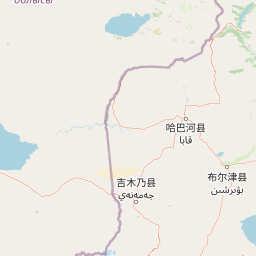
Map view of Markakol Nature Reserve

Use this park location map to pinpoint Markakol Nature Reserve in Kazakhstan, understand its exact geographic position, and read its mapped placement within the surrounding landscape more clearly.

Pigeon | © OpenStreetMap contributors

Location context for Markakol Nature Reserve

East Kazakhstan Region

Explore protected area views, high mountain terrain, and glacial lake habitats across the reserve.

Markakol Nature Reserve Photos and Landscapes: Visualizing Southern Altai Scenery

Visual documentation captures the rugged mountain terrain, tectonic lake shores, and layered forest habitats defining Markakol Nature Reserve. Photographic records reveal the ecological character of Southern Altai landscapes, alpine tundra, and pristine freshwater environments.

A clear stream flows through a valley with patches of remaining winter snow, dry golden grasses, and evergreen trees, with snow-capped mountain peaks in the background.

A silhouette of a bird flying over a frozen or calm lake, with dark mountain silhouettes in the background under a pink and orange sunset sky.

A clear, shallow river flows through a valley with patches of snow remaining on the banks, surrounded by dry golden grasses and dark coniferous trees, with snow-capped mountain peaks in the distance under a clear deep blue sky.

A calm, reflective lake with a shoreline of low, sparse vegetation in the foreground and snow-dusted mountain ridges visible under a clear, cool-toned sky.

A peaceful, wide landscape view of Lake Markakol at dusk, with snow-dusted hills in the background reflected in the calm, dark blue water of the lake. The foreground features a rugged, grassy shoreline.

A bird flying over a partially frozen, still lake with snow-covered mountains in the distance under a sunset sky.

A wide angle shot of Lake Markakol at dusk; the calm, glassy water reflects the soft pink and blue sky, with a rugged, grassy shoreline in the foreground and forested mountain slopes in the distance.

Park atlas

Compare regional mountain reserves and protected areas across the Southern Altai

Other Parks Near Markakol Nature Reserve and Surrounding Protected Landscapes

Visitors exploring Markakol Nature Reserve can continue browsing nearby mountain reserves and protected landscapes across the surrounding region. Comparing adjacent park geography reveals broader patterns in regional terrain, alpine watersheds, and high-altitude habitats.
Watercolor painting of a river flowing through forested hills with mountains in the background under a sunset sky
National parkEast Kazakhstan Region
About 33 km away#1 closest

Northeast

Katon-Karagay National Park: Discover Kazakhstan's Largest Protected Mountain Landscape

Explore the geography and park boundaries of East Kazakhstan's premier national park.

Katon-Karagay National Park, the largest national park in Kazakhstan, offers a deep dive into the protected landscapes of the Southern Altai Mountains. This page provides essential geographic context, detailing the park's terrain, its significance as a protected area within East Kazakhstan Region, and its role in mapping the natural contours of this ecologically diverse mountain system. Understand the park's boundaries and its contribution to regional conservation.

Area
6,435 km²
Established
2001
IUCN
II
Relief
Mountain
National parkBayan-Ölgii Province
About 146 km away#2 closest

East

Altai Tavan Bogd National Park: Protected Mountainous Landscape in Bayan-Ölgii

Explore mapped geography and protected terrain.

Altai Tavan Bogd National Park, situated in Mongolia's Bayan-Ölgii Province, offers a detailed view of a significant protected natural area. This park is defined by its mountainous geography, forming a key part of the Altai range. Users can explore its mapped boundaries and understand its role as a protected landscape within the western Mongolian atlas.

Area
6,362 km²
Established
1996
IUCN
II
Relief
Mountain
Nature reserveXinjiang
About 177 km away#3 closest

Southeast

Altay Kokesu Wetland National Nature Reserve: Protected Landscape and Regional Map

A diverse wetland corridor in the Xinjiang region

Spanning over 300 square kilometers, the Altay Kokesu Wetland National Nature Reserve represents a key protected entity within the Altai grasslands. This area supports a unique hydrological convergence of the Irtysh and Kran rivers, resulting in a rare ecological mosaic of meadows, marshes, and desert-steppe transition zones. Users can explore the reserve's topography and its critical role in maintaining water-fed habitats for regional bird populations.

Area
306.67 km²
Established
2001
Relief
Lowland
Climate
Arid
Watercolor painting showing green mountains, valleys, and a winding river under a light sky
National parkAltai Republic
About 208 km away#4 closest

Northeast

Saylyugemsky National Park: Discover its Protected Landscape and Geographic Significance in Altai Republic

Mapped boundaries and regional landscape context within the Altai Republic.

Delve into Saylyugemsky National Park, a designated national park situated within the vast geographic expanse of Russia's Altai Republic. This canonical page provides detailed insights into its protected landscape, meticulously mapped boundaries, and its contribution to the regional geography. MoriAtlas focuses on structured geographic discovery, enabling a deeper understanding of Saylyugemsky National Park's place within the atlas of protected areas and natural landscapes.

Area
1,183.8 km²
Established
2012
IUCN
II
Relief
Mountain
A wide, panoramic watercolor illustration showing a mountain range with purple and yellow hues in the background, a green grassy meadow in the middle ground, and small pine trees and wildflowers in the foreground against a white background.
Nature reserveKazakhstan
About 214 km away#5 closest

Northwest

West Altai State Nature Reserve: Protected Mountain Taiga and Alpine Geography in Kazakhstan

An ecological atlas of the Western Altai mountain system

Spanning the Ivanovsky and Uba ranges, this nature reserve protects a diverse terrain of mountain taiga, glacial cirques, and high-mountain bogs. It remains a key conservation landscape for Central Asian biodiversity, anchoring the headwaters of the Uba River within a striking environment of granite pillars and alpine meadows.

Area
861.22 km²
Established
1992
Relief
Mountain
Climate
Boreal
National parkEast Kazakhstan Region
About 292 km away#6 closest

Southwest

Tarbagatai National Park: Protected Landscape and Wild Fruit Tree Forests in East Kazakhstan Region

Explore the mapped boundaries and ecosystem of this national park.

Tarbagatai National Park is a protected area in East Kazakhstan recognized for its unique role in conserving wild fruit tree forests that have maintained genetic isolation. This national park provides a detailed view of a mountain-steppe ecosystem across the Tarbagatai mountain range, Karabas Mountains, and Arkaly Mountains, along with the Urzhar and Emel river valleys. Its establishment in 2018 highlights its importance for biodiversity and the study of natural forest genetics, offering significant geographic context for regional protected land exploration.

Area
1,364 km²
Established
2018
IUCN
II
Relief
Mountain
National parkBayan-Ölgii Province
About 383 km away#7 closest

East

Tsambagarav Uul National Park: Mapped Protected Landscape in Bayan-Ölgii

Explore its geographic context and park boundaries.

Tsambagarav Uul National Park offers a detailed look at a significant protected landscape situated in Mongolia's western Bayan-Ölgii Province. This national park's boundaries are mapped to provide context within the broader Altai Mountains region. Users can explore the park's geographic setting, understanding its contribution to the protected natural areas of western Mongolia and its significance for regional landscape studies.

Area
1,110 km²
Established
2000
IUCN
II
Relief
Mountain
Nature reserveTacheng Prefecture
About 391 km away#8 closest

Southwest

Xinjiang Barkol Mountain National Nature Reserve: Protected Terrain and Regional Geography

Mountain forest sanctuary in Tacheng Prefecture, Xinjiang

The Xinjiang Barkol Mountain National Nature Reserve protects a diverse mountain environment where the Barkol range captures moisture-bearing winds. Known for its globally significant stands of wild almond and Xinjiang wild apple, the reserve features a complex landscape of rocky ridges, forested slopes, and deep river valleys that sustain rare montane species and resilient endemic flora.

Area
1,150.37 km²
Established
1980
Relief
Mountain
Climate
Temperate

Common questions about visiting, size, designation, and location context for Markakol Nature Reserve

Markakol Nature Reserve FAQs for park facts, access, geography, and protected area context

Find quick answers about Markakol Nature Reserve, including protected-area facts, park geography, trail and visitor context, and how the park fits into its surrounding country and regional landscape.
MoriAtlas Explorer

Continue Your Protected Areas Search Across the Global Atlas

Deepen your exploration by continuing the structured search for national parks and protected areas worldwide. Utilize the comprehensive filtering capabilities to compare different conservation landscapes and refine your understanding of global park geography. Discover more about the distribution and characteristics of protected natural areas.

Global natural geography