Why Marolambo National Park stands out
Marolambo National Park is best known for containing the highest waterfall in Madagascar, the Andrevaronina Falls on the Sakaleona River, which plummets roughly 350 meters. The park is also renowned for its exceptional remoteness and the challenge it presents to visitors, requiring hikers to traverse difficult terrain for days to reach its core areas. The protected forest landscapes represent some of the less-visited eastern rainforest ecosystems in Madagascar, offering a wilderness experience far removed from more accessible parks.
Marolambo National Park history and protected-area timeline
The formal establishment of Marolambo National Park occurred as part of Madagascar's broader protected area expansion efforts coordinated through the Madagascar National Parks Association. While specific dates regarding the park's designation are limited in the source material, its creation reflects the national priority to conserve eastern rainforest corridors that harbor exceptional biodiversity. The park was integrated into the country's network of national parks managed by Madagascar National Parks Association, which maintains administrative oversight from its headquarters in Fandriana. The park's relative obscurity in international conservation circles compared to more established parks like Ranomafana or Andasibe-Mantadia likely reflects its challenging access conditions rather than any deficiency in ecological value. The absence of significant tourism infrastructure and the need for multi-day hiking expeditions to reach the park's interior have maintained its wilderness character.
Marolambo National Park landscape and geographic character
The landscape of Marolambo National Park is characterized by the rugged terrain typical of eastern Madagascar, where the island's central highlands descend toward the coastal lowlands. The park encompasses forested slopes, valleys, and ridgelines associated with the Sakaleona River basin and its tributaries. The defining physical feature is the Andrevaronina Falls, which represents Madagascar's highest waterfall with a drop of approximately 350 meters, formed where the Sakaleona River cascades over a dramatic cliff in the park's interior. The terrain varies from lower elevation areas in the eastern portions to higher ground approaching the central highlands, creating environmental gradients that support diverse ecological communities. The forest-covered landscape presents a typically dense tropical appearance with the steep terrain creating numerous microhabitats and visual drama throughout the protected area.
Marolambo National Park ecosystems, habitats, and plant life
Marolambo National Park protects substantial tracts of eastern Madagascar's rainforest ecosystems, representing an important component of the island's eastern biodiversity corridor. The protected forests occur across an elevation gradient that supports varied plant communities, from lowland rainforest in the eastern portions to transitional forest types at higher elevations. While detailed species inventories are not provided in the source material, the park's eastern Madagascar location places it within a region renowned for high levels of endemism across numerous taxonomic groups. The forest ecosystems likely include characteristic species from the island's unique flora, with the protected area serving as a reservoir for biodiversity in a region facing ongoing deforestation pressures. The park's remote character has allowed these ecosystems to persist relatively intact compared to more accessible areas.
Marolambo National Park wildlife and species highlights
While specific wildlife details are not extensively documented in available sources, Marolambo National Park's location in eastern Madagascar places it within one of the island's most biodiverse regions. The eastern rainforests are home to numerous endemic species including lemurs, birds, reptiles, and amphibians that occur nowhere else on Earth. The park's protected status provides conservation space for these species in a region where habitat loss remains a significant pressure. The forest canopy supports diverse avifauna, while the understory and ground layers harbor various endemic mammals, reptiles, and insects. The Sakaleona River and its tributaries likely contain endemic aquatic species adapted to the clear mountain waters. Visitors undertaking the challenging hikes through the park may encounter various wildlife species, though the park's remoteness means wildlife viewing opportunities remain less documented than in more accessible protected areas.
Marolambo National Park conservation status and protection priorities
Marolambo National Park contributes to Madagascar's protected area network by preserving a substantial tract of eastern rainforest that might otherwise face conversion pressures. The park's designation provides legal protection for its forest ecosystems and the biodiversity they contain, including potentially threatened species that depend on intact habitat. The challenging access conditions that limit human visitation also serve as a de facto protection mechanism, reducing pressure from tourism and development that has affected more accessible parks. Conservation of this area supports broader regional efforts to maintain connectivity between protected areas in Madagascar's eastern forest corridor, which is essential for species that require large home ranges or dispersal routes between habitat patches. The park's management by Madagascar National Parks Association connects it to the country's primary conservation governance framework.
Marolambo National Park cultural meaning and human context
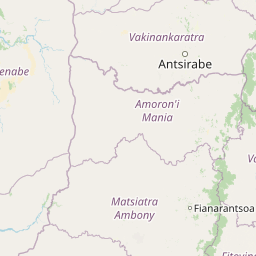
The territory of Marolambo National Park spans multiple traditional administrative regions of eastern Madagascar, each with distinct local communities and cultural histories. The park is bounded by several regional centers including Marolambo, Fandriana, Ambositra, and Nosy Varika, each representing different aspects of Madagascar's highland and eastern lowland cultural landscapes. The local communities in this region maintain traditional relationships with the forest landscape, though specific indigenous or traditional land use practices within the park boundaries are not detailed in available sources. The park's name derives from the town of Marolambo, which serves as a regional reference point for this protected area.
Top sights and standout views in Marolambo National Park
The primary highlight of Marolambo National Park is undoubtedly Madagascar's highest waterfall, Andrevaronina Falls, which drops approximately 350 meters over the Sakaleona River. This dramatic natural feature alone justifies the considerable effort required to reach the park's interior through multi-day hiking expeditions. Beyond the waterfall, the park offers access to some of eastern Madagascar's more pristine and rarely visited rainforest environments, providing a wilderness experience distinctly different from more accessible protected areas. The challenge of reaching the park itself becomes part of the appeal for adventurous travelers seeking to explore Madagascar's less-touristed landscapes. The park's biodiversity value, while less documented than in more studied areas, represents another significant highlight for conservation-minded visitors.
Best time to visit Marolambo National Park
The optimal time to visit Marolambo National Park would align with Madagascar's dry season, typically running from May through October, when trail conditions are most favorable for hiking and the risk of heavy rainfall is reduced. The dry season offers more manageable conditions for the multi-day hikes required to access the park's interior, as the rainy season would transform trails into difficult, slippery passages. However, the park's remote character means that even during the optimal season, visitors should be prepared for demanding terrain and limited infrastructure. The lack of visitor facilities and the requirement for self-sufficient trekking mean that planning should account for extended expedition-style travel regardless of when visits occur.