Why Andasibe-Mantadia National Park stands out
Andasibe-Mantadia is best known for its remarkable lemur populations, particularly the indri, which is the largest lemur species in Madagascar and perhaps the most iconic resident of the park. The Analamazoatra section is particularly celebrated for reliable indri sightings, as these animals have become habituated to human presence. The park also protects ten additional lemur species, including the critically endangered diademed sifaka and the black-and-white ruffed lemur, both of which have been the focus of successful reintroduction programs. The park's accessibility from the capital, combined with its dense rainforest trails and the distinctive calls of indri that echo through the canopy, makes it one of Madagascar's most visited and beloved protected areas.
Andasibe-Mantadia National Park history and protected-area timeline
The conservation history of Andasibe-Mantadia reflects the broader story of Madagascar's struggle to preserve its unique biodiversity amid development pressures. The Analamazaotra Special Reserve, also known locally as Andasibe or Périnet, was historically connected to the larger Mantadia National Park, which once included adjacent forest areas such as Maromizaha Classified Forest to the southeast and Anosibe an'ala to the south. However, systematic deforestation for logging, agricultural expansion, and the establishment of commercial tree plantations has fragmented this landscape, leaving the park as an isolated island of forest surrounded by transformed land. The primary threats to the park stem from habitat loss in the surrounding area, where native rainforest has been replaced by Australian eucalyptus and Chinese pine plantations, and where slash-and-burn cultivation for rice agriculture continues to expand. These pressures are exacerbated by Madagascar's extremely high population growth rate and widespread rural poverty, which drive communities to convert forest land for subsistence agriculture. The national park was officially established in 1989 under the management of Madagascar National Parks Association, formalizing protection for this critical rainforest habitat. In 2007, the park was nominated for inclusion in the World Heritage Site of Rainforests of the Atsinanana, though the park's forests were ultimately not selected for the final list. A significant milestone came in 2025 when the park was designated as a UNESCO biosphere reserve, acknowledging its global importance and strengthening its conservation framework.
Andasibe-Mantadia National Park landscape and geographic character
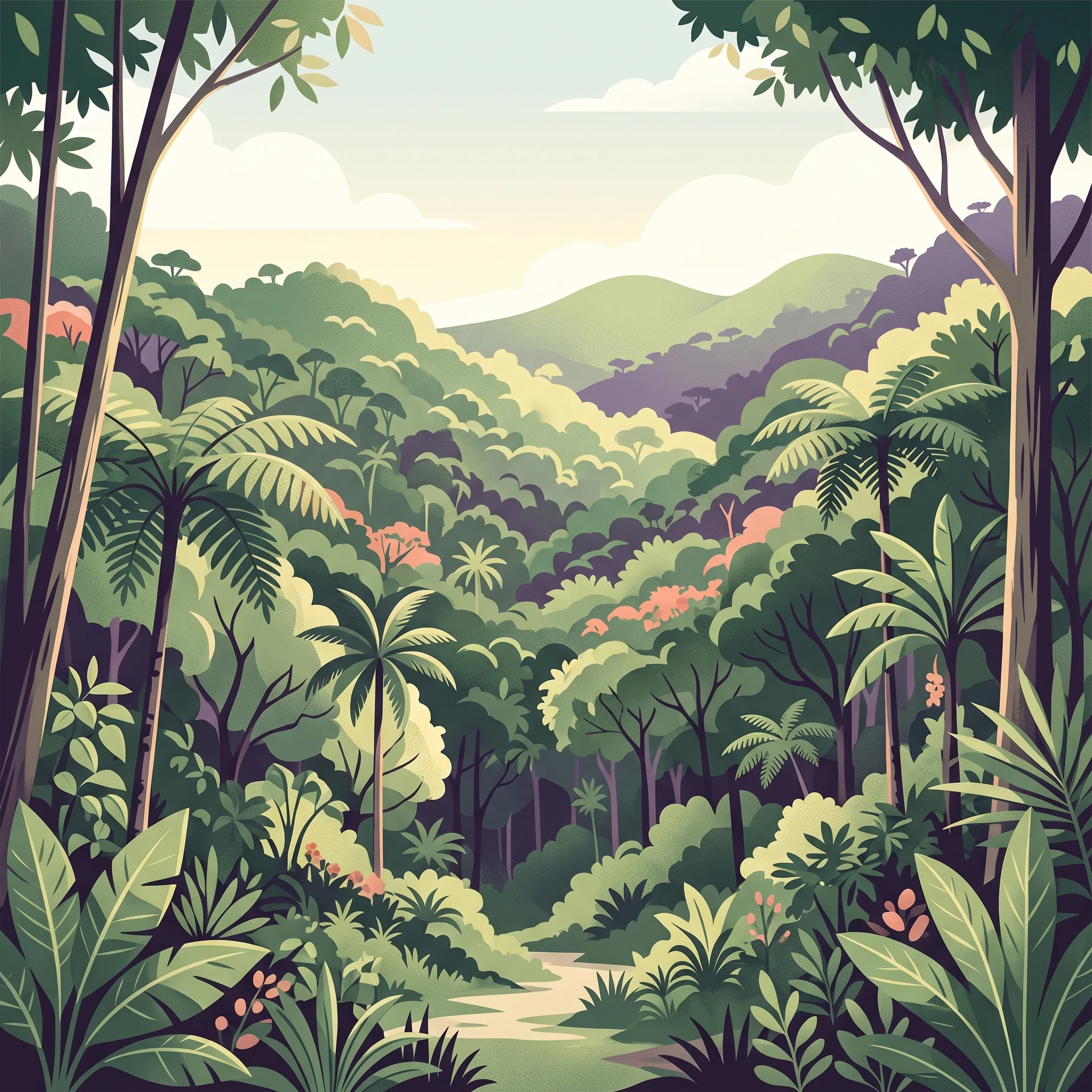
The physical landscape of Andasibe-Mantadia is characterized by rolling terrain within the eastern Madagascar highlands, where elevation rises from 800 meters at the lower boundaries to approximately 1260 meters at the highest points. The terrain is dominated by dense, humid rainforest with a complex vertical structure featuring emergent trees, a dense canopy, understory vegetation, and forest floor layers. The landscape receives heavy rainfall, with approximately 1700 millimeters falling annually across roughly 210 rainy days, creating consistently humid conditions that sustain the forest's lush vegetation. Streams and small rivers traverse the park, fed by the high precipitation, and the park likely contains areas of wetland or marshy terrain typical of Malagasy rainforest. The forest surrounding the trails is visually dramatic, with towering trees, dense epiphytes, and the constant sound of dripping water and bird calls. While the park itself remains forested, the surrounding landscape tells a different story, with visible boundaries where native forest gives way to plantations of eucalyptus and pine, illustrating both the value of what is protected within the park and the pressures that threaten the broader ecosystem.
Andasibe-Mantadia National Park ecosystems, habitats, and plant life
The ecological character of Andasibe-Mantadia is defined by its status as a humid rainforest ecosystem within the Alaotra-Mangoro Region of Madagascar. This primary forest represents a critical repository of biodiversity, hosting species found nowhere else on Earth due to Madagascar's long-term isolation as an island. The park's elevation gradient creates multiple habitat zones, from lower elevation forest to higher altitude areas with different species assemblages and vegetation patterns. The humidity and consistent rainfall support epiphytic plants including orchids, ferns, and mosses that carpet tree trunks and branches, creating the classic appearance of a tropical rainforest. The forest structure provides habitat layers that support diverse ecological niches, from canopy-dwelling lemurs and birds to ground-dwelling mammals and invertebrates. This ecosystem is part of the larger Rainforests of the Atsinanana, a recognized center of plant endemism that extends along the eastern spine of Madagascar. The park's biodiversity value is concentrated in its lemur populations, but the forest also supports numerous bird species, reptiles, amphibians, and insects that together form a complex ecological community.
Andasibe-Mantadia National Park wildlife and species highlights
The wildlife of Andasibe-Mantadia is exceptionallyrich, with lemurs serving as the flagship attraction and defining the park's ecological identity. The park protects 11 lemur species, a remarkable concentration that reflects the park's diverse habitats and its position within Madagascar's eastern rainforest belt. The indri, the largest of all lemurs and perhaps Madagascar's most iconic animal, is the star attraction, particularly in the Analamazoatra section where habituated groups can be reliably encountered. The diademed sifaka, with its striking black and white coloration and distinctive large eyes, was the focus of a significant reintroduction program that successfully established populations in the park after translocating individuals from threatened habitat areas. The black-and-white ruffed lemur, another visually striking species, has also benefited from reintroduction efforts. Beyond lemurs, the park supports diverse birdlife, including various endemic species adapted to rainforest habitats. The park's streams and forest floor provide habitat for amphibians and reptiles, while the insect fauna is extraordinarily diverse though less visible to visitors. The wildlife viewing experience is enhanced by the relatively accessible trail system and the presence of guides who can help visitors locate and interpret animal behavior.
Andasibe-Mantadia National Park conservation status and protection priorities
The conservation significance of Andasibe-Mantadia extends beyond its borders as a critical stronghold for Madagascar's endemic biodiversity. The park's designation as a UNESCO biosphere reserve in 2025 acknowledges its global importance and integrates conservation with sustainable development objectives. The park protects primary rainforest in a region where forest loss has been severe, making this habitat island critically important for species survival. The 11 lemur species protected here include numerous species classified as endangered or critically endangered, and the park's populations serve as important insurance against extinction in the face of broader habitat loss. Conservation challenges remain significant, however, as the primary threat to the park comes from habitat disappearance outside the protected boundaries. The replacement of native forest with eucalyptus and pine plantations, combined with slash-and-burn agriculture, continues to shrink the available habitat for species that require large territories and forest connectivity. The reintroduction program for diademed sifaka and black-and-white ruffed lemur represents an active conservation intervention that has demonstrated success in establishing viable populations within the park, providing a model for similar efforts elsewhere in Madagascar.
Andasibe-Mantadia National Park cultural meaning and human context
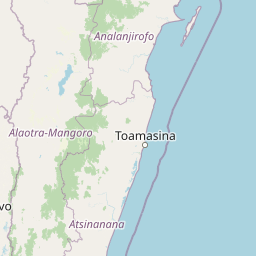
The cultural context of Andasibe-Mantadia is closely tied to the local communities who live in the vicinity of the park and who have traditional connections to the forest landscape. The Analamazoatra Reserve is known locally simply as Andasibe, taking its name from the nearby village, and this local identity reflects the long-standing relationship between people and this forest area. The park lies within the Alaotra-Mangoro Region, home to Malagasy communities whose livelihoods are closely tied to the land, though the intense population growth and poverty rates in rural Madagascar create pressure on forest resources. The park management involves collaboration with local communities, and the reintroduction program has specifically incorporated community benefits through education initiatives and employment as guides. Visitors to the park are required to have local guides, a policy that both ensures safety and provides economic benefit to community members. The relationship between the park and surrounding communities represents both a conservation challenge, as local resource needs place pressure on forest boundaries, and an opportunity for integrated conservation that supports human well-being while protecting biodiversity.
Top sights and standout views in Andasibe-Mantadia National Park
Andasibe-Mantadia offers visitors the chance to experience Madagascar's iconic rainforest wildlife in one of the most accessible locations in the country. The park's headline experience is hearing and hopefully observing the indri, whose distinctive wailing calls resonate through the forest and create an unforgettable soundtrack to a rainforest hike. The diademed sifaka, with its dramatic black and white fur and golden eyes, represents another highlight, particularly for those lucky enough to see the reintroduced groups that have established successful breeding populations in the park. The guided trail system through both Analamazoatra and Mantadia sections allows visitors to explore different aspects of the forest, from the more accessible trails near the main road to the more remote areas that require special arrangements. The park's status as a UNESCO biosphere reserve, combined with its 11 lemur species and successful reintroduction program, makes it a model for Malagasy conservation. The relative ease of access from Antananarivo, with a three-hour drive on paved roads, means this remarkable wildlife experience is available to visitors with limited time in the country.
Best time to visit Andasibe-Mantadia National Park
The best time to visit Andasibe-Mantadia depends on what experience visitors are seeking, though the park can be visited year-round given its accessible location and established tourism infrastructure. The dry season, typically from May to October, offers more comfortable hiking conditions with lower humidity and less rain, making trail walking more pleasant and reducing the challenges of wet conditions. However, this period corresponds to the cooler months, and some visitors may find the reduced visibility in the forest due to lower canopy moisture a trade-off. The wet season, from November to April, brings heavier rainfall but also the dramatic atmosphere of a full rainforest, with waterfalls potentially at their most impressive and the forest at its most lush and green. Wildlife viewing may be somewhat more challenging during heavy rain, but lemurs remain active year-round and can be encountered in any season. The park's popularity means that accommodations can fill during peak tourist seasons, so advanced booking is advisable for those planning visits during the most popular periods.