Why Montecristo National Park stands out
Montecristo National Park is best known for its cloud forest environment, one of the most endangered forest types in Central America. The park protects a crucial corridor of montane forest that supports biodiversity across international boundaries. It is recognized as a key component of the Trifinio Fraternidad Transboundary Biosphere Reserve, representing trinational cooperation in conservation. The park's elevation and moisture regime support epiphytes, ferns, and moisture-dependent species that characterize true cloud forest communities.
Montecristo National Park history and protected-area timeline
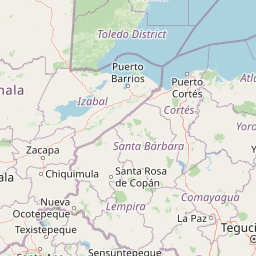
Montecristo National Park was established in 2008 as part of El Salvador's efforts to expand its protected area network and preserve remaining natural ecosystems. The park's creation was closely tied to the development of the Trifinio Fraternidad Transboundary Biosphere Reserve, a collaborative initiative involving El Salvador, Honduras, and Guatemala. This trinational reserve was designed to protect the shared cloud forest ecosystems that span the three countries' borders. Prior to national park designation, the area had been recognized for its ecological significance and was included in broader conservation planning for the Central American Isthmus. The establishment reflected growing regional recognition that effective conservation of cloud forest biodiversity required cross-border cooperation and coordinated management strategies.
Montecristo National Park landscape and geographic character
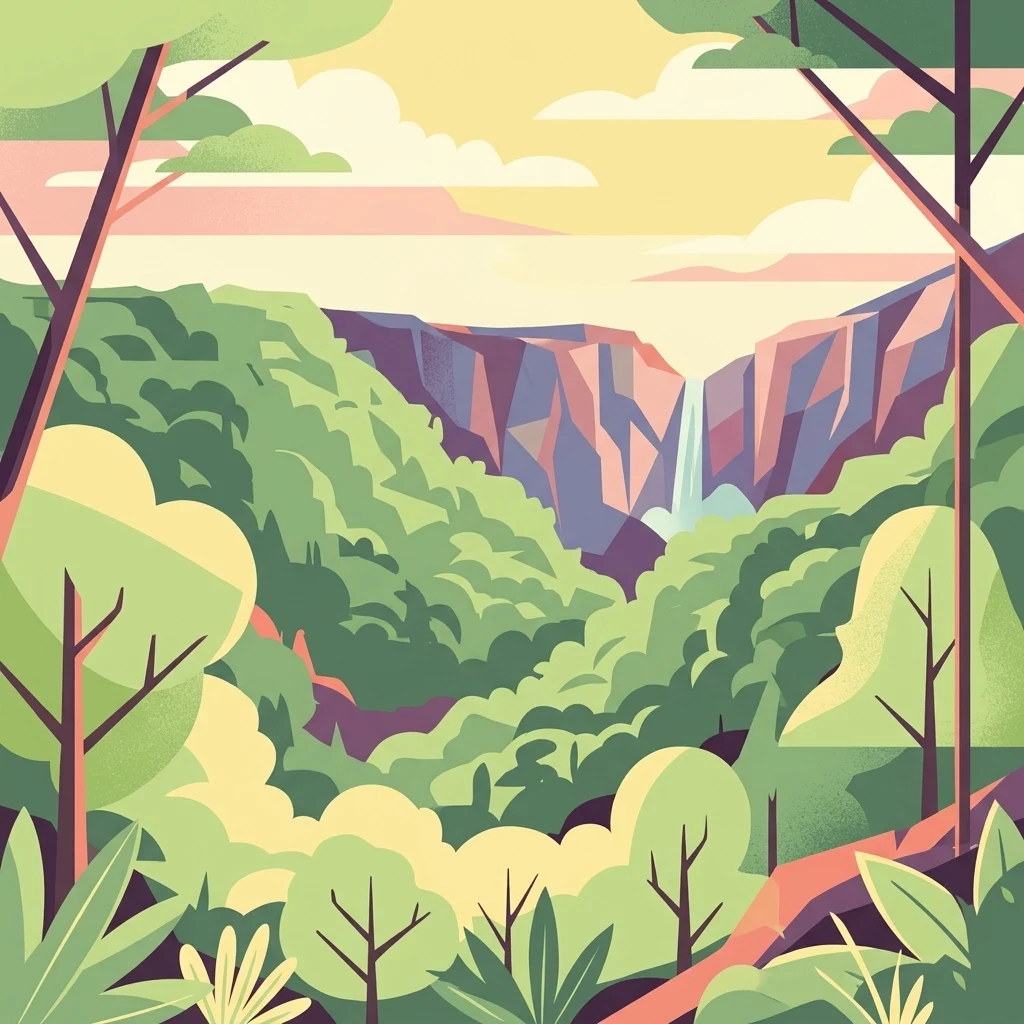
The landscape of Montecristo National Park is characterized by steep mountainous terrain rising from the surrounding lowlands of northwestern El Salvador. The cloud forest develops on the slopes and ridges where moisture from trade wind currents condenses as mist, creating the persistent cloud cover that defines this ecosystem type. The terrain features numerous ravines and drainage channels that carry water from the highland catchments. The forest canopy reaches significant heights in undisturbed areas, with emergent trees protruding above the general canopy level. The combination of elevation, slope, and moisture creates a rugged landscape with limited accessibility, factors that have historically limited human settlement and agricultural development in the area.
Montecristo National Park ecosystems, habitats, and plant life
The nature of Montecristo National Park centers on its cloud forest ecosystem, a habitat type characterized by frequent cloud immersion at canopy level. This moisture regime supports extraordinary biodiversity including extensive epiphyte communities (bromeliads, orchids, ferns), dense understory vegetation, and specialized fauna adapted to the humid forest environment. The park lies within the Mesoamerican biodiversity hotspot, one of the world's most species-rich regions. The cloud forest represents a transition zone between lowland tropical rainforests and higher-elevation pine-oak forests, containing elements of both. The high rainfall and consistent humidity maintain year-round growing conditions and support continuous ecological processes. The transboundary protected area network of which the park is a part helps maintain ecological connectivity across a landscape fragmented by agricultural development.
Montecristo National Park wildlife and species highlights
The wildlife of Montecristo National Park reflects the Mesoamerican cloud forest fauna, though detailed species documentation is limited in available sources. Cloud forests in this region typically support diverse bird communities including resplendent quetzals, toucans, and numerous migrant species. Mammals common to Central American cloud forests include various species of howler monkeys, coatis, and numerous bat species. The humid forest conditions support abundant amphibian populations, particularly salamanders and frogs, many of which are sensitive to environmental changes. The park's position within a transboundary reserve network helps maintain wildlife corridors that allow species to move across national boundaries in response to seasonal conditions or ecological changes.
Montecristo National Park conservation status and protection priorities
Montecristo National Park contributes to regional conservation by protecting one of the last cloud forest remnants in El Salvador. The park's inclusion in the Trifinio Fraternidad Transboundary Biosphere Reserve exemplifies trinational cooperation in environmental protection, recognizing that cloud forest ecosystems transcend political boundaries. This transboundary approach allows for coordinated management of wildlife corridors, water resources, and ecological processes that operate across national jurisdictions. The reserve designation also provides international recognition and potential access to technical and financial resources for conservation management. In a country where natural forest cover has been severely reduced, protecting remaining cloud forest areas is particularly important for biodiversity conservation and watershed protection.
Montecristo National Park cultural meaning and human context
The Montecristo area lies within a region of northwestern El Salvador that has historical connections to both Lenca and Pipil indigenous territories. The nearby town of Metapán has served as a regional center and historically had connections to broader trade networks across the Central American highlands. The cloud forest area would have been known to local communities as a source of water, forest products, and game. The modern protected area represents a shift from traditional land use patterns toward conservation-focused management, reflecting broader societal changes in how natural landscapes are valued and protected.
Best time to visit Montecristo National Park
The optimal time to visit Montecristo National Park corresponds to the drier season from November through April, when precipitation is reduced and trail conditions are more favorable. The wet season, particularly from May through October, brings heavy rainfall that can make trails slippery and access more difficult, though the cloud forest is at its most dramatic during this period with frequent mist and full hydration of the vegetation. The park's cloud forest character means that misty conditions can occur year-round, with the highest probability during the wet season. Visitor access may be influenced by seasonal road conditions and park management arrangements.