Why Mpem and Djim National Park stands out
Mpem and Djim National Park is best known for its position within the Northern Congolian forest-savanna mosaic, a transitional ecoregion of outstanding ecological significance. The park exemplifies the boundary zone between the humid Congo Basin forests to the south and the drier Sudanian savanna to the north, creating a complex mosaic of habitats. This ecological positioning supports remarkable biodiversity, with 79 native mammal species recorded including threatened populations of leopards, chimpanzees, hippopotamuses, and African bush elephants. The park's riverine forests harbor valuable timber species and endemic flora, while the surrounding savanna woodlands contain distinctive tree species adapted to seasonal moisture variations.
Mpem and Djim National Park history and protected-area timeline
Mpem and Djim National Park was established by the government of Cameroon in 2004, representing a relatively recent addition to the nation's protected area network. The park's creation was part of Cameroon's ongoing efforts to expand and consolidate its conservation estate during the early 2000s, a period that saw increased attention to biodiversity protection following international conventions and sustainable development priorities. The selection of this particular landscape for national park status reflected growing recognition of the ecological importance of the forest-savanna transition zone, which had previously received limited formal protection compared to the more strictly forest-covered areas of southern Cameroon or the highland regions. The park's designation also acknowledged the watershed functions of the Mpem and Djim river systems, whose protection contributes to downstream water quality and flood regulation in the broader Sanaga River basin. Since establishment, the park has been managed under Cameroon's protected areas regulatory framework, with the national park designation providing legal protection against logging, mining, and other extractive activities that could degrade its ecological integrity.
Mpem and Djim National Park landscape and geographic character
The landscape of Mpem and Djim National Park is characterized by a diverse topography shaped by the interplay of river systems and the transitional ecological zone. The terrain consists primarily of undulating upland areas interspersed with valleys formed by the Mpem and Djim rivers and their tributaries. Gallery forests line the watercourses, creating dense green corridors that contrast sharply with the more open savanna and woodland environments on the surrounding slopes. The savanna areas are dominated by grasses including Bokassa grass and Imperata cylindrica, with scattered trees such as Albizzia and Lophira providing limited canopy cover. The woodland zones contain a more diverse tree stratum, with species adapted to the seasonal climate patterns. The rivers themselves form natural boundaries that help define the park's perimeter, with the Mpem River bounding the western side and the Djim River marking the eastern edge. This riverine configuration creates a landscape of ecological gradients, where moisture availability decreases as one moves away from the watercourses toward the upland savanna. The overall visual character blends the lush greenery of riverine forest with the golden-brown tones of savanna grasslands, creating a mosaic pattern typical of transitional African landscapes.
Mpem and Djim National Park ecosystems, habitats, and plant life
The nature of Mpem and Djim National Park is defined by its position in the Northern Congolian forest-savanna mosaic, one of Africa's key ecological transition zones. This ecoregion forms a broad band of interwoven habitats where the immense Congo Basin rainforest gives way progressively to the drier Sudanian savanna belt. Within the park, this transition manifests as a patchwork of distinct habitat types: dense forest formations concentrated along the river corridors, more open woodland on the intermediate slopes, and expansive savanna grasslands covering the higher ground. The vegetation reflects this gradient, with forest areas supporting species such as Piptadeniastrum africanum, Milicia excelsa, and Pterocarpus soyauxii, while savanna trees like Albizzia and Lophira dominate the open areas. The forest understory contains characteristic species adapted to the lower light conditions, while savanna areas support an understory dominated by grasses that thrive in the seasonal climate. This ecological complexity creates conditions suitable for a wide range of plant and animal species, with the transitional nature of the environment supporting both forest-dependent organisms and species adapted to more open savanna conditions.
Mpem and Djim National Park wildlife and species highlights
The wildlife of Mpem and Djim National Park reflects the park's transitional position between forest and savanna ecosystems. Seventy-nine native mammal species have been recorded within the park's boundaries, representing a significant diversity for a protected area of this size. Large mammals of conservation concern include leopards, chimpanzees, hippopotamuses, and African bush elephants, all of which face varying levels of threat across their ranges. The chimpanzee populations represent an important component of the park's biodiversity, as these primates require forest habitat for feeding and nesting. Hippopotamuses inhabit the river systems, utilizing the Mpem and Djim for grazing and cooling activities. African bush elephants, though ranging across both forest and savanna environments, may use the park's river corridors as movement pathways through the landscape. The park also supports at least fourteen species of bats, including both forest-dwelling and savanna-adapted species, reflecting the diversity of roosting and foraging habitats available within the protected area. This assemblage of mammalian fauna, combined with the reptile, bird, and invertebrate species that occupy the various habitat types, creates a wildlife community representative of central Africa's forest-savanna transition zone.
Mpem and Djim National Park conservation status and protection priorities
Mpem and Djim National Park serves as an important conservation tool for protecting a globally significant ecological transition zone. The park's inclusion within the Northern Congolian forest-savanna mosaic, which is recognized as a Key Biodiversity Area and a Priority Ecoregion for conservation action, reflects the importance of this landscape for maintaining ecological processes and species diversity. The protected area status provides legal framework for preventing habitat conversion, controlling hunting pressure, and managing sustainable use of natural resources within its boundaries. Conservation of this landscape is particularly relevant given the broader context of forest loss and fragmentation across central Africa, as the transitional zone between Congo forest and Sudanian savanna faces increasing pressures from agricultural expansion, logging, and infrastructure development. The park also contributes to watershed protection, with the Mpem and Djim rivers feeding into the Sanaga River system that provides water resources for downstream communities and ecosystems. By protecting both forest and savanna habitats within a single protected area, Mpem and Djim National Park helps maintain the ecological connectivity that allows species to move and adapt in response to environmental changes.
Mpem and Djim National Park cultural meaning and human context
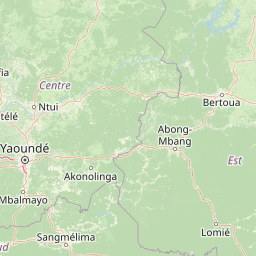
Mpem and Djim National Park is situated in Cameroon's Centre Region, an area with diverse human communities whose traditional land use practices have shaped the landscape over generations. The park's name derives from the two rivers that form its natural boundaries, reflecting the importance of these watercourses in local geography and culture. The rivers have historically provided water for agriculture, fishing, and transportation for communities in the surrounding area. While the park's establishment has restricted certain traditional uses of the land, the protected area framework in Cameroon typically acknowledges existing community rights and seeks to balance conservation objectives with sustainable livelihood needs. The Centre Region contains a mosaic of ethnic groups with varying relationships to the land, and the park's forests and savanna areas have been part of regional patterns of resource use that predate formal protected area designation. Understanding these cultural dimensions contributes to effective park management and helps ensure that conservation efforts account for the human context in which the protected area exists.
Top sights and standout views in Mpem and Djim National Park
Mpem and Djim National Park stands out as a protected area that captures the ecological richness of central Africa's forest-savanna transition. The park's gallery forests along the Mpem and Djim rivers offer opportunities to observe forest ecosystems in a landscape more typically associated with savanna environments. The presence of large mammals including elephants, hippos, leopards, and chimpanzees demonstrates the conservation value of protecting this transitional habitat. The diverse plant community, ranging from riverine forest trees like Milicia excelsa and Piptadeniastrum africanum to savanna species like Albizzia and Lophira, illustrates the ecological complexity that the park helps preserve. The wet-dry seasonal rhythm of the landscape creates dynamic conditions throughout the year, with the two rainy seasons bringing different visual characters to the savanna and influencing wildlife behavior and distribution.
Best time to visit Mpem and Djim National Park
The climate of Mpem and Djim National Park follows a tropical savanna pattern with four distinct seasons that influence the character of a visit. The long dry season from mid-November to mid-March typically offers easier movement through the landscape as vegetation is less dense and wildlife concentrates more predictably around water sources. This period coincides with cooler temperatures and lower humidity, making it generally more comfortable for field activities. The short rainy season from mid-March to end of June and the long rainy season from September to mid-November transform the landscape, with the savanna turning lush and green and watercourses flowing more fully. These periods may present challenges for travel but offer the opportunity to experience the park's ecosystems at their most verdant. The short dry season from July to August represents a transitional period between the two rainy seasons. Visitors interested in wildlife viewing might consider the dry seasons when animals are more readily observable at waterholes and river margins, while those interested in botanical features and landscape photography may find the rainy seasons more visually appealing.