
Why Ostoja nad Bobrem stands out
Ostoja nad Bobrem is best known for protecting one of the largest priority slope forest communities of Aceri-Tilietum in Poland, for hosting rich xerothermic grasslands with significant orchid populations, and for being a key bat conservation area in Lower Silesia. The site is also recognized for its ecological role as a wildlife corridor that links the larger Sudetes uplands to the broader Odra basin, while preserving surprisingly varied geology, with basalts, limestones, and sandstones shaping hills rising above the Bóbr River valley.
Ostoja nad Bobrem history and protected-area timeline
Ostoja nad Bobrem's history as a protected area begins in the European Union's Natura 2000 ecological network. The site was first submitted to the European Commission as a candidate Site of Community Importance and was formally adopted on 13 February 2009 under the EU Habitats Directive. This stage marked the international recognition of the Bóbr valley and its adjoining hills as a habitat area of pan-European interest.
For more than a decade after its EU-level listing, the site existed within the Natura 2000 framework but lacked full national legal documentation under Polish conservation law. This changed on 11 August 2022, when Poland officially confirmed the special area of conservation through a dedicated legal act (Dz.U. 2022 poz. 1568), assigning the area the official designation PLH020054 and binding its protection into Polish national nature conservation legislation.
The longer human history of the region stretches well beyond protected-area status. Wleń and surrounding settlements have medieval origins, and the landscape carries traces of Piast-era castles, historic grodziska (fortified settlement sites), and centuries of agricultural use. These cultural layers are part of why the area today balances active conservation with tourism and traditional land use.
Ostoja nad Bobrem landscape and geographic character
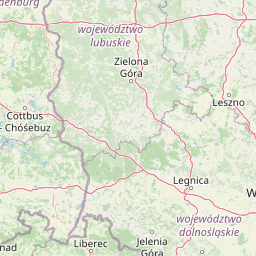
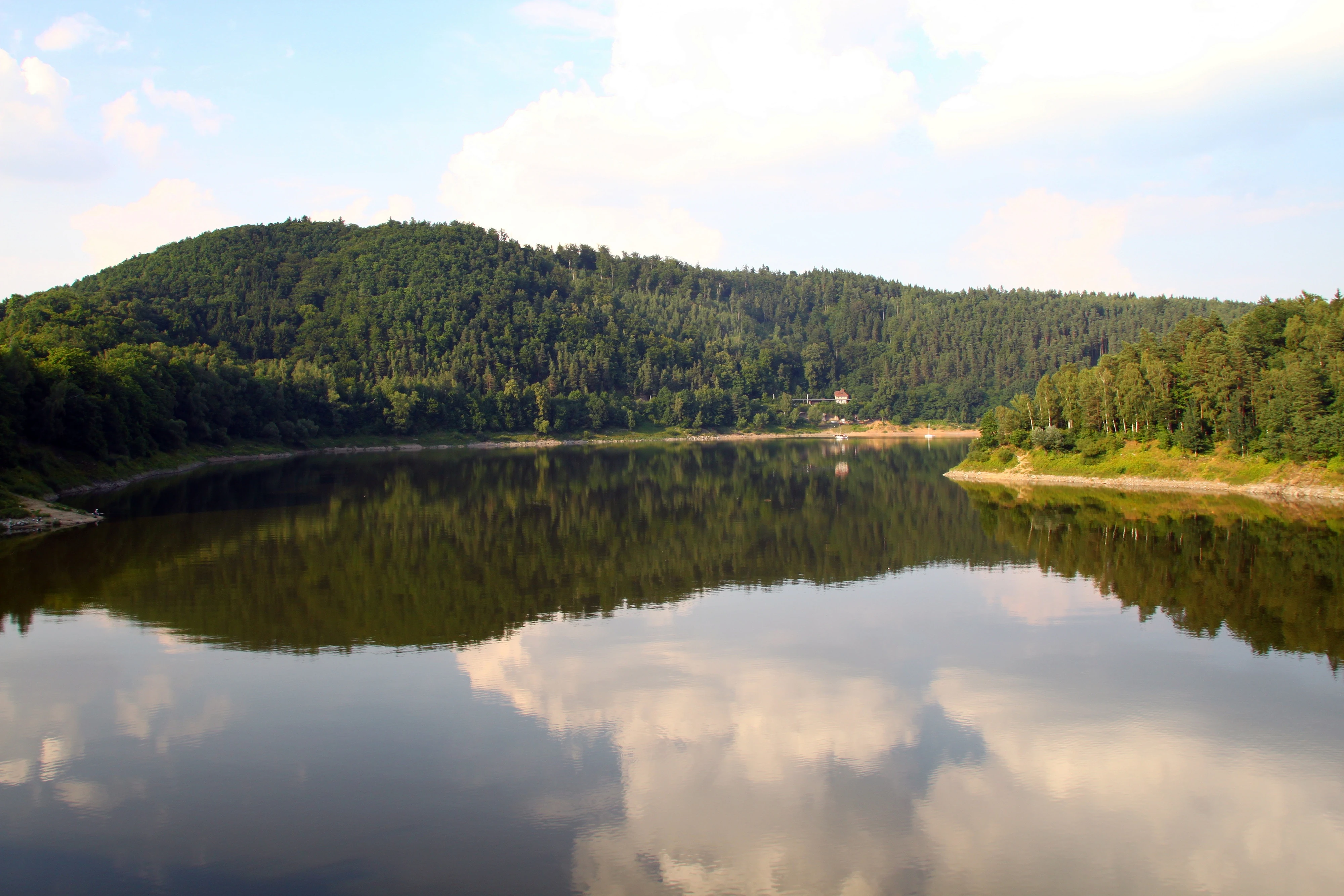
The landscape of Ostoja nad Bobrem is shaped by the Bóbr River and the neighboring uplands of the Pogórze Izerskie, in the northern foothills of the Sudetes. The Bóbr valley forms the central axis of the area, with the river carving between hills that rise in a patchwork of ridges, slopes, and small valleys. The Pilchowickie Lake, an artificial reservoir on the Bóbr, forms one of the recognizable scenic features of the lower part of the valley.
Geologically, the area is unusually varied for a single protected site. The hills framing the river include exposures and outcrops of basalt, limestone, and sandstone, giving rise to different soils, slope angles, and microclimates. This geological diversity drives much of the ecological richness of the area. In places, weathered volcanic and sedimentary rocks produce warm, dry slopes ideal for thermophilic vegetation, while the riverbanks and ravines support floodplain and gallery forest communities.
The resulting scenery is a mix of forested hills, semi-natural grasslands, rocky escarpments, narrow river bends, and reservoir-fringed open water. The landscape visually links the cultivated surroundings of the Lower Silesian towns with the more rugged, forested terrain of the higher Sudetes mountains to the south.
Ostoja nad Bobrem ecosystems, habitats, and plant life
Ecologically, Ostoja nad Bobrem represents a remarkably concentrated mosaic of habitat types. The site contains at least 13 natural habitat types listed under Annex I of the EU Habitats Directive, ranging from priority habitats of European significance to more widespread, but ecologically valuable, forest, meadow, and riverine communities.
The dominant land cover consists of meadows, pastures, and forests, reflecting the long agricultural and forestry history of the region. Among the most ecologically significant habitats are slope oak-hornbeam forests of the Aceri-Tilietum type, of which the area holds one of the largest known stands in Poland. Equally important are the xerothermic grasslands, dry, sun-exposed slopes harboring thermophilic plant communities with a notable proportion of wild orchids, making these habitats a priority for European conservation.
Along the Bóbr River and its tributaries, the area preserves a range of riparian and floodplain habitats. These include willow, alder, poplar, and ash floodplain forests, shifting pioneer vegetation on river gravels and stones, and wet meadows such as the moisture-variable Molinion grasslands. Upland forests are represented by acidic and fertile beech woodlands as well as sycamore and small-leaved lime forests of the Tilio-Acerion type, and tall-herb subalpine communities characteristic of montane river margins.
Together, these habitats form a layered ecological system where river habitats, mixed deciduous forests, dry grasslands, and montane forests coexist within a relatively compact geographic envelope.
Ostoja nad Bobrem wildlife and species highlights
The wildlife of Ostoja nad Bobrem reflects the diversity of its habitats, with a particular focus on species protected under Annex II of the EU Habitats Directive. The area supports eleven such species, spanning mammals, amphibians, fish, and invertebrates, each tied to specific habitat conditions within the site.
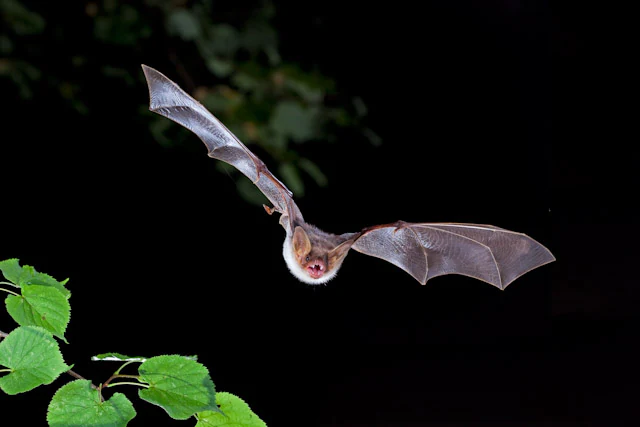
Bats are among the most ecologically significant animal groups. The site is notable for holding what is believed to be the largest known breeding colony of the greater mouse-eared bat (Myotis myotis) in Lower Silesia, located in the church in Wleń. The barbastelle bat (Barbastella barbastellus) is also recorded. These bat populations tie the conservation importance of the area closely to its old buildings, caves, and mature forests.
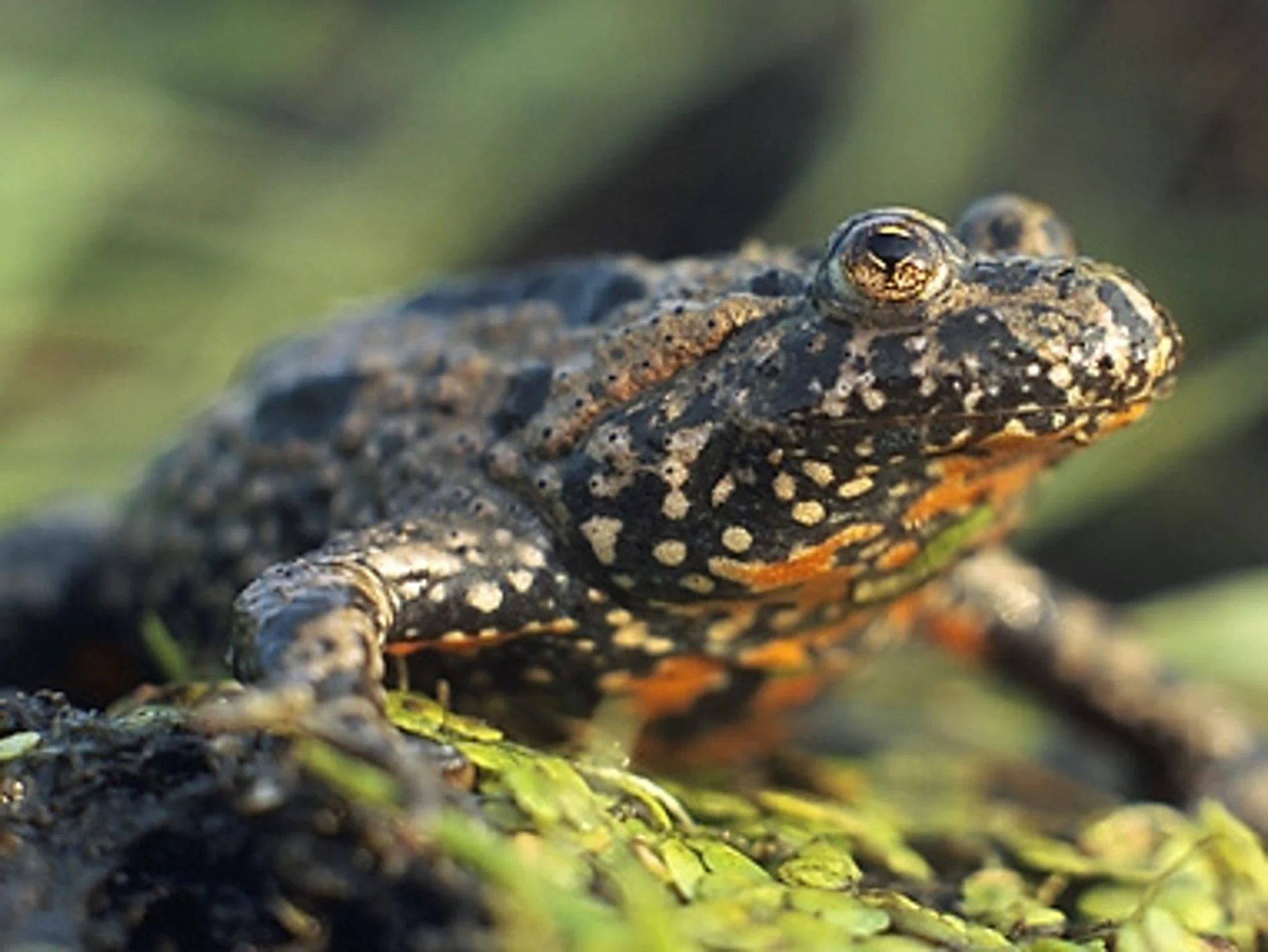
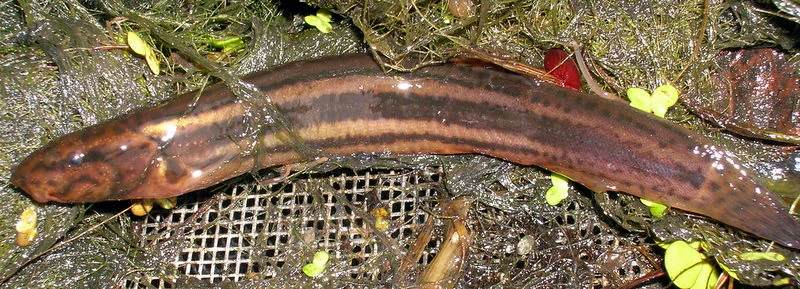
Amphibians are represented by the great crested newt (Triturus cristatus) and the fire-bellied toad (Bombina bombina), both species sensitive to water quality and habitat continuity. The river and stream systems support specialized fish, including the bullhead (Cottus gobio), the European brook lamprey (Lampetra planeri), the bitterling (Rhodeus sericeus), and the weatherfish (Misgurnus fossilis), all of which require clean, well-oxygenated water and intact riverbeds.
Invertebrate diversity is equally notable. The area hosts several species of conservation interest, including the dusky large blue (Phengaris nausithous), the scarce large blue (Phengaris teleius), and the large copper (Lycaena dispar), butterflies that depend on very specific combinations of meadow vegetation and host plants. The presence of these species underscores the value of the area's mosaic of moist meadows, wet grasslands, and water margins.
Ostoja nad Bobrem conservation status and protection priorities
The conservation value of Ostoja nad Bobrem lies in the combination of habitat richness, species of European interest, and strategic geographic position. Designated under the EU Habitats Directive as a Site of Community Importance and confirmed nationally as a Polish special area of conservation, the site is intended to safeguard a defined set of habitats and species of community importance in the long term.
Its particular strength is the concentration of priority habitats. The slope oak-hornbeam forests (Aceri-Tilietum) and the orchid-rich xerothermic grasslands are recognized as priority habitats under the directive, making their protection a matter of European-level importance. The presence of eleven Annex II species further underscores the conservation profile of the site.
Equally important is the site's ecological connectivity. By preserving a natural corridor along the Bóbr valley, Ostoja nad Bobrem links the wider Odra river system to the higher mountain ranges of Karkonosze and Rudawy Janowickie, supporting landscape-level processes such as species dispersal, seasonal migration, and recolonization. Maintaining this corridor function is integral to the coherence of the Natura 2000 network in the Sudetes region.
Conservation management aims to reduce a range of identified pressures, including water and air pollution, illegal waste disposal, intensification of agriculture and forestry, river regulation, and disturbance of bat hibernation sites. Protecting habitat integrity and water quality is central to maintaining the site's overall conservation value.
Ostoja nad Bobrem cultural meaning and human context
The cultural context of Ostoja nad Bobrem is closely tied to the historic towns and landscapes of the Lower Silesian Sudetes foothills. Wleń, situated in the central part of the protected area, is regarded as one of the oldest small towns in Lower Silesia and is renowned for its scenic setting, characterized by the Zamkowa Hill nature reserve and the visible ruins of a medieval castle dating back to the Piast dynasty.
The broader region carries a deep human-history imprint, including medieval grodziska (fortified settlement sites), castles, wayside shrines, and a long tradition of agriculture. Several long-distance hiking routes pass through or near the area, including the Trail of Extinct Volcanoes, the international E3 long-distance footpath, and the Piast Castles Trail, which together link the ecological and cultural heritage of the region.
Tourism in and around the protected area combines walking, cycling, agrotourism, and water-based recreation, drawing on the scenic variety of the river valley and the cultural landmarks of surrounding towns such as Jelenia Góra, Wleń, and Lwówek Śląski.
Top sights and standout views in Ostoja nad Bobrem
Among the strongest points of distinction of Ostoja nad Bobrem are its ecologically diverse Sudetes foothills setting, the unusual concentration of priority habitats, and its function as a key ecological corridor in Lower Silesia. The site combines rocky slopes, river floodplains, meadows, and forests within a single coherent protected area.
A defining feature is its orchid-rich xerothermic grasslands, its nationally important colonies of greater mouse-eared bats, and its mosaic of deciduous forests ranging from hillside oak-hornbeam woodlands to floodplain willow and alder galleries. Together with the surrounding medieval towns and long-distance hiking routes, these features make the area both an ecological stronghold and a culturally rich part of the Polish Sudetes.
Best time to visit Ostoja nad Bobrem
As a habitat-oriented protected area rather than a developed visitor destination, Ostoja nad Bobrem is best appreciated during the warmer months when plant communities are in full display. Late spring and early summer are particularly favorable for seeing the orchid-rich xerothermic grasslands come into bloom, while the broader vegetative season offers the richest experience of meadow, forest, and river habitats.
Late summer and early autumn bring forest color and generally stable weather for exploring the Bóbr valley and the surrounding hills, especially for those combining the visit with hiking routes such as the Piast Castles Trail or the Trail of Extinct Volcanoes. Winter visits can offer quieter wildlife observation possibilities, particularly for bats and forest species, though access conditions in the hills and along the river should be considered. Overall, the area rewards visits focused on landscape, ecology, and cultural heritage rather than seasonal tourist programming.