Why Parc de la Lékédi stands out
Parc de la Lékédi is best known as a converted industrial site turned biodiversity reserve: a place where the infrastructure and workforce of a manganese mining operation were repurposed, after the closure of the 76 km cable transport system, into a working landscape of forest, savanna, lakes, and primate-focused conservation. Its mission expands well beyond tourism, since it serves as a sanctuary and reintroduction zone for confiscated chimpanzees and gorillas, including a recognized western lowland gorilla reintroduction program with the Aspinall Foundation. The reserve is also notable for its great ape populations, its mandrills, the introduced Namibian impalas, and for being an unusual convergence point for primate research carried out with the Franceville-based Centre international de recherches médicales de Franceville and the CNRS. Combined with its savanna and forest mosaic, lakes, and rivers, Lékédi stands out as one of the few places in Gabon where visitors can experience both classic Central African forest wildlife and open savanna scenery on the same estate.
Parc de la Lékédi history and protected-area timeline
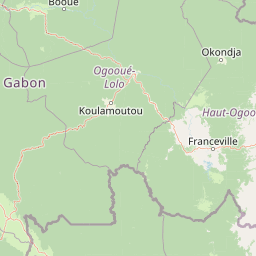
The history of Parc de la Lékédi is inseparable from the mining history of the Haut-Ogooué region. From the 1960s onward, the Compagnie minière du Haut-Ogooué, known as Comilog, transported manganese from its operations in southeastern Gabon to the Republic of the Congo using a cable transport system that stretched roughly 76 km. The midpoint of this system was at Bakoumba, where a maintenance center was established; the town grew rapidly as activity concentrated there.
In 1991, the cable transport was decommissioned after Comilog shifted to transporting manganese by rail. The decision threatened the economic base of Bakoumba, and to keep local employment alive, Comilog, through what became the operating company SODEPAL, decided to develop new activities on the same lands: fish farming and the protection and management of wild animals. This conversion is the direct origin of the Lékédi reserve, which thus began as a strategy of industrial reconversion rather than as a traditional conservation project.
From its early years onward, Lékédi was shaped by the broader Gabonese context of great ape protection. Confiscated chimpanzees and gorillas, many of them young orphans taken from illegal trafficking during anti-poaching operations, were brought to the reserve for rehabilitation and gradual readaptation to forest life. A western lowland gorilla reintroduction program was established in cooperation with the Aspinall Foundation, strengthening the reserve's role as a sanctuary. The expansion of aquaculture, which was initially extensive and later upgraded to semi-intensive production in 1992, complemented the conservation and tourism objectives while keeping Bakoumba economically active.
In 2007, Eric Willaume became the operating director, and SODEPAL, still linked to Comilog and Eramet, continued to maintain employment at a level of approximately fifty staff, mostly based in Bakoumba. The reserve's evolution from mining logistics hub to multi-purpose biodiversity site is the defining thread of its institutional history.
Parc de la Lékédi landscape and geographic character
The landscape of the Parc de la Lékédi is shaped by the geology of southeastern Gabon. The reserve sits on a sandstone formation, and the resulting ferralitic soils are deep, clay-rich, and permeable, supporting the evergreen humid forest that dominates natural vegetation in this part of the country. The terrain is not dramatic in the alpine sense, but it offers a clear mosaic of contrasting environments: dense forest blocks, patches of tree savanna, open savanna, and low-lying marshlands.
The reserve's spatial shape is defined by the surrounding river system. It is about 20 km long and 7 km wide, and it is crossed by several rivers, of which the two most important are the Missombo and the Lékédi. Two large lakes, Lake Lékédi (around 120 ha) and Lake Missombo (around 80 ha), contribute substantially to the open-water character of the site and act as focal points for both wildlife and aquaculture infrastructure.
The savanna-forest mosaic, partly maintained through active cutting to prevent the grasses from masking animals, gives Lékédi a notably different visual profile from purely forested Gabonese landscapes. This mosaic, combined with the lakes and the gently undulating sandstone base, is what gives the reserve both its ecological variety and its distinct scenery.
Parc de la Lékédi ecosystems, habitats, and plant life
Ecologically, Parc de la Lékédi reflects the transition zone between forest and savanna that characterizes parts of southeastern Gabon. The natural vegetation consists of primary and secondary evergreen humid forest, increasingly interspersed as one moves across the reserve with savanna, tree savanna, and wetland forest in the lower-lying areas. The reserve is divided into three modules, each reflecting a different balance of these habitats: a savanna-dominated module of roughly 650 ha, a savanna-forest mosaic module of around 1,750 ha, and the largest module of about 11,600 ha dominated by dense secondary forest.
Notable plant species include the okoumé (Aucoumea klaineana), which is emblematic of Gabonese forests, as well as rattan, tree ferns, the umbrella tree, Aframomum, or wild ginger, and the so-called "liana à eau," a liana that releases large quantities of drinkable water when cut. The reserve also hosts the Barteria tree, locally associated with traditional practices concerning suspected adultery, and is host to the ant colonies that live inside it. No rare or formally protected plant species have been formally inventoried at Lékédi.
The mosaic-style habitats support a wide variety of fauna without artificial feeding. Savanna is preserved through regular cutting to keep grass height low enough for animals to remain visible, and the strict ban on hunting, combined with speed limits for vehicles, has reduced animal stress and made regular sightings more common. This management approach, applied across the mosaic of forest, savanna, and wetland, is what defines the ecological character of Lékédi.
Parc de la Lékédi wildlife and species highlights
The wildlife of Parc de la Lékédi is built around the great apes and a wide range of typical Central African forest fauna. Almost all species present are native to Gabon, the only notable exception being the impala, which was introduced from Namibia. Particular attention is paid to the great ape populations: gorillas and chimpanzees, both protected under Gabonese law, are monitored especially closely. Chimpanzees and gorillas confiscated during anti-poaching operations are progressively reintroduced into forest life at the reserve, which also hosts a recognized western lowland gorilla reintroduction program with the Aspinall Foundation.
Alongside the great apes, Lékédi is home to mandrills, sitatungas, guibs (also called harnessed antelopes), forest buffalo, leopards, and many smaller monkey species. The reserve also supports a wide variety of birds, contributing to the general richness of the site's animal life. Impalas, originally introduced from Namibia, thrive in the open savanna spaces, where their visibility is enhanced by the active savanna management practices.
The reserve's strict rules against hunting and its speed restrictions on internal vehicles are credited with substantially reducing the disturbance of animals, making encounters with buffalo and antelope more frequent. This combination of active wildlife management and the absence of hunting pressure is what gives Lékédi its distinctively approachable wildlife character.
Parc de la Lékédi conservation status and protection priorities
From a conservation standpoint, Parc de la Lékédi fulfills several functions at once. It is a working biodiversity reserve, a sanctuary for great apes confiscated during anti-poaching operations, and a recognized site for the reintroduction of confiscated chimpanzees and gorillas. Through its partnership with the Aspinall Foundation, Lékédi hosts a reintroduction program for western lowland gorillas (Gorilla gorilla gorilla), which is one of the more notable primate reintroduction efforts in central Africa.
The reserve also serves as a research platform for primatology. It collaborates with the Centre international de recherches médicales de Franceville, the CIRMF, and the CNRS on ethological and medical studies of monkeys and great apes, including work on mandrills. These scientific programs make Lékédi a valuable site for primate research, especially given the unusual combination of resident ape populations, savanna open spaces, and the strict environmental controls typical of the reserve.
Hunting is prohibited inside the reserve, and strict speed limits for vehicles are enforced. These measures are designed to reduce stress on the animals and make observation possible without disturbing them. Beyond the conservation of the animals and habitats themselves, the reserve's model demonstrates how former industrial sites and their local workforces can be redirected toward conservation, animal welfare, aquaculture, and research.
Parc de la Lékédi cultural meaning and human context
The cultural context of Parc de la Lékédi is shaped primarily by the history of Bakoumba and the broader mining heritage of the Haut-Ogooué. The town of Bakoumba grew around the maintenance center of the Comilog cable transport system, a 76 km structure used from the 1960s to the early 1990s to move manganese to the Republic of the Congo. When this system was decommissioned in 1991, the future of the town depended on new activities developed on the same site, which became the Lékédi reserve, the aquaculture operations, and the tourism activities that employ approximately fifty staff today.
Traditional plant uses are still referenced within the reserve's vegetation. The Barteria tree, sometimes known locally as the "adultery tree" or "arbre adultère," is associated with traditional practices in which women suspected of adultery were bound to the tree; the tree also hosts large colonies of ants. The "liana à eau," a water-bearing liana that yields drinkable water when cut, similarly reflects traditional knowledge of the forests.
The reserve itself, however, is not primarily framed as a heritage or cultural site. Its cultural identity is rooted more in the industrial reconversion story and in the local Gabonese management structure tied to Comilog and Eramet than in explicit indigenous or ethnographic traditions.
Top sights and standout views in Parc de la Lékédi
Among the reserve's most distinctive qualities, the savanna-forest mosaic stands out as a defining visual and ecological trait, especially given that most protected areas in Gabon are primarily associated with dense forest. The two large lakes, Lake Lékédi and Lake Missombo, contribute both to the open scenery and to the aquaculture and wildlife observation opportunities.
Another defining highlight is the role of the reserve as a great ape sanctuary: chimpanzees and gorillas confiscated during anti-poaching operations are rehabilitated on-site, and the partnership with the Aspinall Foundation gives the reserve a recognized place in gorilla reintroduction work. The active primate research agenda, conducted with the CIRMF and CNRS and centered on mandrills, chimpanzees, and gorillas, adds a further dimension.
The reserve's industrial reconversion story, from Comilog mining operations to a multi-purpose reserve and aquaculture site with about 120 tons of tilapia per year, is itself a notable feature. Together, these elements make Lékédi a site of unusual depth, where biodiversity, animal welfare, research, tourism, and aquaculture converge on former mining infrastructure.
Best time to visit Parc de la Lékédi
The climate of southeastern Gabon is tropical and warm throughout the year, so seasonality at Lékédi is shaped more by rainfall patterns than by temperature changes. Generally, drier periods tend to favor clearer sightings in the savanna modules, since lower grass height, partly maintained by management, is combined with less dense understory; the savanna cutting program further helps expose animals for observation.
Wet periods often correspond to a greener landscape, more active waterbird presence around Lake Lékédi and Lake Missombo, and more lush forest conditions. Activities, including half-day guided visits focused on gorillas, chimpanzees, impalas, and mandrills, are designed to be conducted throughout the year. Visitors can therefore approach timing based on preferences for clearer savanna sightings versus lusher forest and waterbird conditions, without there being a strictly closed period for natural-area enjoyment.