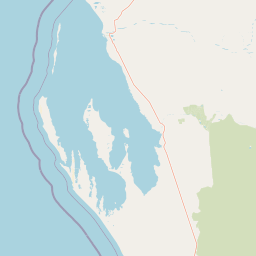
Why Pimbee National Park stands out
Pimbee National Park is best known as a newly established protected area representing the Carnarvon xeric shrublands bioregion of Western Australia. The park is notable for its joint management arrangement with the traditional Yingkarta people through the Yinggarda Aboriginal Corporation, reflecting contemporary approaches to Indigenous co-management of protected lands. As an arid-zone protected area in the Gascoyne region, it contributes to the conservation of semi-desert ecosystems that are poorly represented in Australia's protected area network. The park's establishment also connected with the parallel expansion of Kennedy Range National Park, creating a broader contiguous conservation landscape on Yingkarta country.
Pimbee National Park history and protected-area timeline
The establishment of Pimbee National Park represents the culmination of several years of conservation planning and negotiation. A proposal for a Pimbee Conservation Park was developed in 2019, envisioning protection of approximately 99,000 hectares on the former Pimbee leasehold property located north of the Wooramel River. This proposal was subsequently listed as in progress within the 2022 Collaborative Australian Protected Areas Database, indicating ongoing work toward formal protection.
In August 2023, the Pimbee Conservation Park proposal was realized through the formal declaration of Pimbee National Park. This establishment occurred alongside a significant expansion of Kennedy Range National Park, which also lies within Yingkarta country. The parallel declarations reflected a coordinated approach to expanding protected area coverage in the Gascoyne region while establishing collaborative management frameworks with traditional owners. At the time of establishment, plans were announced for the employment of four Yingkarta rangers based at Gascoyne Junction to support management operations across both protected areas. This marked a practical step toward integrating Indigenous participation in the day-to-day management of these newly protected landscapes.
Pimbee National Park landscape and geographic character
The landscape of Pimbee National Park reflects the characteristic terrain of the Carnarvon xeric shrublands bioregion, an extensive area of arid Western Australia dominated by low-lying shrubland and open woodland on ancient landscapes. The terrain consists primarily of stony plains and gently undulating terrain, with occasional low ridges and hills breaking the otherwise flat horizon. Drainage lines, including the Wooramel River system to the south, create linear features through the landscape but typically carry water only intermittently following rainfall events in this region of highly variable precipitation.
Vegetation across the park consists of dense shrubland dominated by species adapted to arid conditions, including various acacia species, saltbush, and other chenopod shrubs that characterize much of Australia's arid interior. The low, open canopy of the shrubland allows for substantial ground exposure, with soils typically consisting of red-brown earths and stony mantles derived from the ancient continental basement rocks. The overall visual character is one of vast, open space with a tapestry of grey-green foliage punctuated by the occasional flowering of drought-resistant plants following rainfall.
Pimbee National Park ecosystems, habitats, and plant life
Pimbee National Park lies within the Carnarvon xeric shrublands bioregion, one of Australia's extensive arid-zone bioregions that support distinctive ecosystems adapted to harsh, water-limited conditions. The bioregion is characterized by shrubland communities dominated by acacias, eremophilas, and chenopod shrubs that form a mosaic across the landscape. These plant communities have evolved sophisticated adaptations to survive extended dry periods and capitalize on infrequent rainfall events that trigger brief periods of productivity.
The biodiversity of arid Western Australia, while less visually dramatic than tropical or temperate environments, includes numerous specialized species found nowhere else. The region's isolation has driven evolution of endemic species adapted to specific habitat niches within the scrubland environment. Birdlife includes various desert-adapted species, while reptiles constitute a significant component of the vertebrate fauna, with numerous lizard and snake species occupying different ecological roles within the arid ecosystem.
Pimbee National Park wildlife and species highlights
The wildlife of Pimbee National Park represents the adapted fauna of Australia's arid interior, a fauna that has evolved remarkable strategies for surviving in an environment characterized by extreme temperatures, limited water availability, and highly unpredictable resource availability. Reptiles form a major component of the vertebrate fauna, with various skinks, geckos, dragons, and snakes occupying the diverse microhabitats provided by the shrubland environment. These cold-blooded animals are well-suited to the variable thermal conditions, using burrows and shelter sites to moderate body temperature.
Bird species present include various parrots, honeyeaters, and birds of prey adapted to arid environments. Desert birds have evolved behaviors such as nomadism, moving in response to rainfall and resource availability across the vast arid zone. Mammals in similar arid environments tend to be small and nocturnal, sheltering during the heat of the day and emerging at night to forage. Kangaroos and wallabies occur in appropriate habitats, while small marsupials such as dunnarts and planigales occupy niche roles within the ecosystem.
Pimbee National Park conservation status and protection priorities
The establishment of Pimbee National Park contributes to the conservation estate in a region where protected area coverage has been limited relative to more populous parts of Australia. The Carnarvon xeric shrublands bioregion, while extensive, has historically had relatively little formal protection, making new protected areas like Pimbee significant for biodiversity conservation. The park helps protect representative examples of arid-zone ecosystems and the species they support.
The joint management arrangement with the Yingkarta people represents an important conservation model that combines western scientific conservation approaches with traditional Indigenous knowledge and land management practices. This collaborative framework is increasingly recognized as essential for effective conservation in Australian landscapes, particularly in remote arid zones where resources for park management are limited. The employment of Yingkarta rangers at Gascoyne Junction to manage Pimbee and the expanded Kennedy Range National Park demonstrates a practical commitment to Indigenous involvement in conservation management.
Pimbee National Park cultural meaning and human context
Pimbee National Park is situated on the traditional lands of the Yingkarta people, an Aboriginal group with deep historical connections to the arid landscapes of the Gascoyne region. The park's establishment explicitly acknowledges Yingkarta peoples as the traditional owners of the land, and the involvement of the Yinggarda Aboriginal Corporation in joint management reflects contemporary recognition of Indigenous rights and the value of traditional ecological knowledge in land stewardship.
The landscape has been part of Yingkarta Country for thousands of years, with Indigenous heritage values embedded in the physical and cultural landscape. The joint management arrangement represents not only a conservation milestone but also an important step in reconciliation and recognition of Aboriginal connection to Country. This model acknowledges that Indigenous peoples have maintained these landscapes through sophisticated land management practices over millennia, and that their continued involvement is essential for both cultural and ecological outcomes.
Top sights and standout views in Pimbee National Park
Pimbee National Park represents a significant recent addition to Western Australia's national park system, providing protected status to a representative area of the Carnarvon xeric shrublands bioregion. The park's joint management arrangement with the Yingkarta people through the Yinggarda Aboriginal Corporation exemplifies contemporary best practice in protected area management, integrating Indigenous knowledge and participation. As one of the newest protected areas in Western Australia, Pimbee offers the opportunity to establish management programs from the outset that incorporate both scientific and traditional approaches to conservation. The connection with the expanded Kennedy Range National Park creates a broader conservation landscape under collaborative management, with Yingkarta rangers providing on-ground stewardship across both areas.
Best time to visit Pimbee National Park
Visiting Pimbee National Park requires consideration of the extreme conditions characteristic of Western Australia's arid interior. The most comfortable season for exploration typically falls during the cooler winter months from May to September, when daytime temperatures are more moderate and overnight lows are not as severe. Summer temperatures in the Gascoyne region can be very high, making outdoor activity during daylight hours challenging and potentially dangerous. Visitors should be aware that the park, being newly established, may have limited visitor facilities and infrastructure compared to more established national parks. Those planning visits should ensure they are well-prepared for remote area travel, including carrying sufficient water, informing others of their plans, and being aware of the distance from Towns and medical facilities.