Why Prales Jizera stands out
Prales Jizera is best known for preserving one of the last remnants of high-elevation climax spruce forest in the Jizera Mountains, along with characteristic summit granite outcrops and boulder screes. The reserve showcases the resilience of mountain spruce ecosystems at the edge of their natural climatic range, where trees grow in stunted, wind-resistant forms. It is also recognized as a landmark conservation site because it captures the long recovery story of Central European mountain forests after severe industrial pollution and bark beetle damage.
Prales Jizera history and protected-area timeline
Prales Jizera has a long history as a recognizable protection site within the Jizera Mountains. The summit of Mount Jizera was historically covered by coniferous forest, with minimal timber harvesting because of the difficult terrain. On 21 June 1960, the area was formally declared a nature reserve by the Czechoslovak Ministry of Education and Culture, then reissued on 19 October 1965 by the same authority, and confirmed again through later amendments under the Ministry of Culture in December 1987 and under the Ministry of the Environment in August 1992. These re-declarations reflect the evolving legal framework for nature protection in the Czech Republic, while the reserve itself remained a continuous protected entity.
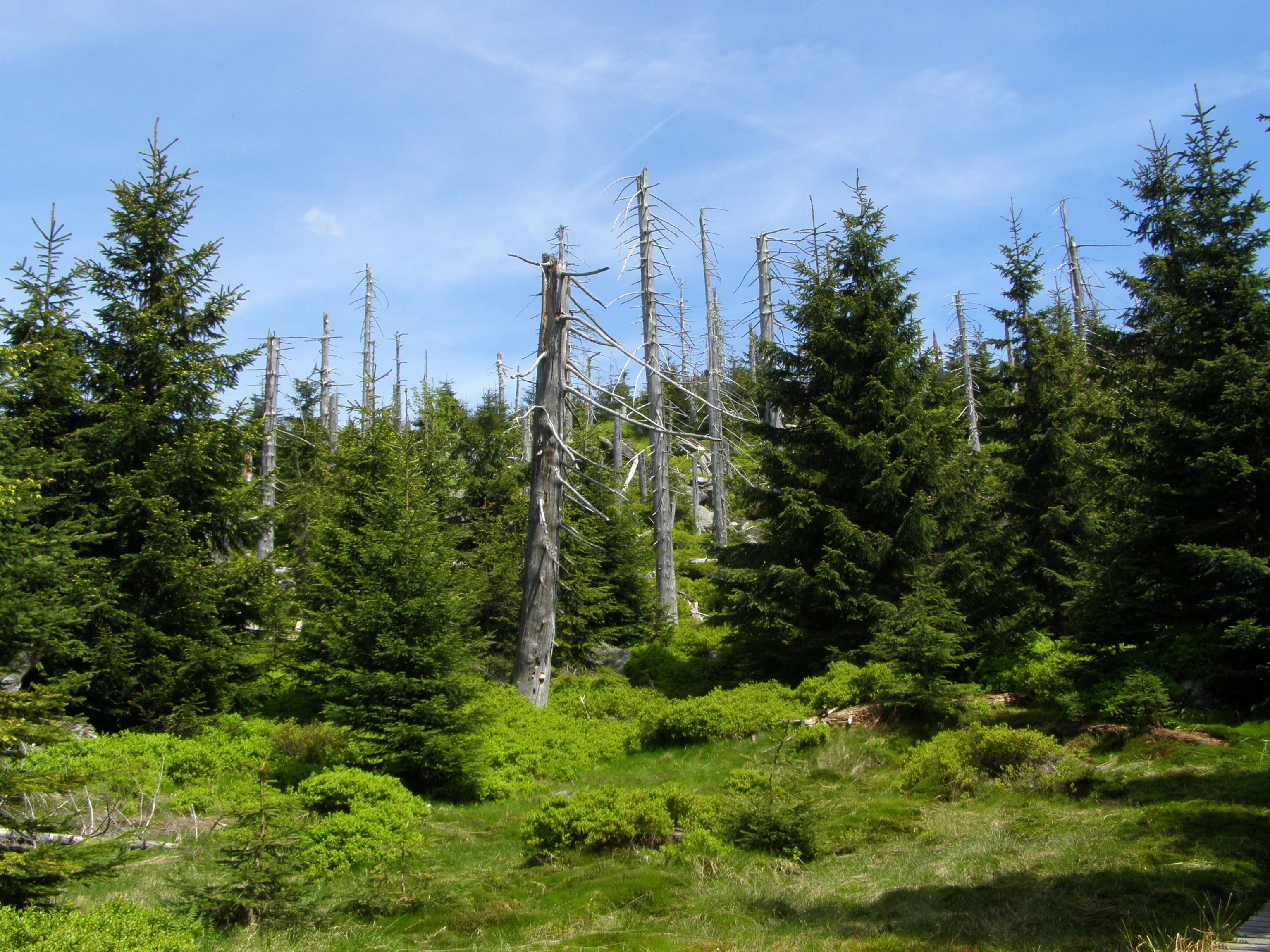
The forest of Prales Jizera was severely degraded during the second half of the twentieth century. Acid rain driven by sulfur dioxide emissions from industrial sources in neighboring countries weakened soils and trees, leading to windthrow and widespread dieback. A major storm in 1966 felled old-growth trees across roughly 30 hectares, and most of the broken timber was removed, leaving a sizable clearing. A bark beetle outbreak peaking between 1983 and 1986 compounded the damage, and many of the remaining dead trees on the reserve were deliberately left in place to decompose naturally rather than being harvested.
Restoration efforts began in 1976 with a plan to reforest the clearings, primarily using silver spruce, oak, birch, and rowan, although planting was not fully carried out until 1980. A second major restoration phase between 1994 and 1995 covered about 45 hectares with seedlings, including substantial use of non-native blue spruce and dwarf pine alongside local sources. The reserve has also been the focus of ecological inventories, including botanical surveys in 1980 and 1990, ground beetle research in 1991 and 1994, spider surveys between 1993 and 1999, and orthoptera inventory work in 2001.
Prales Jizera landscape and geographic character
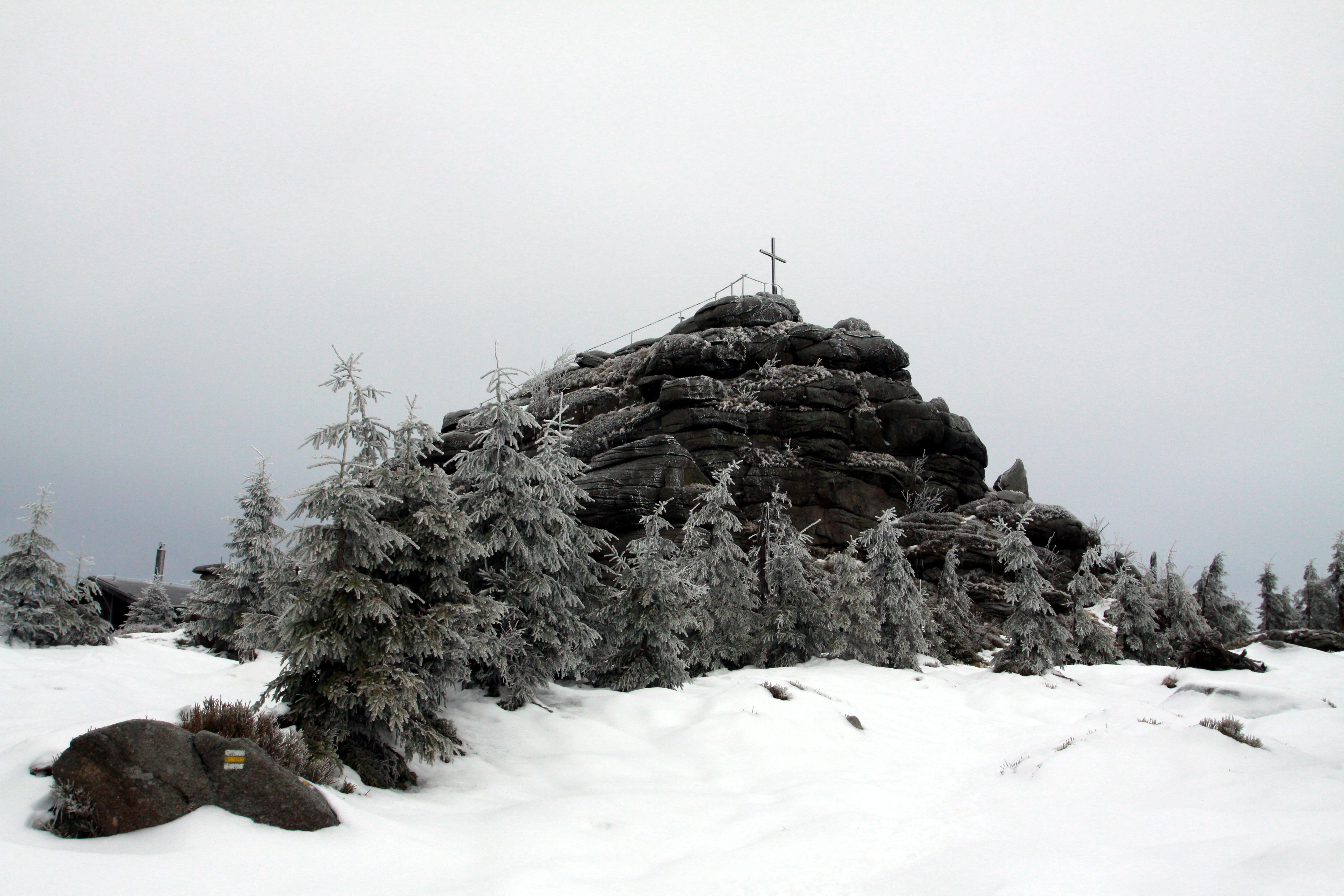
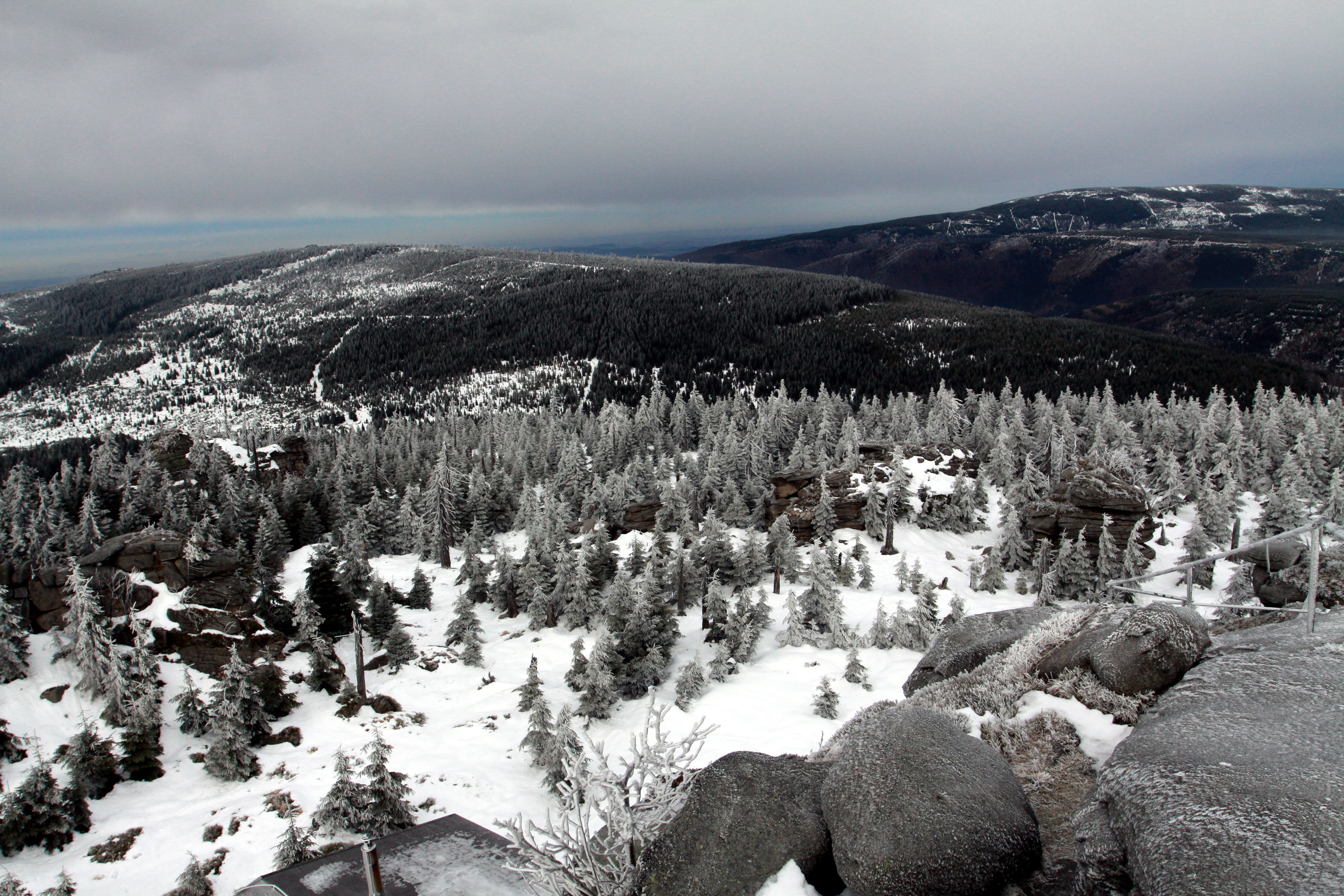
The landscape of Prales Jizera is shaped by the summit geomorphology of Mount Jizera and the broader Jizera Mountains highland terrain. Thirteen separate granite rock bodies rise above the surrounding forest, forming characteristic summit outcrops and blockfields. Much of the reserve is covered by acidic climax spruce forest of the Calamagrostio villosae-Piceetum type, where mature and middle-aged spruce trees dominate a tightly contoured mosaic of rock, soil, and vegetation. About three percent of the area is covered by boulder scree fields, and a further small share supports peat-forming forest stands, especially toward the eastern part of the reserve.
The terrain is strongly influenced by glacial and periglacial processes that have produced frost-shattered rock, mrazové sruby rock formations, and steep boulder accumulations. Coarse porphyritic granite dominates the bedrock, broken locally by fine-grained granite variants that weather into extensive screes. Soil cover is shallow and nutrient-poor, dominated by peaty podzol with patches of regosol and peaty gleys, which reinforces the harsh upland character of the site.
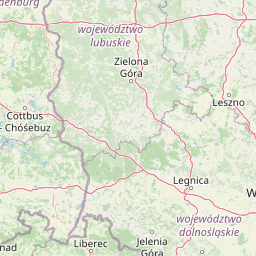
A distinctive hydrological feature of the reserve is its position on the main European watershed. Rainfall that falls on the northern slope ultimately drains into the Smědá river system and onward to the Baltic Sea, while precipitation on the southern slope feeds the Desná river and reaches the North Sea via the Elbe basin. Although no permanent streams flow within the reserve itself, springs are found just outside its protected boundaries.
Prales Jizera ecosystems, habitats, and plant life
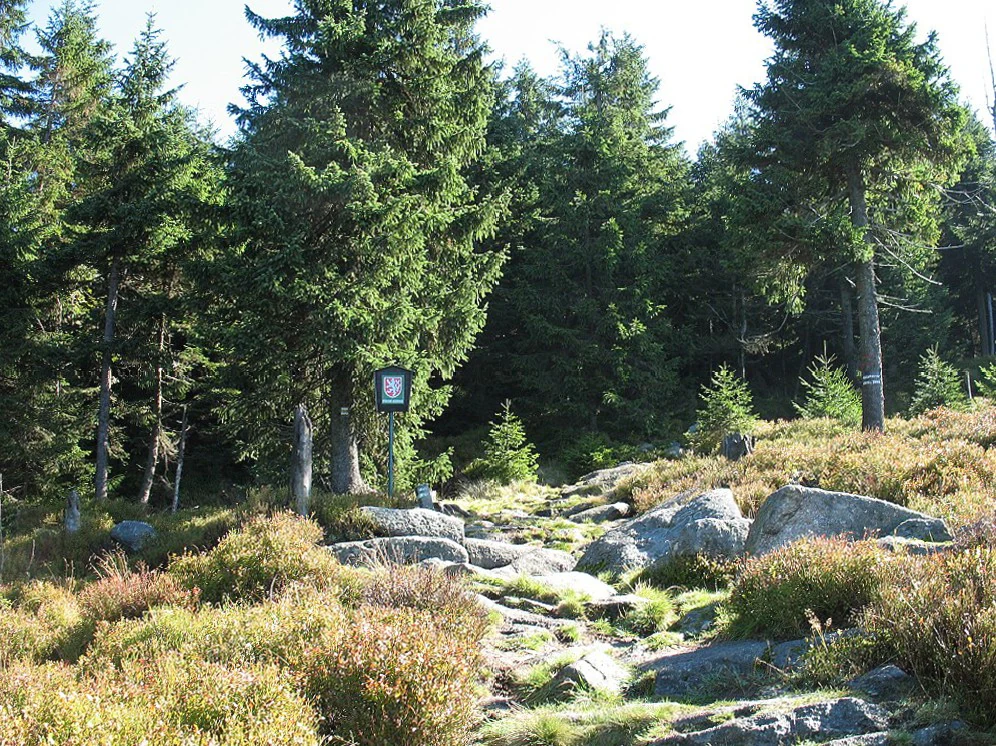
Prales Jizera protects a representative sample of upland spruce forest ecosystems that occur at the climatic edge of spruce's natural range in Central Europe. The dominant vegetation type is mountainous acidophilous spruce forest, in which spruce dominates the canopy together with rowan, while the understory supports blueberry shrubs, mosses, lichens, and scattered dwarf shrubs across the boulder screes. The slow-growing, wind-shaped spruce trees illustrate how species composition and tree form respond directly to severe mountain climate.
Botanical diversity within the reserve includes typical Jizera Mountains species such as dwarf mountain pine, white false hellebore, alpine blue sow-thistle, willow gentian, black crowberry, fir clubmoss, and mountain lady fern. These collectively give the protected area a strong subalpine character despite its relatively modest elevation. The reserve's peat-influenced soils and exposed rock communities also support a mosaic of microhabitats that contribute to its biodiversity.
Because of its position, elevation, and recovery dynamics, Prales Jizera functions as a key reference site for understanding how high-elevation spruce forests in the Jizera Mountains respond to atmospheric stress, storms, insect outbreaks, and active restoration. The reserve's vegetation mosaic continues to evolve from heavily damaged twentieth-century forest toward a more natural composition, while still preserving features that echo its primeval character.
Prales Jizera wildlife and species highlights
Wildlife in Prales Jizera reflects the broader fauna of the Jizera Mountains' high-elevation spruce forests and rock habitats. Reptiles recorded in the area include the viviparous lizard, which is strongly protected in the Czech Republic, and the common European adder, which is considered critically threatened. The combination of open boulder fields, regenerating forest, and decaying wood provides shelter and basking sites for these species in an otherwise cold and exposed environment.
The reserve and its surroundings support notable breeding birdlife. Confirmed or characteristic breeding species in and around the protected area include the red crossbill, the meadow pipit, the common raven, and the spotted nutcracker. The surrounding forests also host the boreal owl, which ranges into the reserve for foraging. The site's inclusion in the Jizera Mountains Bird Protection Area further highlights the importance of the broader landscape for forest and mountain bird communities.
Invertebrate surveys have also given Prales Jizera a distinctive entomological profile. Research in the 1990s documented several ground beetle and spider communities, and an orthoptera inventory in 2001 added information about grasshoppers and related insects in the reserve's mosaics of spruce forest, peat substrate, and open boulder fields. Together these findings mark the reserve as a small but ecologically rich site for upland fauna.
Prales Jizera conservation status and protection priorities
Prales Jizera is a flagship conservation site for the Czech side of the Jizera Mountains, recognized as the oldest nature reserve in the range. Its formal status as a protected area combines with overlap onto larger landscape and European designations, including the Jizera Mountains Protected Landscape Area, the Jizera Mountains Bird Protection Area, and a Natura 2000 site. This layered recognition reflects the reserve's role in maintaining habitat continuity, high-elevation spruce forest, and species populations across a heavily transformed mountain region.
The reserve's conservation significance is closely tied to its recovery history. Twentieth-century atmospheric pollution, storms, and bark beetle outbreaks reduced much of the original spruce forest to dead wood, clearings, and degraded stands. By leaving dead trees in place within the reserve rather than harvesting them, managers preserved habitat structure and supported natural regeneration. Subsequent replanting brought significant non-native species into the system, particularly blue spruce and dwarf pine, and current management seeks to gradually remove these non-native elements and restore a more natural species composition.
Long-term conservation planning for the reserve focuses on transitioning the current forest toward a near-natural state reminiscent of primeval forest character, rather than seeking an exact restoration. The reserve's management plan recommends the gradual elimination of non-native dwarf pine over roughly a twenty-year horizon, particularly on boulder fields and scree, paired with continued natural regeneration of native spruce and associated species.
Prales Jizera cultural meaning and human context
Although Prales Jizera is primarily valued for its natural character, the summit of Mount Jizera also carries modest cultural significance. The highest rock outcrop of Mount Jizera is marked by a large wooden cross and equipped with a ladder that allows visitors to climb up to a viewpoint, suggesting a tradition of marking and visiting the peak that long predates modern nature tourism. The reserve itself has no permanent settlements or built infrastructure beyond footpaths, and its management is carried out by the Czech Agency for Nature Conservation and Landscape Protection.
The surrounding municipality of Hejnice has historically been tied to the Jizera Mountains as a gateway for visitors and pilgrims, and the ridge on which the reserve sits forms part of that broader regional landscape. Today the reserve contributes to the identity of the Jizera Mountains as both a recreational and a conservation destination, even though access is limited to footpaths and the area itself remains strongly oriented toward ecological rather than cultural significance.
Top sights and standout views in Prales Jizera
Prales Jizera is distinguished by combining a summit-area primeval spruce forest, granite blockfields, and a layered legal protection status within a single compact reserve. Its thirteen exposed granite rock bodies, boulder screes, and thin upland soils support a characteristic mix of climax spruce forest and specialized microhabitats. The reserve's ongoing transformation from a pollution-damaged forest to a near-natural mountain forest, including the gradual removal of non-native spruce and dwarf pine, gives it a strong ecological storyline. Its inclusion in the broader Jizera Mountains Protected Landscape Area and the Jizera Mountains Bird Protection Area reinforces its value as a landmark conservation site in northern Bohemia.
Best time to visit Prales Jizera
Because Prales Jizera is a high-elevation mountain reserve, visitors should expect conditions typical of the Jizera Mountains rather than lowland weather. Summer and early autumn usually offer the most comfortable experience, with warmer temperatures, longer daylight hours, and generally stable trail conditions, although rain and rapid weather changes are common. Winter brings deep snow, freezing temperatures, and short days, but also offers a strikingly atmospheric view of the stunted spruce, snow-covered boulder fields, and granite outcrops. Spring is often muddy and cold, with lingering snow patches and active regeneration of the forest understory. The reserve is accessible only on foot, so visiting outside peak winter conditions is generally recommended for most hikers.