Mori Atlas logo
National parkPukaskwa National Park

Discover the geographic context and protected land identity of Pukaskwa National Park.

Pukaskwa National Park: Mapped Boundaries and Protected Landscape Geography in Thunder Bay District

Pukaskwa National Park stands as a significant protected area, offering a unique lens into the geography of Thunder Bay District. This national park provides essential context for understanding the distribution of conservation landscapes and mapped natural terrain within its region. Explore the distinct geographic features and protected boundaries that define Pukaskwa National Park, enriching your atlas-based discovery of Canada's protected lands.

Boreal forestLake Superior coastlineBackcountry hikingRemote wildernessGreat Lakes protectionIndigenous heritage

Pukaskwa National Park

National park

Park overview

Structured park overview, official facts, and landscape profile for Pukaskwa National Park

Pukaskwa National Park park facts, protected area profile, and essential visitor context
Review the core facts for Pukaskwa National Park, including designation, size, terrain, visitor scale, habitats, and operating context in one park-focused overview.

About Pukaskwa National Park

Pukaskwa National Park occupies a striking position along the north shore of Lake Superior in northern Ontario, roughly 150 kilometres east of Thunder Bay. The park was established in 1978 and remains one of Canada's less-visited national parks, appealing to those seeking genuine wilderness isolation rather than accessible nature tourism. The terrain is characterized by ancient Precambrian bedrock sculpted by glacial activity, creating a landscape of rounded hills, rocky ridges, and spectacular cliff faces that drop directly into Lake Superior. The park protects headland ecosystems, sheltered harbours like Picture Rock Harbour, and the river systems that drain the boreal uplands into the lake. The name Pukaskwa carries cultural significance, with the Ojibway and Cree nations maintaining that Pukasu represents the correct spelling, referring to a traditional method of cooking marrow from animal bones over open fires. The park's remoteness is its defining characteristic: there is no road access to the interior, and visitors must be prepared for self-sufficient backcountry travel or paddle the coastal waters.

Quick facts and research context for Pukaskwa National Park

Located in the Thunder Bay District of northern Ontario, Pukaskwa National Park protects a critically significant stretch of undeveloped Great Lakes coastline. The park features the 60-kilometre Coastal Hiking Trail, one of Ontario's most remote and challenging backcountry routes, along with shorter alternatives like the Mdaabii Miikna trail opened in 2017. The landscape is characterized by boreal forest ecosystems, cobblestone beaches, and ancient Indigenous archaeological sites known as Pukaskwa Pits scattered along the shoreline. The park falls under the management of Parks Canada and receives approximately 17,000 visitors annually.

Park context

Deeper park guide and search-rich context for Pukaskwa National Park

Pukaskwa National Park history, landscape, wildlife, and travel context
Explore Pukaskwa National Park through its history, landscape character, ecosystems, wildlife, conservation priorities, cultural context, and seasonal travel timing in a structured park guide built for atlas discovery and search intent.

Why Pukaskwa National Park stands out

Pukaskwa National Park is best known for preserving the longest undeveloped shoreline on the Great Lakes, a remarkable feat given the extensive industrial and recreational development along these massive freshwater seas. The park protects a transition zone where the boreal forest meets Lake Superior, creating a distinctive landscape of rocky headlands, cobble beaches, and dense forests. Its backcountry hiking trail system, featuring two dramatic suspension bridges across the White River and Willow River, draws experienced hikers seeking remote wilderness experiences. The park also contains rare Arctic-alpine plant species at their northernmost Canadian range, including populations of Pitcher's thistle growing in coastal dune areas.

Pukaskwa National Park history and protected-area timeline

Pukaskwa National Park was established in 1978 as part of Canada's national park system, representing a commitment to preserving the environmental integrity of the Lake Superior shoreline. Prior to designation, the area had limited industrial development due to its remote location and challenging terrain, leaving much of the landscape in a relatively natural state. The creation of the park protected both ecological values and cultural heritage sites, including the ancient Pukaskwa Pits, thousand-year-old stone structures created by Indigenous peoples that remain visible on cobblestone beaches throughout the park. The park's management by Parks Canada has focused on maintaining wilderness character while providing minimal infrastructure for backcountry access. The most recent State of the Park Report was published in 2008, providing a comprehensive assessment of ecological conditions at that time.

Pukaskwa National Park landscape and geographic character

The physical landscape of Pukaskwa National Park is defined by the intersection of the boreal uplands with the massive waters of Lake Superior. The park's coastline features dramatic rocky headlands, cobble and boulder beaches, and small sheltered harbours formed where rivers enter the lake. The highest point within the park is Tip Top Mountain, rising to 641 metres above sea level and providing panoramic views of the surrounding wilderness and lake. The interior contains a network of rivers including the Pukaskwa River, White River, Swallow River, Willow River, and Cascade River, each cutting through the boreal forest and creating cascading waterfalls such as Cascade River Falls. The landscape shows the influence of glaciation, with rounded rock formations, glacial erratics, and well-developed beach systems where wave action has sorted cobbles into distinctive ridges.

Pukaskwa National Park ecosystems, habitats, and plant life

Pukaskwa lies at the heart of Canada's boreal forest ecozone, where the typical coniferous forest of black spruce, white spruce, jack pine, and eastern white cedar dominates the upland areas. Trembling aspen and white birch provide deciduous variety throughout the forest matrix. The park is notable for containing plant species more typical of Arctic and alpine environments, including encrusted saxifrage, birds-eye primrose, and butterwort, which survive in specialized microhabitats along the coast. The park hosts the northernmost populations of Pitcher's thistle in Canada, with four self-sustaining colonies growing in coastal dune areas. Rare plant species including Franklin's lady-slipper and mountain huckleberry also occur within the park boundaries. The forests support numerous lichen and moss species, with sphagnum, reindeer moss, and lungwort varieties common in wetter areas.

Pukaskwa National Park wildlife and species highlights

The boreal forests of Pukaskwa support a classic array of Canadian wildlife species. Large mammals include moose, which are common in the forest wetlands, and black bears, which range throughout the park. Historically, the park supported a small population of boreal woodland caribou, though these animals have been locally extirpated due to wolf predation, declining from approximately 30 individuals in the 1970s to just four by 2012, with the last confirmed sighting in 2017. Medium-sized mammals include beavers, river otters, Canada lynx, and timber wolves, with the wolf population playing a significant ecological role as the primary predator affecting caribou survival. Bird species are well-represented, with bald eagles nesting along the shoreline and peregrine falcons hunting from cliff ledges. The coastline provides important habitat for waterbirds and migratory species moving along the Great Lakes flyway.

Pukaskwa National Park conservation status and protection priorities

Pukaskwa National Park represents a critical conservation area for several reasons. It protects the longest undeveloped shoreline on the Great Lakes, preserving natural coastal processes and wildlife habitat that has been lost or degraded throughout most of the Great Lakes region. The park maintains ecological corridors allowing wildlife to move between inland forests and lakeshore habitats. The protection of rare plant populations, particularly the Pitcher's thistle colonies and Arctic-alpine species at their range limits, ensures genetic diversity and evolutionary potential. The boreal forest ecosystem stores significant carbon and provides watershed protection for rivers flowing into Lake Superior. The presence of ancient Pukaskwa Pits on the beaches also preserves cultural heritage sites of significance to Indigenous peoples.

Pukaskwa National Park cultural meaning and human context

The name Pukaskwa carries deep cultural meaning rooted in Indigenous tradition. While English sources suggest possible translations like "eaters of fish" or "something evil," the Ojibway and Cree nations maintain that Pukasu describes the traditional practice of cooking marrow from animal bones in open fires, a culturally significant preparation method. The park contains numerous Pukaskwa Pits, ancient stone structures created by the original inhabitants of this region, estimated to be around a thousand years old. These structures can be found on many of the park's cobblestone beaches, representing physical evidence of Indigenous presence and land use long before European contact. The landscape has supported Indigenous communities for generations through its fish, game, and plant resources.

Top sights and standout views in Pukaskwa National Park

The defining highlight of Pukaskwa National Park is its remarkable shoreline, the longest undeveloped stretch along the Great Lakes, where rocky headlands meet the cold waters of Lake Superior in near-pristine condition. The Coastal Hiking Trail offers one of Ontario's most remote backcountry experiences, with suspension bridges spanning major rivers and campsites positioned to allow multi-day wilderness traversals. The shorter Mdaabii Miikna trail provides an Ojibwe-named alternative following the coastline through Picture Rock Harbour. Ancient Pukaskwa Pits scattered along beaches connect visitors to Indigenous heritage spanning millennia. The boreal forest setting, with its mix of coniferous and deciduous species, creates a distinctive northern wilderness character that differs markedly from more accessible southern parks.

Best time to visit Pukaskwa National Park

Pukaskwa National Park is best visited during the warmer months from late May through September, when trail conditions are favorable and the backcountry is accessible. The summer months offer the warmest temperatures and longest daylight hours for hiking and paddling, though mosquito and black fly activity can be significant in early summer. The shoulder seasons of late spring and early fall provide fewer visitors and changing scenery, though trail conditions may be more challenging and some services limited. Winter visits are not typical due to heavy snowfall and extreme cold, with temperatures regularly dropping below minus twenty degrees Celsius. Lake Superior strongly influences the park's climate, moderating temperatures in summer while contributing to significant lake-effect snow in winter.
Park location guide

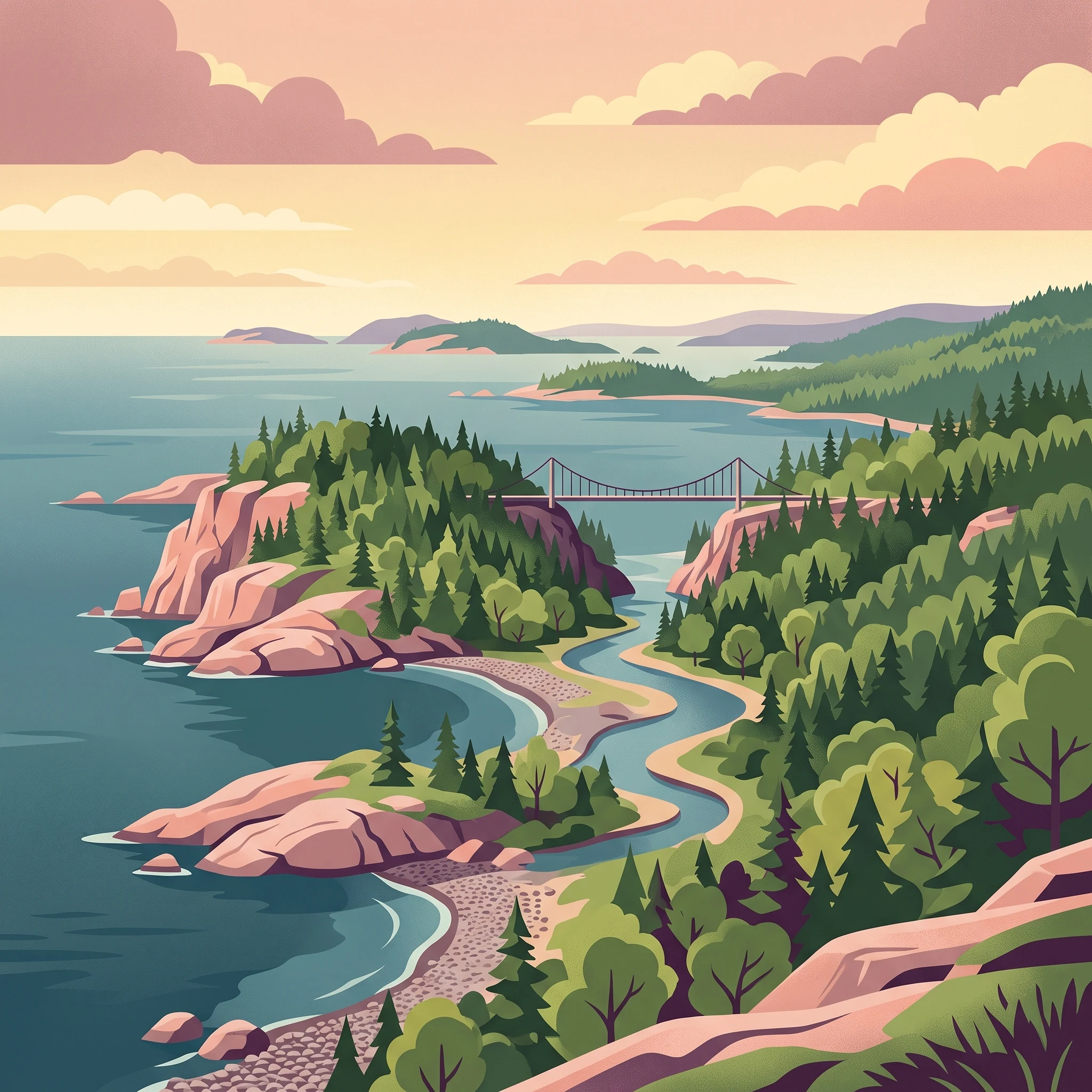
Geography guide, regional context, and park location map for Pukaskwa National Park

Pukaskwa National Park park geography, regions, and map view in Canada
Understand where Pukaskwa National Park sits in Canada through a broader geographic reading of the surrounding landscape, nearby location context, and its mapped position within the national park landscape.

How Pukaskwa National Park fits into Canada

Canada is a federal parliamentary constitutional monarchy spanning North America from the Atlantic to the Pacific and Arctic Oceans. With a population of over 41 million, it is officially bilingual in English and French at the federal level. The country gained independence from the United Kingdom through a gradual process culminating in 1982.

Wider geography shaping Pukaskwa National Park in Canada

Canada occupies the northern portion of North America, sharing its longest international border with the United States. The country extends from the Atlantic Ocean to the Pacific Ocean and northward into the Arctic Ocean, giving it the longest coastline of any nation.

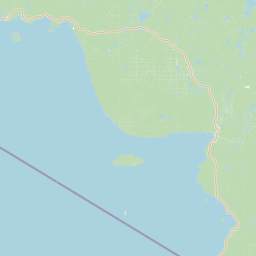
Map view of Pukaskwa National Park

Use this park location map to pinpoint Pukaskwa National Park in Canada, understand its exact geographic position, and read its mapped placement within the surrounding landscape more clearly.

Pigeon | © OpenStreetMap contributors

Location context for Pukaskwa National Park

OntarioThunder Bay District
Park atlas

Map the regional context of protected areas surrounding Pukaskwa National Park and explore adjacent landscapes.

Nearby National Parks and Protected Areas: Continuing Your Pukaskwa National Park Discovery
Explore nearby national parks and protected areas, tracing the regional geography of wilderness preserves adjacent to Pukaskwa National Park. Continue your geographic discovery by comparing landscape features, conservation priorities, and the unique spread of protected wilderness across Northern Ontario.
National parkKeweenaw County

Isle Royale National Park: Protected Landscape Atlas and Geographic Context

Explore mapped boundaries and natural terrain of this national park.

Isle Royale National Park offers a distinct opportunity for understanding protected landscapes through detailed map exploration. As a national park within Keweenaw County, its geographic identity and mapped boundaries provide valuable context for regional geography and atlas-based discovery. Investigate the natural terrain and protected land features that define this unique area, contributing to a richer comprehension of the surrounding protected areas.

Area
2,314 km²
Established
1940
IUCN
Ib
Visitors
29K annual
National parkOntario

Bruce Peninsula National Park: National Park Protected Landscape and Geographic Context in Ontario

Discover its mapped boundaries and regional landscape identity.

Bruce Peninsula National Park stands as a protected national park entity within Ontario, offering a distinct geographic profile. Its mapped boundaries and position within the regional atlas are crucial for understanding its landscape character. MoriAtlas facilitates exploration of the park's protected status and its contribution to the conservation landscape of Ontario.

Area
154 km²
Established
1987
IUCN
II
Visitors
460.4K annual
National parkMinnesota

Voyageurs National Park: Minnesota's Mapped Protected Landscape and Geography

Explore the atlas context and mapped park boundaries of Voyageurs National Park.

Voyageurs National Park in Minnesota is a key protected area offering rich geographic discovery. As a designated National Park, it provides a unique lens through which to study regional landscapes and mapped natural terrain. Users can delve into its protected boundaries and understand its specific identity within the broader Minnesota geography, making it a vital point for atlas-focused exploration.

Area
883 km²
Established
1975
IUCN
II
Visitors
239.7K annual
National parkOntario

Georgian Bay Islands National Park: Ontario National Park Protected Landscape Atlas

Explore mapped boundaries and regional geographic context.

Gain a comprehensive understanding of Georgian Bay Islands National Park as a distinct protected area within Ontario. This entry provides detailed geographic context, focusing on the park's mapped landscape, its protected status as a national park, and its position within the regional geography of Canada. It is designed for users seeking structured information about protected lands and their atlas-level significance.

Area
13.5 km²
Established
1929
IUCN
II
Visitors
27.5K annual
National parkOntario

Rouge National Urban Park: Ontario's Mapped Protected Landscape Atlas

Explore national park boundaries and regional geography.

Investigate Rouge National Urban Park, a designated national park situated in Ontario, Canada. This page provides detailed atlas-style information focusing on its mapped boundaries, regional geographic context, and its identity as a significant protected natural landscape. Understand the park's role within the broader Canadian atlas for landscape exploration.

Area
79.1 km²
Established
2015
IUCN
V
Relief
Mixed relief
National parkUnited States of America

Indiana Dunes National Park: Protected Landscape Geography and Map Exploration

Explore the National Park's geographic boundaries and regional context.

Indiana Dunes National Park represents a distinct protected area within the United States of America, characterized by its unique landscape setting. This entry provides a detailed atlas-style view, highlighting the park's mapped boundaries and its contribution to the regional geography. Understanding this National Park means appreciating its specific natural terrain and its place within the conservation landscape of North America.

Area
62.12 km²
Established
1966
IUCN
II
Visitors
2.8M annual
National parkOntario

Point Pelee National Park: Ontario's National Park Atlas and Protected Landscape Explorer

Mapped geography and protected area context within Ontario.

Point Pelee National Park is a designated national park in Ontario, Canada, offering a unique focus for geographic discovery. This entry details its protected landscape and mapped boundaries, essential for understanding its place within regional park atlases. Explore the core geographic identity of Point Pelee National Park and its significance as a protected natural area.

Area
15 km²
Established
1918
IUCN
II
Visitors
491.1K annual
National parkOhio

Cuyahoga Valley National Park: Detailed Atlas and Protected Landscape Information

Explore the mapped geography and natural terrain of Ohio's National Park.

Access detailed atlas information for Cuyahoga Valley National Park, a vital protected landscape in Ohio. Understand its geographic scope, mapped boundaries, and the surrounding natural terrain. This entry provides essential context for exploring the park's identity as a National Park and its significance within the broader mapped geography of the United States.

Area
132.7 km²
Established
2000
IUCN
II
Visitors
2.9M annual

Common questions about visiting, size, designation, and location context for Pukaskwa National Park

Pukaskwa National Park FAQs for park facts, access, geography, and protected area context
Find quick answers about Pukaskwa National Park, including protected-area facts, park geography, trail and visitor context, and how the park fits into its surrounding country and regional landscape.
MoriAtlas Explorer

Continue Your Protected Areas Search Across the Global Atlas

Deepen your exploration by continuing the structured search for national parks and protected areas worldwide. Utilize the comprehensive filtering capabilities to compare different conservation landscapes and refine your understanding of global park geography. Discover more about the distribution and characteristics of protected natural areas.

Global natural geography