Why Scheyville National Park stands out
Scheyville is best known for its exceptional combination of cultural heritage and natural values. The park preserves the most extensive remnant of Cumberland Plain Grey Box and Ironbark Woodland in the Sydney region, an endangered ecological community that once dominated western Sydney. Its cultural significance is equally profound, representing one of the oldest continuously occupied landscapes in the Sydney area, with evidence of Dharug Aboriginal occupation spanning at least 13,000 years. The quadrangle buildings constructed in 1928-1929 stand as a testament to the site's various institutional uses. As the largest surviving portion of the Nelson (later Pitt Town) Common declared by Governor King in 1804, the park contains physical evidence of nearly 220 years of colonial history including agricultural experiments, migrant settlement, and military training.
Scheyville National Park history and protected-area timeline
The history of Scheyville National Park spans a remarkable continuum from pre-colonial Aboriginal occupation through to modern national park status. The land was originally Dharug country, inhabited by the Cattai clan of the Dharug people who lived along Cattai Creek and Pitt Town for at least 30,000 years, sustained by the fertile alluvial soils of the Hawkesbury River system. Governor Phillip made contact with the Dharug in 1789 and 1791, and by 1794 European settlers had established farms on the same productive lands. In 1804, Governor King reserved approximately 5,650 acres as the Nelson Common, later known as the Pitt Town Common, making it one of the earliest officially declared commons in the colony. This common system was expanded to 9,000 acres by 1889. In 1893, the Pitt Town Village Settlement was established as a cooperative farm for the unemployed during the economic depression, followed by a Casual Labour Farm in 1905. Under William Frances Schey, MP for Redfern and Darlington, the Government Agricultural Training Farm was created in 1911 to train young British migrants under the Dreadnought scheme, continuing until 1929. During World War II, the site housed the 73rd Australian Anti-Aircraft Searchlight Company and the 1st Parachute Battalion. From 1950 to 1964, it operated as the largest migrant holding centre in Australia, welcoming thousands of post-war immigrants. The Officer Training Unit from 1965 to 1973 trained national servicemen for the Vietnam War. After various proposals for development, the land was finally gazetted as a national park in 1996.
Scheyville National Park landscape and geographic character
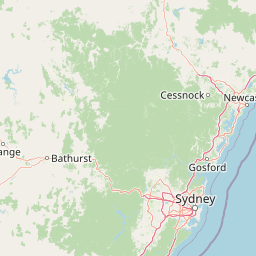
The landscape of Scheyville National Park occupies a transitional position between the Hawkesbury Valley and the Cumberland Plain, characterized by gentle slopes rising to a commanding knoll where the historic quadrangle buildings stand. The terrain is predominantly undulating woodland and grassland, with Longneck Lagoon forming a prominent wetland feature in the northern section. The park contains several distinct vegetation communities, with the Cumberland Plain Grey Box and Ironbark Woodland dominating the higher ground. A smaller area of Castlereagh Scribbly Gum Woodland occurs on the ridge between Pitt Town and Avondale roads, classified as vulnerable. Between Llewellyn Creek, Longneck Lagoon, and Avondale Road, the Shale and Gravel Transition Forest contains rare plant species. The landscape offers elevated views over the Hawkesbury River valley toward the Blue Mountains escarpment. The sandstone quarry near Longneck Lagoon operated from the mid-nineteenth century into the 1930s, its workings still visible as evidence of colonial-era extractive industries.
Scheyville National Park ecosystems, habitats, and plant life
The ecological character of Scheyville National Park centers on its role as the largest remaining example of Cumberland Plain vegetation communities in the Sydney region. The Cumberland Plain Grey Box and Ironbark Woodland, listed as an endangered ecological community, forms the dominant habitat across much of the park. This woodland once covered extensive areas of western Sydney but has been largely cleared for agriculture and urban development. The park protects three threatened native plant species and supports several regionally rare plant populations. Longneck Lagoon and the associated wetland areas are integral to the Hawkesbury wetland system, providing habitat for diverse waterbird communities and supporting aquatic vegetation. The combination of woodland, grassland, and wetland creates a diverse habitat matrix that supports numerous species despite the park's long history of modification and use.
Scheyville National Park wildlife and species highlights
Scheyville National Park supports a notable diversity of birdlife, particularly in the Longneck Lagoon wetland area where numerous waterbird species congregate. Ten bird species listed under the Threatened Species Conservation Act have been recorded within the park. The woodland environments provide habitat for various bird species adapted to Cumberland Plain ecosystems, while the wetland areas attract migratory and resident waterbirds. The park's position within the Hawkesbury Valley corridor supports wildlife movement through an increasingly urbanized landscape. However, introduced species including red foxes, cats, rabbits, and carp in the waterways pose ongoing challenges to native wildlife. European carp are present in both Longneck and Pitt Town Lagoons, competing with native species and affecting water quality.
Scheyville National Park conservation status and protection priorities
Scheyville National Park holds significant conservation value as the largest and most intact remnant of Cumberland Plain native vegetation communities remaining in the Sydney region. The park protects the endangered Cumberland Plain Grey Box and Ironbark Woodland community, as well as vulnerable Castlereagh Scribbly Gum Woodland and Shale and Gravel Transition Forest. Three threatened native plant species occur within the park boundaries, along with ten threatened bird species. Longneck Lagoon provides important wetland habitat within the Hawkesbury system. The park's conservation significance is enhanced by its role as a wildlife corridor in a landscape increasingly fragmented by urban development. Heritage listing on the New South Wales State Heritage Register in 2010 recognizes both the cultural and natural values that require ongoing protection and management.
Scheyville National Park cultural meaning and human context
The cultural context of Scheyville National Park is extraordinary in its depth and continuity, representing one of the few places in Sydney where Aboriginal and colonial histories are both physically present and well documented. The Dharug people, specifically the Cattai clan, inhabited the area for at least 13,000 years before European contact, relying on the fertile Hawkesbury soils and abundant wildlife. Following European settlement, the site became one of the colony's earliest commons in 1804, serving various social purposes from grazing to unemployment relief. The Dreadnought scheme from 1911 to 1929 brought young British migrants for agricultural training, making Scheyville one of the earliest child immigrant training farms in Australia. The post-war migrant holding centre between 1950 and 1964 processed thousands of displaced persons, many of whom returned for a 2005 reunion. The Officer Training Unit from 1965 to 1973 produced 330 graduates who served in the Vietnam War, eight of whom died in action. The quadrangle buildings and various archaeological remains demonstrate this layered history.
Top sights and standout views in Scheyville National Park
The quadrangle complex designed by the Government Architects Office in 1928-1929 represents the architectural highlight of the park, with its Georgian Revival and Inter-War Mediterranean style buildings arranged around a central courtyard on a commanding knoll. Longneck Lagoon provides a natural highlight, with its wetland habitats, walking tracks, and birdwatching opportunities. The park contains the largest remnant of Cumberland Plain Grey Box and Ironbark Woodland, an endangered ecological community unique to the Sydney region. The archaeological remains spanning Aboriginal occupation, colonial commons, farming periods, military uses, and migration provide a tangible connection to two centuries of Australian history. The views from the park toward the Blue Mountains add scenic value to the woodland and wetland landscapes.
Best time to visit Scheyville National Park
Scheyville National Park can be visited throughout the year, with each season offering different experiences. The cooler months from autumn through early spring typically provide comfortable conditions for walking and exploring the park's trails around Longneck Lagoon and the quadrangle area. Birdwatching is particularly rewarding during the wetland months when waterbird activity increases. Summer can bring hot conditions but early morning visits allow for wildlife observation when animals are most active. The park's woodland and wetland environments change character with the seasons, with spring bringing flowering of native plants and increased bird activity during the breeding season. Visitors interested in the cultural history may find the historic quadrangle buildings and surrounding archaeological evidence most compelling at any time of year.