
Why Tapiche Reserve stands out
Tapiche Reserve is best known for protecting a rare side-by-side mosaic of igapo, varzea, and terra firme lowland Amazonian forests within a single contiguous block, combined with a distinctive blackwater river system. Few other places in the Amazon basin bring all three of these forest environments into such close proximity. The reserve is also recognized for the rich wildlife supported by that habitat mix, including jaguar, bald uakari, giant armadillo, Brazilian tapir, Amazonian manatee, and harpy eagle, as well as for its dense catalog of timber, palm, and culturally important plant species documented during a 2011 biological inventory.
Tapiche Reserve landscape and geographic character
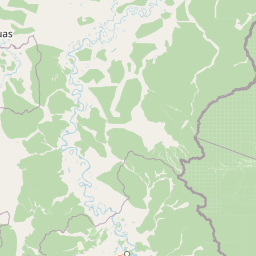
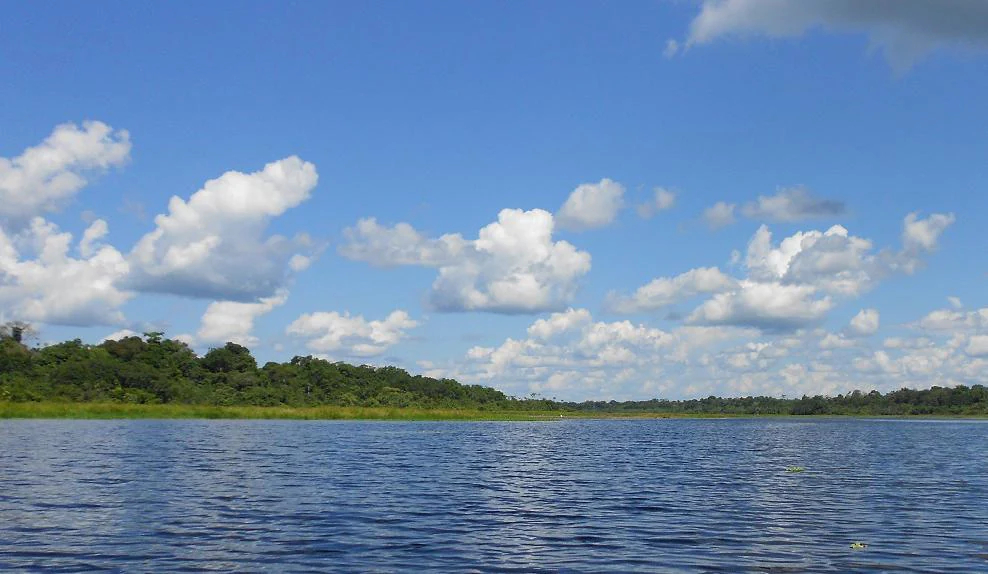
The landscape of Tapiche Reserve is defined by a transition from river to forest, hydrology to topography. The Tapiche River runs through the center of the protected area, its blackwater character shaping both the chemistry and the visual feel of the surrounding forests. Its waters carry little suspended sediment but a heavy load of organic acids, giving them a dark, tea-like appearance that influences plant communities all along its banks.
Surrounding the river course, the terrain unfolds in several distinct layers. Alluvial plains and associated floodplains sit closest to the active channels, while aguajal palm swamps develop in the lowest, most waterlogged depressions, often over fibric histosol soils with pH values between 3.5 and 5. Slightly higher ground appears as undulating terraces that are not regularly flooded but still carry the imprint of the river's movement. Further from the active floodplain, the reserve rises into gently sloping low hills, providing long, well-drained slopes dominated by terra firme forest.
The reserve's hydrography adds a finer texture to this landscape. Internal lakes, oxbows, meanders, restingas, and narrow channels weave between the forest stands. Quebrada Chambiria, the largest internal body of water, has low flow and accumulates enough organic material to create a distinctive habitat corridor in its own right. During the rainy season, when floodwaters connect these channels, the entire lowland mosaic becomes navigable from a network of shortcuts and side passages instead of the main river course.
Tapiche Reserve ecosystems, habitats, and plant life
The reserve's nature is ultimately a story of water chemistry, forest types, and the way they interlock. Igapo, varzea, and terra firme forests all occur within the protected boundaries, and this unusual convergence is core to its ecological identity. Igapo forests occupy the blackwater floodplains along the Tapiche itself; varzea appears in narrower bands where more sediment-rich inputs alter the soil; and terra firme forests dominate the higher terraces and gentle hills away from the active flood zone.
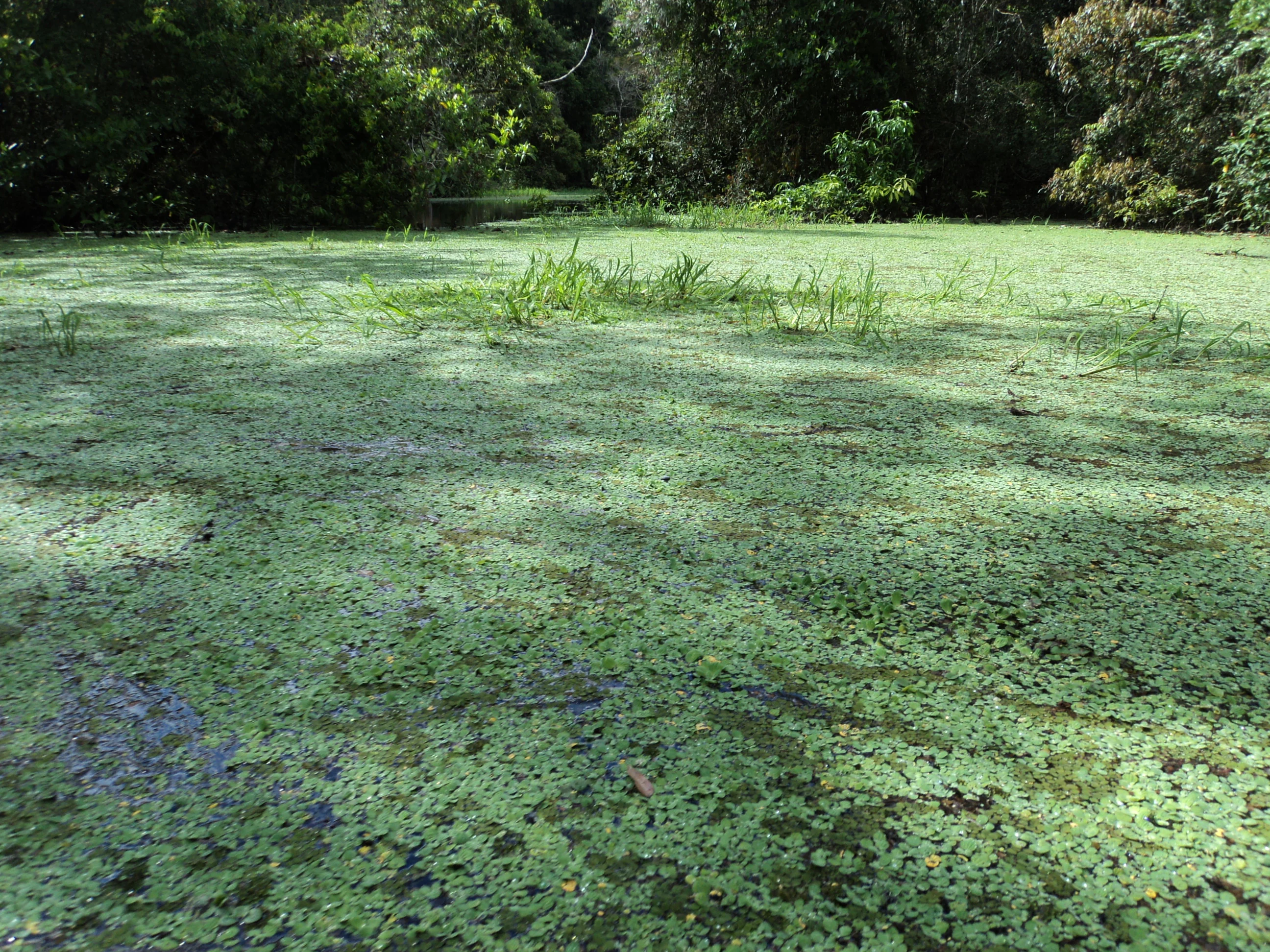
Aquatic ecosystems are equally important to the reserve's ecological fabric. Cochas and tahuampas (seasonally inundated forest pools and grass-lake wetlands) host distinctive plant communities built around aquatic grasses such as Paspalum fasciculatum and other grasses in the genera Paspalum and Echinochloa. These are accompanied by tall emergent reeds like caña brava (Gynerium sagittatum), water hyacinth (Eichhornia crassipes), and water lettuce (Pistia stratiotes), which together form floating and semi-aquatic habitats that shift with the seasonal flood cycle.
Botanically, the reserve is rich in palms, hardwoods, and culturally valued species. Arecaceae (palms) are particularly prominent, including Mauritia flexuosa in the swamps and species such as Astrocaryum, Attalea, Bactris, Euterpe, and Phytelephas in the broader forests. The Moraceae family contributes strangler figs and renaco, while Fabaceae offers nitrogen-fixing species and several valuable timber trees. Annonaceae completes the quartet of dominant families in the swamp environments, hinting at the structural and functional diversity packed into the area's wetlands.
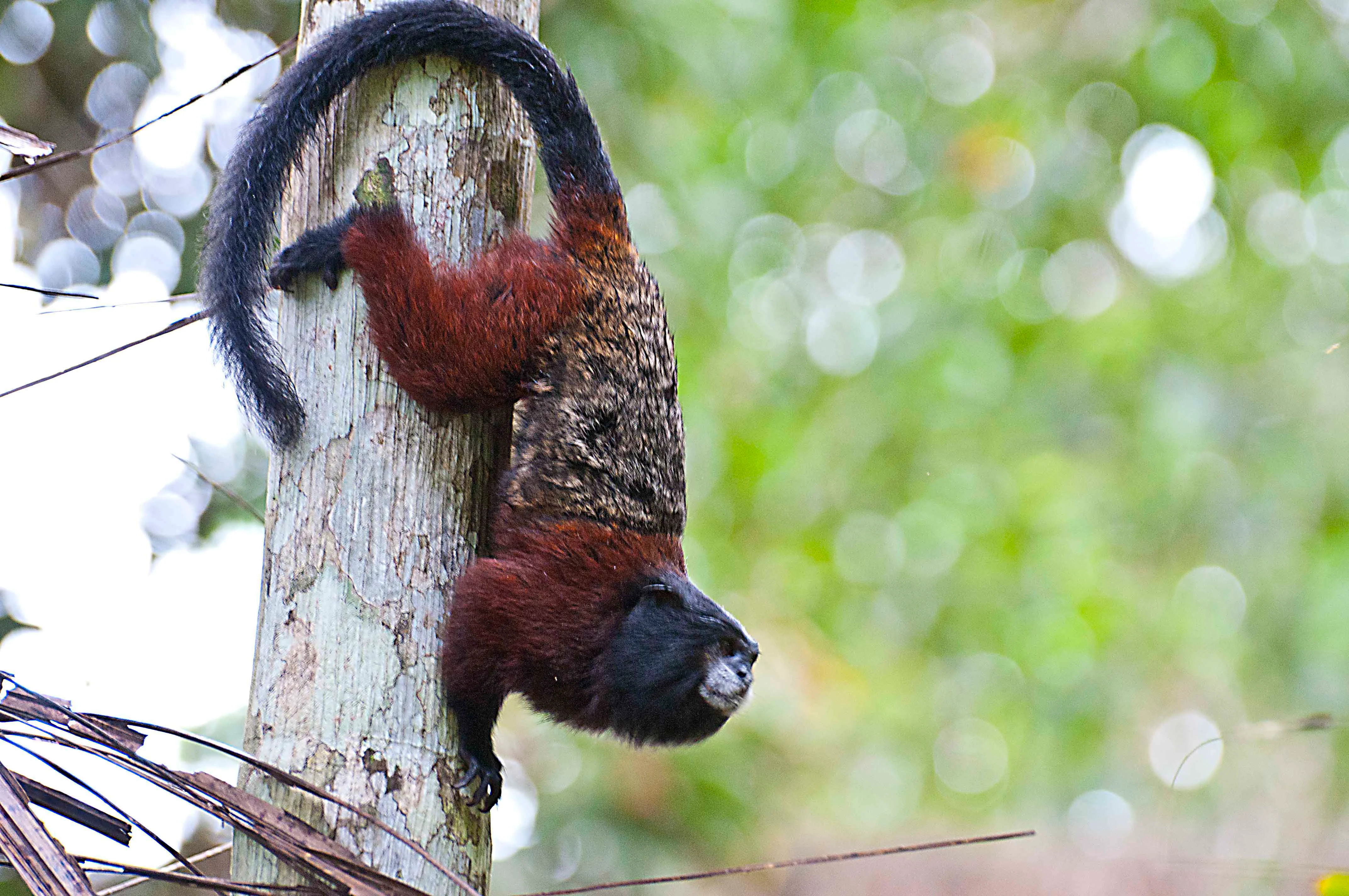
Tapiche Reserve wildlife and species highlights
Tapiche Reserve supports an exceptionally broad vertebrate fauna, anchored by several large, range-restricted species. The jaguar (Panthera onca) is present as an apex predator, while primates form one of the reserve's most distinctive features: red howler monkeys, white-fronted capuchin monkeys, squirrel monkeys, the bald uakari, and both white-bellied and black spider monkeys are all documented. The Brazilian tapir and the giant armadillo add further weight to the terrestrial mammal community, alongside the Amazonian manatee in the waterways.
Birds are abundant and varied, reflecting the diversity of forest types. Harpy eagles are among the most coveted species recorded, along with crested eagles, black hawk-eagles, and several other raptors including hook-billed kites, double-toothed kites, and swallow-tailed kites. Parrots and macaws are well represented: blue-and-yellow macaws, red macaws, red-bellied macaws, mealy parrots, orange-cheeked parrots, blue-headed parrots, and both tui and dusky-headed parakeets have been documented. Rates like the red-throated caracara, black caracara, and yellow-headed caracara round out the bird community.
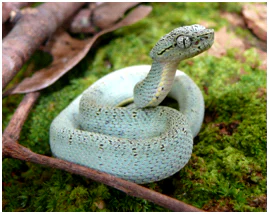
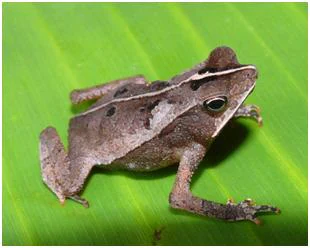
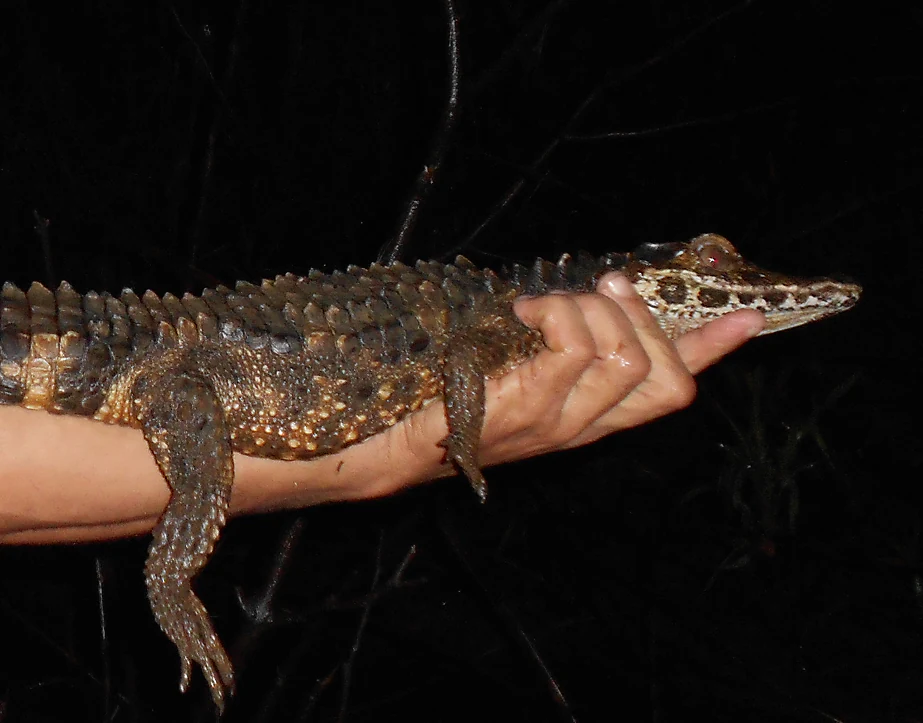
The reserve also hosts a remarkable collection of reptiles, amphibians, and smaller mammals. Spectacled caimans and dwarf caimans live in the waters, while yellow-spotted river turtles nest along sandbanks. Frogs such as Hypsiboas punctatus, Rhinella marina, and Phyllomedusa tomopterna, and lizards like Plica plica, are tied closely to the reserve's pools, channels, and floodplain forests. Two-toed sloths, kinkajous, tayras, agoutis, Brazilian porcupines, and bush dogs add a further layer of mammalian diversity, and otters (Lutra longicaudis) and both pink and gray Amazonian river dolphins (Inia geoffrensis and Sotalia fluviatilis) inhabit the larger river channels. Some records also note the presence of the yellow-tailed woolly monkey (Lagothrix lagotricha), a species of significant conservation concern in the region.
Tapiche Reserve conservation status and protection priorities
As a designated Private Conservation Area (Área de Conservación Privada) under Peruvian law, Tapiche Reserve sits within the country's framework for privately held lands enrolled in the national protected-areas system. The forest types it protects, especially the convergence of igapo, varzea, and terra firme in a single block, carry conservation value well beyond the reserve's borders, because these three forest systems are typically fragmented across the broader Amazon basin.
The reserve's significance is further reinforced by the species it shelters. The jaguar, bald uakari, giant armadillo, Brazilian tapir, Amazonian manatee, and harpy eagle are all species of conservation concern, with the manatee in particular dependent on the quiet, floodplain-connected channels and lakes of the Tapiche basin for refuge. Maintaining functional populations of these animals requires very large, connected forest and river habitats, which the reserve helps sustain alongside neighboring areas.
The 2011 land survey and rapid biological inventory raised the reserve's profile as a scientific reference site. By systematically documenting flora and fauna across a relatively well-protected corridor of lowland Amazon, the inventory created a baseline that can be used for future monitoring of forest health, wildlife populations, and the impacts of broader regional pressures, including climate shifts, river-system changes, and external land-use pressures.
Tapiche Reserve cultural meaning and human context
Cultural context for Tapiche Reserve is most evident in the deep ethnobotanical relationships embedded in its forests. The 2011 flora inventory catalogs not only scientific species names but also local names and traditional uses, ranging from construction timber and food to medicine, dyes, thatching, and ritual plants. Species such as ayahuasca (Banisteriopsis caapi), uña de gato (Uncaria tomentosa), and a wide range of medicinal barks and resins speak to a long-standing local knowledge of how the forest is used.
Palms occupy a particularly rich cultural niche in the area. Arecaceae species such as Astrocaryum chambira (chambira), Mauritia flexuosa (aguaje), Attalea phalerata (shapaja), and Phytelephas macrocarpa (yarina) appear in substantial volume and are used for thatching, fiber, crafts, food, and tools. Trees such as Socratea exorrhiza (cashapona), Hura crepitans (catahua), and Eschweilera species (machimango) are similarly woven into everyday material culture. This breadth of ethnobotanical use suggests that the broader Tapiche basin has long supported communities whose daily life is tightly interwoven with the surrounding forest and river.
Top sights and standout views in Tapiche Reserve
Tapiche Reserve's strongest points of distinction are ecological: it is one of the few protected areas in the Amazon basin where igapo, varzea, and terra firme forests all converge within a single continuous landscape. Layered on top of that forest mosaic is a network of aguajal palm swamps, a blackwater river system with acidic, humic-rich waters, and a labyrinth of oxbows, channels, and meanders that expand significantly in the rainy season.
Equally notable is the wildlife profile. The reserve provides habitat for an unusually complete set of Amazonian icon species: jaguar, harpy eagle, bald uakari, giant armadillo, Brazilian tapir, and Amazonian manatee, alongside a rich primate community that includes spider monkeys, howler monkeys, and the yellow-tailed woolly monkey. Add to this the documented presence of Amazonian river dolphins (both pink and gray), harpy and crested eagles, and a long list of parrot, macaw, and amphibian species, and the reserve emerges as a high-biodiversity refuge in the western Amazon.
Finally, the reserve's role as a private conservation area with a formal biological inventory elevates it beyond a generic protected landscape. The 2011 survey created a detailed baseline of plants and animals, giving Tapiche Reserve an enduring reference value for Amazon research, conservation planning, and regional biodiversity monitoring.
Best time to visit Tapiche Reserve
The climate of Tapiche Reserve is strongly seasonal, and timing a visit around those rhythms significantly shapes what one experiences. From October through May, the area enters its rainy season, with tropical rainfall that can total roughly three meters across the year. During this period, river channels and forest pools expand, lowland trails may be partially flooded, and the landscape takes on its most water-rich, dynamic character.
Between June and September, rainfall eases and the reserve typically experiences its most accessible conditions. Notably, in June or July a brief "cold spell" can occur, when polar air masses penetrate into the South American tropics and drop temperatures for two to four days, sometimes as low as around 13 degrees Celsius. This unusual chill can briefly alter the soundscape and behavior of wildlife, and signals the transitional character of the dry season. Year-round temperatures in the lowland Amazon remain warm: daily ranges typically sit between roughly 25 and 33 degrees Celsius, with high relative humidity.