
Why Vlčí louka stands out
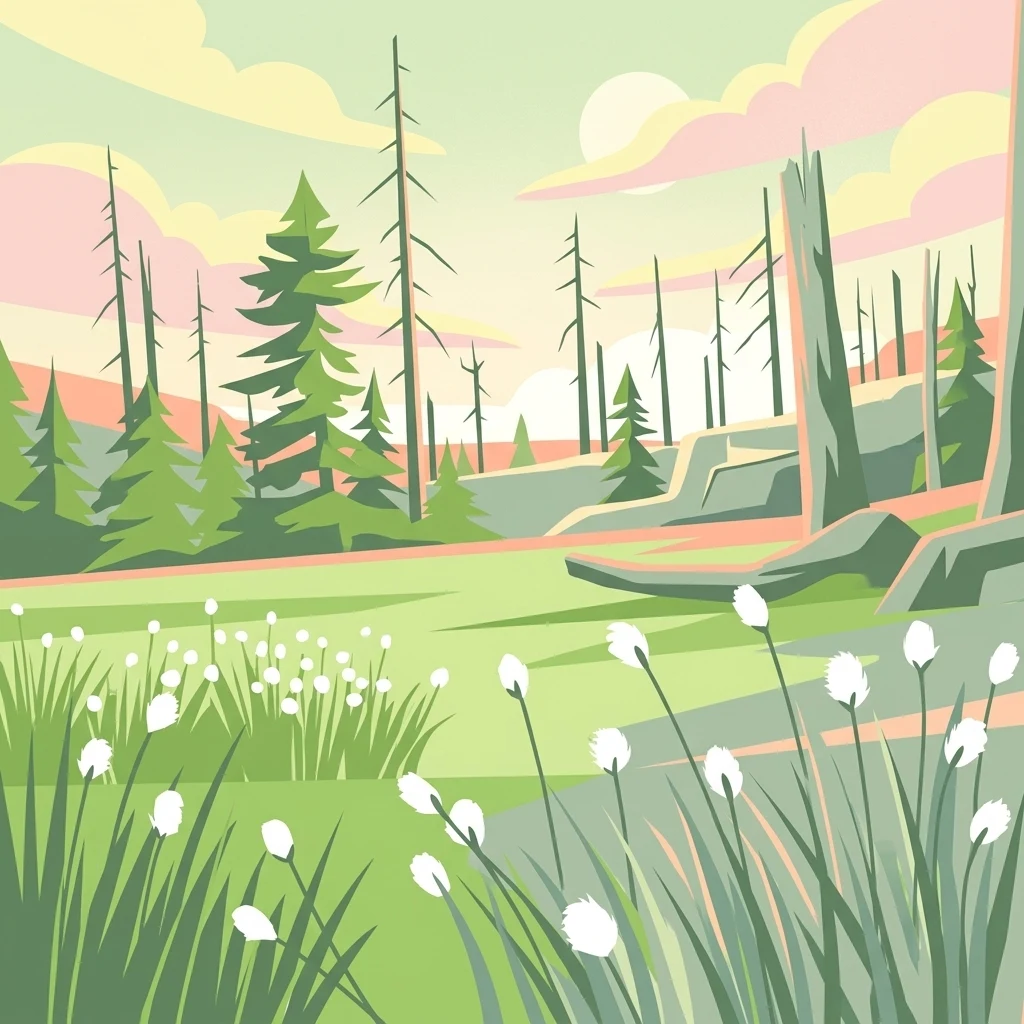
Vlčí louka is best known for hosting one of the highest-elevation raised bog, or vrchoviště, sites in the entire Jizera Mountains. The protected meadow exists in a narrow altitudinal band above 1000 meters, making it an unusually elevated example of peatland habitat in a range where summit bogs are rare. The interplay between the open wet bog flora and the surrounding mats of dwarf pine gives Vlčí louka a distinctive ecological character. Equally important is the site's role as habitat for black grouse, a species that relies on the kind of open, boggy, mountain landscape that Vlčí louka represents. The bog is also notable for its suite of indicator plants such as round-leaved sundew, bog rosemary, cranberry, and crowberry, which together signal the persistence of an intact upland peatland community.
Vlčí louka history and protected-area timeline
Vlčí louka was declared a protected natural monument on 19 October 1965 by the Czechoslovak Ministry of Education and Culture, with the original designation covering an area of 5.87 hectares. The timing of its establishment reflects the broader Czechoslovak conservation push of the 1960s, when many small, biologically distinctive sites were given formal protection ahead of later landscape-scale designations.
The site was created specifically to preserve one of the highest-lying raised bogs in the Jizera Mountains, a habitat type that is naturally restricted and vulnerable to disturbance. Surrounding natural monuments such as U posedu, Klečové louky, and Na kneipě, along with the nearby Prales Jizera primeval forest reserve, were protected in subsequent decades, gradually building a coordinated network of conservation sites along the southern flanks of the Jizera ridge. Compared with these later designations, Vlčí louka stands out as the earliest formal protection of an upland bog in this particular part of the range.
Vlčí louka landscape and geographic character
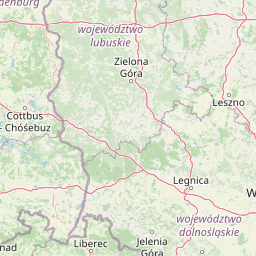
Vlčí louka occupies a narrow altitudinal band on the southern slope of Smědavská hora, between approximately 1020 and 1025 meters above sea level. Within the Jizera Mountains this is a high setting, close to or just below the elevation of the ridge crests, and it shapes both the climate and the vegetation pattern of the site.
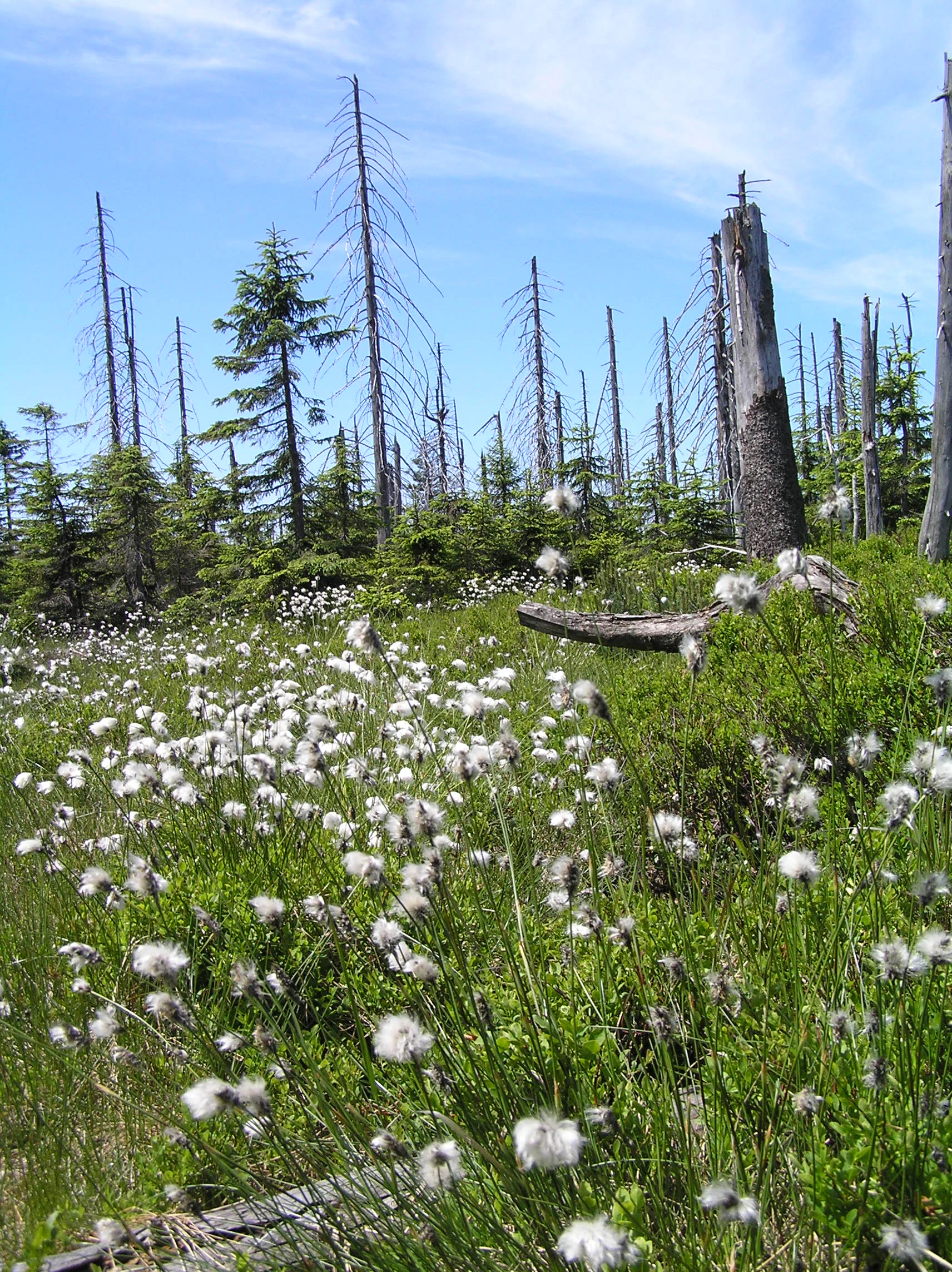
The dominant landform is a gentle, slope-bound peatland rather than a flat summit basin. The bog is set within a mosaic of mountain spruce forest and extensive dwarf pine stands, which frame the wetter central meadow and give the protected area its characteristic structure of open low vegetation interspersed with low conifer scrub. The combination of slope, raised peat substrate, and high-elevation climate produces conditions akin to northern or subalpine bog environments, which is what distinguishes Vlčí louka from the lower-lying wetlands of the surrounding foothills.
Vlčí louka ecosystems, habitats, and plant life
The ecosystem at Vlčí louka is best understood as an upland raised bog lying near the altitudinal limit of this habitat type in the Jizera Mountains. The wet central portion supports a specialist bog flora, while the drier fringes are invaded and stabilized by dwarf mountain pine, creating a transitional zone between open peatland and subalpine shrub community.
The botanical inventory reflects this character. Round-leaved sundew, a small carnivorous plant of nutrient-poor peatlands, is present alongside bog rosemary, small cranberry, few-flowered sedge, and heath rush. Black crowberry adds a distinctly northern, subarctic element to the flora. The moss layer, implied by the use of terms such as suchopýr in the Czech description of the site, contributes to the raised peat substrate itself. Together, these species indicate conditions of low nutrient availability, high humidity, and acidic substrate, which are the defining parameters of an intact upland bog system. The structure of the habitat, with its mix of open wet ground and dwarf pine stands, also creates microclimates that support different stages of bog succession within a very small area.
Vlčí louka wildlife and species highlights
Wildlife interest at Vlčí louka is closely tied to its character as an open, boggy mountain habitat. The site is documented as a locality for black grouse, a grouse species that favors the kind of mosaic environment provided by the peatland and surrounding dwarf pine. Black grouse are widely regarded as an indicator of well-preserved upland habitats in Central Europe, and their presence adds significant conservation weight to the site's designation.
The common European adder is also recorded at Vlčí louka, taking advantage of the warm, sunny openings among the bog vegetation and dwarf pine stands. The protected area's small size limits the absolute number of species it can support, but its elevated peatland character offers a habitat type that is genuinely scarce in the Jizera Mountains, which enhances the value of any wildlife assemblage it hosts.
Vlčí louka conservation status and protection priorities
From a conservation perspective, Vlčí louka's significance is twofold. First, it protects one of the highest-elevation raised bog sites in the Jizera Mountains, a habitat type that is naturally rare in the range and highly sensitive to hydrological disturbance, peat extraction, and vegetation encroachment. Second, the site contributes to a wider conservation landscape that includes several neighboring natural monuments and the Prales Jizera primeval forest reserve, together forming a network of habitat patches along the southern Jizera ridge.
The site's IUCN Category IV designation reflects its role as a management-oriented protected area, focusing conservation effort on a particular habitat and its associated species. Protection of the bog flora, including sundew, bog rosemary, and cranberry, is also a de facto protection of the invertebrate communities that depend on these specialist plants. The presence of black grouse further strengthens the case for retaining the site as protected land, as the species depends on conservation of suitable open, boggy mountain habitat at sufficient scale.
Vlčí louka cultural meaning and human context
The name Vlčí louka translates roughly as "Wolf Meadow," reflecting a long-standing tradition in Central European place-naming of referencing wildlife encounters in rural topography. Although the Jizera Mountains have historically supported large predators in changing numbers, the toponym today functions primarily as a cultural echo of older land-use names rather than as a direct reference to a current ecological reality.
The wider area around Hejnice has a long tradition of small-scale grazing and haymaking on mountain meadows, although the upper-elevation Vlčí louka itself appears to have been valued primarily as a botanical oddity rather than as agricultural land. The site's history of formal protection since 1965 makes it one of the earlier examples of conservation-minded land recognition in the post-war Czech landscape.
Top sights and standout views in Vlčí louka
Vlčí louka is notable for combining three distinct qualities in a very compact area: it is one of the highest-elevation raised bogs in the Jizera Mountains; it preserves a near-complete upland bog flora including specialist species such as round-leaved sundew and bog rosemary; and it supports black grouse in a habitat type that is increasingly rare in Central European mountain ranges.
The site's position at the interface between an open bog and surrounding dwarf pine stands gives it additional visual and ecological distinctiveness, and its membership in a cluster of related natural monuments and reserves along the Smědavská hora ridge reinforces its importance as part of a larger, coherent conservation landscape.
Best time to visit Vlčí louka
Given its high-elevation setting in the Jizera Mountains, Vlčí louka experiences a cool mountain climate with a short growing season. Late spring through early autumn generally offers the best conditions for viewing the bog flora, with the dwarf pine stands providing accessible ground cover and the open peat surface becoming more visible once frost and snow have receded.
Summer visitors are likely to encounter the bog vegetation in full development, when specialist bog plants are most easily observed against a backdrop of dwarf pine. Winter brings snow cover to the surrounding slopes, though access to the protected area itself may be limited by snow conditions and should always be assessed locally. Because Vlčí louka is a conservation site rather than a developed visitor attraction, visits should prioritize minimal-impact observation of the habitat.