Mori Atlas logo
Nature reserveXinjiang Bulgan Beaver National Nature Reserve

Tracing the protected riverine corridors and riparian ecosystems of the Altai Mountains foothills.

Xinjiang Bulgan Beaver National Nature Reserve: A Detailed Geographic and Protected Landscape Atlas

Xinjiang Bulgan Beaver National Nature Reserve encompasses a vital fifty-kilometre stretch of the Bulgan River in the Altay Prefecture. This protected area serves as a critical refuge for the Mengxin beaver within its unique riparian forest, wetland, and valley plain mosaic. The geography of the reserve reflects an essential conservation effort, shielding an endemic species and its river-dependent habitat against the more arid surroundings of the northern Altai foothills.

river valleybeaver conservationriparian forestwetlandspalearctic wildlifeAltai mountains

Xinjiang Bulgan Beaver National Nature Reserve

Nature reserve

Park overview

Structured park overview, official facts, and landscape profile for Xinjiang Bulgan Beaver National Nature Reserve

Xinjiang Bulgan Beaver National Nature Reserve park facts, protected area profile, and essential visitor context

Review the core facts for Xinjiang Bulgan Beaver National Nature Reserve, including designation, size, terrain, visitor scale, habitats, and operating context in one park-focused overview.

About Xinjiang Bulgan Beaver National Nature Reserve

The Xinjiang Bulgan Beaver National Nature Reserve is a compact but ecologically intense protected area in the remote northeastern corner of Xinjiang. Stretching for fifty kilometres along the Bulgan River, it occupies a strip of alluvial valley at the southeastern edge of the Altai Mountains, between roughly 1100 metres of elevation and the Sino-Mongolian border to the east. Its geography is defined by the river itself, with the protected zone extending about 500 metres outward from each bank in a band-like shape that centres on the seasonal and year-round reach of this tributary of the Ulungur system.

The reserve's defining ecological character is its combination of flowing freshwater, fringing wetlands, and gallery forests along a single river in an otherwise dry continental landscape. Cottonwood, willow, and shrub species dominate the riparian vegetation, while wet meadows, aquatic plant communities, and small desert patches reflect the gradient between moisture and aridity. Average conditions in the valley are cool and dry, with annual precipitation well below the level of more humid Chinese mountain reserves, and a cold continental climate that shapes both plant composition and seasonal wildlife activity.

What truly distinguishes this protected area is its institutional focus on a single animal. The Mengxin beaver, a subspecies of the Eurasian beaver found only within the Ulungur River basin, has survived in this valley from a much broader Pleistocene-era distribution that once included saber-toothed cats and other now-extinct species. The reserve was created to give this beaver a viable refuge in one of the few places in China where a natural beaver population still exists. Although the reserve is small in area by national standards, its ecological significance is amplified by the concentration of beavers it shelters and the wider biodiversity supported by its river corridor, which includes raptors, waterbirds, ungulates, and a number of fish species that depend on the same cold, well-vegetated waters.

Quick facts and research context for Xinjiang Bulgan Beaver National Nature Reserve

The Xinjiang Bulgan Beaver National Nature Reserve is located in Qinghe County, Altay Prefecture, in northern Xinjiang, China, bordering Mongolia. It lies along the Bulgan River, a source tributary of the Ulungur River, and covers roughly 50 square kilometres in a narrow 50-kilometre river valley. The reserve was originally established in 1980 as the Bulgan River Beaver Nature Reserve under the Xinjiang Uyghur Autonomous Region government and was elevated to national status in 2013 by China's State Council.

Its principal object of protection is the Mengxin beaver (Castor fiber birulai), an endemic subspecies of the Eurasian beaver found only in the Ulungur River system. The reserve additionally protects a rich assemblage of birds, mammals, reptiles, and fish typical of the Palearctic realm, including species such as the black stork, golden eagle, great bustard, snow leopard, and Siberian ibex. The management authority is affiliated with the Altay Prefecture Forestry Bureau and operates as a public institution with its own office, laboratory, beaver rescue centre, and ranger stations.

Protection and recognition

Examine the terrestrial protected area designation history and management scope established in 2013.

Xinjiang Bulgan Beaver National Nature Reserve Protection Status and Designation History

Xinjiang Bulgan Beaver National Nature Reserve maintains a documented terrestrial protection status established in 2013. Review the official designation history and management scope details compiled for this protected area.

Protection details

Protection scope
Terrestrial
Designated year
2013
Transboundary protection
No
Core area
7 km²
Buffer area
12 km²
Park context

Deeper park guide and search-rich context for Xinjiang Bulgan Beaver National Nature Reserve

Xinjiang Bulgan Beaver National Nature Reserve history, landscape, wildlife, and travel context

Explore Xinjiang Bulgan Beaver National Nature Reserve through its history, landscape character, ecosystems, wildlife, conservation priorities, cultural context, and seasonal travel timing in a structured park guide built for atlas discovery and search intent.

Why Xinjiang Bulgan Beaver National Nature Reserve stands out

The reserve is especially known for being China's only national nature reserve focused on a single nationally protected wild mammal: the Mengxin beaver, an endemic subspecies of the Eurasian beaver. More than a fifth of China's beaver population is concentrated within its boundaries, making this river valley the single most important refuge for the species in the country. Its purely species-focused identity sets it apart from most of China's other reserves, which tend to be defined by full ecosystems, mountain ranges, or scenic landscapes. Instead, the Bulgan Beaver Reserve is a tightly defined, river-centred sanctuary where protection efforts are organised around the survival of one ancient wetland mammal, while still safeguarding the broader wetlands, riparian forests, and valley grasslands on which the beaver depends.

Xinjiang Bulgan Beaver National Nature Reserve history and protected-area timeline

The deeper history of the Bulgan valley stretches back to the early Quaternary, when northern Xinjiang supported dense forests, scattered lakes, and a rich community of large mammals including beavers, saber-toothed cats, and ancient rhinoceros species. Of those, only the beaver has survived into the present day along this stretch of river, surviving in Qinghe County after decades of environmental change while most of its Pleistocene neighbours went extinct.

Modern protection began in the mid-1970s, when the Xinjiang Forestry Department conducted a series of surveys on the Mengxin beaver living in the Ulungur River system. By the early 1980s, hunting, overgrazing, and the conversion of riparian forests into farmland had pushed the local beaver population to fewer than around forty animals. In 1980, the Xinjiang regional government approved the establishment of the Bulgan River Beaver Nature Reserve, with a formal management station set up in 1987. In 1991, the regional government issued forest tenure documentation for the site, formalising protective authority over the surrounding valley forests.

In its first decades, the reserve faced constant pressure from hydropower development, winter firewood cutting by herders, expanding pasture, and limited staff capacity. Rangers sometimes faced hostility or even physical confrontation as they tried to enforce restrictions. From the early 2000s onward, however, the reserve shifted toward more collaborative models, introducing programmes such as valley-forest enclosure, coal-for-firewood exchanges, hiring herders as rangers, environmental education, and ecological resettlement from the core zone. In 2007, the regional highway bureau began rebuilding Provincial Road 320, which passes through all three reserve zones, and in December 2013 the State Council approved the upgrade of the provincial reserve to the current Xinjiang Bulgan Beaver National Nature Reserve, formalising its national status and giving the area renewed institutional backing.

Xinjiang Bulgan Beaver National Nature Reserve landscape and geographic character

The reserve's physical geography is shaped almost entirely by the Bulgan River and its valley. The protected area occupies the southeastern flanks of the Altai Mountains, where the terrain transitions from upland hills into a riverine corridor. To the east, the reserve meets the Chinese-Mongolian border; to the west, it reaches the confluence of the Bulgan with the Qinggeli River. Elevations in the valley average around 1100 metres, and the highest ground lies in the northeast, with the land gradually opening out toward the southwest.

In shape, the reserve is a long, narrow strip: fifty kilometres in length along the river, but only about one kilometre wide in cross-section, with 500 metres of buffer extending on either side of the active channel. Within this band, the terrain is dominated by valley plains shaped by erosion and alluvial deposition. The river itself is one of the headwater sources of the Ulungur River, originating in Mongolia and flowing westward into China, with an annual runoff of more than 330 million cubic metres. The combination of perennial flowing water, groundwater, and seasonal flooding sustains wetlands, freshwater meadows, and dense riverside forests that contrast sharply with the more arid surroundings of the broader Altai foothills.

Xinjiang Bulgan Beaver National Nature Reserve ecosystems, habitats, and plant life

The Bulgan valley supports a surprisingly wide variety of vegetation within its small footprint. Three principal plant communities are recognised: the valley grassland community, which has the highest vegetation coverage; the valley aquatic plant community; and a desert plant community that reflects the dry regional climate. Higher plants recorded in the reserve belong to around 49 families and 387 species, with Salicaceae, Fabaceae, Poaceae, and Chenopodiaceae among the most prominent families.

Woody species typical of the riparian zone include bitter poplar, silver-grey poplar, white willow, Tulan willow, three-stamened willow, fine-leaved swamp willow, oil-willow, and Liaoning hawthorn. Wet ground and shallow water add herbaceous species such as sedges, rushes, and soft-stem bulrush. The fauna follows Palearctic patterns: amphibians are represented by the Tarim toad, reptiles include several lizard species together with snakes and gecko relatives, and the bird list spans at least 16 orders, 35 families, and 60 genera. Fish in the Bulgan itself include river bass, lake roach, and common carp-related species. Together, these assemblages form an unusually rich wet-habitat ecosystem embedded in a dry, mountainous regional setting.

Xinjiang Bulgan Beaver National Nature Reserve wildlife and species highlights

Although the beaver is the reserve's flagship species, the area also shelters a striking diversity of other animals that share the same river corridor and adjacent slopes. Birds are particularly significant, with at least 84 species recorded, classified ecologically as 21 resident birds, 49 summer visitors, 6 winter visitors, and 8 passage migrants. Protected species range from Class I nationally protected birds such as the black stork, golden eagle, great bustard, Pallas's fish eagle, and macqueen's bustard, to Class II species including the whooper swan, common crane, demoiselle crane, black kite, northern goshawk, saker falcon, lesser kestrel, common kestrel, long-eared owl, short-eared owl, eagle owl, and little owl.

Alongside the beavers, mammals of conservation interest include the Siberian ibex, argali, snow leopard, Eurasian lynx, Pallas's cat, and red fox. Many of these species use the reserve's river, valley forests, wetlands, and upland slopes in different seasons, while others pass through during broader migrations. The reptile fauna includes several lizard species typical of dry Central Asian landscapes, such as the Xinjiang rock lizard and the colour-changing sand lizard, alongside colubrid snakes, gecko relatives, and a small number of viper species. This combination of wetland and arid-steppe wildlife gives the reserve an unusually layered ecological profile for its compact size.

Xinjiang Bulgan Beaver National Nature Reserve conservation status and protection priorities

The reserve's conservation importance lies primarily in its function as the most important refuge in China for the Mengxin beaver, an endemic subspecies of the Eurasian beaver found nowhere else. With more than a fifth of China's total beaver population living here, the Bulgan valley is the species' stronghold, and protection here directly determines whether this subspecies continues to survive in the wild. The reserve also functions as a habitat bank for a broader set of Palearctic species, from black storks and golden eagles to snow leopards and Siberian ibex, that share the same river corridor and adjacent hillsides.

From a management perspective, the reserve represents a case study in how to protect a single, ecologically demanding species in a working landscape. Active measures have included fencing key beaver concentration areas, restoring riparian forests through enclosure, replacing firewood cutting with coal supply, employing local herders as rangers, environmental education, and small-scale ecological resettlement from the core zone. Road improvements and noise-control efforts around Provincial Road 320 have attempted to limit disturbance along the corridor. Ongoing research collaborations with Xinjiang University, Xinjiang Agricultural University, Shandong University, East China Normal University, and regional forestry agencies continue to monitor beaver populations, habitat use, and broader ecological factors of the Ulungur River system.

Xinjiang Bulgan Beaver National Nature Reserve cultural meaning and human context

The reserve sits within a traditional pastoral landscape. The Bulgan valley includes four villages belonging to the Takshiken township area, whose residents have historically relied on livestock as their main livelihood. Conservation here is inseparable from the everyday lives of these local herding communities, and management strategies such as hiring herders as rangers, providing coal in exchange for firewood, and supporting community development have been shaped by this relationship between people, livestock, and the river corridor.

The broader cultural meaning of the reserve is also tied to the unusual status of the Mengxin beaver itself, as a survivor of an ancient Pleistocene community that has otherwise vanished from the region. Its continued presence along the Bulgan River links contemporary pastoral life in Qinghe County to a much older natural history of the Altai foothills, giving the area a distinct regional identity that combines working landscapes with rare and charismatic wildlife.

Top sights and standout views in Xinjiang Bulgan Beaver National Nature Reserve

A nationally designated river corridor dedicated to the survival of China's rarest beaver subspecies, set against the dry foothills of the Altai Mountains. The reserve combines riparian wetlands, gallery forests, and valley grasslands in a single narrow strip, supporting breeding and migratory birds, large mammals such as the snow leopard and Siberian ibex, and the only Chinese population of the Mengxin beaver. The story of its creation, from provincial protection in 1980 to national status in 2013, illustrates both the threats facing this animal and the long-term effort required to keep a working valley landscape viable for it.

Best time to visit Xinjiang Bulgan Beaver National Nature Reserve

The reserve sits in a cold continental climate with annual mean temperatures only a few degrees above freezing and modest annual precipitation, so seasonal conditions strongly shape the experience of the landscape. Spring and summer bring the richest bird activity, including summer visitors such as cranes and a wide range of passage and breeding species, while warmer months also make the riverside vegetation and wetland edges easier to observe. Late autumn and early winter are quieter biologically but mark the traditional period for annual beaver and river-system surveys, when researchers document population trends along the Ulungur basin. Visitors expecting beaver activity should generally aim for milder seasons when animals are most active along the riverbank; harsh winter cold limits accessibility and makes wildlife observation more difficult.
Monthly climate preview

Long term temperature ranges and monthly precipitation averages recorded across representative terrain

Climate Normals and Annual Weather Patterns at Xinjiang Bulgan Beaver National Nature Reserve

Xinjiang Bulgan Beaver National Nature Reserve exhibits a measured annual climate cycle spanning subzero winter minimums and warm summer peaks alongside steady precipitation rates. Reviewing the complete twelve month data profile reveals detailed baseline temperature variations across the protected area.
Annual mean5 °C
-14 °C22 °C
Jan-14°
Feb-10°
Mar-2°
Apr
May14°
Jun20°
Jul22°
Aug20°
Sep13°
Oct
Nov-4°
Dec-12°
Warmest month
July

21.9 °C

Coolest month
January

-13.8 °C

Wettest month
July

0.7 mm/day

Driest month
January

0.2 mm/day

Park location guide

Geography guide, regional context, and park location map for Xinjiang Bulgan Beaver National Nature Reserve

Xinjiang Bulgan Beaver National Nature Reserve park geography, regions, and map view in China

Understand where Xinjiang Bulgan Beaver National Nature Reserve sits in China through a broader geographic reading of the surrounding landscape, nearby location context, and its mapped position within the national park landscape.

How Xinjiang Bulgan Beaver National Nature Reserve fits into China

China is a unitary communist state in East Asia, governed by the Chinese Communist Party. The country's capital is Beijing, while Shanghai is the largest city by urban population. China has 33 province-level divisions including provinces, autonomous regions, municipalities, and special administrative regions. The nation has a long history spanning thousands of years, with achievements including the invention of gunpowder, paper, printing, and the compass.

Wider geography shaping Xinjiang Bulgan Beaver National Nature Reserve in China

China is located in East Asia, bordering fourteen countries: Russia, North Korea, Vietnam, Laos, Myanmar, India, Bhutan, Nepal, Pakistan, Afghanistan, Tajikistan, Kyrgyzstan, Kazakhstan, and Mongolia. The country spans diverse terrain including deserts, mountains, plateaus, and river valleys. Major river systems include the Yellow River and Yangtze River. The coastline stretches along the East China Sea, South China Sea, and Yellow Sea.

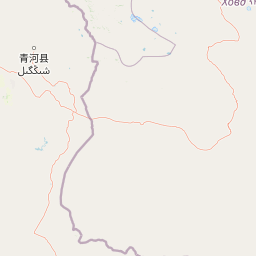
Map view of Xinjiang Bulgan Beaver National Nature Reserve

Use this park location map to pinpoint Xinjiang Bulgan Beaver National Nature Reserve in China, understand its exact geographic position, and read its mapped placement within the surrounding landscape more clearly.

Pigeon | © OpenStreetMap contributors

Location context for Xinjiang Bulgan Beaver National Nature Reserve

Altay PrefectureXinjiang
Park atlas

Compare adjacent protected landscapes and regional river valley reserves in the Altai foothills

Explore Other Parks Near Xinjiang Bulgan Beaver National Nature Reserve

Browse related national nature reserves and protected areas located throughout the surrounding northern region. Comparing these neighboring habitats provides a broader geographic perspective on conservation corridors and regional terrain.
National parkKhovd Province
About 34 km away#1 closest

East

Bulgan Gol-Ikh Ongog National Park: Khovd Province's Vital Riparian Protected Landscape

Mapped geography of river valley, wetlands, and desert steppe.

Bulgan Gol-Ikh Ongog National Park is a designated national park situated in the Khovd Province of western Mongolia, focusing on the preservation of the Bulgan River valley. This protected landscape features a distinctive desert steppe environment interwoven with extensive riparian wetlands, islands, and river channels. The park is ecologically significant as a crucial migratory bird stopover point, supporting diverse habitats that highlight the transition from mountainous sources to the flatter valley floor, offering unique atlas-level geographic insight.

Area
2,461 km²
Established
2011
IUCN
II
Relief
Lowland
National parkBayan-Ölgii Province
About 166 km away#2 closest

Northeast

Munkhkhairkhan National Park: Alpine Glacial Landscape & Protected Area

Explore the mapped geography of western Mongolia's high peaks.

Munkhkhairkhan National Park protects the dramatic alpine environment surrounding Mönkhkhairkhan Mountain, Mongolia's second-highest peak. This national park showcases spectacular glacial valleys and steep, rock-strewn slopes characteristic of the Mongol-Altai Mountains. As a key protected landscape in Bayan-Ölgii Province, it offers a distinct view into Mongolia's high-elevation ecosystems and their unique mapped boundaries for atlas exploration.

Area
5,061 km²
Established
2011
IUCN
II
Relief
Mountain
National parkBayan-Ölgii Province
About 228 km away#3 closest

Northwest

Altai Tavan Bogd National Park: Protected Mountainous Landscape in Bayan-Ölgii

Explore mapped geography and protected terrain.

Altai Tavan Bogd National Park, situated in Mongolia's Bayan-Ölgii Province, offers a detailed view of a significant protected natural area. This park is defined by its mountainous geography, forming a key part of the Altai range. Users can explore its mapped boundaries and understand its role as a protected landscape within the western Mongolian atlas.

Area
6,362 km²
Established
1996
IUCN
II
Relief
Mountain
National parkBayan-Ölgii Province
About 281 km away#4 closest

North

Tsambagarav Uul National Park: Mapped Protected Landscape in Bayan-Ölgii

Explore its geographic context and park boundaries.

Tsambagarav Uul National Park offers a detailed look at a significant protected landscape situated in Mongolia's western Bayan-Ölgii Province. This national park's boundaries are mapped to provide context within the broader Altai Mountains region. Users can explore the park's geographic setting, understanding its contribution to the protected natural areas of western Mongolia and its significance for regional landscape studies.

Area
1,110 km²
Established
2000
IUCN
II
Relief
Mountain
Watercolor illustration of a lake with mountains in the background, surrounded by trees and grass
National parkMongolia
About 284 km away#5 closest

Northeast

Har Us Nuur National Park: A Mapped Protected Landscape in Mongolia's Vast Geography

Explore the geography and atlas context of this national park.

Har Us Nuur National Park is a designated national park offering a unique protected landscape within Mongolia. This page provides context for exploring its geographic features, mapped boundaries, and its significance within the broader atlas of protected areas in East Asia. Understanding Har Us Nuur National Park contributes to a structured appreciation of Mongolia's natural terrains and regional conservation landscapes.

Area
8,503 km²
Established
1997
Relief
Mixed relief
Climate
Arid
A soft watercolor illustration featuring marsh grasses in the foreground, calm water, and layered mountain ranges in the background under a pale sky.
National parkKhovd Province
About 284 km away#6 closest

Northeast

Khar Us Nuur National Park: Geographic and Protected Area Map of Western Mongolia

Wetland habitats and mountain-fed basins in Khovd Province

Khar Us Nuur National Park offers a comprehensive view of the Great Lakes Basin ecology, where freshwater delta inflows meet saline lakes and high mountain catchments. The park is defined by its diverse terrain, ranging from the extensive Agbash island and reed-fringed shorelines to the prominent southern slopes of the Altai Mountains. This protected area is essential for understanding the hydrological and ecological connectivity of the region.

Area
8,503 km²
Established
1997
IUCN
II
Relief
Mixed relief
Nature reserveXinjiang
About 298 km away#7 closest

Northwest

Altay Kokesu Wetland National Nature Reserve: Protected Landscape and Regional Map

A diverse wetland corridor in the Xinjiang region

Spanning over 300 square kilometers, the Altay Kokesu Wetland National Nature Reserve represents a key protected entity within the Altai grasslands. This area supports a unique hydrological convergence of the Irtysh and Kran rivers, resulting in a rare ecological mosaic of meadows, marshes, and desert-steppe transition zones. Users can explore the reserve's topography and its critical role in maintaining water-fed habitats for regional bird populations.

Area
306.67 km²
Established
2001
Relief
Lowland
Climate
Arid
Protected areaUvs Province
About 365 km away#8 closest

Northeast

Airag Lake Protected Area: Geographic Context and Steppe Wetland Mapping

Hydrological features within the Uvs Province regional landscape

Airag Lake serves as a critical freshwater habitat in the Uvs Province of western Mongolia. This detailed overview covers the lake's shallow basin, its seasonal thermal patterns, and the outflow canal connecting it to the broader Great Lakes Depression system, providing an essential look at this unique steppe wetland environment.

Area
143.3 km²
Established
1999

Common questions about visiting, size, designation, and location context for Xinjiang Bulgan Beaver National Nature Reserve

Xinjiang Bulgan Beaver National Nature Reserve FAQs for park facts, access, geography, and protected area context

Find quick answers about Xinjiang Bulgan Beaver National Nature Reserve, including protected-area facts, park geography, trail and visitor context, and how the park fits into its surrounding country and regional landscape.
MoriAtlas Explorer

Continue Your Protected Areas Search Across the Global Atlas

Deepen your exploration by continuing the structured search for national parks and protected areas worldwide. Utilize the comprehensive filtering capabilities to compare different conservation landscapes and refine your understanding of global park geography. Discover more about the distribution and characteristics of protected natural areas.

Global natural geography