
Mori Atlas logo
Protected areaAlvão Natural Park

Discover the mapped boundaries and regional landscape of this key Portuguese protected area.

Alvão Natural Park: Protected Landscape and Geographic Context in Norte Region

(Parque Natural do Alvão)

Alvão Natural Park stands as a significant protected area within Portugal's Norte Region, offering a distinct focus for geographic exploration and atlas-based discovery. This page serves as the canonical entry point for understanding the park's role as a protected landscape, detailing its mapped boundaries and its relationship to the broader regional geography. Explore the natural terrain and conservation context that define Alvão Natural Park within the landscape of Northern Portugal.

Protected landscapeMountain parkWaterfallNatura 2000 siteTraditional agricultureIUCN Category V
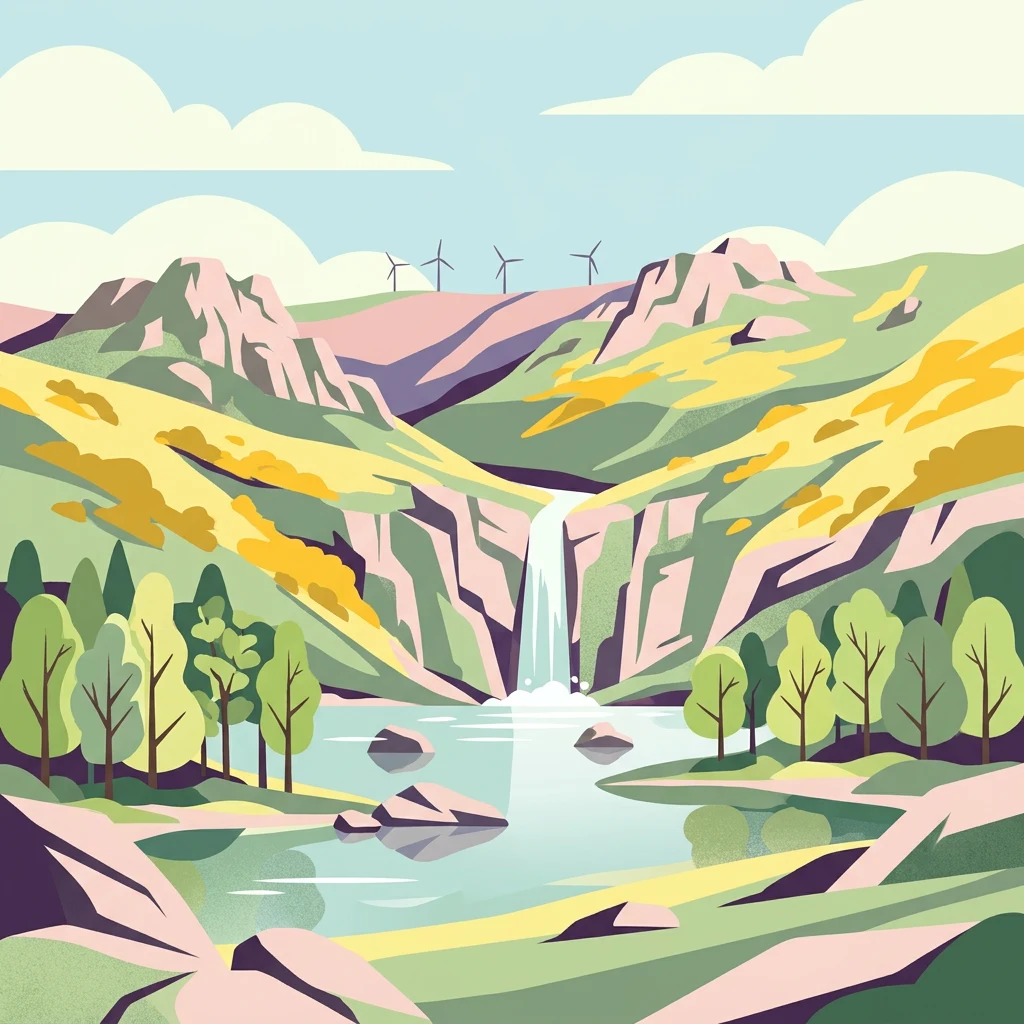
Colorful illustration of a mountain landscape with a waterfall cascading into a lake surrounded by trees and hills

Alvão Natural Park

Protected area

Park overview

Structured park overview, official facts, and landscape profile for Alvão Natural Park

Alvão Natural Park park facts, protected area profile, and essential visitor context
Review the core facts for Alvão Natural Park, including designation, size, terrain, visitor scale, habitats, and operating context in one park-focused overview.

About Alvão Natural Park

Alvão Natural Park occupies the western slopes of the Serra do Alvão mountain range in the Trás-os-Montes e Alto Douro region of northern Portugal. Despite being the smallest of Portugal's natural parks, it preserves an exceptional diversity of landscapes, habitats, and cultural traditions within its 72 square kilometre boundary. The park straddles two distinct geological zones that define its character: the elevated eastern portion is dominated by rugged granite formations including the distinctive caos granítico (granite chaos) around Lamas de Olo, while the western lower areas feature softer schist and phyllite terrain. This geological dichotomy creates the dramatic scenery that defines the park, most visibly at the Fisgas de Ermelo waterfall where the Rio Olo plunges from the hard granite bedrock into the softer schist valley below. The park encompasses parishes of Lamas de Olo, Vila Marim, Ermelo, and Bilhó, with a population of approximately 700 permanent residents who maintain traditional agricultural practices. The landscape bears the imprint of centuries of mountain agro-silvopastoral activity, with terraced fields, irrigation channels, and scattered farmsteads blending into the natural vegetation. The park's small size and relative isolation have helped preserve both natural values and cultural heritage that might otherwise have been lost to modernization.

Quick facts and research context for Alvão Natural Park

Alvão Natural Park covers approximately 72 square kilometres across the municipalities of Vila Real and Mondim de Basto in northern Portugal. The park features an elevation range from 260 metres to 1,339 metres at the Caravelas peak, with the landscape divided between a granite plateau in the east and a lower schist-dominated area in the west. The park was established in 1983 and serves as a protected landscape under IUCN category V. It is part of the broader Alvão-Marão Natura 2000 site spanning nearly 58,766 hectares. The Rio Olo is the principal watercourse, feeding several tributaries and the notable Fisgas de Ermelo waterfall. The park supports around 486 plant species and approximately 200 animal species, with significant populations of golden eagles, wolves, and other protected species.

Park context

Deeper park guide and search-rich context for Alvão Natural Park

Alvão Natural Park history, landscape, wildlife, and travel context
Explore Alvão Natural Park through its history, landscape character, ecosystems, wildlife, conservation priorities, cultural context, and seasonal travel timing in a structured park guide built for atlas discovery and search intent.

Why Alvão Natural Park stands out

Alvão Natural Park is best known for its dramatic contrasts between granite highlands and schist lowlands, which give rise to one of the most spectacular waterfalls in northern Portugal, the Fisgas de Ermelo. This waterfall drops approximately 250 metres along a 1,500-metre course where the Rio Olo descends from the upper granite zone to the lower schist zone. The park also preserves one of the few remaining examples of traditional agro-silvopastoral mountain communities in Portugal, with its network of levadas (irrigation channels), dry-stone terraces, watermills, and characteristic mountain villages. The biodiversity is remarkable for the park's small size, with old-growth oak forests, mixed chestnut and birch woodlands, and a rich community of breeding golden eagles. The transition between Eurosiberian and Mediterranean phytoclimatic regions creates unusual ecological conditions that support species found nowhere else in Portugal.
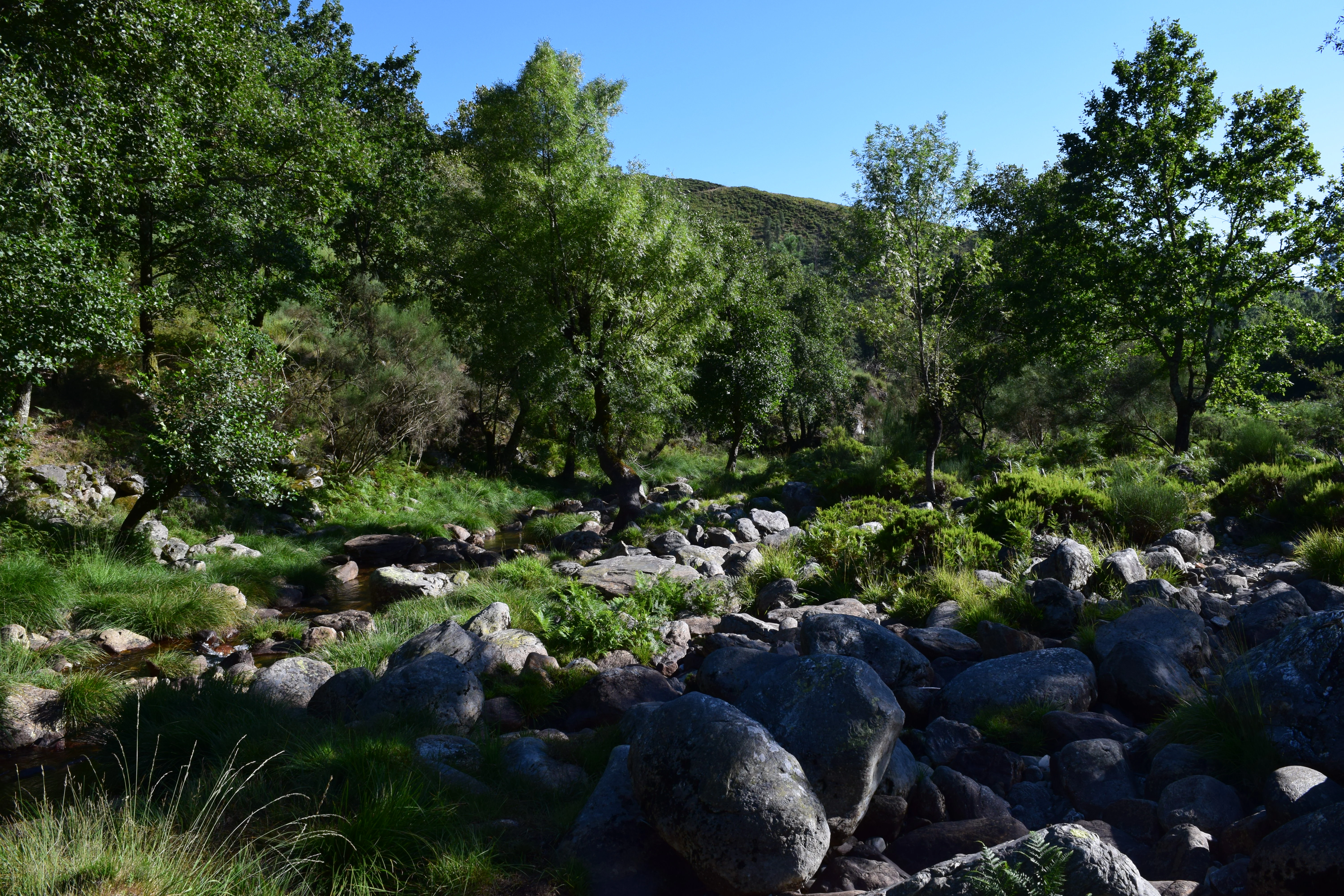
Rocky stream surrounded by large boulders and dense green trees under a clear blue sky
Rocky stream flowing through lush green forest in Alvão Natural Park

Alvão Natural Park history and protected-area timeline

Alvão Natural Park was created on June 8, 1983 under the provisions of decree-law 237/83, establishing it as Portugal's smallest natural park. The park was designated to protect the distinctive mountain landscapes, biodiversity, and traditional rural culture of the Alvão region. In 1997, the park gained additional protection through integration into the European Union's Natura 2000 network. A Council of Ministers resolution (142/97) dated August 28, 1997, classified the broader Alvão-Marão area as a Site of Community Importance (SCI) under the name Sítio Alvão-Marão (PTCON0003). This designation encompasses not only the entire natural park but also extensive areas of the Serra do Alvão and Serra do Marão mountain ranges, totalling approximately 58,766 hectares. The Natura 2000 designation brought the park under the EU Birds Directive (79/409/CEE) and Habitats Directive (92/43/CEE), providing legal framework for the conservation of threatened habitats and species. The management of the park falls under the Instituto da Conservação da Natureza e da Biodiversidade (ICNF), with the park headquarters operating as Parque Natural do Alvão.

Alvão Natural Park landscape and geographic character

The landscape of Alvão Natural Park is defined by a stark geological contrast between two distinct zones that produce dramatically different terrain and scenery. The upper zone, occupying the eastern portion of the park around the parish of Lamas de Olo, consists of a granite plateau at elevations between 800 and 1,339 metres with relatively gentle slopes and limited elevation variation of about 300 metres. Here, the granite has weathered into distinctive formaciones including the caos granítico around Arnal, where rounded boulders create a chaotic, almost lunar landscape. The lower zone, centred on the parish of Ermelo, features much steeper terrain on schist and phyllite bedrock, with slopes dropping dramatically from around 800 metres to the valley floor at 260 metres. The transition between these zones is marked by the spectacular Fisgas de Ermelo waterfall, one of the most impressive in northern Portugal, where the Rio Olo descends 250 metres over a 1,500-metre course. The park is traversed by the Rio Olo and its tributaries, including the Ribeira de Fervença, Rio do Sião, and Ribeira do Vale Longo. Two reservoirs, the Barragem Fundeira and Barragem da Cimeira, sit in the upper elevations and serve as important water sources for Vila Real.
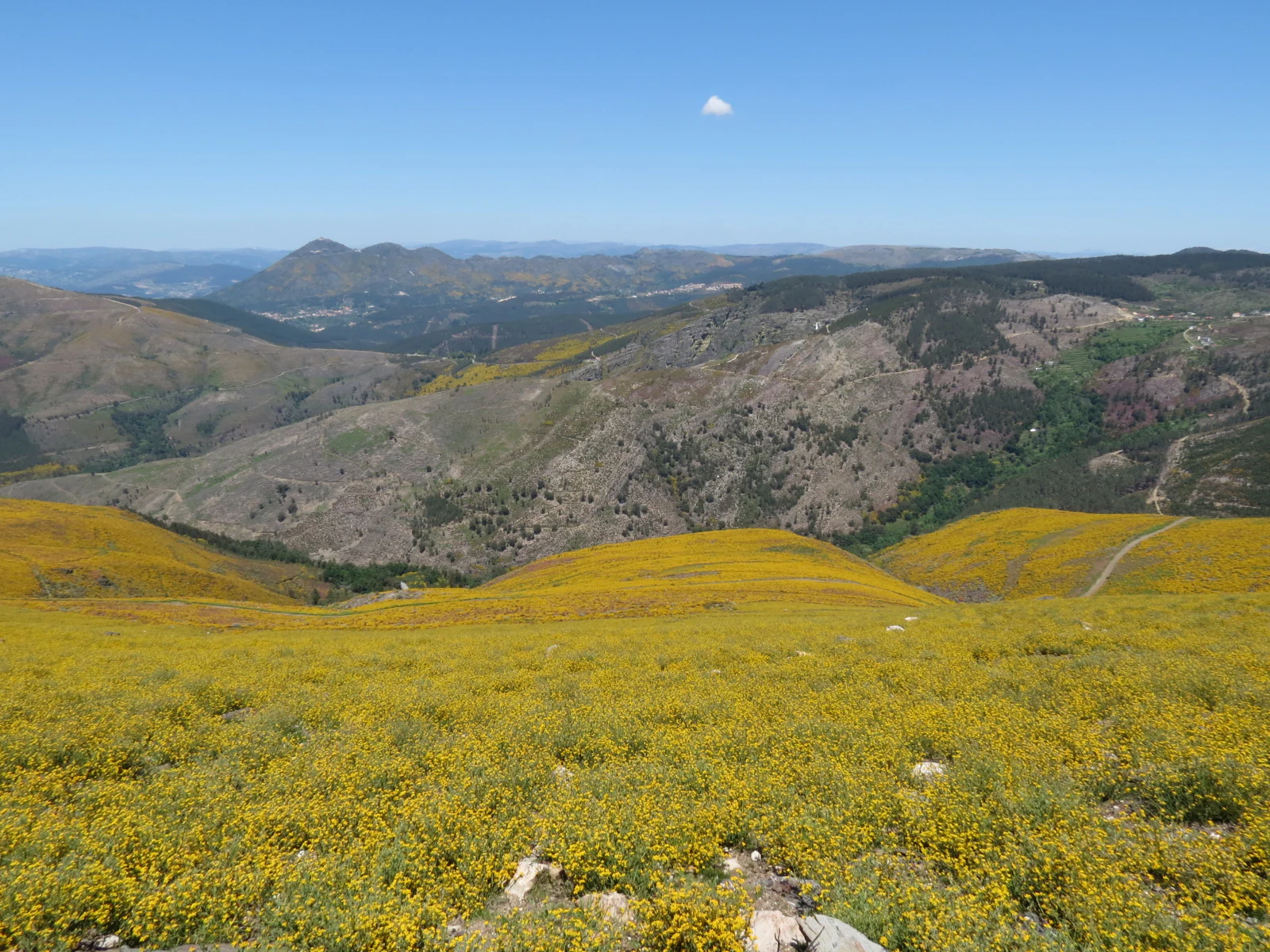
Yellow wildflowers covering rolling hills under clear blue sky with distant mountains
Yellow wildflower meadow landscape in Alvão Natural Park with mountainous backdrop under clear blue sky

Alvão Natural Park ecosystems, habitats, and plant life

Alvão Natural Park occupies a transitional zone between the Eurosiberian and Mediterranean phytoclimatic regions, creating conditions that support a remarkable diversity of plant life. Approximately 486 plant species have been recorded within the park, including 25 species endemic to the Iberian Peninsula and six endemic to Portugal. The vegetation varies significantly with altitude and exposure. Below 600 metres in areas of Atlantic influence, oak forests of pedunculate oak (Quercus robur) dominate, associated with sweet chestnut, hawthorn, holly, and the carnivorous round-leaved sundew (Drosera rotundifolia) in moist riparian areas. At higher elevations and in more continental conditions, mixed forests of pedunculate oak and Pyrenean oak (Quercus pyrenaica) prevail, with birch (Betula alba), rowan, and various shrub species. The riparian zones support alder, ash, willow, and royal fern. Shrub formations include extensive heathlands of Erica species and gorse communities that result from forest degradation. Traditional agricultural areas around the villages feature orchards, olive groves, and meadowlands maintained by the levada irrigation system.
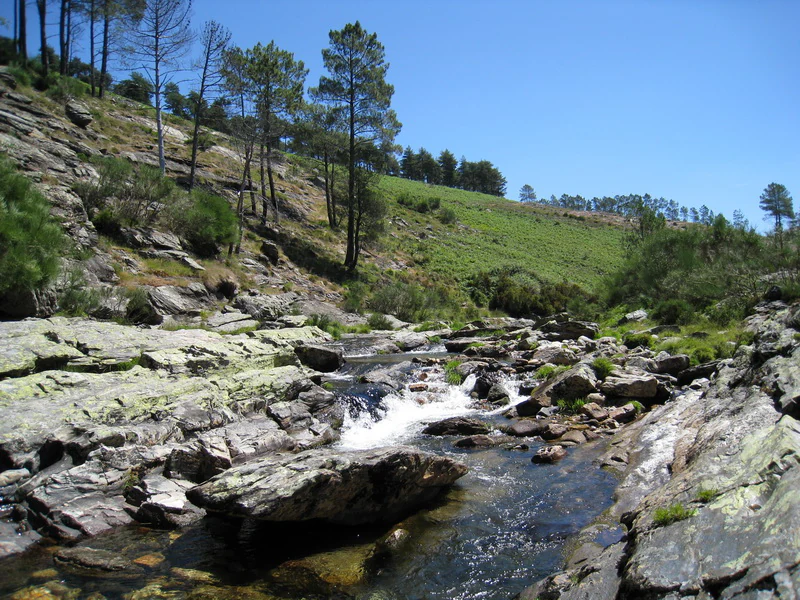
A river with a small waterfall cascading over rocks, surrounded by green hills and trees under a clear blue sky.
A waterfall flowing through rocky terrain in Alvão Natural Park.

Alvão Natural Park wildlife and species highlights

The fauna of Alvão Natural Park comprises approximately 200 species, of which 117 are strictly protected under the Bern Convention and 44 appear on the Red Book of Portuguese Vertebrates. Ten species are endemic to the Iberian Peninsula. Among the most notable predators, the golden eagle (Aquila chrysaetos) nests within the park, while the wolf (Canis lupus) persists in the broader region. The mammalian community includes wild boar, roe deer, European badger, Granada hare, and European rabbit, with mustelids such as weasel, stone marten, polecat, and genet. The Eurasian otter inhabits the Rio Olo and its tributaries, while the Pyrenean desman occupies the park's streams. Birdlife is diverse, with birds of prey including northern goshawk, Eurasian sparrowhawk, common buzzard, and peregrine falcon. The forest avifauna includes woodpigeon, Eurasian hoopoe, Eurasian nuthatch, green woodpecker, and various thrushes and finches. Reptiles include the Iberian emerald lizard and Lataste's viper, while amphibians such as the Lusitanian salamander and Spanish frog inhabit the aquatic habitats. The Rio Olo supports populations of brown trout.
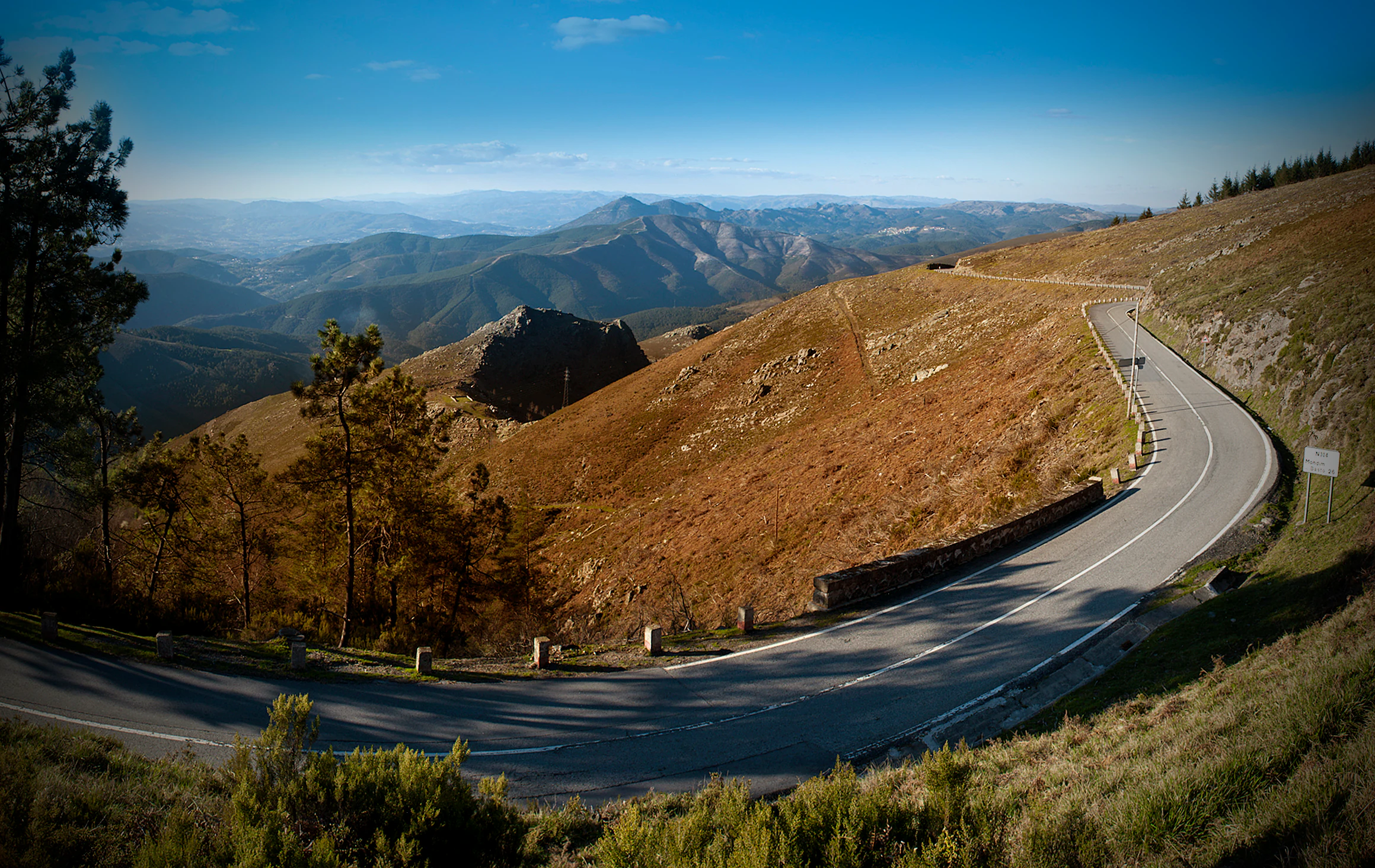
Winding paved road through mountainous landscape with dry brown vegetation, scattered trees, and distant mountain ranges under clear blue sky
Winding road through mountainous terrain in Alvão Natural Park

Alvão Natural Park conservation status and protection priorities

Alvão Natural Park holds IUCN category V status as a protected landscape, recognizing its harmonious integration of natural and cultural values. The park's inclusion in the Natura 2000 network as part of the Alvão-Marão site (PTCON0003) provides additional European-level protection under the Birds and Habitats Directives. Nearly 200 animal species have been documented, with 23 species holding formal conservation status. Among the most significant are the wolf, several bat species including whiskered bat and Nathusius' pipistrelle, and birds such as the short-toed eagle, peregrine falcon, and red-billed chough. The park preserves important forest habitats, including old-growth oak woodlands and riparian forests that serve as corridors for wildlife movement. The traditional land management practices, including grazing and selective logging, have shaped the landscape over centuries and help maintain the open habitats required by species such as the golden eagle. However, depopulation of mountain communities and abandonment of traditional practices pose ongoing challenges to the park's ecological integrity.

Alvão Natural Park cultural meaning and human context

Alvão Natural Park preserves one of the most complete examples of traditional mountain agro-silvopastoral culture in Portugal. The communities of Lamas de Olo, Ermelo, Fervença, and surrounding villages maintained economies based on mixed agriculture, forest exploitation, and pastoralism adapted to the harsh mountain environment. The traditional architecture reflects this heritage, with schist and granite houses, granaries (espigueiros), and abandoned watermills scattered throughout the landscape. The irrigation systems known as levadas are among the most sophisticated in the region, capturing water at high altitude and distributing it through networks of stone channels to terraced fields and meadows. The sistema de rega de lima allowed summer irrigation of pastures while protecting crops from frost in winter. These collective water management systems remain functional in places. Traditional crafts persisted longer here than in most of Portugal due to the communities' isolation, including chestnut wood basketry, almond wood clog-making, straw hat weaving, and wool weaving. Many of these traditions are now in decline as the population ages and younger generations move to urban areas.
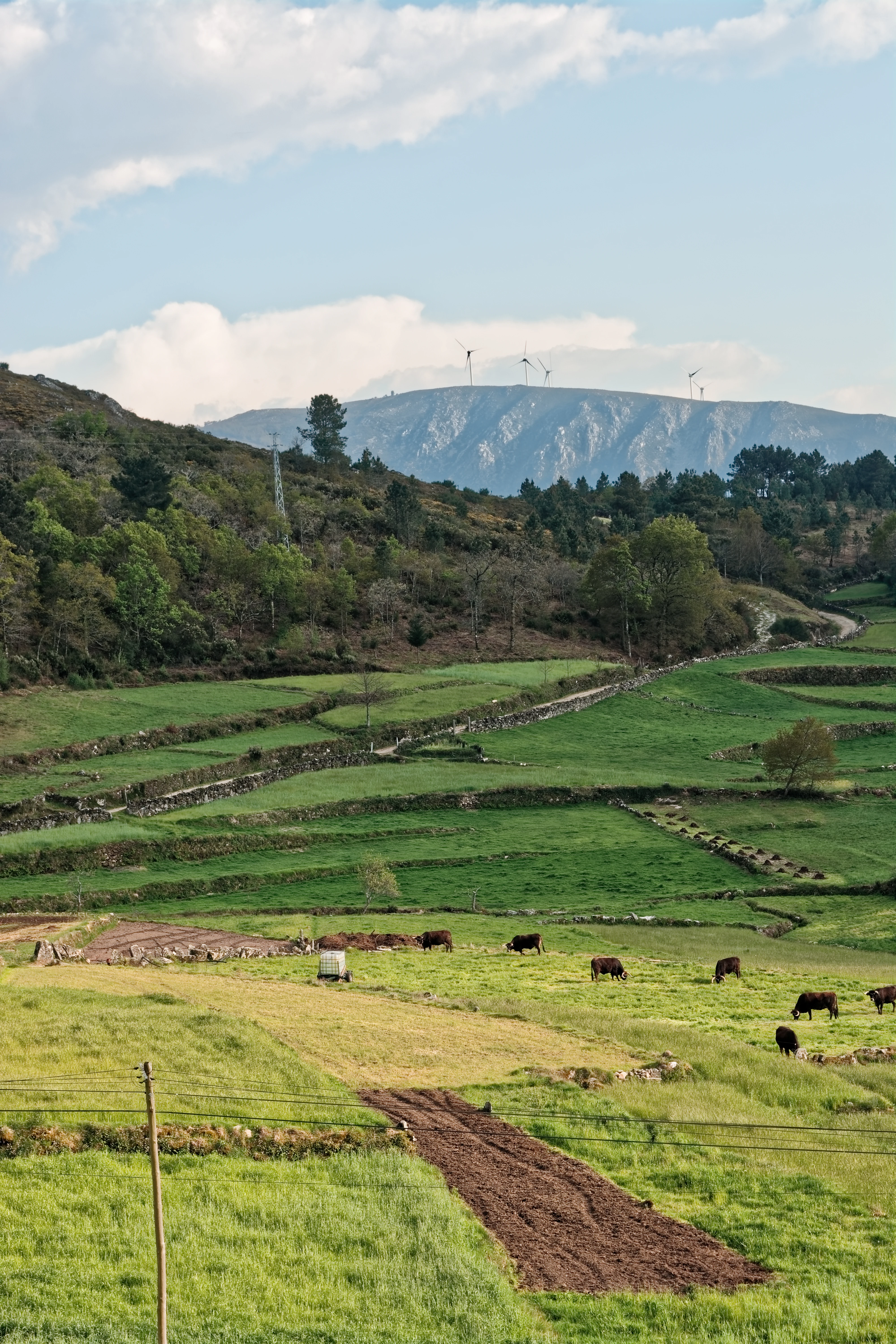
Grassy fields with cows grazing, stone walls, rolling hills, and mountains in the background under a partly cloudy sky
Green pastures with grazing cows in Alvão Natural Park, Portugal

Top sights and standout views in Alvão Natural Park

The Fisgas de Ermelo waterfall stands as the park's most dramatic natural landmark, where the Rio Olo plunges 250 metres in a series of cascades across the granite-schist boundary. The granite chaos formations around Lamas de Olo create an otherworldly landscape of weathered boulders and tors. The Caravelas peak at 1,339 metres offers sweeping views across the park and toward the Serra do Marão. Traditional villages such as Ermelo and Lamas de Olo preserve mountain architecture and cultural practices. The levada trails provide access to the park's most scenic areas while illustrating the sophisticated traditional irrigation systems. The contrast between the lush green valleys and the rocky, exposed peaks defines the park's visual character. Golden eagles can be observed soaring over the ridges, while the Rio Olo supports healthy populations of brown trout and otters. The park's small size makes it possible to experience the full range of its landscapes in a single day hike.
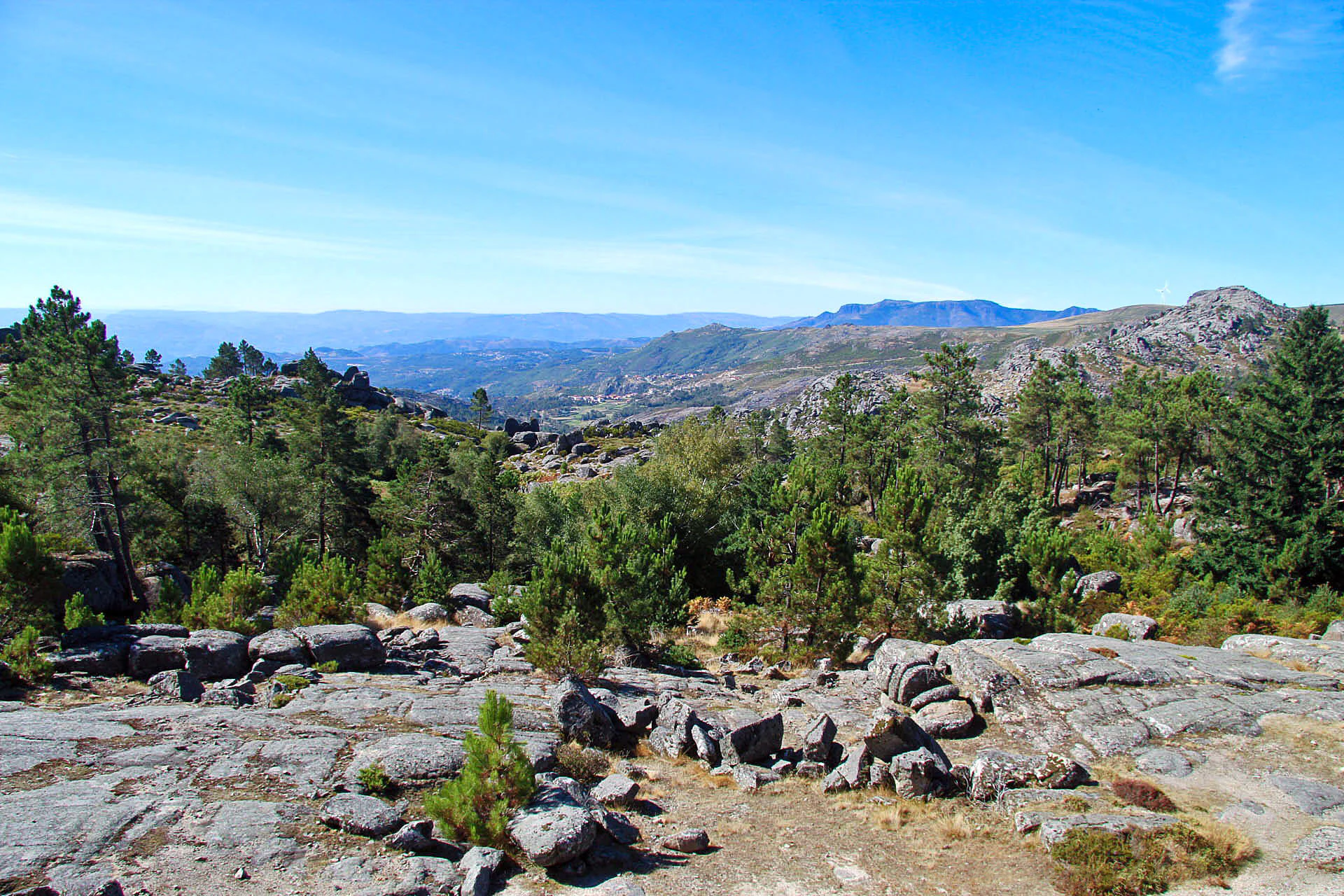
Wide landscape view showing rocky outcrops, scattered pine trees, and distant mountain ranges under a clear blue sky
Rocky terrain and forested hills in Alvão Natural Park under a clear blue sky

Best time to visit Alvão Natural Park

The best time to visit Alvão Natural Park depends on what visitors hope to experience. Spring (April to June) brings the park to life with wildflowers, flowing waterfalls due to snowmelt and spring rains, and active wildlife. The landscape is at its greenest, and temperatures are comfortable for hiking. Summer (July to September) offers warm, dry conditions ideal for trail walking, though some springs and small watercourses may dry up. Autumn (October to November) paints the deciduous woodlands in rich colours and is a good time for mushroom foraging, though visitor numbers decrease. Winter (December to March) brings cold, sometimes snowy conditions at higher elevations, but the dramatic waterfalls benefit from winter precipitation and the park is quiet. The shoulder seasons of spring and autumn offer the most pleasant temperatures and the best balance of scenery and accessibility. The park can be visited year-round, but trail conditions vary with season.
Park location guide

Geography guide, regional context, and park location map for Alvão Natural Park

Alvão Natural Park park geography, regions, and map view in Portugal
Understand where Alvão Natural Park sits in Portugal through a broader geographic reading of the surrounding landscape, nearby location context, and its mapped position within the national park landscape.

How Alvão Natural Park fits into Portugal

Portugal is a developed European country on the western Iberian Peninsula. It features a coastline along the Atlantic Ocean, includes the autonomous regions of the Azores and Madeira, and is known for its maritime history during the Age of Discovery. The country has a population of over 10.7 million and operates as a semi-presidential republic with Portuguese as its official language.

Wider geography shaping Alvão Natural Park in Portugal

Portugal occupies the western portion of the Iberian Peninsula in Southwestern Europe. The mainland borders Spain to the north and east, while the autonomous regions of Madeira and the Azores are situated in the Atlantic Ocean. The country includes Cabo da Roca, the westernmost point in continental Europe. The terrain varies from plains in the south to mountainous regions in the north.

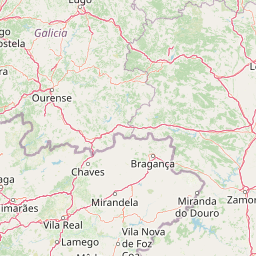
Map view of Alvão Natural Park

Use this park location map to pinpoint Alvão Natural Park in Portugal, understand its exact geographic position, and read its mapped placement within the surrounding landscape more clearly.

Pigeon | © OpenStreetMap contributors

Location context for Alvão Natural Park

Norte RegionVila Real

Explore the Dramatic Terrain, Fisgas de Ermelo Waterfall, and Distinctive Habitats of Portugal's Smallest Natural Park

Alvão Natural Park Photos: A Visual Guide to Its Protected Landscapes and Mountain Scenery
Browse a comprehensive visual collection of Alvão Natural Park, revealing its dramatic granite highlands, steep schist valleys, and the spectacular Fisgas de Ermelo waterfall. Understand the park's unique protected area character by examining its diverse habitats, traditional mountain communities, and the striking environmental contrasts within its Northern Portugal terrain.

Rocky stream surrounded by large boulders and dense green trees under a clear blue sky

Reservoir with clear blue water reflecting rocks, trees, and hills under a clear sky

Yellow wildflowers covering rolling hills under clear blue sky with distant mountains

A river with a small waterfall cascading over rocks, surrounded by green hills and trees under a clear blue sky.

Winding paved road through mountainous landscape with dry brown vegetation, scattered trees, and distant mountain ranges under clear blue sky

Green and brown lizard with blue head on a rocky surface surrounded by vegetation

Grassy fields with cows grazing, stone walls, rolling hills, and mountains in the background under a partly cloudy sky

Wide landscape view showing rocky outcrops, scattered pine trees, and distant mountain ranges under a clear blue sky

A waterfall cascading down a rocky cliff face, surrounded by sparse vegetation and trees, under a clear blue sky

Stone building ruins on rocky terrain with stream and vegetation

Yellow wildflowers covering rolling hills with mountainous terrain and a winding road in the background

A narrow stone-lined water channel with green vegetation on both sides.

Park atlas

Trace nearby national parks and protected landscapes, comparing their mapped geography and conservation footprint across Portugal's Norte Region.

Discover Other Protected Areas and National Parks Near Alvão Natural Park, Portugal
Browse a curated selection of protected areas and national parks located near Alvão Natural Park, extending your geographic discovery across Portugal's Norte Region. This comparative view provides valuable context for understanding the regional spread of conservation landscapes, allowing deeper atlas-style analysis of adjacent mountain parks and diverse natural reserves.
National park

Peneda-Gerês National Park: A Distinct Protected Landscape in Northern Portugal

Granite peaks, glacial valleys, and cultural heritage mapped.

Peneda-Gerês National Park represents a cornerstone of protected landscapes in Portugal, celebrated for its rugged granite mountains and deep glacial valleys sculpted over millennia. This national park showcases a rare ecological transition zone with unique endemic species and features dramatic waterfalls and pristine river systems. The park's rich cultural tapestry, interwoven with its natural environment, offers a compelling subject for atlas-based geographic discovery and landscape exploration.

Area
695.93 km²
Established
1971
IUCN
II
Visitors
92.8K annual
Protected landscapeEsposende

Northern Littoral Natural Park Protected Landscape: Geographic Discovery and Atlas Context

Mapped protected areas and regional landscape discovery near Esposende.

Uncover the geographic identity of Northern Littoral Natural Park, a key protected landscape situated near Esposende. This MoriAtlas entry focuses on its mapped boundaries and regional significance, providing a factual basis for understanding its role within Portugal's network of protected areas. Explore the park's natural terrain and its context within the broader geography of the Norte region for comprehensive atlas-based discovery.

Area
87.62 km²
Established
1987
IUCN
V
Relief
Lowland
Protected landscapeBragança District

Montesinho Natural Park: Protected Landscape in Bragança District, Portugal

Explore mapped boundaries and regional landscape context.

Montesinho Natural Park is designated as a protected landscape in northeastern Portugal, located within the administrative region of Bragança District. This page serves as an entry point to understanding the park's protected area characteristics, its mapped geographic footprint, and its role in the broader natural landscape of the Trás-os-Montes region. Discover the atlas value of this significant protected territory and its relation to surrounding geography.

Area
742.25 km²
Established
1979
IUCN
V
Relief
Mountain
Watercolor illustration of a landscape with green mountains, a body of water, and colorful wildflowers in the foreground
Nature reservePortugal

Serra da Estrela Natural Park: Glacial Terrain and Highest Peaks in Portugal

Explore the dramatic geography of this nature reserve.

Serra da Estrela Natural Park is a significant protected landscape in Portugal, celebrated for containing the nation's highest peak and exceptional Quaternary glacial formations. The park's terrain includes dramatic valleys carved by ice, numerous glacial lakes, and a stark alpine plateau around Torre. This nature reserve preserves a unique environment shaped by both geological history and traditional pastoralism, offering rich mapped context for understanding Portugal's mountainous geography and protected areas.

Area
891.32 km²
Established
1976
IUCN
V
Visitors
7.6K annual
Watercolor illustration of rolling green hills and distant purple mountains under a light sky
National parkGalicia

Atlantic Islands of Galicia National Park: Protected Archipelagos & Galician Coastline Geography

Explore mapped island ecosystems and protected marine areas.

Uncover the protected landscape of the Atlantic Islands of Galicia National Park, Spain's only national park in Pontevedra province. This atlas entry details the four distinct archipelagos, Cíes, Ons, Sálvora, and Cortegada, across the Rías Baixas. Discover the unique sea-land protected area, its rare bay laurel forests, significant seabird colonies, and the broader regional geography of Galicia.

Area
84.8 km²
Established
2002
IUCN
II
Visitors
472.3K annual
Watercolor illustration of a landscape with rolling hills, a body of water, and vegetation
Protected landscapePortugal

Aire and Candeeiros Ranges Natural Park: Protected Landscape and Regional Geographic Context

Explore the mapped boundaries and natural landscape of this Portuguese protected area.

Understand the Aire and Candeeiros Ranges Natural Park as a key protected landscape in Portugal. This page offers detailed geographic information, focusing on the park's mapped boundaries and its intrinsic connection to the surrounding regional geography. It serves as a portal for atlas exploration, providing structured data for users interested in the specific protected area and its landscape characteristics within the Iberian Peninsula.

Area
383.93 km²
Established
1979
IUCN
V
Visitors
31.9K annual
National park

Monfragüe National Park: Protected Landscape Atlas of Spanish Raptor Colonies

Explore mapped terrain and regional geography within this Spanish National Park.

As a national park in Spain's Extremadura region, Monfragüe National Park offers a distinct protected landscape shaped by the Tagus River and dramatic limestone cliffs. It is globally recognized for its exceptional birdlife, especially its large griffon vulture colonies and populations of Spanish imperial eagles, making it a significant site for ecological study and atlas-based exploration of protected areas. The park's landscape, characterized by Mediterranean woodlands and rugged terrain, provides crucial habitat and a unique geographic context for understanding Iberian Peninsula conservation.

Scope
Terrestrial
Watercolor illustration of rolling green hills, a winding river, and a distant horizon with a soft sun
National parkExtremadura

Monfragüe National Park: Dramatic Cliffs, Raptor Haven, and Extremadura's Protected Landscape

Discover its mapped terrain and unique geography in Spain.

Monfragüe National Park, situated in Extremadura, Spain, offers a compelling study in protected landscape geography. The park's identity is shaped by its formidable cliffs and river valleys carved by the Tagus, providing critical nesting grounds for European raptors. This MoriAtlas entry details the park's mapped boundaries and its significance as a vital protected area within the region. Users can explore the specific natural terrain and regional context that establish Monfragüe as a unique protected territory.

Area
179 km²
Established
2007
IUCN
II
Visitors
331.8K annual

Common questions about visiting, size, designation, and location context for Alvão Natural Park

Alvão Natural Park FAQs for park facts, access, geography, and protected area context
Find quick answers about Alvão Natural Park, including protected-area facts, park geography, trail and visitor context, and how the park fits into its surrounding country and regional landscape.
MoriAtlas Explorer

Continue Your Protected Areas Search Across the Global Atlas

Deepen your exploration by continuing the structured search for national parks and protected areas worldwide. Utilize the comprehensive filtering capabilities to compare different conservation landscapes and refine your understanding of global park geography. Discover more about the distribution and characteristics of protected natural areas.

Global natural geography