Mori Atlas logo
National parkDachigam National Park

Discover the mapped boundaries and natural terrain of this Indian national park.

Dachigam National Park: Protected Landscape and Geographic Context in Srinagar District

Dachigam National Park, a protected area situated within the Srinagar district of India, offers a unique landscape for geographic exploration. This page serves as a dedicated entry point for understanding the park's identity as a national park, its place within the regional geography, and its mapped boundaries. Dive into the structured details to grasp the essence of Dachigam National Park's protected land and terrain.

Himalayan national parksKashmir wildlifeEndangered species habitatAlpine meadowsWatershed protectionMountain conservation

Dachigam National Park

National park

Park overview

Structured park overview, official facts, and landscape profile for Dachigam National Park

Dachigam National Park park facts, protected area profile, and essential visitor context
Review the core facts for Dachigam National Park, including designation, size, terrain, visitor scale, habitats, and operating context in one park-focused overview.

About Dachigam National Park

Dachigam National Park represents one of the most significant protected areas in the Kashmir Himalayas, combining critical biodiversity conservation with watershed protection for the Srinagar metropolitan area. The park's dramatic elevation gradient from approximately 1,676 metres to 4,267 metres creates a remarkable diversity of habitats within a relatively compact area, supporting everything from forested lower slopes to alpine grasslands. The Zabarwan Range, which forms the park's geographic backbone, provides a stunning backdrop visible from Srinagar and represents the foothills of the greater Himalayan mountain system. The park's hydrological significance cannot be overstated, as the Dagwan River originates from highland snowmelt and Marsar Lake within the park boundaries, flowing through the protected area before supplying the Sarband reservoir that serves as a critical source of clean drinking water for nearly a million people in the Kashmir Valley. This dual role of biodiversity conservation and water security makes Dachigam uniquely important among Indian national parks.

Quick facts and research context for Dachigam National Park

Dachigam National Park occupies 141 square kilometres in the Zabarwan Range of the western Himalayas, approximately 22 kilometres from Srinagar. The park was first protected in 1910 as a water catchment area and became a national park in 1981. Elevations range from 1,676 to 4,267 metres, creating diverse habitats across alpine meadows, coniferous forests, and rocky terrain. The park serves as a critical watershed, with the Dagwan River feeding the Sarband reservoir that provides drinking water to Srinagar. The park is most renowned for supporting the hangul, or Kashmir stag, a critically endangered species that is the state animal of Jammu and Kashmir.

Park context

Deeper park guide and search-rich context for Dachigam National Park

Dachigam National Park history, landscape, wildlife, and travel context
Explore Dachigam National Park through its history, landscape character, ecosystems, wildlife, conservation priorities, cultural context, and seasonal travel timing in a structured park guide built for atlas discovery and search intent.

Why Dachigam National Park stands out

Dachigam National Park is best known as the primary sanctuary for the hangul, also called the Kashmir stag, one of the rarest and most endangered large mammals in the world. This Critically Endangered deer species finds one of its last remaining strongholds within the park's montane forests and alpine meadows. Beyond the hangul, the park protects a remarkable assembly of Himalayan wildlife including snow leopards, musk deer, Himalayan serow, and both black and brown bears. The park's position in the Zabarwan Range provides access to some of the most scenic Himalayan landscapes accessible from a major city, with its combination of alpine meadows, coniferous forests, and dramatic mountain vistas making it a significant conservation and wilderness area within the Kashmir Valley.

Dachigam National Park history and protected-area timeline

The protection history of Dachigam National Park traces back to 1910, when the area was first reserved under the rule of the Maharaja of Jammu and Kashmir. The initial motivation for protection was pragmatic rather than conservation-focused: the forested catchments of the Zabarwan Range supplied clean water to Srinagar, and the maharaja's administration recognized the importance of maintaining these watersheds against deforestation and degradation. Ten villages that had historically existed within what is now the park were relocated during the early twentieth century, giving the area its name meaning ten villages. This displacement created the conditions for a relatively intact wilderness to persist despite increasing pressure from a growing regional population. The area remained under various forms of protection through the mid-twentieth century before being formally upgraded to national park status in 1981 under India's wildlife protection framework, establishing the current conservation regime that balances ecological preservation with limited sustainable tourism.

Dachigam National Park landscape and geographic character

The physical landscape of Dachigam National Park embodies the dramatic topography characteristic of the western Himalayan foothills. The terrain is defined by steep mountain slopes, rocky cliffs, and deep gullies known locally as nars, which channel seasonal water flow down from the higher elevations. Below the tree line, the mountainsides support dense coniferous forests dominated by broadleaf species, creating a forested character quite different from the higher-elevation pine forests found elsewhere in the Himalayas. Alpine meadows and pastures are interspersed throughout the forest zone, providing seasonal grazing areas and supporting diverse herbaceous vegetation. The upper reaches of the park transition into rocky alpine terrain with limited vegetation, where snow persists for extended periods during winter. Two significant water bodies define the park's hydrology: Marsar Lake sits at high elevation in the interior of the park, and the Dagwan River flows from this lake through the lower regions, following the only motorable road within the park boundaries before eventually joining the Jhelum River system.

Dachigam National Park ecosystems, habitats, and plant life

The ecological character of Dachigam National Park reflects its position in the western Himalayan biodiversity hotspot. The park's elevation range of nearly 2,600 metres supports a vertical zonation of habitats, from subtropical forested slopes through coniferous forest zones to alpine meadows and rock. The forest composition is predominantly broadleaf coniferous, with various species of pine, cedar, and birch occurring at different elevations. These forests grade into alpine pastures during the brief summer growing season, when the meadows explode with colourful wildflowers. The park's water systems, including Marsar Lake and the Dagwan River, add wetland and aquatic habitat diversity to the terrestrial ecosystems. This habitat heterogeneity supports remarkable biodiversity, with the park serving as a microcosm of Himalayan ecology. The protection of these habitats is particularly significant given the intense development pressure on the Kashmir Valley, as Dachigam represents one of the few relatively intact ecological corridors remaining in the region.

Dachigam National Park wildlife and species highlights

Dachigam National Park supports a remarkable assemblage of Himalayan fauna, centred around its most famous resident, the hangul or Kashmir stag. This large deer, the state animal of Jammu and Kashmir, has suffered severe population declines across its historic range, making Dachigam's population critically important for species survival. The park also protects the secretive musk deer, a small Asian ungulate prized for its aromatic musk pod, as well as the Himalayan serow, a goat-antelope adapted to steep mountainous terrain. Predators present include the snow leopard, one of the rarest and most elusive large cats in the world, along with smaller predators such as the leopard cat, jungle cat, and various mustelids including the Himalayan weasel and yellow-throated marten. Bear species include both the Himalayan black bear and the larger Himalayan brown bear. The bird fauna is equally diverse, featuring the brilliantly coloured Himalayan monal pheasant, the distinctive koklass pheasant, and various vulture species including the Himalayan griffon and bearded vulture. The Dagwan River supports introduced trout populations, providing fishing opportunities while also supporting aquatic wildlife including otter.

Dachigam National Park conservation status and protection priorities

Dachigam National Park plays a vital role in conserving some of the most threatened Himalayan biodiversity. The park's primary conservation significance lies in its role as a refuge for the Kashmir stag, a species now confined to isolated populations in the Kashmir Himalayas and neighbouring regions. Conservation efforts within the park focus on protecting habitat connectivity, managing human-wildlife conflict, and maintaining the water catchments that support both wildlife and human communities downstream. The park's proximity to Srinagar creates both opportunities and challenges: the accessible location facilitates conservation monitoring and tourism revenue, but also subjects the area to development pressure and habitat fragmentation. The watershed protection function provides an additional conservation rationale, as maintaining forest cover in the park directly ensures water security for the Kashmir Valley's capital city. This integration of biodiversity conservation with ecosystem service provision makes Dachigam a model for protected area management in mountainous Asian landscapes.

Dachigam National Park cultural meaning and human context

The cultural history of Dachigam National Park is intertwined with the human settlement history of the Kashmir Valley. The name Dachigam derives from the local term for ten villages, reflecting the displacement of these communities in the early twentieth century to create the protected area. While this relocation occurred over a century ago, the cultural landscape bears the imprint of this human history alongside the more recent wilderness conservation values. The park lies within a region of extraordinary cultural significance, as the Kashmir Valley has been a crossroads of South Asian civilization for millennia, with influences from Central Asian, Persian, and South Asian traditions shaping local communities. The nearby city of Srinagar, one of India's oldest continuously inhabited cities, provides the cultural context for understanding Dachigam's role as both a wilderness area and a critical ecological service provider for a historic urban centre.

Top sights and standout views in Dachigam National Park

Dachigam National Park offers visitors a rare opportunity to experience Himalayan wilderness within reach of a major city. The park's most iconic wildlife encounter is the Kashmir stag, which can be spotted in the forested slopes and meadows, particularly during the rutting season when males display their impressive antlers. The scenic drive along the Dagwan River provides access to the park's interior, with views of forested slopes rising toward snow-capped peaks. The combination of alpine meadows blanketed with wildflowers in summer, the dramatic autumn colours of the deciduous forests, and the stark beauty of snow-covered terrain in winter creates a year-round scenic destination. Birdwatchers find particular reward in observing the Himalayan monal, various thrushes, and the spectacular vultures circling on thermal currents. The park's role as a watershed supplying Srinagar adds an ecological dimension to the visitor experience, connecting the landscape to the daily lives of over a million people.

Best time to visit Dachigam National Park

The best time to visit Dachigam National Park depends on what visitors hope to experience. Summer and early autumn, from May through October, offer the most accessible conditions with snow-free roads within the park and pleasant temperatures in the lower elevations. This period coincides with the bloom of alpine flowers in the meadows and provides the best opportunities for wildlife viewing as animals are more active in the warmer months. Autumn brings spectacular forest colour as the broadleaf trees turn golden and red, creating particularly scenic landscapes. Winter visits offer a different experience, with snow-covered terrain and fewer visitors, though some areas may be inaccessible and temperatures drop significantly at higher elevations. The park remains open year-round, but visitors planning trips should be aware that winter conditions in the Himalayas can be challenging and some services may be limited. Spring and early summer provide the most verdant scenery, while late autumn offers clearer skies and excellent visibility for mountain views.

Park location guide

Geography guide, regional context, and park location map for Dachigam National Park

Dachigam National Park park geography, regions, and map view in India
Understand where Dachigam National Park sits in India through a broader geographic reading of the surrounding landscape, nearby location context, and its mapped position within the national park landscape.

How Dachigam National Park fits into India

India is a South Asian country bordered by the Indian Ocean, Arabian Sea, and Bay of Bengal. It shares land borders with Pakistan, China, Nepal, Bhutan, Bangladesh, and Myanmar. The country has a population of over 1.4 billion people and operates as a federal parliamentary republic with its capital in New Delhi.

Wider geography shaping Dachigam National Park in India

India occupies the Indian subcontinent in South Asia, bordered by the Arabian Sea to the southwest, the Bay of Bengal to the southeast, and the Indian Ocean to the south. It shares land borders with Pakistan to the west, China, Nepal, and Bhutan to the north, and Bangladesh and Myanmar to the east. The territory also includes the Andaman and Nicobar Islands in the Indian Ocean.

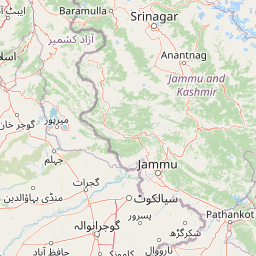
Map view of Dachigam National Park

Use this park location map to pinpoint Dachigam National Park in India, understand its exact geographic position, and read its mapped placement within the surrounding landscape more clearly.

Pigeon | © OpenStreetMap contributors

Location context for Dachigam National Park

Jammu and KashmirSrinagar district
Park atlas

Explore regional park geography and connected protected landscapes surrounding Dachigam National Park in India.

Discover Other National Parks and Protected Areas Near Dachigam National Park
After exploring Dachigam National Park, browse additional protected areas across the Western Himalayan region to compare diverse montane forests, alpine meadows, and critical wildlife habitats. Continue your atlas-style discovery by mapping the regional spread of conservation landscapes and understanding their geographic context alongside Dachigam National Park.
National parkGilgit-Baltistan

Deosai National Park: A Premier High-Altitude Alpine Wilderness and Protected Landscape in Pakistan

Mapped boundaries and unique terrain within Gilgit-Baltistan's geography.

Deosai National Park is a key protected area in Pakistan's Gilgit-Baltistan region, characterized by its high-altitude alpine meadows and expansive plateau terrain. As a national park, it offers crucial insights into mapped landscapes and regional geography, particularly for understanding conservation efforts in extreme environments. The park's setting provides a unique lens through which to explore the distribution and characteristics of protected lands within the broader atlas of natural landscapes.

Area
3,584 km²
Established
1993
IUCN
Ib
Relief
Highland
National parkKishtwar district

Kishtwar National Park: Discover Protected Himalayan Wilderness & Geography

Mapped terrain and protected area context in India's Kishtwar district.

Kishtwar National Park is a significant protected landscape situated in the Kishtwar district, India, offering a detailed view of high-altitude Himalayan wilderness. Its dramatic mountainous terrain, from temperate forests to alpine meadows, defines its unique geographic character. Explore the park's mapped boundaries and understand its place within the broader regional geography for comprehensive atlas discovery.

Area
2,190.5 km²
Established
1981
IUCN
II
Relief
Mountain
National parkAzad Kashmir

Panjal Mastan National Park: High-Altitude Plateau Landscape in Azad Kashmir

Discover mapped terrain and protected area geography.

Panjal Mastan National Park represents a significant protected landscape within the Pir Panjal mountain range of Azad Kashmir, Pakistan. This national park is characterized by its expansive high-altitude plateau, sitting at an average elevation of 2,800 meters, offering a unique regional geography. Known for its dramatic mountainous surroundings and seasonal wildflower meadows that bloom in spring, the park provides valuable context for understanding the natural terrain and protected area distribution in this part of the western Himalayas.

Area
300 km²
IUCN
II
Relief
Mountain
Climate
Alpine
National parkAzad Jammu and Kashmir

Poonch River Mahaseer National Park: Pakistan's First Riverine Conservation Area

Mapped aquatic landscape and freshwater biodiversity in Azad Jammu and Kashmir.

Poonch River Mahaseer National Park is a significant aquatic protected area established in 2010, renowned for being Pakistan's first dedicated riverine conservation zone. Situated along the Poonch River in Azad Jammu and Kashmir, it spans approximately 22.5 square kilometers, encompassing the main river channel and key tributary nullahs crucial for breeding. The park's primary objective is to protect the endangered golden mahseer and the broader freshwater ecosystem, serving as a vital model for river-based conservation and mapped biodiversity stewardship in the region.

Area
22.5 km²
Established
2010
IUCN
II
National parkGilgit-Baltistan

Nanga Parbat National Park: Protected Himalayan Landscape and Geographic Atlas

Explore mapped boundaries and alpine terrain in Gilgit-Baltistan.

Nanga Parbat National Park is a vast protected area defined by its spectacular Himalayan setting and dramatic alpine geography within Gilgit-Baltistan, Pakistan. As a national park, it safeguards the immense Nanga Parbat massif, its surrounding glaciers, and diverse altitudinal landscapes. This page offers an atlas perspective for understanding the park's geographic scope, its mapped natural features, and its significance as a protected mountain wilderness.

Area
1,785.61 km²
Established
2021
IUCN
II
Relief
Mountain
National parkAzad Jammu and Kashmir

Pir Lasura National Park: Pakistan National Park with Subtropical Pine Forest Landscape

Explore the mapped boundaries and geography of this unique Azad Jammu and Kashmir protected area.

Pir Lasura National Park in Azad Jammu and Kashmir, Pakistan, is a critical national park encompassing approximately 15.8 square kilometers of subtropical chir pine forest and scrub vegetation. Located in the Pir Lasura mountain range, it features a varied terrain with elevations ranging from 1,000 to 2,000 meters, contributing to its unique ecosystem at the transitional zone between major geographic regions. This page offers a detailed atlas-style exploration of the park's mapped features, its importance as a protected landscape, and its role in supporting diverse wildlife including significant vulture roosting sites and common leopard habitats.

Area
15.8 km²
Established
2005
IUCN
II
Relief
Mountain
National parkAzad Jammu and Kashmir

Machiara National Park: A Protected National Park in Pakistan's Himalayas

Explore mapped terrain and mountain biodiversity.

Machiara National Park, located in Azad Jammu and Kashmir, Pakistan, is a designated national park preserving unique Himalayan ecosystems. This atlas-focused exploration details the park's protected landscape, encompassing steep slopes, forested ridges, and varied terrain. Discover its significance for wildlife conservation and its position within the broader regional geography, offering a clear view of its mapped natural features.

Area
135.33 km²
Established
1996
IUCN
II
Relief
Mountain
National parkPakistan

Deva Vatala National Park: Pakistan's Protected Tropical Thorn Forest Landscape

Explore mapped boundaries and regional geography within the Lower Himalayan foothills.

Deva Vatala National Park is a significant protected area located in Pakistan's Lower Himalayan Range, notable for its unique tropical thorn forest ecosystem. Occupying hilly terrain with elevations up to 1,101 meters, the park's landscape is defined by semiarid conditions and acacia-dominated vegetation, creating an unusual ecological interface. Its mapped boundaries encompass lake systems and diverse habitats, making it a critical conservation site within South Asia, distinct from typical Himalayan protected areas.

Area
70 km²
Established
1998
IUCN
II
Relief
Mountain

Common questions about visiting, size, designation, and location context for Dachigam National Park

Dachigam National Park FAQs for park facts, access, geography, and protected area context
Find quick answers about Dachigam National Park, including protected-area facts, park geography, trail and visitor context, and how the park fits into its surrounding country and regional landscape.
MoriAtlas Explorer

Continue Your Protected Areas Search Across the Global Atlas

Deepen your exploration by continuing the structured search for national parks and protected areas worldwide. Utilize the comprehensive filtering capabilities to compare different conservation landscapes and refine your understanding of global park geography. Discover more about the distribution and characteristics of protected natural areas.

Global natural geography