
Mori Atlas logo
National parkDadia-Lefkimi-Soufli Forest National Park

Discover the protected boundaries and diverse terrain of this critical European raptor habitat.

Dadia-Lefkimi-Soufli Forest National Park: Mapped Protected Landscape and Raptor Sanctuary

(National Park of Dadia-Lefkimi-Soufli)

Dadia-Lefkimi-Soufli Forest National Park represents a significant protected landscape within Eastern Macedonia and Thrace, Greece. This national park preserves a vital forest ecosystem, recognized globally for its importance as a sanctuary for birds of prey. Explore the mapped geography of this approximately 428 square kilometer protected area, characterized by low wooded mountains, rocky formations, and diverse natural clearings that provide essential habitats. Discover the unique protected-area context of Dadia-Lefkimi-Soufli Forest National Park through its terrain and regional setting.

Protected ForestRaptor ConservationVulture HabitatEastern Macedonia and ThraceIUCN Category VIEcotourism Destination

Dadia-Lefkimi-Soufli Forest National Park

National park

Park overview

Structured park overview, official facts, and landscape profile for Dadia-Lefkimi-Soufli Forest National Park

Dadia-Lefkimi-Soufli Forest National Park park facts, protected area profile, and essential visitor context
Review the core facts for Dadia-Lefkimi-Soufli Forest National Park, including designation, size, terrain, visitor scale, habitats, and operating context in one park-focused overview.

About Dadia-Lefkimi-Soufli Forest National Park

Dadia-Lefkimi-Soufli Forest National Park occupies a distinctive position in Greece's protected areas network as a sanctuary for one of Europe's most important assemblages of birds of prey. Located in the northeastern corner of the country, within the Evros regional unit of Eastern Macedonia and Thrace, the park protects a forested landscape of approximately 428 square kilometers that stretches between several villages, with Dadia serving as a key access point and the town of Soufli nearby.

The park's terrain is characterized by low wooded mountains, natural clearings, and dramatic rocky formations. The geological foundation varies across the park, with volcanic rocks predominant in the larger core area and metamorphic and sedimentary formations in the smaller core zone. This geological diversity contributes to varied microhabitats that support the park's exceptional biodiversity. The highest point within the park reaches 620 meters at Kappsalo peak, offering panoramic views over the forested landscape.

The park was officially established as a national park in 2006, building upon initial protection measures implemented in 1980. This protected area status reflects both the ecological significance of the forest ecosystem and the need to conserve the critical habitats supporting endangered raptor populations. In 2014, the National Park was submitted for future inscription on the UNESCO World Heritage List under criterion x, which recognizes natural sites containing the most important and significant natural habitats for in-situ conservation of biological diversity.

The park's management framework incorporates both strict protection zones and peripheral areas allowing sustainable use. This zoning approach has enabled the integration of conservation objectives with compatible human activities, particularly the development of community-based ecotourism initiatives that have provided economic benefits to local communities while fostering stewardship of the natural environment.

A devastating wildfire in August 2023 caused catastrophic damage to the park, burning approximately 57% of its total area. This fire, which was the largest recorded in European Union history, devastated much of the Dadia Forest and posed severe challenges to the park's ecological integrity and the raptor populations it supports. Recovery of the forest to its pre-fire condition is estimated to require approximately 150 years under suitable conditions, representing a profound transformation of this remarkable protected landscape.

Quick facts and research context for Dadia-Lefkimi-Soufli Forest National Park

The park was established in 2006, building on initial protection measures dating from 1980. It covers 428 square kilometers in the Evros region of northeastern Greece, with two core zones and a peripheral protective zone. The landscape features volcanic and metamorphic rock formations with varied terrain including valleys and rocky outcrops, with the highest point at Kappsalo peak at 620 meters elevation. Biodiversity surveys have recorded 60-65 mammal species including wolves, roe deer, wild boar, and wildcats, alongside 29 reptile species, 13 amphibian species, and 17 fish species. The flora includes 360-400 plant species, of which two are endemic to the region. The park has successfully developed community-based ecotourism since the early 1990s, centered on the Dadia Ecotourism Centre.

Park context

Deeper park guide and search-rich context for Dadia-Lefkimi-Soufli Forest National Park

Dadia-Lefkimi-Soufli Forest National Park history, landscape, wildlife, and travel context
Explore Dadia-Lefkimi-Soufli Forest National Park through its history, landscape character, ecosystems, wildlife, conservation priorities, cultural context, and seasonal travel timing in a structured park guide built for atlas discovery and search intent.

Why Dadia-Lefkimi-Soufli Forest National Park stands out

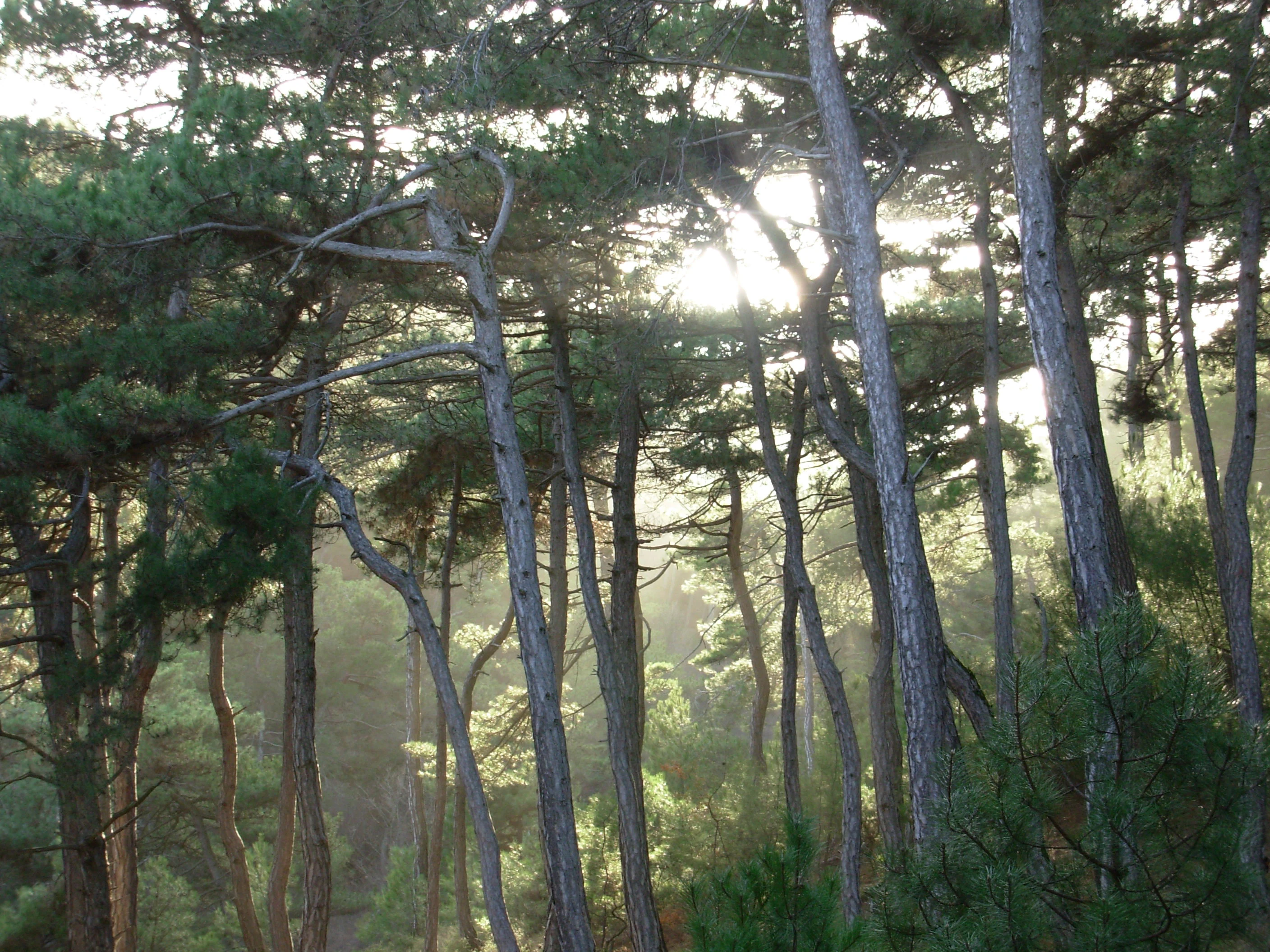
Dadia-Lefkimi-Soufli Forest National Park is renowned as one of Europe's most significant raptor habitats. The park hosts 36 species of birds of prey, a remarkable concentration that makes it exceptional among protected areas on the continent. The Black vulture (Aeegyptian vulture) finds one of its last strongholds here, alongside populations of Egyptian vulture and Griffon vulture. The park's success in combining biodiversity conservation with sustainable community development has served as a model for protected area management in Greece. Prior to the 2023 wildfires, the forest was dominated by black pine and brutish pine in the central and eastern areas, with oak forests more prevalent in the northern and southwestern sectors, creating diverse habitats that supported the rich raptor populations.
Dadia-Lefkimi-Soufli Forest National Park history and protected-area timeline

The protection history of Dadia-Lefkimi-Soufli Forest reflects a gradual evolution from initial conservation measures to full national park designation. Initial protected status was granted in 1980, recognizing the forest's ecological significance, particularly its exceptional concentrations of birds of prey. Following nearly three decades of protected status under various frameworks, the area was formally designated as a national park in 2006, elevating its conservation status and providing a more robust management framework.

The establishment of the national park coincided with growing recognition of the site\'s international significance. In 2014, the National Park of Dadia-Lefkimi-Soufli was submitted for future inscription on the UNESCO World Heritage List, recognizing its outstanding universal value as a habitat for endangered raptor species. The nomination under criterion x acknowledged the site\'s role in conserving biological diversity, particularly the populations of vultures and other birds of prey that depend on the forest ecosystem.

The park has experienced multiple wildfire events that have significantly impacted its ecosystems. Prior to the catastrophic 2023 fire, the park suffered damage from fires in 2011, which destroyed approximately 39,200 stremmas, and in 2022, when a fire burned 40,000 stremmas over eight days. These earlier fire events demonstrated the vulnerability of the forest ecosystem to wildfire and set the context for the devastating impact of the August 2023 wildfire.

The August 2023 wildfire burned approximately 73,000 hectares in the Alexandroupolis area, primarily within the Dadia Forest, resulting in 18 fatalities. This fire was described by EU officials as the largest recorded in the European Union up to that time. Within the national park, approximately 245,299 stremmas were burned, representing roughly 57% of the park\'s total area. The president of the Department of Forestry and Natural Environment at Aristotle University of Thessaloniki noted that the Dadia Forest effectively \"will not return to its previous form,\" as recovery would require approximately 150 years along with appropriate conditions.

Dadia-Lefkimi-Soufli Forest National Park landscape and geographic character

The landscape of Dadia-Lefkimi-Soufli Forest National Park presents a distinctive character shaped by its geology, topography, and vegetation. The terrain consists of low wooded mountains with elevations ranging from near sea level to 620 meters at Kappsalo peak, the park\'s highest point. This relatively modest elevation range creates a landscape of rounded hills and valleys rather than dramatic alpine terrain.

The park\'s geology divides into two distinct zones. The larger core area features volcanic rocks, evidence of the region\'s geological history. The smaller core zone contains predominantly metamorphic and sedimentary formations, creating geological diversity that contributes to varied soil types and microhabitats throughout the park. This geological variation supports the diverse vegetation communities that characterize different parts of the park.

The terrain includes numerous small and large valleys carved by seasonal watercourses, interspersed with rocky outcrops and cliff faces that provide nesting sites for raptors. Natural clearings break the forest cover in various locations, creating the mosaic of forest and open habitat that supports the park\'s exceptional biodiversity. The landscape extends across an area of approximately 428 square kilometers, encompassing the forest between the villages of Dadia, Giannouli, Kotronia, and Lefkimi.

Prior to the 2023 wildfire, the forest was dominated by coniferous species, particularly black pine and brutish pine, which covered the central and eastern portions of the park. Deciduous oak forests were more prevalent in the northern and southwestern sectors, providing a different habitat character. Other deciduous species complemented this forest composition, creating a structurally diverse landscape.

Dadia-Lefkimi-Soufli Forest National Park ecosystems, habitats, and plant life

The nature of Dadia-Lefkimi-Soufli Forest National Park is defined by its exceptional biodiversity, which ranks among the highest in Greek protected areas. The park supports remarkable plant diversity, with 360-400 plant species recorded within its boundaries, including two endemic species found nowhere else on Earth. This floristic richness reflects the park\'s varied habitats, ranging from coniferous forests to deciduous woodlands and rocky outcrops.

The forest ecosystem prior to the 2023 fire featured a distinctive zonation of vegetation types. Black pine and brutish pine dominated the central and eastern areas, forming extensive coniferous forest that provided important habitat for cavity-nesting species. Oak forests, primarily of deciduous oak species, were more prevalent in the northern and southwestern portions of the park, offering different ecological conditions and supporting distinct communities of organisms. This mosaic of forest types created the diverse habitats necessary for the park\'s exceptional raptor populations.

The park\'s ecological significance extends beyond its borders as part of a broader network of protected areas in the Balkans. Its position in northeastern Greece places it along migratory routes and within a biogeographical context that contributes to its species richness. The combination of diverse habitats, protection from human disturbance, and management focused on conservation has enabled the maintenance of ecological processes and species populations that are otherwise declining across much of Europe.

The devastating 2023 wildfire fundamentally altered the park\'s ecological character, burning approximately 57% of its area and transforming much of the forest ecosystem. Recovery of the pre-fire conditions will require decades or even centuries, representing a profound change in the nature of this protected area.

Dadia-Lefkimi-Soufli Forest National Park wildlife and species highlights

Dadia-Lefkimi-Soufli Forest National Park is world-renowned for its exceptional wildlife, particularly its extraordinary concentrations of birds of prey. The park hosts 36 raptor species, making it one of the most important bird-of-prey habitats in Europe. This remarkable diversity includes three vulture species of particular conservation significance: the Black vulture, Egyptian vulture, and Griffon vulture. These species find in the Dadia Forest one of their last strongholds in Greece and the broader Mediterranean region.

The mammalian fauna of the park is equally impressive, with 60-65 species recorded. Notable mammals include wolves, which maintain viable populations in the forest, roe deer, wild boar, and wildcats. The park is particularly important for bats, with 24 species recorded, reflecting the availability of suitable roosting habitats in the forest and the park\'s position along migratory routes. This bat diversity represents a significant proportion of Greece\'s total bat fauna.

The reptile community includes 29 species, while 13 amphibian species and 17 fish species have been documented within the park\'s waters. This herpetofaunal diversity reflects the variety of habitats present, from streams and wetlands to rocky outcrops and forest habitats. The invertebrate fauna includes at least 104 butterfly species, indicating the rich invertebrate communities supported by the park\'s diverse plant communities.

The 2023 wildfire severely impacted wildlife populations across the park. While specific post-fire population data remains under assessment, the loss of forest habitat affected species dependent on the forest ecosystem, particularly cavity-nesting birds, bats, and forest-dwelling mammals. The long-term implications for wildlife populations remain a significant conservation concern.

Dadia-Lefkimi-Soufli Forest National Park conservation status and protection priorities

The conservation significance of Dadia-Lefkimi-Soufli Forest National Park is exceptional within both the Greek and European protected areas network. The park\'s primary conservation value lies in its role as a sanctuary for birds of prey, particularly vultures, which have suffered severe declines across Europe due to changes in agricultural practices, poisoning, and habitat loss. The park provides secure habitat for breeding populations of Black vulture, Egyptian vulture, and Griffon vulture, contributing to the survival of these species at both national and continental scales.

The park\'s IUCN Category VI designation reflects a management approach that combines strict conservation of core areas with sustainable use in peripheral zones. This framework has enabled the development of community-based conservation that aligns local economic interests with protection objectives. The successful integration of ecotourism with conservation has demonstrated that protected areas can provide sustainable livelihoods while maintaining ecological integrity.

The 2023 wildfire presented the most significant conservation challenge in the park\'s history. The loss of approximately 57% of the park\'s area to fire has created urgent needs for post-fire recovery and adaptive management. The long recovery timeline, estimated at approximately 150 years, necessitates a fundamental rethinking of conservation strategies and priorities. Ongoing monitoring of post-fire ecosystem recovery, assessment of wildlife population impacts, and adaptive management responses will be critical to the park\'s conservation future.

The park\'s nomination for UNESCO World Heritage List inscription under criterion x acknowledges its outstanding universal value as a habitat for in-situ conservation of biological diversity. This recognition reflects the international significance of the park\'s raptor populations and the importance of maintaining the conditions necessary for their survival.

Dadia-Lefkimi-Soufli Forest National Park cultural meaning and human context

Dadia-Lefkimi-Soufli Forest National Park exists within a landscape shaped by long-term human presence and traditional land use practices. The villages surrounding the park—Dadia, Giannouli, Kotronia, and Lefkimi—have historical connections to the forested landscape that now falls within protected boundaries. The community of Soufli, the nearest town, has served as an important access point and service center for visitors to the park.

The development of the park\'s conservation program has been closely intertwined with community engagement and local development. The Dadia Ecotourism Centre, completed in 1995 with European Union funding secured through WWF Greece, was designed to provide accommodation, information, and visitor services while ensuring that local residents benefit economically from conservation. A women\'s cooperative established in 1993 further supports community engagement through the sale of local food products and operation of a restaurant.

Local communities have played an essential role in the park\'s management and protection. The Dadia Municipal Enterprise, established in 1994, has progressively taken over management of ecotourism operations, ensuring local ownership and control. This community-based approach has been central to the park\'s conservation model, demonstrating that successful protection requires local support and involvement.

The traditional land use practices that preceded formal protection, including pastoral activities and selective resource use, contributed to the creation of the diverse habitat mosaic that characterizes the park. These practices, combined with the cultural values of local communities, created the conditions for the exceptional biodiversity that the park protects.

Top sights and standout views in Dadia-Lefkimi-Soufli Forest National Park

Dadia-Lefkimi-Soufli Forest National Park stands as one of Europe\'s premier raptor conservation sites, hosting 36 bird-of-prey species in a relatively compact forested landscape. The Black vulture, Egyptian vulture, and Griffon vulture find critical habitat here, making the park essential for the survival of these threatened species in Greece and the broader Mediterranean region. The successful integration of biodiversity conservation with community-based ecotourism has provided a replicable model for protected area management. The park\'s designation as a national park in 2006, building on protection since 1980, and its submission for UNESCO World Heritage List inscription in 2014 reflect growing recognition of its exceptional conservation value. The devastating 2023 wildfire, which burned approximately 57% of the park and was the largest recorded in EU history, represents a profound challenge to the park\'s ecological integrity and will shape its conservation trajectory for decades to come.

Best time to visit Dadia-Lefkimi-Soufli Forest National Park

The optimal time to visit Dadia-Lefkimi-Soufli Forest National Park depends on the experience sought, though spring and early summer traditionally offered the best conditions for wildlife observation and outdoor activities. The warmer months from April through September provided opportunities to observe raptors at feeding sites and witness the park\'s bird activity, while the milder temperatures of spring allowed comfortable exploration of the trail network. Autumn offered different attractions as migratory species passed through the area. The park\'s facilities, including the Ecotourism Centre, operated year-round to some degree, though visitor services may have been more limited during winter months. Post-2023, visitors should check current conditions and any access restrictions as the park continues to recover from the wildfire.

Park location guide

Geography guide, regional context, and park location map for Dadia-Lefkimi-Soufli Forest National Park

Dadia-Lefkimi-Soufli Forest National Park park geography, regions, and map view in Greece
Understand where Dadia-Lefkimi-Soufli Forest National Park sits in Greece through a broader geographic reading of the surrounding landscape, nearby location context, and its mapped position within the national park landscape.

How Dadia-Lefkimi-Soufli Forest National Park fits into Greece

Greece, officially the Hellenic Republic, is a country in Southeast Europe occupying the southern Balkans. It borders Albania, North Macedonia, Bulgaria, and Turkey, with coastlines on the Aegean, Ionian, and Mediterranean seas. The country has over 10 million people and is renowned for its ancient Greek heritage, philosophy, democracy, and the Olympic Games.

Wider geography shaping Dadia-Lefkimi-Soufli Forest National Park in Greece

Greece occupies the southern tip of the Balkan peninsula in Southeast Europe. It shares land borders with Albania to the northwest, North Macedonia and Bulgaria to the north, and Turkey to the east. The Aegean Sea lies to the east of the mainland, the Ionian Sea to the west, and the Sea of Crete and Mediterranean Sea to the south. The country spans thousands of islands across nine traditional geographic regions and has the longest coastline in the Mediterranean basin.

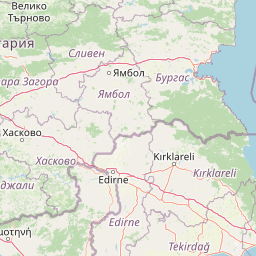
Map view of Dadia-Lefkimi-Soufli Forest National Park

Use this park location map to pinpoint Dadia-Lefkimi-Soufli Forest National Park in Greece, understand its exact geographic position, and read its mapped placement within the surrounding landscape more clearly.

Pigeon | © OpenStreetMap contributors

Location context for Dadia-Lefkimi-Soufli Forest National Park

Eastern Macedonia and ThraceEvros
Park atlas

Explore the geographic spread of protected landscapes across Eastern Macedonia and Thrace, Greece

Discover Nearby National Parks and Protected Areas from Dadia-Lefkimi-Soufli Forest National Park
Browse other national parks and protected areas located geographically close to Dadia-Lefkimi-Soufli Forest National Park, extending your exploration of Greece's varied conservation landscapes. This geographic context allows for comparing diverse forest ecosystems and protected raptor habitats, offering insights into the regional spread of significant natural areas in Eastern Macedonia and Thrace.
National parkTurkey

Lake Gala National Park: A Key Protected Wetland Landscape in Turkey's Maritsa Delta

Discover its bird habitats and mapped geographic context.

Lake Gala National Park is a nationally significant protected area, designated in 2005 to conserve the unique wetland ecosystem of the Maritsa Delta. Encompassing the shallow lakes Pamuklu and Küçük Gala, this park spans approximately 6,090 hectares of diverse wetland and forest habitats. It is internationally recognized as a Ramsar site and serves as a critical sanctuary for over 160 bird species, making it a premier birdwatching destination in Turkey and an important locus for understanding protected landscapes within a regional geographic framework.

Area
60.9 km²
Established
2005
Relief
Lowland
Climate
Temperate
Protected areaTurkey

Ancient Troya National Park: A Mapped Protected Landscape with Deep Historical Significance

Explore the terrain and protected boundaries of this key Turkish heritage site.

Ancient Troya National Park offers a unique window into history, preserving the layers of the ancient city of Troy within its protected boundaries. Situated in Turkey, this park encompasses a significant archaeological site on a commanding hilltop, overlooking rolling Mediterranean terrain and coastal plains. Its landscape, characterized by fortified walls, gates, and the remnants of ancient structures, provides a rich context for understanding its mythological and historical importance. MoriAtlas provides detailed mapping and geographic context for this vital protected area, enhancing its atlas exploration value.

Established
1996
Relief
Lowland
Climate
Mediterranean
Access
Moderate access
Watercolor illustration showing mountains, river, and forested area
National park

Rodopi Mountain Range National Park: Greece's Largest Protected Forest Landscape Explorer

Mapped boundaries, old-growth ecosystems, and Balkan geography.

Rodopi Mountain Range National Park is a critical protected forest area in Greece, safeguarding one of Europe's last primeval forests, the Frakto Virgin Forest. As the nation's largest woodland conservation site, it showcases remarkable biodiversity and complex mountain terrain, from low-lying forests to subalpine meadows. This page provides detailed mapping context and geographic specifics for understanding this unique protected landscape and its ecological significance within the Rhodope Mountains.

Area
1,731.5 km²
Established
2009
IUCN
VI
Relief
Mountain
National parkKırklareli Province

İğneada Floodplain Forests National Park: Kırklareli Province Protected Wetland Exploration

Mapped geography of a rare Turkish floodplain forest ecosystem.

İğneada Floodplain Forests National Park, located in Kırklareli Province, stands as a testament to Turkey's rare floodplain ecosystems. This protected national park features a remarkable landscape blending coastal sand dunes stretching along the Black Sea with inland lakes, marshes, and ancient deciduous forests. Its unique 'longoz' configuration and rich biodiversity offer significant value for atlas exploration, revealing the intricate interplay of landforms and water systems within this protected natural area. Discover the geographic context and mapped boundaries of this important conservation landscape.

Area
31.55 km²
Established
2007
Relief
Lowland
Climate
Temperate
National parkLovech Province

Central Balkan National Park: Bulgaria's Majestic National Park and Protected Landscape

Explore mapped alpine terrain and ancient forests in Lovech Province.

Central Balkan National Park is a significant protected area in Bulgaria, renowned for its stunning mountain geography and exceptionally well-preserved ancient beech forests. Located within Lovech Province, the park's landscape is defined by dramatic peaks, including Botev Peak, deep canyons, and alpine meadows, offering a rich context for geographical exploration and understanding its protected status. Its ecosystem health and ecological value are underscored by multiple nature reserves and its recognition as part of a UNESCO World Heritage Site.

Area
716.69 km²
Established
1991
IUCN
II
Relief
Mountain
Watercolor illustration of green mountains and a lake with trees
National parkBlagoevgrad Province

Pirin National Park: Protected Area and Regional Geographic Context in Bulgaria

Explore Pirin National Park's mapped boundaries and landscape.

Pirin National Park serves as a vital national park entity within the atlas of Blagoevgrad Province, Bulgaria. This page details its protected landscape, offering a structured view of its geographic setting and mapped terrain. Users can investigate the park's specific identity and its relation to the surrounding regional geography, providing essential context for understanding protected areas and natural landscapes within a comprehensive map-driven framework.

Area
403.56 km²
Established
1962
IUCN
II
Relief
Mountain
National park

Rila National Park: Bulgaria's Largest National Park with Alpine Terrain and Glacial Lakes

Explore mapped boundaries and protected landscape features.

Rila National Park, situated in Bulgaria's Rila mountain range, stands as the country's largest national park and a vital protected landscape. Its territory is characterized by dramatic glacial topography, including the iconic Seven Rila Lakes, and ascends to Musala Peak, the highest summit in the Balkan Peninsula. This atlas entry details the park's extensive mapped boundaries and unique ecosystems, emphasizing its importance for understanding regional geography and protected area networks.

Area
810.46 km²
Established
1992
IUCN
II
Relief
Mountain
Watercolor illustration of a coastal landscape with hills, trees, and a body of water
Marine protected area

National Marine Park of Alonnisos Northern Sporades: Protected Marine Landscape and Aegean Geography

Explore Greece's largest marine protected area and its vital ecosystems.

Investigate the National Marine Park of Alonnisos Northern Sporades, an extensive marine protected area situated in the northern Aegean Sea. This protected landscape is internationally significant for its role in conserving the Mediterranean monk seal and for its healthy Posidonia oceanica seagrass meadows. Understanding this park's geographic scope and its protected marine terrain offers crucial insights into Mediterranean island ecosystems and conservation efforts within the region.

Area
2,260 km²
Established
1992
IUCN
II
Relief
Mixed relief

Common questions about visiting, size, designation, and location context for Dadia-Lefkimi-Soufli Forest National Park

Dadia-Lefkimi-Soufli Forest National Park FAQs for park facts, access, geography, and protected area context
Find quick answers about Dadia-Lefkimi-Soufli Forest National Park, including protected-area facts, park geography, trail and visitor context, and how the park fits into its surrounding country and regional landscape.
MoriAtlas Explorer

Continue Your Protected Areas Search Across the Global Atlas

Deepen your exploration by continuing the structured search for national parks and protected areas worldwide. Utilize the comprehensive filtering capabilities to compare different conservation landscapes and refine your understanding of global park geography. Discover more about the distribution and characteristics of protected natural areas.

Global natural geography