Mori Atlas logo
National parkDanube-Ipoly National Park

Mapping the rich terrain of volcanic mountains, karst systems, and river ecosystems in Pest County.

Danube-Ipoly National Park: Hungary's Diverse Protected Landscape and Geographic Context

Danube-Ipoly National Park represents a significant protected area in northwestern Hungary, characterized by its exceptional ecological diversity and a unique confluence of dramatic landscapes. This national park, encompassing parts of Pest County and beyond, showcases a remarkable mosaic of terrain including the volcanic Börzsöny Mountains, the extensive karst cave systems of the Pilis region, and vital river ecosystems along the Danube and Ipoly floodplains. As Hungary's second-largest national park, it serves as a critical refuge for rare species and offers a rich atlas for understanding transitional ecosystems and protected land geography.

mountain parksriver ecosystemskarst landscapesforest protected areasEastern Europewetland conservation

Danube-Ipoly National Park

National park

Park overview

Structured park overview, official facts, and landscape profile for Danube-Ipoly National Park

Danube-Ipoly National Park park facts, protected area profile, and essential visitor context
Review the core facts for Danube-Ipoly National Park, including designation, size, terrain, visitor scale, habitats, and operating context in one park-focused overview.

About Danube-Ipoly National Park

Danube-Ipoly National Park represents one of Hungary's most significant protected areas, established in 1997 to preserve the remarkable ecological diversity found where the Danube River and several mountain ranges converge in northwestern Hungary. The park's territory spans approximately 60,314 hectares, encompassing portions of four counties and some smaller Danube islands, with administrative offices in Budapest and Esztergom. The park's identity is defined by the meeting of three major landscape units—the river valleys of the Danube and Ipoly, the forested mountain ranges of Pilis, Visegrád, and Börzsöny, and the lowland plains—creating a complex ecological tapestry that supports exceptional biodiversity. This transitional character means that species from different biogeographic origins meet here, and several organisms have their sole Hungarian populations within the park's boundaries. The park is managed by the National Parks Directorate with a dual mission of conservation and public education, maintaining educational trails and visitor facilities throughout its territory.

Quick facts and research context for Danube-Ipoly National Park

Danube-Ipoly National Park covers 603.14 square kilometers in northwestern Hungary, making it the country's second-largest national park. Created in 1997, it incorporates the former Pilis and Börzsöny protected areas plus sections of the Ipoly River floodplain. The park is administered from offices in Budapest and Esztergom. Its ecological significance stems from the confluence of three major landscape types—river valleys, mountain ranges, and plains—which creates diverse habitats supporting numerous endemic species. The park encompasses the famous Danube Bend area, the Szentendrei Island, and portions of three distinct mountain ranges.

Park context

Deeper park guide and search-rich context for Danube-Ipoly National Park

Danube-Ipoly National Park history, landscape, wildlife, and travel context
Explore Danube-Ipoly National Park through its history, landscape character, ecosystems, wildlife, conservation priorities, cultural context, and seasonal travel timing in a structured park guide built for atlas discovery and search intent.

Why Danube-Ipoly National Park stands out

Danube-Ipoly National Park is best known for its extraordinary ecological diversity and the rare species that inhabit its boundaries. The park protects Hungary's richest floral and faunal communities, including species found nowhere else in the country. The Börzsöny Mountains contain volcanic formations and some of the most intact forest ecosystems in Hungary, while the Pilis region features extensive karst systems with over 400 caves, including the third-longest cave system in the country. The Danube serves as a significant biogeographic barrier, creating distinct botanical communities on each bank. The park also protects important bird populations, including endangered raptors like the saker falcon and eastern imperial eagle, as well as the endemic Hungarian spring moth found only in the Ipoly Valley.

Danube-Ipoly National Park history and protected-area timeline

Danube-Ipoly National Park was formally established in 1997 through the consolidation of two earlier national parks—Pilis and Börzsöny—along with the incorporation of floodplain areas along the Ipoly River. This merger created a larger, more ecologically coherent protected area that could better manage the connected ecosystems spanning from the mountainous regions down to the river floodplains. The park's administrative structure includes offices in Budapest and the Jókai garden in the 12th district, with headquarters located in Esztergom. Following its establishment, Hungary initiated multiple programs to protect the rare and endangered species that occur within the park's boundaries, recognizing that some flora and fauna have their only Hungarian habitats within this protected landscape. The park continues to operate under the National Parks Directorate, maintaining visitor access while implementing conservation protocols for sensitive species and habitats.

Danube-Ipoly National Park landscape and geographic character

The physical landscape of Danube-Ipoly National Park encompasses three distinct but interconnected terrain types that meet within its boundaries. The Börzsöny Mountains, formed through volcanic activity, rise along the park's northern reaches with their highest point at Csóványos at 938 meters. These mountains feature a twelve-kilometer-long ridge with numerous springs feeding brawling streams. The Pilis Mountains consist primarily of carbonate rocks, particularly Dachstein limestone and main dolomite deposited in Upper Triassic seas, and contain over 400 karst and hydrothermal caves, including the Leány-Legény cave system—Hungary's third-longest. The Pilis peak at 757 meters represents the highest elevation in the entire Dunazug mountain region. The Visegrádi Mountains, also volcanic in origin and geologically connected to Börzsöny, feature dramatic gorges carved into volcanic tuff at locations like Holdvilág-árok, Salabasina-árok, and Rám-szakadék. Between these mountains, the Danube and Ipoly rivers create floodplain habitats, while the Szentendrei Island features distinctive sand dunes along its interior.

Danube-Ipoly National Park ecosystems, habitats, and plant life

The ecological character of Danube-Ipoly National Park reflects its position at a biogeographic crossroads. The Danube River acts as a significant floristic barrier, with only a limited number of species able to cross its waters, creating distinct botanical communities on each bank. The park's vegetation displays transitional characteristics, with Börzsöny serving as a boundary between the Great Hungarian Plain and higher mountain regions, determining the distribution limits of numerous plant species. The forests dominate the landscape, with oak forests in lower elevations, hornbeam-oak forests at middle heights, and beech forests on cooler northern slopes and in narrow valleys. The Ipoly River floodplain meadows support the rare hedge convolvulus, while Szentendrei Island's sand dunes harbor protected species including the autumn crocus and sand iris. The Pilis mountains preserve the relict endemic species Hungarian angelica, dating from a warmer interglacial period, while the cliff wall at Solymár contains the glacial relict mountain cress, found nowhere else in Hungary.

Danube-Ipoly National Park wildlife and species highlights

The wildlife population of Danube-Ipoly National Park is exceptionally rich and includes several endemic species found only within its boundaries. The Middle Ipoly Valley harbors the Hungarian spring moth, a native species that exists nowhere else on Earth. The park's clean waterways support abundant aquatic invertebrate communities including mayflies, caddisflies, and freshwater shrimp, while rare fish species such as the Petényi's barbel, Danube bleak, and gudgeon populate the rivers. The Börzsöny streams hold populations of brown trout. The bird community includes significant raptors—saker falcon, eastern imperial eagle, and honey buzzard—along with species like the corn crake that breed in the wetlands and reedbeds. The forests harbor the middle spotted woodpecker and dipper, while caves provide roosting sites for lesser horseshoe bats and common bats. Undisturbed forest areas support lynx, and riverbanks provide habitat for European otters. The amphibian population includes yellow-bellied toads, green frogs, and fire salamanders, while reptiles such as the slow worm and marsh turtle inhabit wetland areas.

Danube-Ipoly National Park conservation status and protection priorities

Danube-Ipoly National Park holds particular conservation significance as Hungary's most biodiversity-rich protected area. The park protects numerous species that occur nowhere else in the country, creating a unique conservation responsibility. Special programs target the survival of these rare and endangered species, both flora and fauna, recognizing that their continued existence depends on the protection of this specific landscape. The diversity of habitats—from karst caves to river floodplains, volcanic mountain slopes to sand dune ecosystems—creates a complex conservation challenge requiring integrated management approaches. The park's size as Hungary's second-largest national park provides substantial area for ecological processes, while its location near Budapest makes it accessible for both conservation work and environmental education. The management approach balances protection of sensitive species and habitats with public access through educational trails and visitor programs.

Danube-Ipoly National Park cultural meaning and human context

The landscape of Danube-Ipoly National Park has been shaped by human activity over centuries, though the protected area itself focuses on natural values. The regions within the park boundaries include historic towns like Esztergom, one of Hungary's oldest cities and former capital, which sits at the edge of the protected area. The park encompasses portions of the Danube Bend, a culturally significant landscape that has been inhabited since prehistoric times and contains numerous historical monuments and settlements. The Szentendrei Island has been cultivated for centuries, with its agricultural lands and traditional settlements now incorporated into the protected landscape. The park administration maintains facilities in Esztergom and operates visitor centers that help interpret both natural and cultural values of the region.

Top sights and standout views in Danube-Ipoly National Park

Danube-Ipoly National Park stands out for the exceptional diversity of its landscapes within a relatively compact area—the dramatic volcanic peaks of Börzsöny, the extensive karst cave systems of Pilis, the scenic Danube Bend, and the wetlands of the Ipoly Valley. The park protects Hungary's richest biodiversity, including species found nowhere else in the country, particularly in the Ipoly Valley and the sand dune habitats of Szentendrei Island. The network of educational trails, including routes near the Esztergom visitor center, provides access to many of these highlights while explaining the park's ecological significance. The combination of mountainous terrain, river ecosystems, and transitional habitats creates a protected area of national and international conservation importance.

Best time to visit Danube-Ipoly National Park

The park can be visited throughout the year, with each season offering distinct experiences. Spring brings active wildlife viewing as amphibians become active and birds return to breeding territories, while the forest understory blooms with wildflowers. Summer offers the most accessible trail conditions and is ideal for exploring the mountain sections and cave systems, though this is also the busiest period. Autumn creates particularly atmospheric conditions in the forested mountains, with fall colors enhancing the landscape and fewer visitors on the trails. Winter provides a different perspective on the park, particularly in the mountains where snow transforms the character of the terrain, though some trails may have restricted access. The shoulder seasons of spring and autumn generally offer the best combination of favorable conditions and fewer crowds for those seeking a more contemplative experience.
Park location guide

Geography guide, regional context, and park location map for Danube-Ipoly National Park

Danube-Ipoly National Park park geography, regions, and map view in Hungary
Understand where Danube-Ipoly National Park sits in Hungary through a broader geographic reading of the surrounding landscape, nearby location context, and its mapped position within the national park landscape.

How Danube-Ipoly National Park fits into Hungary

Hungary is a landlocked Central European country occupying the Carpathian Basin, also known as the Pannonian Basin. It borders Slovakia, Ukraine, Romania, Serbia, Croatia, Slovenia, and Austria. Budapest serves as both the capital and largest city. The population is predominantly ethnic Hungarians (Magyars), with Hungarian as the official language.

Wider geography shaping Danube-Ipoly National Park in Hungary

Hungary occupies the Carpathian Basin in Central Europe, a large lowland plain surrounded by the Carpathian Mountains. It is bordered by Slovakia to the north, Ukraine to the northeast, Romania to the east and southeast, Serbia to the south, Croatia and Slovenia to the southwest, and Austria to the west. The Danube River flows through the country, providing its primary drainage.

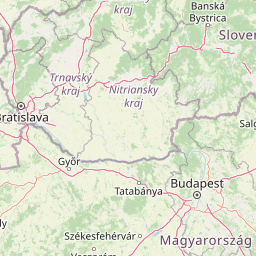
Map view of Danube-Ipoly National Park

Use this park location map to pinpoint Danube-Ipoly National Park in Hungary, understand its exact geographic position, and read its mapped placement within the surrounding landscape more clearly.

Pigeon | © OpenStreetMap contributors

Location context for Danube-Ipoly National Park

Fejér CountyKomárom-Esztergom CountyPest County
Park atlas

Trace the regional spread of protected landscapes, comparing terrain and conservation zones surrounding Danube-Ipoly National Park.

Discover Other National Parks and Protected Areas Near Danube-Ipoly National Park
Explore a curated list of national parks and protected areas geographically connected to Danube-Ipoly National Park, spanning Hungary's diverse landscapes from river ecosystems to karst mountains. Compare their unique conservation profiles, mapped terrain, and regional spread to deepen your understanding of Eastern European protected-area geography.
National park

Balaton Uplands National Park: Mapped Volcanic Terrain and Protected Landscape Atlas

Explore Hungary's protected volcanic landscape and its regional geography.

Balaton Uplands National Park presents a compelling study in volcanic geography, showcasing dramatic 'witness mountains' and diverse terrains. As a protected national park in Hungary, it offers rich opportunities for atlas-style exploration of its mapped boundaries, unique basalt formations, and significant wetland areas. Discover the distinct geological narrative and landscape context of this protected region, providing a clear point of reference for understanding Hungary's natural heritage through structured geographic data.

Area
569.97 km²
Established
1997
Relief
Highland
Climate
Temperate
Watercolor painting showing a winding river, green trees, distant hills, and grassy foreground
National park

Aggtelek National Park

Karst Landscape & Cave Systems

Explore the protected area of Aggtelek National Park, a UNESCO World Heritage site known for its extensive karst landscapes and significant cave systems. Understand its geographic setting and protected land status.

Area
198.92 km²
Established
1985
IUCN
II
Relief
Mixed relief
National parkBanská Bystrica Region

Muránska planina National Park: Discover Slovakia's Karst Plateau and Protected Natural Landscape

Explore mapped boundaries, caves, and endemic flora in Banská Bystrica Region.

Muránska planina National Park represents a significant protected landscape in central Slovakia's Banská Bystrica Region, defined by its extensive karst topography. This national park encompasses a limestone and dolomite plateau rich with geological wonders, including over 150 caves, sinkholes, and karst springs. The unique contrast between the flat plateau surface and the sharp, rocky ravines showcases a dramatic natural terrain. Explore the park's mapped boundaries and its remarkable biodiversity, highlighted by 35 endemic species and rare Tertiary relict flora like Daphne arbuscula, making it a key destination for atlas-based geographic discovery.

Area
213.18 km²
Established
1997
IUCN
II
Relief
Mountain
National park

Low Tatras National Park: Slovakia's Vast National Park and Carpathian Protected Landscape

Explore mapped terrain and regional geographic context.

The Low Tatras National Park represents Slovakia's largest protected area, encompassing the entirety of the Low Tatras mountain range. Its landscape is defined by dramatic altitudinal diversity, from alpine summits like Ďumbier to extensive forest zones and significant karst formations with notable cave systems. This page provides detailed geographic context and map-based discovery for the park's protected boundaries and its ecological significance within the Carpathian region.

Area
728 km²
Established
1978
IUCN
II
Relief
Mountain
National park

Veľká Fatra National Park: Slovakia's Premier Protected Landscape for Geographic Discovery

Explore the park's mapped boundaries and regional natural terrain.

Veľká Fatra National Park stands as a distinct protected area, offering critical insights into Slovakia's regional geography and landscape character. This entry provides an atlas-driven perspective on its mapped boundaries and its significance as a national park. Delve into the structured geographic details and protected land context that define Veľká Fatra National Park for comprehensive discovery.

Area
403.713 km²
Established
2002
Relief
Mountain
Climate
Temperate
National parkKošice Region

Slovak Karst National Park: Premier Central European Karst Landscape and Cave Systems

Explore protected terrain and mapped underground wonders in Košice Region.

Slovak Karst National Park offers an unparalleled glimpse into a dynamic karst environment. As a designated national park and UNESCO Biosphere Reserve, it preserves a significant concentration of caves, dramatic limestone formations, and rugged canyons within its territory in southeastern Slovakia. This atlas-focused presentation highlights the park's distinctive geology, mapped landscape features, and its importance as a protected natural area within the broader geography of the Košice Region. Understand the park's surface topography and its world-renowned subterranean realms.

Area
346.11 km²
Established
2002
IUCN
II
Relief
Mountain
National parkLower Austria

Danube-Auen National Park: Protected Floodplain Ecosystem and Regional Geography

Mapped boundaries and vital riparian landscape in Lower Austria.

Delve into the unique protected landscape of Danube-Auen National Park, a cornerstone of Central European riparian conservation. This page offers detailed insights into its mapped boundaries, the dynamic interplay of river channels, lowland forests, and wetlands, and its significant role within the geographic context of Lower Austria. Understand the atlas value of this protected area, ideal for discovering rich natural terrain and ecosystem context.

Area
93 km²
Established
1996
IUCN
II
Relief
Lowland
National park

Malá Fatra National Park National Park: Geographic Context and Protected Area Mapping

Explore the mapped terrain and regional geography.

Malá Fatra National Park serves as a cornerstone for understanding Slovakia's protected landscapes. This dedicated park page provides crucial geographic context, detailing its national park designation and the extent of its protected area boundaries. Users can leverage MoriAtlas to visualize the park's location within the broader regional geography, facilitating a structured approach to discovering its natural landscape and terrain through map-based exploration.

Area
226.3 km²
Established
1988
IUCN
II
Relief
Mountain

Common questions about visiting, size, designation, and location context for Danube-Ipoly National Park

Danube-Ipoly National Park FAQs for park facts, access, geography, and protected area context
Find quick answers about Danube-Ipoly National Park, including protected-area facts, park geography, trail and visitor context, and how the park fits into its surrounding country and regional landscape.
MoriAtlas Explorer

Continue Your Protected Areas Search Across the Global Atlas

Deepen your exploration by continuing the structured search for national parks and protected areas worldwide. Utilize the comprehensive filtering capabilities to compare different conservation landscapes and refine your understanding of global park geography. Discover more about the distribution and characteristics of protected natural areas.

Global natural geography