
Why Bükk National Park stands out
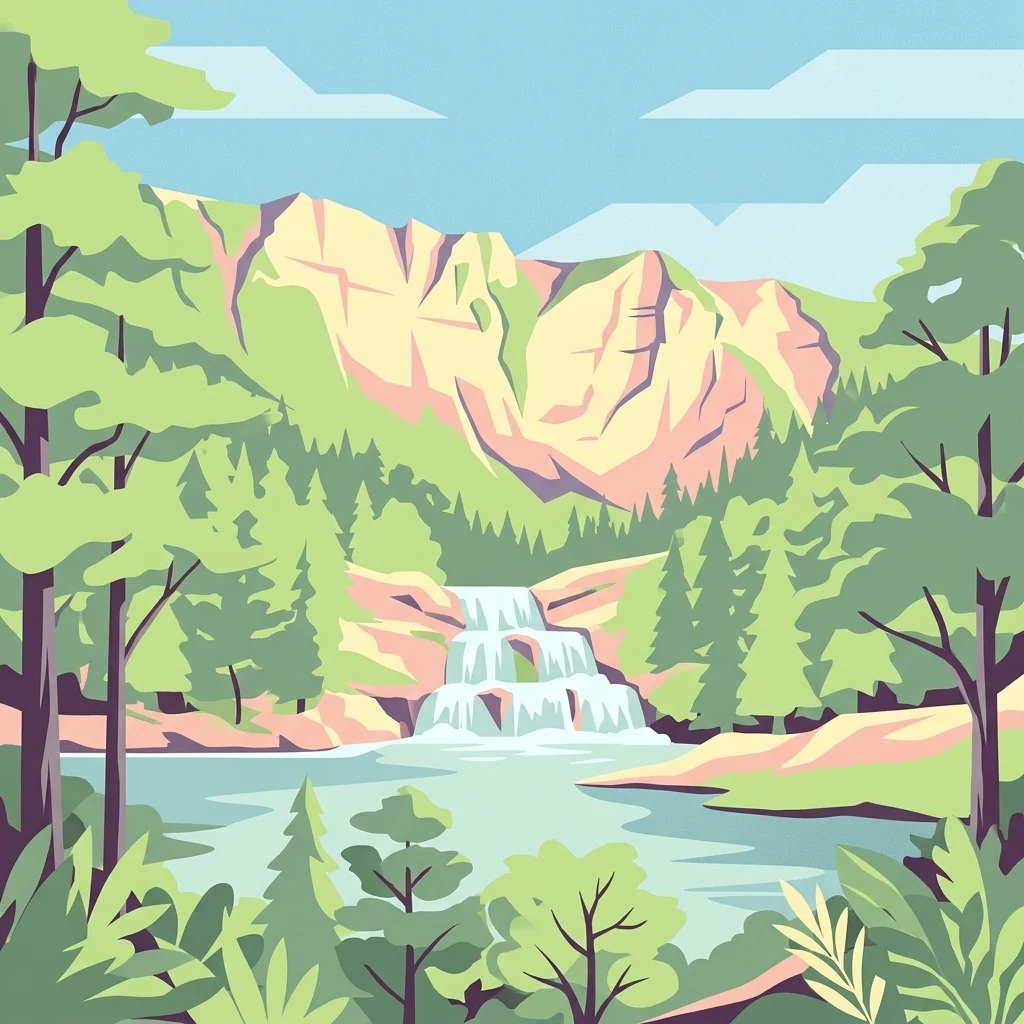
Bükk National Park is best known for its exceptional karst cave systems and the Bükk-fennsík, a distinctive limestone plateau surrounded by dramatic rock spires. The park contains Hungary's longest and deepest caves, with Istállós-kői-barlang and Szeleta-barlang preserving important Neanderthal archaeological finds. The ancient beech forest known as Őserdő represents one of Hungary's few remaining primeval forests. The park supports an extraordinary diversity of orchids with 53 species recorded, including the protected lady's slipper (Cypripedium calceolus). The Fátyol Waterfall cascading 17 meters over travertine barriers in Szalajka Valley is among Hungary's most scenic natural attractions.
Bükk National Park history and protected-area timeline
Bükk National Park was founded in 1977 as the third national park in Hungary, following Hortobágy (1973) and Kiskunság (1975). The creation of the park reflected Hungary's growing commitment to nature conservation during the late Communist period, when environmental protection began receiving greater institutional attention. The selection of the Bükk Mountains for national park status was driven primarily by the region's exceptional geological characteristics and its largely intact forest cover. The mountains have been inhabited since prehistoric times, with archaeologists discovering Neanderthal tools and remains in caves such as Istállós-kői-barlang and Szeleta-barlang, providing evidence of human presence dating back approximately 30,000 years. Later periods left additional cultural traces, including Avar-period hillforts on mountain peaks. The region's more recent history involved limestone quarrying, charcoal production, and glass manufacturing in the mountain villages. The park is managed by the Bükk National Park Directorate, which also oversees numerous landscape protection areas and nature reserves throughout northeastern Hungary.
Bükk National Park landscape and geographic character
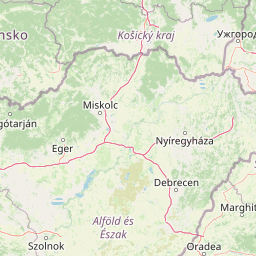
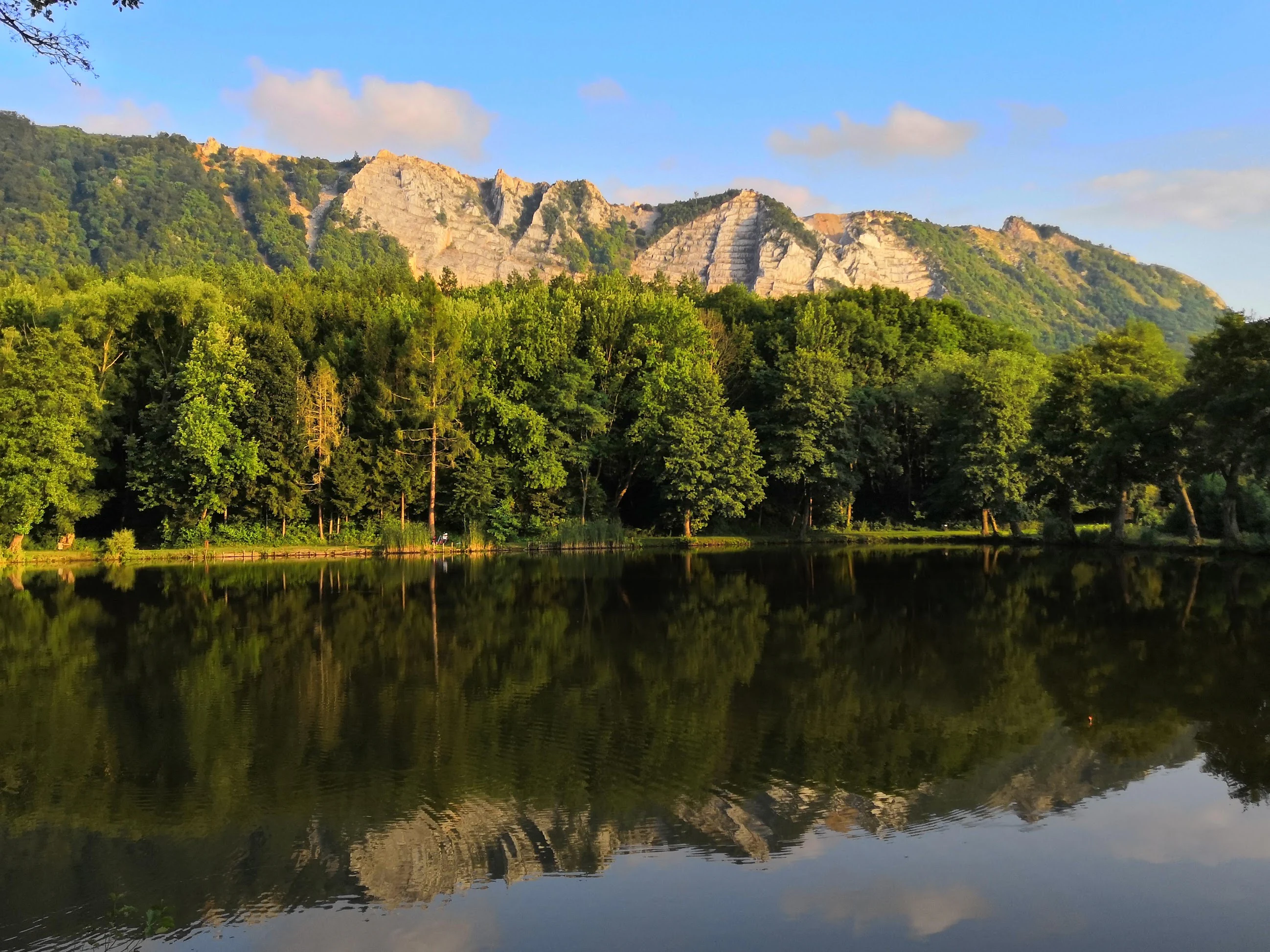
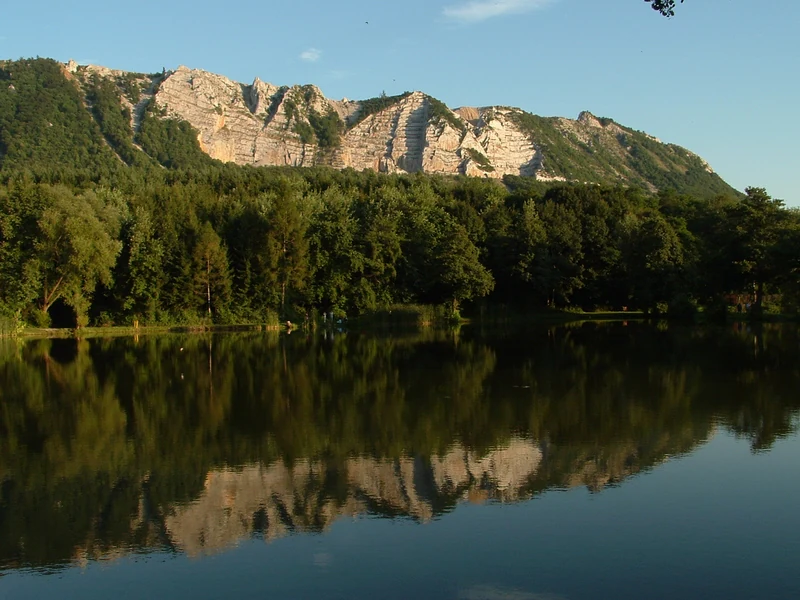
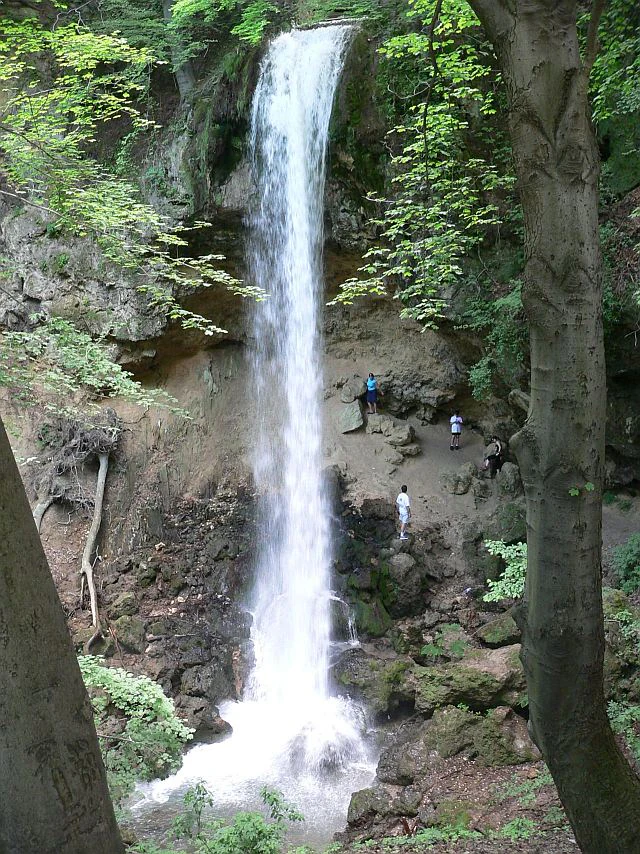
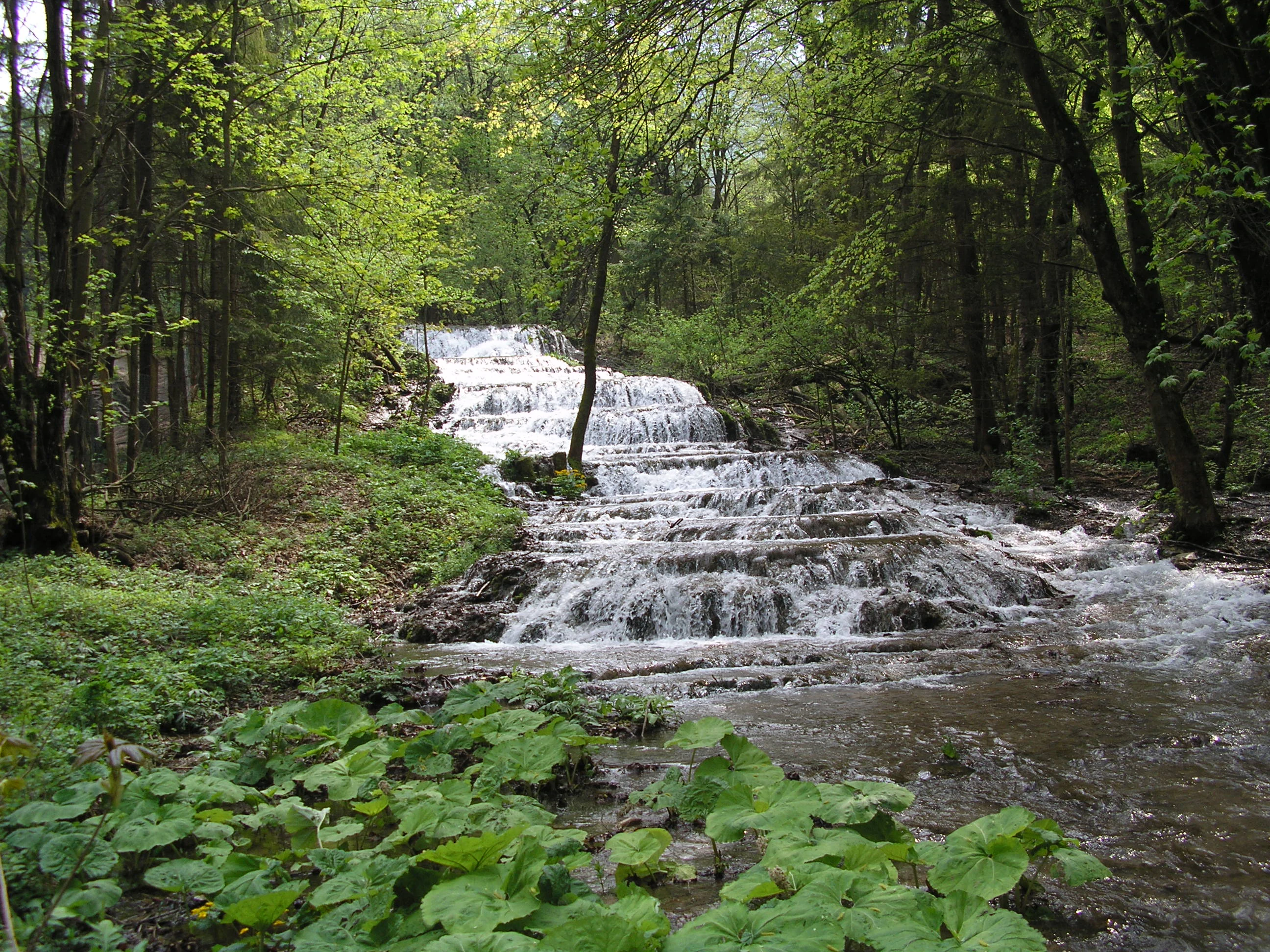
The Bükk landscape is defined by its mountainous karst terrain, one of the most spectacular in Hungary. The Bükk-fennsík is a broad limestone plateau surrounded by steep rocky walls and towering cliff formations known collectively as the "kövek" - prominent peaks that rise abruptly from the forested slopes. These include Imó-kő and Fehér-kő in the southern Bükk, Odvas-kő, Látó-kő, Örvény-kő (773m), Pes-kő, and Tar-kő in the northern section, and the dramatic Ablakoskő with its natural limestone window. The highest point is Istállós-kő at 959 meters, the second-highest peak in the Bükk Mountains. The plateau is dissected by the Garadna stream into two main sections. Karst phenomena dominate the landscape, with sinkholes, swallow-holes, ravines, and rock fields covering the limestone surfaces. Springs at the mountain base have deposited travertine formations, while the valleys feature characteristic bérc (cliff-rimmed basins) and gorge-like völgy formations. The Szalajka stream descends through Szalajka-völgy to the Fátyol Waterfall, where water cascades 17 meters over travertine barriers.
Bükk National Park ecosystems, habitats, and plant life
The vegetation of Bükk National Park reflects the park's position at the crossroads of multiple biogeographic regions, creating exceptional botanical diversity. Forests cover approximately 94% of the park, with oak-beech communities dominating the lower slopes, hornbeam-oak forests in middle elevations, and pure beech forests above 400 meters. The ancient Őserdő (Primeval Forest) preserves beech trees exceeding 200 years old in an area where forest management has been suspended for over 150 years, recently closed to visitors to protect its ecological integrity. The plateau's sinkhole meadows host remarkable plant communities including the fiery lily (Lilium bulbiferum), various rare orchids such as the lady's slipper, and northern dragonhead (Dracocephalum ruyschiana), which reaches the southern limit of its Hungarian distribution here. The karst cliffs support specialized rock rose communities, while the warm southern slopes feature sumac (Cotinus coggygria) that turns the hillsides brilliant red in autumn. Over 53 orchid species have been recorded in the park, one of the highest diversities in Hungary.
Bükk National Park wildlife and species highlights
Bükk National Park supports significant wildlife populations across its diverse habitats. The bird fauna includes ninety nesting species, with particular importance for birds of prey. The saker falcon (kerecsensólyom) has benefited from a complex conservation program spanning nearly two decades, while the golden eagle (parlagi sas), short-toed snake eagle (kígyászölyv), and booted eagle find suitable breeding habitat on the rocky cliffs. The rare rock thrush (kövirigó), common raven (holló), and eagle owl (uhu) nest in the abandoned quarries and rock faces. The park's bat fauna is exceptionally diverse, with nearly all Hungarian bat species recorded, including the Schreiber's bent-winged bat (Miniopterus schreibersii) that exclusively uses caves for breeding and wintering. Large mammals include red deer, mouflon, and wild boar, while the Eurasian lynx has been a permanent resident of the Bükk forests for over a decade, with a growing population of wild wolves recorded since the early 2000s. The Bükk has a notable butterfly species, the Scarce copper, and the area supports amphibians including the Alpine newt and yellow-bellied toad in the plateau's forest pools.
Bükk National Park conservation status and protection priorities
Bükk National Park represents one of Hungary's most important conservation areas, protecting the country's largest mountain forest ecosystem and its associated karst formations. The park's strict protection zone covers nearly 38 square kilometers, preserving the most sensitive habitats including the ancient Őserdő and the karst cliff communities. The cave systems receive particular attention, with 45 caves designated for strict protection due to their geological, archaeological, or biological significance. The park's biodiversity value is underscored by the presence of over 22,000 animal species and exceptional plant communities, including 53 orchid species representing approximately half of Hungary's orchid flora. The Bükk-fennsík and its surrounding cliffs serve as critical habitat for endangered raptor species, and long-term conservation programs for the saker falcon have demonstrated measurable success. The park also includes multiple landscape protection areas extending beyond the mountainous core, encompassing lowland grasslands, wetlands, and volcanic formations in the surrounding regions, all managed by the Bükk National Park Directorate.
Bükk National Park cultural meaning and human context
The Bükk Mountains have been inhabited since prehistoric times, with archaeological evidence of Neanderthal presence dating back approximately 30,000 years. Caves such as Istállós-kői-barlang and Szeleta-barlang have yielded significant archaeological finds including stone tools, fire remains, and other evidence of prehistoric occupation. Medieval hillforts from the Avar period crown several mountain peaks. More recent human history includes the development of limestone quarrying and burning, charcoal production for ironworks, and glass manufacturing in the mountain villages that once characterized the region. Traditional agriculture and forest use shaped the surrounding landscapes. The park encompasses villages where visitors can experience regional culture, including Szilvásvárad with its historic Lipicai horse breeding traditions, Lillafüred with its spa and forest railway, and the historic Diósgyőr Castle near Miskolc. These settlements and their cultural heritage form an integral part of the park's broader identity.
Top sights and standout views in Bükk National Park
Bükk National Park offers exceptional variety within a single protected area, from dramatic karst plateaus and cave systems to ancient beech forests and species-rich meadows. The Fátyol Waterfall in Szalajka-völgy ranks among Hungary's most beautiful natural attractions, accessible via the historic forest railway. The cave systems, including the spectacular Szent István-barlang at Lillafüred and the archaeologically significant Istállós-kői-barlang and Szeleta-barlang, provide windows into both geological processes and human prehistory. The ancient Őserdő preserves old-growth beech forest increasingly rare in Europe. The park supports remarkable biodiversity, with 53 orchid species and significant populations of raptors including saker falcons and golden eagles. Visitors can explore scenic valleys like Szalajka-völgy and the Garadna valley, climb dramatic peaks such as Istállós-kő, or discover historic sites including the medieval Diósgyőr Castle and traditional mountain villages.
Best time to visit Bükk National Park
Bükk National Park can be visited throughout the year, with each season offering distinct experiences. Spring and early summer bring flowering meadows and optimal conditions for orchid viewing, particularly in May and June when many species bloom. Autumn offers spectacular fall colors as the beech forests turn golden and the sumac on southern slopes turns vivid red. Summer provides the best conditions for hiking the mountain trails and exploring the cave systems, though this is also the busiest season. Winter transforms the landscape with snow on the higher peaks, and the area offers skiing opportunities around Lillafüred. The park's higher elevations and north-facing slopes remain cool even in summer, while the sheltered valleys can become quite warm. The most comfortable period for strenuous hiking typically spans from late April through June and again from September through mid-October.