Why Hardangervidda National Park stands out
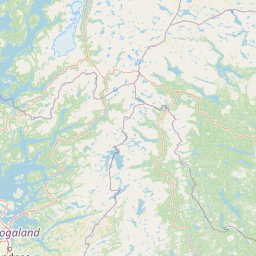
Hardangervidda is best known for its extraordinary Arctic wildlife at unusually southern latitudes, particularly its world-renowned wild reindeer herds that represent one of the last great semi-nomadic cervid populations in Europe. The plateau also contains the largest concentration of Stone Age archaeological sites in Norway, with several hundred nomadic settlements related to ancient reindeer migration routes. The landscape itself is exceptional, a vast, rolling alpine plateau that is the largest of its kind in Europe, with distinctive western and eastern characters: the wet, rocky west side versus the drier, more vegetated east side. The prominent peak of Hårteigen (1,690m) anchors the visual identity of this expansive wilderness.
Hardangervidda National Park history and protected-area timeline
Hardangervidda was designated as a national park in 1981, making it one of Norway's younger protected areas, though the ecological and cultural significance of the plateau had been recognized for decades prior. The establishment of the park came during a period of increased environmental awareness in Norway and reflected a growing commitment to preserving the country's most distinctive natural landscapes. Prior to national park status, the plateau had long been used for seasonal grazing, travel, and recreation, with the Norwegian Mountain Touring Association (DNT) establishing its network of mountain huts and trails across the region beginning in the late 19th and early 20th centuries. The archaeological significance of the area has been understood since the early 20th century, when researchers began documenting the remarkable density of Stone Age settlements across the plateau. These sites, numbering in the hundreds, represent some of the most important archaeological evidence of prehistoric human adaptation to Alpine environments in Northern Europe. The establishment of the park also coincided with growing recognition of the need to protect the reindeer populations, which had been subject to increasing pressure from habitat fragmentation and human disturbance. Today, the park is managed by the Norwegian Directorate for Nature Management, with visitor centres at Øvre Eidfjord in Vestland and at Skinnarbu near Møsvatnet in Telemark providing educational programming and resource information.
Hardangervidda National Park landscape and geographic character
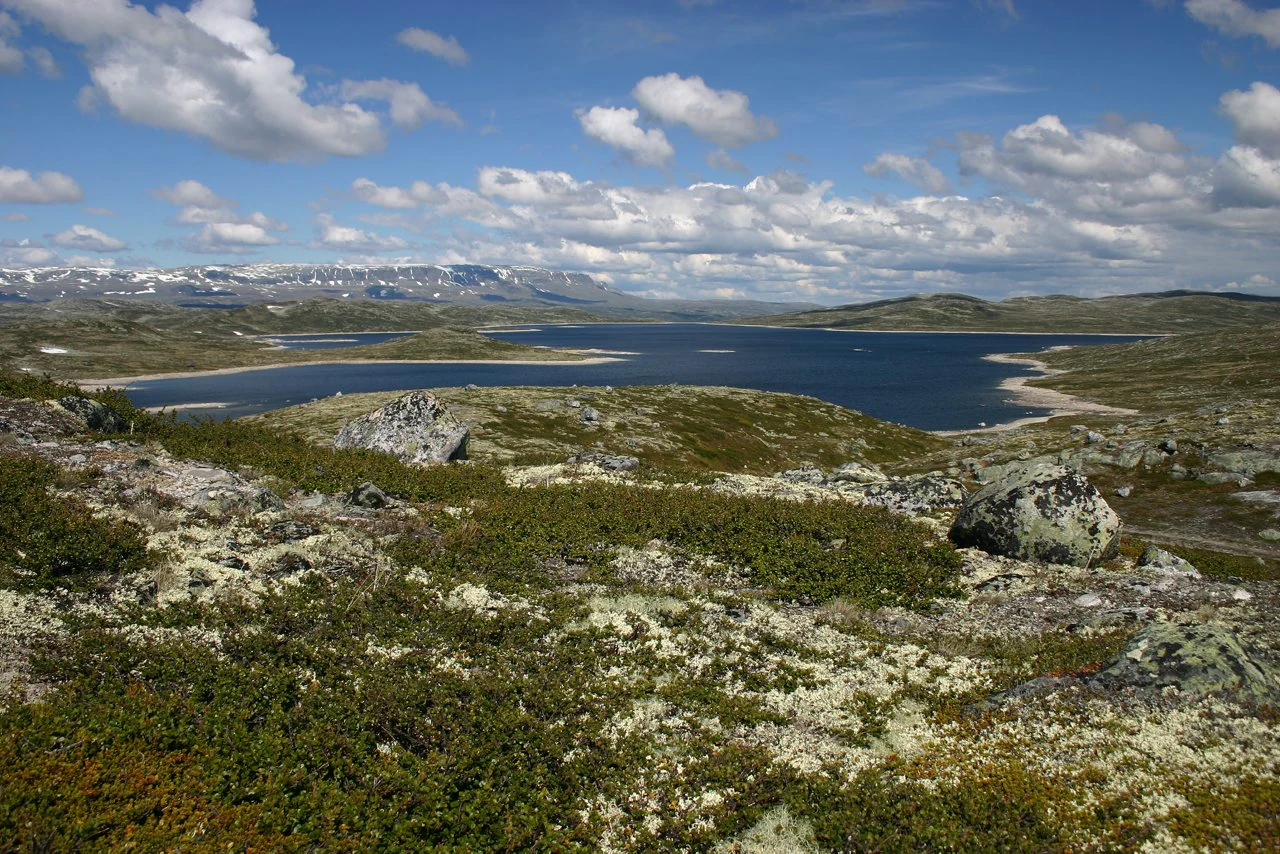
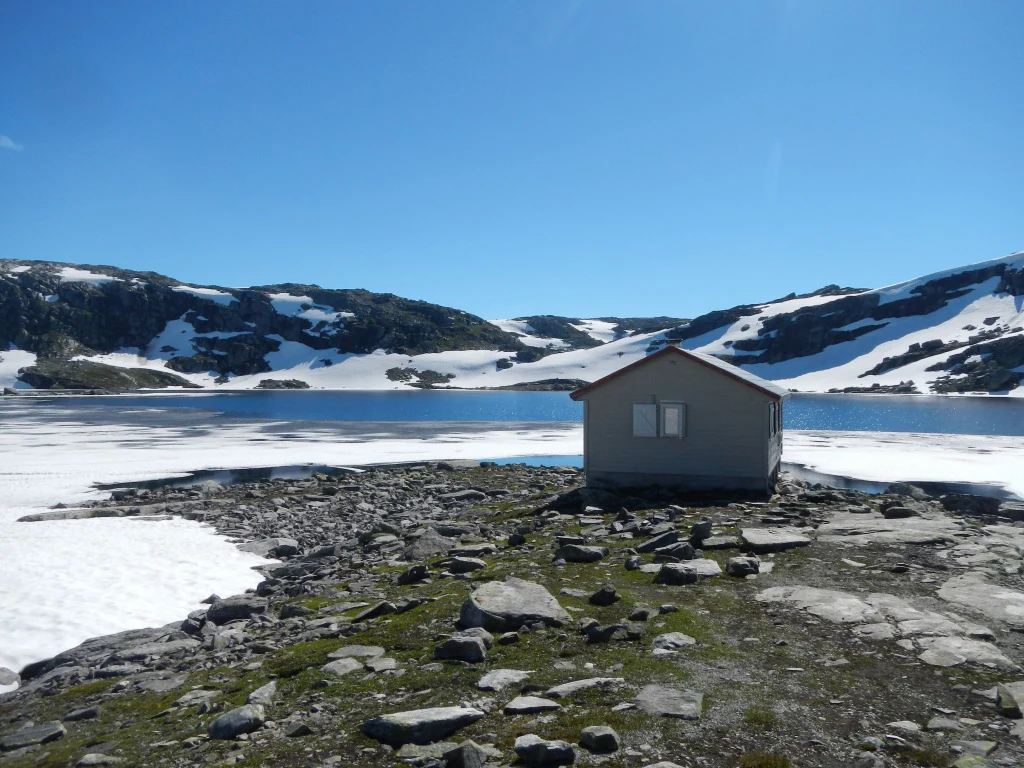
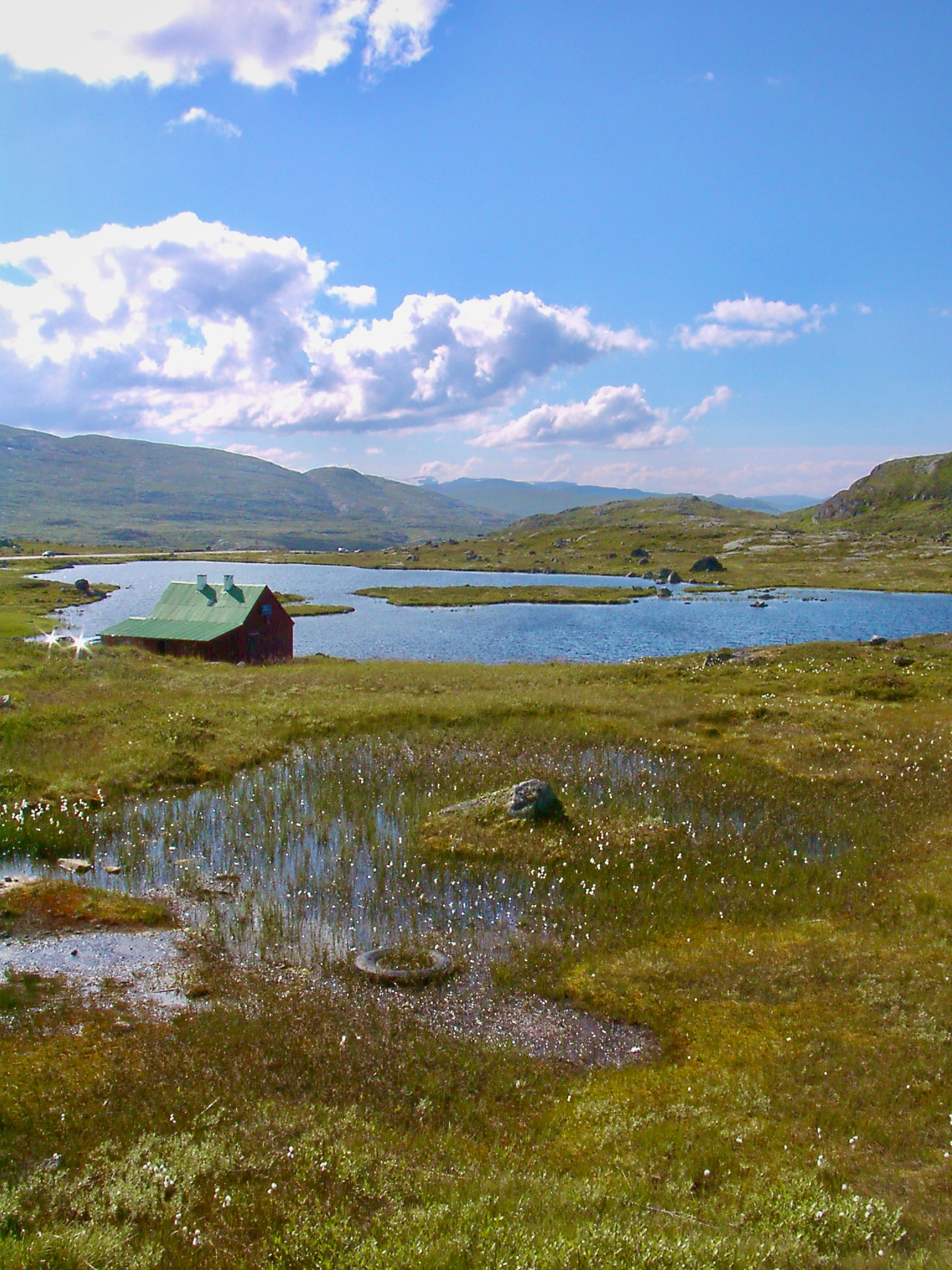
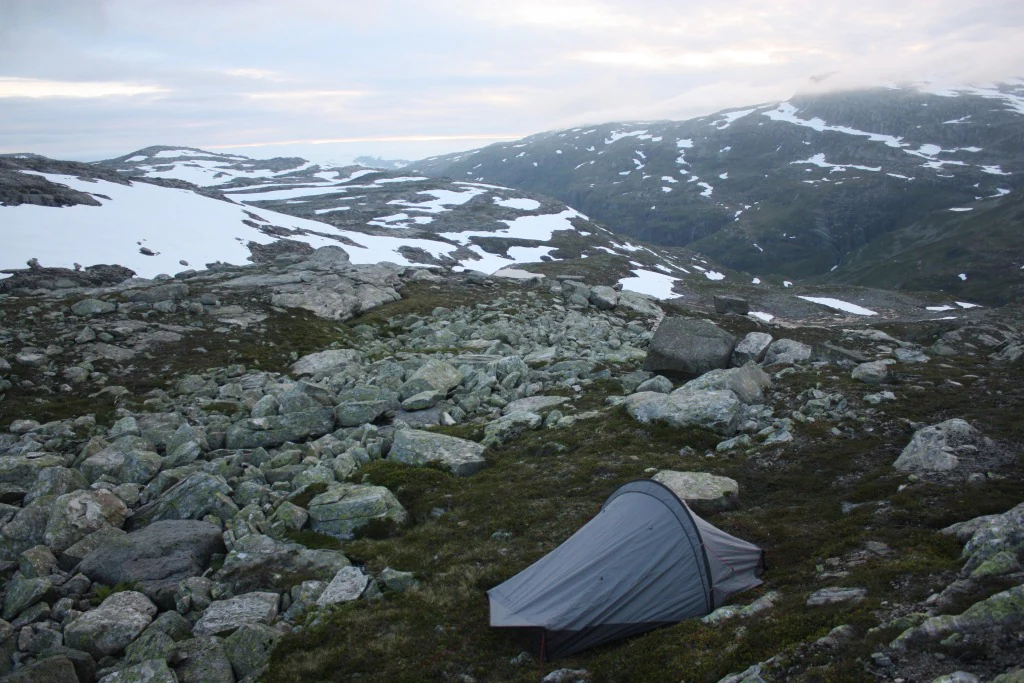
The landscape of Hardangervidda is defined by its extraordinary flatness at altitude—a vast peneplain exposed by the erosive work of glaciers during the ice ages. The plateau covers approximately 6,500 square kilometres at an average elevation of 1,100 metres, making it the largest continuous high-altitude landscape in Europe. The terrain is characterized by gentle, rolling hills, extensive moorlands, and countless bodies of water ranging from small pools to substantial lakes. The western and eastern portions of the plateau present markedly different characters: the west is dominated by rocky terrain, exposed bedrock, and more dramatic relief, while the east is flatter, more vegetated, and tends toward marshy conditions. Several notable peaks punctuate the plateau, most prominently Hardangerjøkulen at 1,863 metres (the highest point within the park) and the distinctive Hårteigen at 1,690 metres, which is visible from much of the plateau and serves as an iconic landmark. The climate varies significantly across the plateau, with the western edge receiving over 1,000 millimetres of precipitation annually while the eastern areas are considerably drier. This climatic gradient contributes to the ecological diversity of the park and creates distinct visual characters between the two sides.
Hardangervidda National Park ecosystems, habitats, and plant life
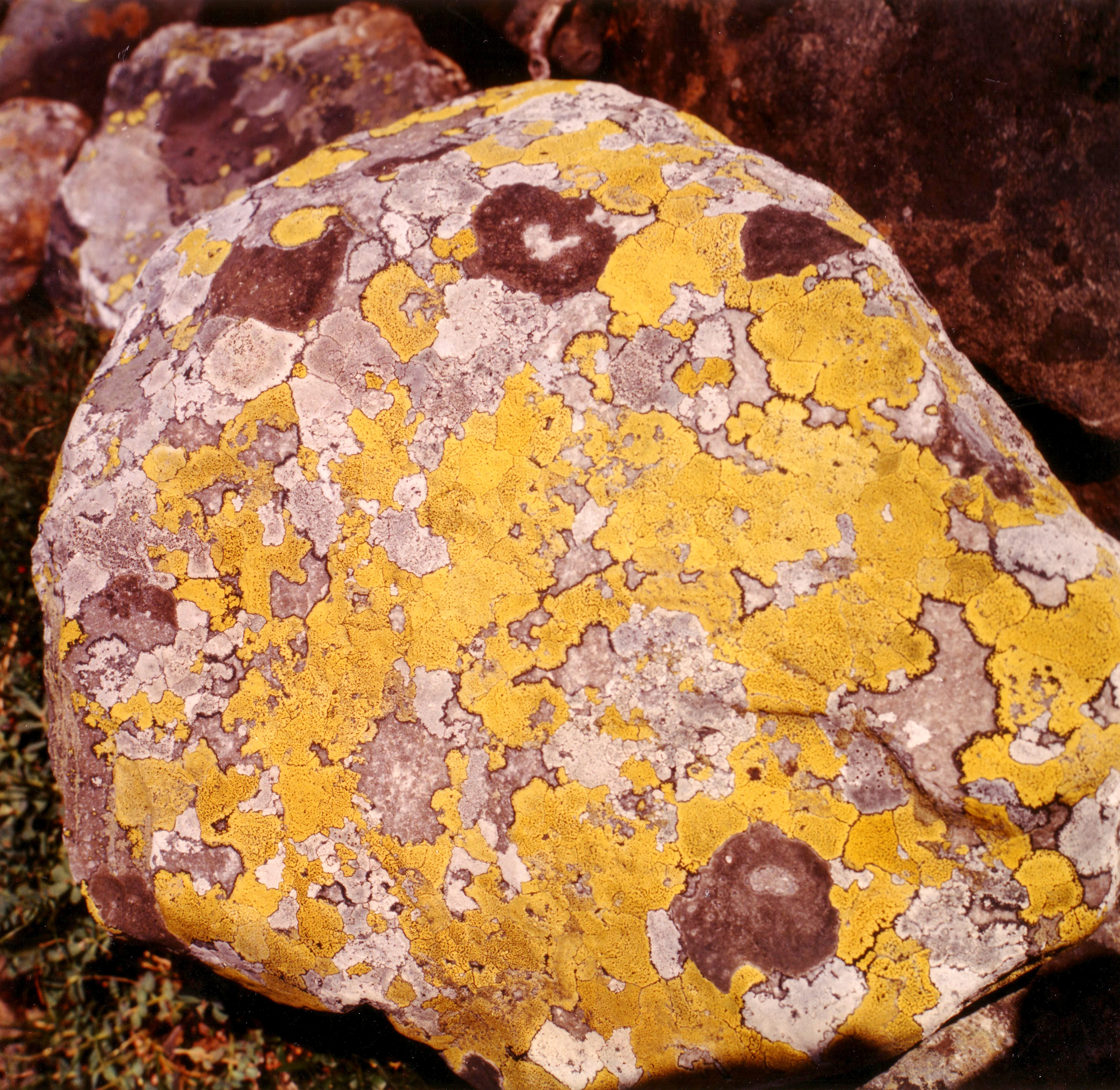
The nature of Hardangervidda is defined by its position as a southern outlier of true Arctic ecosystems. The entire plateau sits above the tree line, creating conditions that allow Arctic species to thrive at latitudes much further south than anywhere else in Europe. This makes the park a critical refuge for cold-adapted species and a living laboratory for understanding climate-driven ecological patterns. The flora of the plateau reflects the climatic gradient between wet west and drier east, with the western side supporting richer vegetation communities including various mosses, grasses, and lichens, while the eastern portions feature more sparse cover. The dominant vegetation across most of the plateau consists of coarse grasses, sphagnum mosses, and lichens, with extensive areas of bare rock and moorland. During the Holocene climatic optimum (approximately 9,000 to 5,000 years ago), the climate was warm enough to support extensive pine forest across the plateau, and preserved logs can still be found in bogs well above today's tree line—a record of past ecosystems that provides context for understanding potential future changes under warming conditions.
Hardangervidda National Park wildlife and species highlights
Hardangervidda supports one of the most significant wildlife populations in Norway, most notably its wild reindeer herds, which are among the largest in the world. These herds represent a remarkable ecological phenomenon: large populations of semi-nomadic reindeer that migrate seasonally across the plateau, moving from winter grazing lands on the eastern side (where they feed primarily on lichen) to more fertile breeding grounds on the western plateau. The herds have historically numbered in the tens of thousands, though populations have shown significant fluctuation, from approximately 15,000 individuals in 1996 to around 8,000 by 2008, reflecting the ecological challenges facing this and other reindeer populations. Beyond reindeer, the park hosts a range of Arctic and alpine species adapted to the harsh conditions, including various bird species that breed on the plateau during the short summer season. The 2016 lightning strike tragedy that killed 323 reindeer (including 70 calves) on the plateau serves as a stark reminder of the vulnerability of these populations to extreme weather events.
Hardangervidda National Park conservation status and protection priorities
Hardangervidda National Park represents one of Norway's most important conservation achievements, protecting a landscape and ecosystem that cannot be found anywhere else in the country or indeed in Europe. The park's designation as IUCN Category II reflects its primary purpose of preserving natural ecosystems while allowing for sustainable recreation and research. The conservation significance of the park is multifaceted: it protects the largest remaining contiguous Alpine landscape in Europe, preserves critical habitat for Arctic species at the southern edge of their range, and safeguards one of the world's last great semi-nomadic reindeer ecosystems. The archaeological heritage of the plateau, with its hundreds of Stone Age sites, adds a cultural dimension to the conservation mandate, as these sites are intimately connected to the ecological patterns (particularly reindeer migration) that the park protects. The challenges facing the park include climate change impacts on both wildlife and vegetation, particularly for the reindeer populations that depend on specific seasonal patterns of forage availability, and ongoing pressures from tourism and infrastructure development along the plateau's edges.
Hardangervidda National Park cultural meaning and human context
The cultural history of Hardangervidda extends back thousands of years and is deeply intertwined with the ecological patterns that define the plateau today. The hundreds of Stone Age settlements discovered across the Hardangervidda represent one of the densest concentrations of prehistoric sites in Norway, and their distribution clearly follows the ancient migration routes of reindeer across the plateau. These nomadic settlements, dating from various periods of the Stone Age, document a pattern of human adaptation in which groups followed the reindeer herds as they moved between seasonal grazing areas, creating a cultural landscape that predates the park by millennia. Ancient trails such as the Nordmannsslepa still cross the plateau, linking the Hardanger fjord region with the Numedal valley and serving as historic corridors between western and eastern Norway. The plateau has never supported permanent settlement, but its role as a transit route and seasonal hunting ground has given it continuous cultural significance from prehistoric times through the present day. The crossing of the plateau by both the Bergen Line railway and Norwegian National Road 7 represents the latest chapter in this long history of human movement across the Hardangervidda.
Top sights and standout views in Hardangervidda National Park
The defining highlights of Hardangervidda include its extraordinary size and accessibility as Norway's largest national park, offering visitors a true wilderness experience within reach of major cities. The wild reindeer herds represent a globally significant wildlife spectacle, visible across the open plateau as one of the last great semi-nomadic cervid populations. The archaeological richness of the landscape, with its hundreds of Stone Age sites, provides a unique window into prehistoric human adaptation to extreme environments. The distinctive visual character of the plateau—vast moorlands, countless lakes, the iconic Hårteigen peak, and the contrast between wet west and dry east—creates one of Norway's most recognizable mountain landscapes. The accessibility of the park, with the Bergen Line railway and National Road 7 crossing the plateau, combined with the extensive DNT hut and trail network, makes it one of Norway's most visited wilderness areas year-round.
Best time to visit Hardangervidda National Park
Hardangervidda is accessible throughout the year, with each season offering distinct experiences. The summer months from June through September represent the most popular time for visitors, when the plateau is ideal for hiking, wildlife viewing, fishing, and camping under the famous midnight sun. The reindeer are most easily observed during this period as they graze on the western plateau, and the long days provide maximum opportunity for exploration. Autumn (September to October) brings spectacular autumn colours across the moorland and offers a quieter, more solitary experience as the summer crowds diminish. Winter transforms the plateau into one of Norway's premier cross-country skiing destinations, with the DNT huts providing shelter for multi-day ski tours across the snow-covered landscape. The harsh winter conditions, with heavy snow and extreme temperatures, demand proper preparation but reward experienced winter visitors with extraordinary silence and stark beauty. Spring (May to June) is a transitional period when the snow recedes and the plateau awakens, though access can be limited as snow fields persist in higher areas.