Why Breheimen National Park stands out
Breheimen National Park is especially known for its extraordinary glacial landscapes and the dramatic mountain terrain of the Breheimen range. The park protects active glaciers and the surrounding peaks that have been carved by ice over millennia, creating a landscape of soaring ridgelines, glacial valleys, and exposed rock. The area's remarkable ecological diversity, spanning from lush pastoral valleys to barren alpine plateaus within a single protected area, makes it distinctive among Norway's national parks. Archaeological significance adds another dimension, with the 2011 discovery of a 300 AD men's coat from a melting glacier representing Norway's oldest known textile artifact. The park also preserves remnants of medieval sælehus shelters and ancient reindeer-hunting traps, providing tangible links to historical human use of these mountain environments.
Breheimen National Park history and protected-area timeline
The establishment of Breheimen National Park followed a prolonged planning trajectory that began with the government's Second National Park Plan presented as a white paper in 1986. This initial proposal was adopted by the Storting, Norway's parliament, in 1992, but actual planning work did not commence until 2005 when the Directorate for Nature Management tasked the County Governors of Sogn og Fjordane and Oppland with preparing a formal proposal. The 2005-2009 planning process was notable for its extensive stakeholder participation, guided by a 1999 government directive to strengthen local involvement. Landowners, municipal and county bodies, and non-governmental organizations contributed to the planning process, which even considered establishing an on-site information centre in Mørkridsdalen. The park was officially designated by Royal decree in August 2009, marking the culmination of nearly two decades of proposal, deliberation, and stakeholder engagement. Following the park's formation, Skjåk Municipality—within whose borders most of the protected area falls—reoriented its development planning towards nature-based branding and infrastructure, launching initiatives including the 'Skjåk 79 – a pure experience!' marketing campaign referencing the percentage of the municipality under protection, and establishing a competence and resource centre for environmental management alongside the park administration.
Breheimen National Park landscape and geographic character
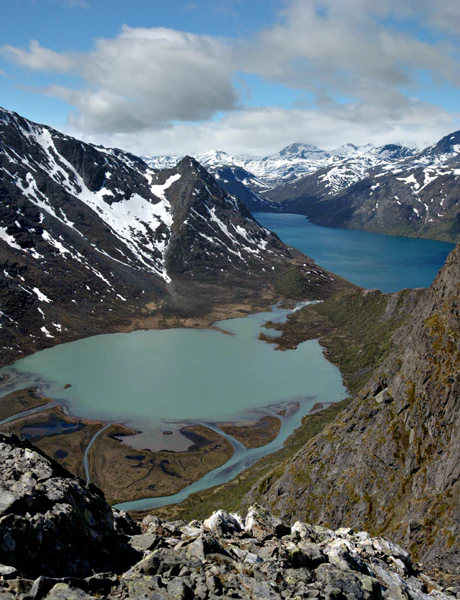
The landscape of Breheimen National Park is defined by its dramatic mountain terrain, formed through hundreds of thousands of years of glacial processes, avalanche activity, and ongoing geological transformation. The Breheimen mountain range rises prominently above the surrounding terrain, with peaks reaching into alpine zones and glacial cirques carved by ancient ice. The park encompasses remarkable topographical diversity, protecting terrain that experiences some of the wettest and driest conditions in Norway simultaneously—the result of complex weather patterns interacting with mountain geography. Visitors encounter a spectrum of landscape types from lush, verdant valleys where historical transhumance farming created pastoral environments, to barren exposed plateaus where vegetation struggles to survive in harsh alpine conditions. Active glaciers remain significant landscape features, continuing the processes that shaped the broader terrain. The combination of soaring peaks, glacial valleys, exposed rock faces, and remnant ice creates a landscape of outstanding natural beauty and geological significance.
Breheimen National Park ecosystems, habitats, and plant life
Breheimen National Park protects an exceptional range of ecological habitats within its 1,671 square kilometre boundary, a diversity that reflects the park's position spanning multiple climate and topographical zones. The environmental gradient from wet western to drier eastern conditions creates distinct ecological communities across relatively short distances. Lush valleys with productive grasslands represent the lower-elevation environments, historically maintained through transhumance farming practices that created and maintained open pastoral landscapes. Moving upward, the terrain transitions through shrub zones and into alpine heath communities adapted to harsh mountain conditions. The barren plateaus represent the most extreme environments within the park, where only the most resilient vegetation survives. Active glaciers and their associated outflow streams add unique aquatic habitats to the park's ecological portfolio. The park's ecological significance is enhanced by its role as a protected area connecting multiple habitat types across an altitudinal gradient, supporting biodiversity in a landscape where environmental conditions change dramatically from valley floor to alpine summit.
Breheimen National Park wildlife and species highlights
The diverse habitats within Breheimen National Park support various wildlife species adapted to Norway's mountain environments. The range of environments—from productive valleys through alpine zones to glacial terrain—creates opportunities for different species communities to inhabit distinct zones within the park. The presence of reindeer in the area is historically significant, with ancient reindeer-hunting traps preserved within the park's boundaries demonstrating the long-standing ecological relationship between humans and these animals in mountain environments. The protected status of the area ensures that wildlife communities can persist in relatively undisturbed conditions, with the park serving as an important refuge for species that require extensive habitat areas. Mountain environments in Norway typically support populations of species including various bird species associated with alpine and cliff habitats, small mammals adapted to rocky terrain, and species that utilize the transitional zones between forest and open mountain terrain.
Breheimen National Park conservation status and protection priorities
Breheimen National Park was established to protect a landscape of outstanding natural value that had remained relatively unmodified by intensive human development despite long history of human use. The park protects geological processes and landforms that represent significant examples of glacial landscape evolution, as well as ecological communities that reflect Norway's mountain environments. The diversity of the park—spanning wet and dry terrain, multiple habitat types, and altitudinal ranges—makes it valuable for biodiversity conservation within Norway's protected area network. The archaeological resources within the park, including the remarkable glacial find of a 300 AD garment, demonstrate the importance of preserving landscapes where both natural and cultural heritage are intertwined. The establishment of the park represents Norway's commitment to maintaining wilderness character in mountain environments, with the 2009 designation adding to the network of Norwegian national parks that collectively protect representative examples of the country's natural landscapes.
Breheimen National Park cultural meaning and human context
The mountains of Breheimen have been inhabited and utilized by humans since the end of the last Ice Age, creating a landscape where natural and cultural history are deeply intertwined. The discovery of a well-preserved man's coat dating to approximately 300 AD from a melting glacier bed in 2011 represents a remarkable archaeological find—not only is this the oldest extant garment found in Norway, but it also demonstrates the long-standing relationship between humans and the glacial environments within what is now the national park. Remains of medieval sælehus shelters—traditional mountain huts used by farmers during the summer grazing season—provide evidence of transhumance practices that shaped the landscape over centuries. Ancient reindeer-hunting traps further attest to the historical use of these mountain environments for subsistence and resource extraction. The park sits within a broader cultural landscape where traditional farming practices, seasonal movement of people and livestock, and close connections to the mountain environment have shaped regional identity. The establishment of the national park has prompted local communities to emphasize their relationship with the protected landscape in development planning and community branding.
Top sights and standout views in Breheimen National Park
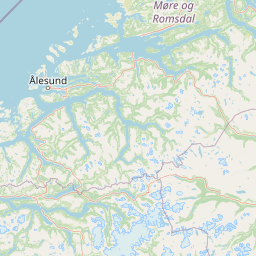
Breheimen National Park stands out for its dramatic glacial mountain landscapes, active ice formations, and exceptional topographical diversity within a single protected area. The park's establishment in 2009 makes it one of Norway's more recent national park designations, representing contemporary conservation priorities. The archaeological significance of the 300 AD garment found in a melting glacier adds unique historical dimension to the park's natural values. The contrast between wet and dry terrain within the same park illustrates the complex environmental gradients that characterize Norwegian mountain landscapes. The park's accessibility from gateway communities like Skjolden and Bismo, combined with well-developed trail networks, makes it a destination for hikers seeking to experience Norway's mountain wilderness. The area's long human history—spanning from post-Ice Age presence through medieval period to contemporary outdoor recreation—creates a layered cultural landscape within the protected area.
Best time to visit Breheimen National Park
Breheimen National Park is best experienced during the summer months when hiking trails are fully accessible and the mountain environment is at its most welcoming. The July to September period typically offers the most favorable conditions for backcountry exploration, with snow-free trails allowing access to higher terrain and glacial areas. Summer visitors can experience the full diversity of the landscape, from lush green valleys to flowering alpine meadows. The winter months transform the park into a snow-covered wilderness, with limited accessibility and challenging conditions that appeal to experienced winter mountaineers rather than general visitors. Spring and autumn represent transitional seasons with variable conditions—spring brings melting snow and rising water levels, while autumn offers changing colors but increasingly unpredictable weather. The character of a visit varies considerably by season, with summer providing the most accessible and diverse experience of the park's landscapes and ecosystems.