Mori Atlas logo
National parkJostedalsbreen National Park

Discover the mapped geography and glacial terrain of this significant Norwegian protected area.

Jostedalsbreen National Park: Europe's Largest Mainland Glacier & Protected Landscape

(Jostedalsbreen nasjonalpark)

Jostedalsbreen National Park, a protected landscape in Norway's Vestland region, safeguards Europe's largest mainland glacier. Covering 1,310 square kilometres, this national park offers unparalleled opportunities to explore dramatic glacial formations, dramatic mountain terrain, and the geological legacy of ice shaping the land. With its vast ice mass and surrounding alpine environments, Jostedalsbreen provides a unique window into glacial dynamics and the evolving geography of mountainous regions.

Glacial landscapesAlpine environmentsNorwayIUCN Category IIProtected areasMountain parks

Jostedalsbreen National Park

National park

Park overview

Structured park overview, official facts, and landscape profile for Jostedalsbreen National Park

Jostedalsbreen National Park park facts, protected area profile, and essential visitor context
Review the core facts for Jostedalsbreen National Park, including designation, size, terrain, visitor scale, habitats, and operating context in one park-focused overview.

About Jostedalsbreen National Park

Jostedalsbreen National Park was established in 1991 to protect one of Europe's most remarkable glacial landscapes. The park encompasses Jostedalsbreen, the largest glacier on the European mainland, a vast ice field that has shaped the surrounding mountains and valleys throughout the Quaternary period. The protection of this area reflects both the scientific importance of the glacier system and its cultural significance to the communities of western Norway. The park's establishment came after decades of growing recognition that the glacier and its surrounding landscape needed formal protection to ensure its preservation for future generations. In 1998, the park was expanded to the northwest, increasing its ecological coherence and protection of the broader glacial watershed. Today, the park serves multiple functions: as a conservation area for unique alpine and glacial ecosystems, as a site for scientific research into glacier behaviour and climate change, and as a destination for education and recreation. The management of the park falls under the Norwegian Environment Agency, which works to balance conservation objectives with sustainable public access. The three visitor centres—Breheimsenteret, Jostedalsbreen nasjonalparksenter, and the Norwegian Glacier Museum—provide interpretation and educational resources that help visitors understand the glacier's significance and the ongoing changes it is experiencing.

Quick facts and research context for Jostedalsbreen National Park

Jostedalsbreen National Park lies in Vestland county, Norway, spanning the municipalities of Luster, Sogndal, Gloppen, Sunnfjord, and Stryn. The park protects the largest glacier on the European mainland, with the glacier system covering roughly 800 of the park's 1,310 square kilometres. Peak elevations within the park reach 2,083 metres at Lodalskåpa, while the glacier itself ranges from 2,018 metres at its highest point (Brenibba) down to 350 metres at its lowest extent. The park was established by royal decree in 1991 and enlarged northwestward in 1998. Visitor facilities include the Breheimsenteret in Jostedalen, the Jostedalsbreen nasjonalparksenter in Oppstryn, and the Norwegian Glacier Museum in Fjærland.

Park context

Deeper park guide and search-rich context for Jostedalsbreen National Park

Jostedalsbreen National Park history, landscape, wildlife, and travel context
Explore Jostedalsbreen National Park through its history, landscape character, ecosystems, wildlife, conservation priorities, cultural context, and seasonal travel timing in a structured park guide built for atlas discovery and search intent.

Why Jostedalsbreen National Park stands out

Jostedalsbreen National Park is renowned for protecting the largest glacier on the European mainland, a singular distinction that makes it one of the most significant glacial protected areas in Europe. The park's namesake glacier, Jostedalsbreen, is a massive ice sheet that dominates the landscape and serves as a living laboratory for understanding glacial dynamics, climate change impacts, and mountain ecology. The Briksdalsbreen arm of the glacier, accessible from Briksdal valley, is particularly famous and attracts over 300,000 visitors annually with its dramatic ice wall and spectacular glacial valley setting. The park offers visitors the rare opportunity to witness a major glacier system up close, walk alongside glacial moraines, and observe the ongoing retreat of ice that has reshaped the landscape for centuries.
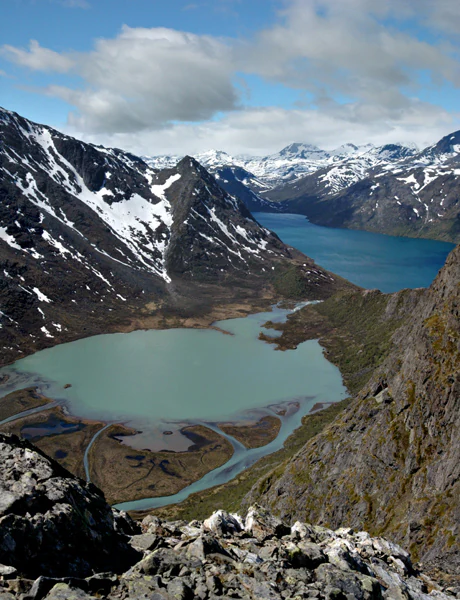
Mountain landscape showing a turquoise lake surrounded by rocky terrain and snow-capped peaks under a partly cloudy sky
Mountain landscape view with turquoise lake and snow-capped peaks

Jostedalsbreen National Park history and protected-area timeline

Jostedalsbreen National Park was established on 25 October 1991 by royal decree, creating formal protection for Norway's largest glacier and the surrounding mountain landscape. The establishment reflected a growing awareness in the late 20th century of the need to preserve significant natural areas and the particular vulnerability of glacial environments to climate change and human disturbance. Prior to national park status, parts of the area had received various levels of protection, but the national park designation provided comprehensive management and ensured coordination across the five municipalities that the park spans. In 1998, the park was significantly enlarged toward the northwest, expanding the protected area to its current extent of 1,310 square kilometres. This expansion improved the ecological coherence of the park by including more of the glacial watershed and additional alpine terrain. The history of the Jostedalsbreen glacier itself is written in the landscape—the park contains ruins of farms that were overtaken by the glacier in 1750, a stark reminder of the glacier's dynamic nature and its capacity to advance dramatically. This historical note also connects the park to the human history of the region, where communities have lived alongside the glacier for generations, adapting to its presence and respecting its power.

Jostedalsbreen National Park landscape and geographic character

The landscape of Jostedalsbreen National Park is defined by the interplay between massive glacial ice and the steep mountain terrain of western Norway. The park occupies a high-alpine setting within the Scandinavian mountain range, where deep valleys have been carved by glacial erosion over thousands of years. Jostedalsbreen itself is a plateau glacier, a broad ice field that spills down into numerous glacial tongues that extend into the surrounding valleys. The highest peaks within the park reach over 2,000 metres, with Lodalskåpa standing at 2,083 metres as the park's highest point. The glacier's surface rises to 2,018 metres at Brenibba, while its lowest edges descend to approximately 350 metres above sea level. The terrain surrounding the glacier includes dramatic valley walls, moraine deposits, glacial lakes, and the characteristic U-shaped valleys that result from glacial erosion. The landscape changes dramatically with the seasons, from winter snow cover to the exposed rock and ice of summer. The ongoing retreat of the glacier has exposed new terrain and created fresh glacial moraines, making the landscape an active site of geological change.

Jostedalsbreen National Park ecosystems, habitats, and plant life

The nature of Jostedalsbreen National Park centres on its unique glacial and alpine ecosystems. The glacier itself is the dominant feature, hosting environments that exist nowhere else in Norway's protected area network. While the ice-covered terrain offers limited ecological diversity, the margins of the glacier and the surrounding alpine zones support distinctive communities adapted to cold, harsh conditions. The park's elevation range—from valley floors at around 350 metres to peaks exceeding 2,000 metres—creates a vertical zonation of habitats, from birch woodland in the lower valleys to alpine heath and exposed rock at higher elevations. The glacial meltwater streams and rivers that flow from the glacier's edges support aquatic ecosystems and contribute to the broader watershed of the region. Birdlife in the park includes species typical of Norwegian mountain environments, and the surrounding non-glaciated areas support vegetation communities that have adapted to the local climate and topography.

Jostedalsbreen National Park wildlife and species highlights

The wildlife of Jostedalsbreen National Park reflects the alpine and glacial character of the protected area. The park's high-elevation terrain and extensive ice cover limit the habitat available for larger mammals, but the surrounding valleys and mountain slopes support populations of species adapted to Norway's mountain environments. The park lies within a region where species such as reindeer roam the alpine meadows, though the glacier itself does not provide significant habitat for most wildlife. The birdlife in the park's lower valleys and surrounding areas includes species common to western Norway's mountain regions, with raptors and ptarmigan among the species that can be observed in the area. The glacial rivers and streams support fish populations, and the park's various elevations create opportunities to observe species moving between different habitat zones. While Jostedalsbreen is not primarily known for wildlife, the broader protected area network in this region of Norway supports significant populations of mountain species.

Jostedalsbreen National Park conservation status and protection priorities

Jostedalsbreen National Park represents one of Norway's most significant conservation designations, protecting a landscape of national and European importance. The park's IUCN Category II status reflects its primary purpose of ecosystem conservation while allowing for sustainable public use and environmental education. The conservation of Jostedalsbreen is particularly important given the glacier's status as the largest on the European mainland—protecting this ice mass means preserving a reference point for understanding glacial ecology and the processes that shape mountain landscapes. The park also contributes to the protection of Norway's alpine biodiversity, preserving the ecological connections between the glacier and the surrounding mountain environments. Climate change poses a significant challenge to the glacier's future, making the protected area increasingly valuable as a site for monitoring and research. The long-term conservation of the park depends on continued management that balances public access with the need to minimise disturbance to sensitive glacial and alpine environments.

Jostedalsbreen National Park cultural meaning and human context

The cultural context of Jostedalsbreen National Park is rooted in the history of the communities that have lived in the shadow of Norway's largest glacier for generations. The park's name derives from Jostedalsbreen, with "Jostedal" referring to the old municipality and "bre" meaning glacier in Norwegian—a direct connection between the landscape and the language of the people who have inhabited this region. The presence of farm ruins overtaken by the glacier in 1750 provides a tangible link between human settlement and the glacial landscape, showing how communities have been shaped by, and have respected, the ice that flows through the valley. The development of visitor infrastructure, including the Norwegian Glacier Museum in Fjærland, reflects a longer tradition of interest in the glacier as a subject of scientific study and public fascination. The five municipalities that share the park—Luster, Sogndal, Gloppen, Sunnfjord, and Stryn—each have their own relationship to the landscape, with local histories intertwined with the seasonal rhythms of the glacier and the mountain environment.

Top sights and standout views in Jostedalsbreen National Park

Jostedalsbreen National Park's defining highlight is unquestionably the glacier itself—Europe's largest mainland ice field, a powerful presence that has shaped the landscape for millennia and continues to change before our eyes. The accessibility of the glacier through glacial tongues like Briksdalsbreen makes this one of the most impressive glacial landscapes available for public viewing in Europe. The visitor centres provide exceptional educational opportunities, helping visitors understand the science of glaciers and the changes occurring in this environment. The dramatic mountain terrain that surrounds the glacier offers spectacular scenery, with peaks rising to over 2,000 metres and deep valleys carved by glacial erosion. The park provides a rare opportunity to witness a major glacier system up close, to walk among glacial moraines, and to understand the ongoing processes of glacial advance and retreat that continue to shape this remarkable landscape.

Best time to visit Jostedalsbreen National Park

The best time to visit Jostedalsbreen National Park depends on what visitors hope to experience, but the summer months of June through September offer the most accessible conditions for exploring the park and viewing the glacier. During this period, the glacial tongues are most visible and the hiking routes are generally open, allowing visitors to approach the ice and explore the surrounding terrain. The summer months also coincide with the peak visitor season at popular sites like Briksdalsbreen. Autumn can offer beautiful mountain scenery with autumn colours in the lower valleys, while the winter season transforms the landscape but limits access to many areas. The experience of visiting the glacier changes substantially with the seasons—summer provides the most direct access to the ice, while the winter landscape offers a different perspective on this glacial environment. Visitors interested in seeing the glacier with minimal crowding may find the shoulder seasons of late spring or early autumn offer a good balance of accessibility and fewer visitors.
Park location guide

Geography guide, regional context, and park location map for Jostedalsbreen National Park

Jostedalsbreen National Park park geography, regions, and map view in Norway
Understand where Jostedalsbreen National Park sits in Norway through a broader geographic reading of the surrounding landscape, nearby location context, and its mapped position within the national park landscape.

How Jostedalsbreen National Park fits into Norway

Norway, officially the Kingdom of Norway, is a Nordic country in Northern Europe located on the Scandinavian Peninsula. It encompasses mainland Norway, the Arctic islands of Svalbard and Jan Mayen, and maintains dependencies including Bouvet Island and Antarctic claims. The country has a population of about 5.6 million and is bordered by Sweden, Finland, and Russia. Norway is a unitary parliamentary constitutional monarchy with Oslo as its capital and largest city.

Wider geography shaping Jostedalsbreen National Park in Norway

Norway occupies the western and northern portions of the Scandinavian Peninsula in Northern Europe. The country shares a long eastern border with Sweden, and borders Finland and Russia to the northeast. Norway has an extensive coastline facing the Skagerrak, North Sea, Norwegian Sea, and Barents Sea. The terrain is predominantly mountainous with numerous fjords along the coastline.

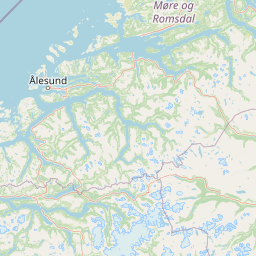
Map view of Jostedalsbreen National Park

Use this park location map to pinpoint Jostedalsbreen National Park in Norway, understand its exact geographic position, and read its mapped placement within the surrounding landscape more clearly.

Pigeon | © OpenStreetMap contributors

Location context for Jostedalsbreen National Park

Vestland

Visual insights into the diverse glacial terrain, unique alpine habitats, and protected landscapes defining Norway's most significant glacier park.

Discover Jostedalsbreen National Park: Visual Guide to Glacial Landscapes, Alpine Scenery, and Protected Environments
Explore a curated collection of Jostedalsbreen National Park images, offering an unparalleled visual journey into Europe's largest mainland glacier, its dramatic mountain terrain, and unique alpine ecosystems. These visuals provide essential context for comprehending the park's vast scale, ongoing glacial dynamics, and the intricate natural features that define this critical protected area in Norway.

Mountain landscape showing a turquoise lake surrounded by rocky terrain and snow-capped peaks under a partly cloudy sky

A large glacier descending between rocky mountain slopes with a body of water at its terminus under a partly cloudy sky

Park atlas

Compare glacial landscapes, mountain parks, and protected regions across Western Norway's Vestland county.

Explore Nearby National Parks and Protected Areas Surrounding Jostedalsbreen in Vestland, Norway
Continue your park discovery beyond Jostedalsbreen National Park by browsing other national parks and protected areas across Norway's Vestland county. Compare varied glacial, fjord, and mountain protected landscapes, tracing the geographic spread of conservation efforts throughout this distinctive Western Norwegian terrain.
National parkInnlandet

Breheimen National Park: Protected Glacial Landscapes and Mountain Terrain in Innlandet

Norway's prominent national park featuring active glaciers and alpine geography.

Breheimen National Park represents a significant protected landscape within Norway's Innlandet region, dedicated to conserving its unique glacial formations and dramatic alpine terrain. The park's vast area encompasses active glaciers, soaring peaks, and a notable diversity of natural environments, from lush valleys to barren plateaus. MoriAtlas facilitates a detailed exploration of Breheimen National Park, highlighting its mapped protected boundaries and its integral role in the regional geography and protected areas atlas.

Area
1,671 km²
Established
2009
IUCN
II
Relief
Mountain
Watercolor illustration of a mountain range with green hills and a lake in the foreground
National park

Jotunheimen National Park: Norway's Iconic Alpine Protected Landscape and Geographic Core

Explore mapped glacial terrain and alpine geography.

Jotunheimen National Park stands as a monument to Norway's alpine grandeur, protecting over 1,151 square kilometers of spectacular mountainous terrain. This protected area is defined by its dramatic glacial features, including sharp peaks exceeding 1,900 meters, U-shaped valleys, and pristine alpine lakes, making it a significant focus for geographic exploration and mapped landscape study. Delve into the core of Norway's mountain heartland, understanding the mapped boundaries and regional geological context that shape this iconic protected landscape.

Area
1,151 km²
Established
1980
IUCN
II
Relief
Mountain
National parkInnlandet

Reinheimen National Park: Norway's Vast Protected Wilderness Landscape and Alpine Geography

Map of protected boundaries and diverse mountain terrain.

Reinheimen National Park is a cornerstone of Norway's protected areas, encompassing a substantial portion of Western Norway's alpine wilderness. This national park protects a dynamic landscape characterized by dramatic western peaks and gentler eastern plateaus, providing critical habitat for wild reindeer and other wildlife. Its extensive mapped boundaries and varied natural terrain offer a rich subject for geographic discovery and atlas exploration, highlighting the ecological significance of well-preserved mountain ecosystems within Innlandet.

Area
1,969 km²
Established
2006
IUCN
II
Relief
Mountain
Abstract watercolor landscape with soft pastel hues of green, pink, yellow, and purple
National park

Hallingskarvet National Park: Norway's High Mountain Plateau and Protected Wilderness

Mapping glacial terrain, alpine environments, and wild reindeer habitat.

Hallingskarvet National Park offers a unique window into Norway's geological history and alpine ecology. This protected landscape encompasses the striking Hallingskarvet plateau and the Vargebreen glacier, along with deep valleys carved by ancient ice. Users can explore the park's mapped boundaries, understand its regional geographic setting in Scandinavia, and appreciate its conservation value as a habitat for wild reindeer. The park's terrain provides a concrete example of glacial shaping and high-altitude ecosystems within the Nordic context.

Area
450 km²
Established
2006
IUCN
II
Relief
Mountain
Watercolor painting of mountain peaks with green valleys and grassy foreground
National parkInnlandet

Rondane National Park: Norway's Premier Alpine Protected Landscape and Historic National Park

Mapped glacial terrain, iconic peaks, and wild reindeer sanctuary.

As Norway's first national park, Rondane offers a profound exploration of a protected alpine environment. Situated in Innlandet county, its 963 square kilometers showcase a landscape sculpted by glaciers, featuring a striking array of ten peaks exceeding 2,000 meters. This page details Rondane National Park's distinct mapped boundaries, dramatic mountain geography, and its ecological significance as a refuge for wild reindeer, making it a cornerstone of Scandinavian natural heritage.

Area
963 km²
Established
1962
IUCN
II
Relief
Mountain
Watercolor painting showing a mountainous landscape with a waterfall, grassy fields, and wildflowers
National parkInnlandet

Dovrefjell, Sunndalsfjella National Park: Mapping Norway's Largest Alpine Protected Landscape

Explore its protected boundaries, mountain terrain, and unique ecological significance.

Dovrefjell, Sunndalsfjella National Park is a cornerstone of Norwegian protected areas, offering an expansive alpine wilderness with dramatic mountain scenery. This page details the park's geographic context, mapped landscape features, and its importance as a refuge for unique wildlife like wild reindeer and muskox. Users can investigate the park's protected boundaries and understand its role within the regional geography of Innlandet, contributing to a structured atlas of Scandinavia's natural heritage.

Area
1,693 km²
Established
2002
IUCN
II
Relief
Mountain
National parkInnlandet

Dovre National Park: Mapped Alpine Terrain & Protected Reindeer Habitat in Innlandet

Norway's protected mountain plateau landscape and wildlife corridor.

Dovre National Park is a significant protected area in Innlandet, Norway, characterized by its expansive alpine plateau terrain and role as a vital ecological corridor for wild reindeer. This national park offers users an atlas-level view of its mapped natural boundaries, focusing on the unique subarctic mountain landscape and its conservation importance. Understand Dovre National Park's geographic identity and its contribution to a contiguous network of protected lands.

Area
289 km²
Established
2003
IUCN
II
Relief
Mountain
National parkInnlandet

Langsua National Park: Protected Mountain Forests and Inland Wilderness in Innlandet, Norway

Discover mapped boundaries and regional geographic context.

Langsua National Park, a designation expanded in 2011, is a prominent protected area in Norway's Innlandet county. This national park encompasses 537.1 square kilometers of diverse mountainous terrain, characterized by extensive mountain forests and inland wilderness habitats. Its creation consolidates fragmented nature reserves into a significant contiguous protected landscape, offering valuable insight into Norway's conservation strategies and the geographic context of its eastern mountain regions.

Area
537.1 km²
Established
2011
IUCN
II
Relief
Mixed relief

Common questions about visiting, size, designation, and location context for Jostedalsbreen National Park

Jostedalsbreen National Park FAQs for park facts, access, geography, and protected area context
Find quick answers about Jostedalsbreen National Park, including protected-area facts, park geography, trail and visitor context, and how the park fits into its surrounding country and regional landscape.
MoriAtlas Explorer

Continue Your Protected Areas Search Across the Global Atlas

Deepen your exploration by continuing the structured search for national parks and protected areas worldwide. Utilize the comprehensive filtering capabilities to compare different conservation landscapes and refine your understanding of global park geography. Discover more about the distribution and characteristics of protected natural areas.

Global natural geography