Why Hallingskarvet National Park stands out
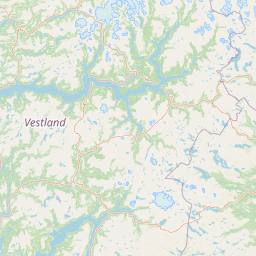
Hallingskarvet National Park is best known for its dramatic alpine plateau landscape, the Vargebreen glacier, and significant wild reindeer populations that inhabit the high mountain terrain. The park preserves one of Norway's more accessible high-altitude wilderness areas, with the Bergen Line railway running along its southern boundary and Finse Station providing rare public access to this otherwise roadless landscape. The geological significance of the area, demonstrating the connection between glacial history and current biodiversity patterns, represents another defining characteristic of the park.
Hallingskarvet National Park history and protected-area timeline
Hallingskarvet National Park was established on 22 December 2006 through formal government action, representing a relatively recent addition to Norway's system of protected areas. The creation of the park reflected growing recognition during the 1990s and early 2000s of the ecological and geological importance of Norway's high mountain landscapes.
The wild reindeer populations of the Hallingskarvet area were a significant factor in the establishment of the park. These animals depend on the alpine and sub-nival habitats within the park boundaries for their seasonal movements and grazing. The protection of these wild reindeer stocks provided a biological rationale for preserving a large contiguous area of mountain terrain.
The Norwegian Directorate for Nature Management serves as the governing body responsible for the park's administration and management. The park's designation as an IUCN Category II protected area reflects its primary objective of landscape and ecosystem conservation while allowing for continued traditional outdoor use of the area.
Hallingskarvet National Park landscape and geographic character
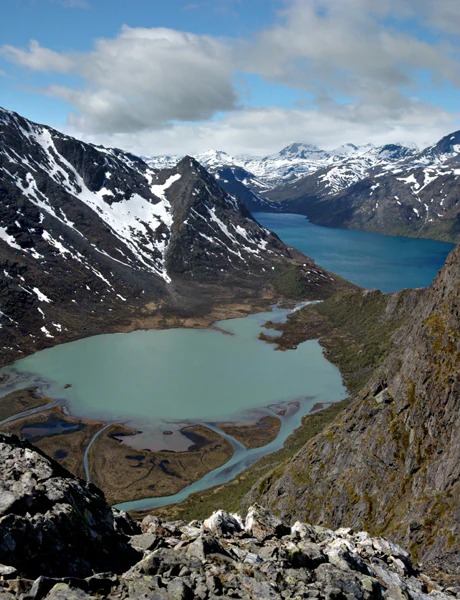
The Hallingskarvet landscape is defined by its high mountain plateau character, the result of geological processes extending through multiple ice ages. The Hallingskarvet plateau rises above the surrounding terrain, creating a distinctive flat-topped mountain formation that dominates the eastern portion of the park. From this elevated surface, the terrain descends westward toward the glacier and the major valleys that carve through the protected area.
The Vargebreen glacier represents a significant glacial feature within the park, occupying the western reaches of the protected area. This ice body, like others in the Norwegian highlands, is a remnant of the extensive glaciation that shaped the current landscape. The glacier's presence influences local hydrology, microclimate, and ecological conditions.
The valleys within the park—Såtedalen, Lengjedalen, Ynglesdalen, and Raggsteindalen—provide lower-elevation corridors through the alpine terrain. These valleys have been shaped by glacial action and subsequent erosion, creating the characteristic U-shaped profiles typical of glacial valleys. The variation in elevation across the park, from valley floors to the plateau surface and culminating at Folarskardnuten at 1,933 metres, creates diverse environmental conditions within a relatively compact area.
Hallingskarvet National Park ecosystems, habitats, and plant life
The ecological character of Hallingskarvet National Park reflects the harsh but productive conditions of Norwegian high mountain environments. The park spans elevation zones from valley bottoms through alpine heaths to nival zones near the glacier and highest peaks. This vertical zonation supports distinct plant communities adapted to each altitude band.
The geological history preserved in the park's landforms has direct relevance to understanding current biodiversity patterns. The variation in substrate, moisture availability, and exposure across the park creates a mosaic of microhabitats supporting different species assemblages. Areas of particular ecological value within the park support species that are threatened or vulnerable in broader Norwegian contexts.
The Draba cacuminum, a species of whitlow-grass, represents one of the specialized alpine plants found in the park. This species, along with Botrychium lanceolatum (lance-leaf grapefern), occupies habitats within the park that provide the specific conditions these species require for survival. These botanical occurrences contribute to the park's conservation significance beyond the more visible mammal populations.
Hallingskarvet National Park wildlife and species highlights
Wild reindeer constitute the most prominent large mammal species within Hallingskarvet National Park. These animals have maintained populations in the Norwegian mountain regions through centuries of traditional land use and represent a key element of the park's ecological character. The high mountain terrain provides seasonal grazing opportunities, with the animals moving between different elevations throughout the year.
The reindeer populations of Hallingskarvet were a primary justification for the park's establishment, reflecting both their conservation importance and their role as an indicator of ecosystem health. The maintenance of viable reindeer stocks depends on the preservation of connected habitat areas that allow for traditional migration patterns and genetic exchange between populations.
The park's position within the broader Norwegian mountain ecosystem means it contributes to the network of protected areas that support biodiversity in this landscape type. While the Wikipedia source emphasizes the wild reindeer populations, the diverse habitats from valley to plateau also support various bird species and smaller mammals adapted to alpine conditions.
Hallingskarvet National Park conservation status and protection priorities
Hallingskarvet National Park serves multiple conservation objectives within Norway's protected area network. The preservation of wild reindeer populations represents a primary conservation goal, with the park protecting essential habitat for these animals in an era when such populations face pressures from development, climate change, and habitat fragmentation. The park forms part of a broader network of protected areas that collectively maintain viable populations of this species across its traditional range.
The geological conservation dimension of the park reflects Norway's approach to preserving representative examples of landscape types and geological processes. The Hallingskarvet area demonstrates clear connections between glacial history and current ecological patterns, making it valuable for both scientific understanding and conservation education. The protection of this geological context ensures that these relationships remain observable and interpretable.
The presence of vulnerable plant species including Draba cacuminum and Botrychium lanceolatum adds botanical conservation significance to the park. These species depend on specific habitat conditions that the park's protection helps maintain. The broader conservation framework also considers cultural heritage elements within the protected area, recognizing the long history of human presence and traditional use that has shaped this landscape.
Hallingskarvet National Park cultural meaning and human context
The name Hallingskarvet provides insight into the cultural geography of the region. The first element, "halling," refers to an inhabitant of the Hallingdal valley, linking the mountain to the human communities that have historically utilized this landscape. The second element derives from "skarv," the Norwegian term for mountain or mountainous area lacking vegetation, describing the character of the exposed high terrain.
This naming convention reflects the traditional relationship between Norwegian valley communities and the mountain areas that border their settlements. The Hallingdal valley has been inhabited for centuries, with communities maintaining connections to the high mountain terrain for grazing, hunting, and other traditional activities. The park encompasses landscape that would have been part of this historical land-use pattern.
The Bergen Line railway, completed in the early twentieth century, introduced new forms of access to this mountain landscape. Finse Station, situated near the park boundary, represents a point where modern infrastructure meets the wilderness character that the park now protects. This railway connection has made the area more accessible to visitors while still maintaining the remote character of the high mountain terrain.
Top sights and standout views in Hallingskarvet National Park
Hallingskarvet National Park protects one of Norway's most distinctive high mountain landscapes, with the dramatic plateau of Hallingskarvet rising above surrounding terrain and the Vargebreen glacier adding glacial character to the western reaches of the park. The wild reindeer populations that depend on this terrain represent a conservation priority and provide a wildlife viewing focus for visitors. The geological significance of the area, demonstrating clear relationships between glacial history and biodiversity patterns, makes the park valuable for environmental education and scientific research. Access via the Bergen Line railway at Finse provides a unique approach to this wilderness area, arriving by train to a landscape largely free of road access.
Best time to visit Hallingskarvet National Park
The optimal time to visit Hallingskarvet National Park corresponds to the Norwegian summer season, typically from June through September, when the high mountain terrain is most accessible and conditions allow for outdoor exploration. During this period, the weather is generally more stable, temperatures are suitable for extended outdoor activities, and the wildflower displays in the alpine zones add botanical interest to the landscape. The summer months also coincide with the active season for wildlife viewing, including the reindeer that inhabit the park.
Winter visits are possible but require appropriate equipment and preparation for harsh mountain conditions. The park's high elevation means snow cover persists for most of the year outside the summer months, and temperatures can be severe. The off-season period offers a different character, with the landscape transformed by winter conditions and fewer visitors, but access challenges increase significantly.
The shoulder seasons of late spring and early autumn present transitional conditions that may offer intermediate character, though weather unpredictability is higher during these periods. Visitors planning trips should be aware that the alpine environment can change rapidly regardless of season, and preparation for variable conditions is essential.