Why Helena National Park stands out
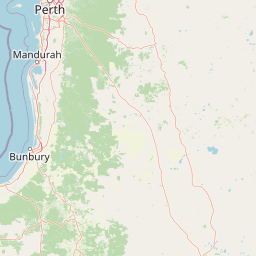
Helena National Park is best known for its protection of jarrah forest ecosystems in the Perth Hills, a region that has seen substantial residential and agricultural development in recent decades. The park encompasses Mount Dale, a prominent local peak that offers scenic views over the surrounding forest and farmland. Its location on the Bibbulmun Track makes it a well-visited destination for hikers completing all or sections of this renowned 1,000-kilometre trail. The reserve also represents one of the more accessible national parks for Perth residents seeking nearby nature experiences.
Helena National Park history and protected-area timeline
Helena National Park was created on 30 November 2004 when the Western Australian government proclaimed it as Class A reserve No. 47882. This designation came as part of a significant expansion of the state's national park network, with nine new national parks established across Western Australia on that date. The park's establishment reflected growing recognition of the conservation importance of remnant jarrah forest in the Perth Hills region, where development pressure had increasingly encroached on natural areas. Prior to national park declaration, the land had been managed for various purposes including timber production and grazing. The formal protection of the area marked a commitment to preserving its natural and cultural values for future generations, with the Whadjuk people acknowledged as the Traditional Owners of the land.
Helena National Park landscape and geographic character
The physical landscape of Helena National Park is characteristic of the Jarrah Forest bioregion, featuring gently undulating lateritic uplands with valleys and winter-wet depressions. The park encompasses forested ridges, open woodland areas, and sections of denser forest in the deeper valleys. Mount Dale rises as a notable landmark within the park, providing topographic variation and elevated viewpoints over the surrounding landscape. The underlying geology consists of ancient Archean granites and metamorphic rocks of the Yilgarn Craton, overlain by laterite and sandy soils that support the jarrah-dominated forest. The park's position in the Perth Hills places it at elevations that experience slightly cooler temperatures than the coastal plain, with subtle differences in vegetation communities across aspects and slope positions.
Helena National Park ecosystems, habitats, and plant life
As a representative example of the Jarrah Forest bioregion, Helena National Park protects ecosystems characterized by jarrah trees as the dominant canopy species, with understory layers including various wattles, grass trees, and diverse heath species. The forest structure varies across the park, with more open woodland on the ridges transitioning to denser forest in the valleys where moisture is more abundant. The park's numerous winter-wet swamps and drainage lines support distinct wetland vegetation communities and provide important habitat for water-dependent species. The jarrah forest of southwest Western Australia is recognized as one of the world's Mediterranean-type ecosystems, renowned for its high degree of endemism and remarkable diversity of plants and animals adapted to the seasonal climate and nutrient-poor soils.
Helena National Park wildlife and species highlights
The jarrah forest of Helena National Park supports a diversity of native wildlife, though detailed species inventories are not prominently featured in available source material. The forest provides habitat for various bird species including honeyeaters, parrots, and woodland birds, while mammals such as western grey kangaroos, bandicoots, and possums inhabit the woodland and forest layers. Reptiles are present in the understory and ground-layer habitats, and the park's wetlands support amphibians and waterbirds during the winter months. The connectivity provided by the protected area, even within a fragmented landscape context, supports ecological processes and provides refuge for species in an area where extensive clearing has reduced available habitat.
Helena National Park conservation status and protection priorities
Helena National Park contributes significantly to the conservation of jarrah forest ecosystems in the Perth region, an area that has experienced substantial vegetation loss due to urban expansion, agricultural development, and mineral extraction. The Class A reserve status provides the highest level of protection available under Western Australian legislation, ensuring the park's values are maintained against future development pressures. The park forms part of a network of protected areas in the Perth Hills that collectively support biodiversity conservation in the southwest Australian biodiversity hotspot. Protecting representative examples of the Jarrah Forest bioregion is particularly important given the region's Mediterranean climate and the pressure placed on native ecosystems by a growing population centre.
Helena National Park cultural meaning and human context
The land on which Helena National Park is situated is the traditional territory of the Whadjuk people, the Traditional Owners of the Perth region. The Whadjuk are part of the Noongar Aboriginal people, whose connections to the lands and waters of the Swan Coastal Plain and adjacent ranges extend over many thousands of years. While the specific cultural heritage values of the park area are not extensively documented in available sources, the broader Perth Hills region contains numerous sites of Aboriginal significance, and the Whadjuk people's association with the landscape predates the colonial period by millennia. Acknowledging the Traditional Owners is an important aspect of the park's identity and management context.
Top sights and standout views in Helena National Park
Helena National Park's standout features include its representative jarrah forest landscapes, the prominent Mount Dale with its panoramic views, and its location along the Bibbulmun Track making it accessible to hikers. The park provides a relatively accessible nature experience for Perth residents, being within approximately an hour's drive of the city centre. The combination of forest scenery, walking opportunities, and conservation significance makes the park a meaningful destination within the regional network of protected areas. Its establishment in 2004 represents a relatively recent addition to Western Australia's national park system, reflecting continued investment in nature conservation.
Best time to visit Helena National Park
The park can be visited throughout the year, though the cooler months from April to October generally offer more comfortable conditions for bushwalking and outdoor activities. During Western Australia's winter, the forest landscape is often at its most vibrant, with wildflowers beginning to appear in late winter and spring, and the forest generally greener than during the hot summer months. Summer temperatures in the Perth Hills can be high, and visitors should be prepared for warm to hot conditions if exploring the park during December through February. The Bibbulmun Track is maintained year-round, though some sections may be closed or have access restrictions following heavy rain due to track conditions or fire risk during the dry season.