
Why Jabal Samhan Nature Reserve stands out
Jabal Samhan Nature Reserve is best known as one of the last remaining refuges of the Arabian leopard, a critically endangered big cat that once roamed much of the Arabian Peninsula. The reserve's remote Dhofar mountain terrain, with its steep escarpments, rocky outcrops, and rugged valleys, provides a combination of cover, elevation, and prey availability that few other areas in Arabia still offer the species. Estimates derived from field data suggest that only around twenty Arabian leopards remain in the reserve, making every surviving animal of exceptional conservation importance. The reserve is also recognized for protecting the prey community that sustains these predators. Arabian gazelles, Nubian ibex, Cape hares, rock hyraxes, and other native species inhabit the same mountains, creating a rare example of an intact Arabian mountain predator-prey system. In a region where leopard habitat has been heavily reduced elsewhere, Jabal Samhan's combination of size, remoteness, and ecological integrity sets it apart.
Jabal Samhan Nature Reserve landscape and geographic character
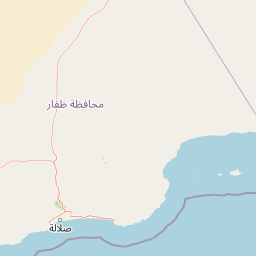
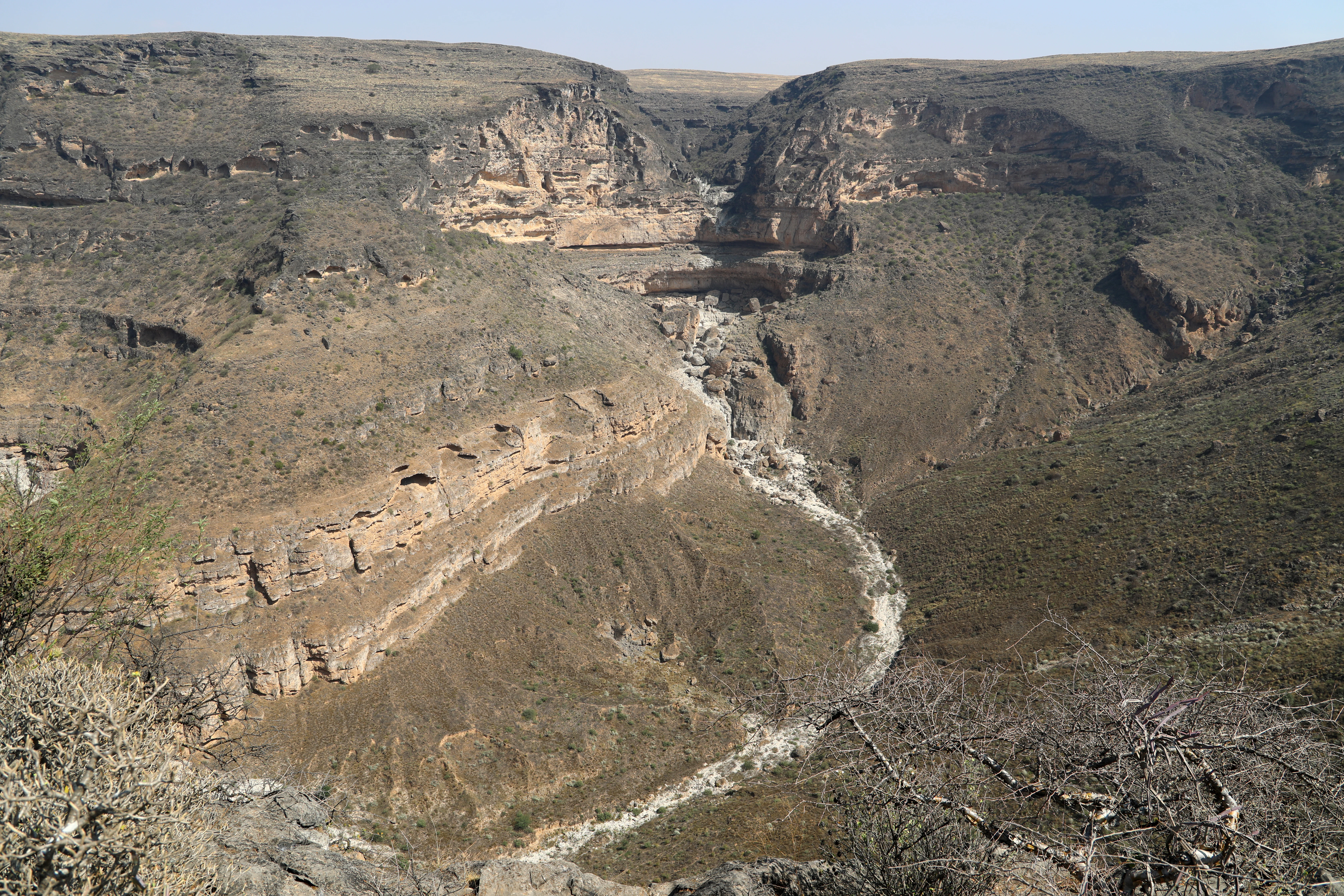
Jabal Samhan lies within the broader Dhofar Mountains, a range that dominates the southern corner of Oman and defines much of the region's geography. The mountains rise sharply from the coastal plain near Salalah, forming steep escarpments, deep-cut valleys, and broad rocky plateaus that extend inland toward the central deserts of the Arabian Peninsula. Within this setting, Jabal Samhan itself represents a particularly rugged segment of the range, characterized by high ridges, exposed rock faces, and a network of wadis that channel seasonal runoff during the annual khareef monsoon period.
The terrain of the reserve is overwhelmingly arid, with sparse vegetation cover adapted to long dry seasons and limited rainfall. Vegetation tends to concentrate in sheltered wadi bottoms and along rocky ledges, while higher slopes and exposed uplands appear bare and skeletal. The combination of elevation, rock structure, and seasonal moisture creates a mosaic of microhabitats that is rare in the surrounding deserts. Despite the harshness of the environment, this landscape offers the cover and remoteness that large, wide-ranging predators need to survive, and the rugged topography itself is part of what makes the reserve ecologically distinctive in southern Arabia.
Jabal Samhan Nature Reserve ecosystems, habitats, and plant life
The ecosystems of Jabal Samhan reflect the transition between the more moisture-influenced coastal escarpment of Dhofar and the arid interior lands of southern Arabia. Vegetation is sparse but ecologically significant, consisting of drought-adapted shrubs, scattered trees in sheltered wadis, and patches of greenery that respond to seasonal moisture from the southwest monsoon. These plant communities, though limited in extent, sustain a herbivore community that in turn supports the predators for which the reserve is best known.
Ecologically, the reserve represents one of the few large, intact arid mountain ecosystems remaining in Oman. The interplay between elevation, rock shelter, seasonal runoff, and prey availability creates conditions that allow a wide range of species to coexist in a relatively small and challenging environment. This ecological integrity is a key reason why the reserve has been prioritized for protection, and it gives the area an outsized importance in regional biodiversity terms despite its harsh and uninviting appearance to casual observers.
Jabal Samhan Nature Reserve wildlife and species highlights
Wildlife is the defining feature of Jabal Samhan Nature Reserve, and the reserve has become almost synonymous with efforts to protect the Arabian leopard in Oman. Field evidence suggests that around twenty individual Arabian leopards still inhabit the mountains, making this one of the most important surviving populations of the subspecies on the Arabian Peninsula. The leopards are wide-ranging and elusive, using steep terrain and deep valleys as both hunting grounds and refuge, and their presence is the principal reason the reserve was established and continues to be protected.
The leopard's prey base in Jabal Samhan is unusually diverse for an arid mountain environment. Arabian gazelles and Nubian ibex are the most important larger prey species, while smaller mammals such as Cape hares, rock hyraxes, Indian crested porcupines, and desert hedgehogs add to the food supply. Several bird species also form part of the leopard's diet in the area. Where livestock is available in surrounding traditional grazing lands, leopards occasionally prey on domestic animals, which has historically created a source of conflict with local communities and is part of the reason the reserve is managed to limit human activity within its core.
In addition to the leopard, the reserve supports a small but ecologically significant community of other predators. Caracals, striped hyenas, and Arabian wolves have all been documented in or near the area, alongside the suite of herbivores and small mammals already mentioned. The combination of predators and prey in a single, relatively undisturbed mountain landscape makes the reserve unusual in a regional context where such intact systems have become increasingly rare.
Jabal Samhan Nature Reserve conservation status and protection priorities
Jabal Samhan Nature Reserve was established primarily to protect the Arabian leopard and the mountain ecosystem on which it depends. As one of the last known strongholds of this critically endangered subspecies, the reserve carries an outsized importance for leopard conservation not only in Oman but across the Arabian Peninsula. The survival of approximately twenty leopards in its mountains represents a population that, while small, is significant enough to anchor the long-term prospects of the subspecies in the wild.
Conservation value in the reserve goes beyond the leopard itself. The intact prey community, the presence of other large predators such as the caracal and striped hyena, and the largely undisturbed character of the habitat make Jabal Samhan an important reference site for arid mountain ecosystems in southern Arabia. The reserve's large size, lack of permanent settlement, and rugged terrain provide a buffer against many of the threats that have reduced leopard populations elsewhere, including habitat fragmentation, direct persecution, and competition with expanding human land use.
Management of the reserve centers on limiting human disturbance, controlling activities such as grazing and infrastructure development within its core, and supporting monitoring work that tracks leopard and prey populations over time. The reserve also plays a role in broader efforts to mitigate human-wildlife conflict in the region, particularly where leopards occasionally prey on livestock in adjacent traditional grazing areas. Its conservation significance is therefore both ecological, as a refuge for endangered wildlife, and institutional, as a protected area framework within which that refuge can be maintained.
Top sights and standout views in Jabal Samhan Nature Reserve
Jabal Samhan Nature Reserve is distinguished by three interconnected strengths: its size, its ecological integrity, and its role as a refuge for the Arabian leopard. At roughly 4,500 square kilometres, it ranks among the largest protected areas in Oman and offers the kind of continuous, undisturbed habitat that wide-ranging predators require. Within that expanses of Dhofar mountain terrain, the reserve sustains an unusually complete arid mountain ecosystem, with leopards, hyenas, caracals, wolves, gazelles, and ibex all coexisting in a setting shaped by deep wadis, rocky plateaus, and seasonal monsoon influence.
Equally important is what the reserve represents in regional conservation terms. In a part of the world where the Arabian leopard has disappeared from most of its former range, Jabal Samhan remains one of the places where the subspecies still has a viable future. The combination of large predator, diverse prey base, and rugged protected habitat gives the reserve a profile that extends well beyond its remote location in southern Oman.
Best time to visit Jabal Samhan Nature Reserve
Jabal Samhan Nature Reserve is a remote and ecologically sensitive area rather than a conventional visitor destination, and access is generally limited and managed for conservation purposes. For anyone with an interest in the reserve's landscapes and wildlife, the cooler months of the year are generally more favorable than the peak of summer, when temperatures across the Dhofar Mountains climb sharply. The annual khareef monsoon season, which brings periodic rain and mist to the Dhofar region between roughly mid-June and mid-September, transforms the broader landscape into a greener, lusher environment, though its effects inside the core mountain reserve are more limited and weather conditions can complicate movement in rugged terrain.
Outside the reserve itself, the city of Salalah and the surrounding Dhofar region, including the monsoon season and the cooler winter period, offer the most accessible context for understanding the landscapes that Jabal Samhan protects. Wildlife viewing within the reserve is not a casual activity: encounters with leopards and other species are rare and depend heavily on luck, patience, and proper guidance. Visitors interested in the reserve generally approach it as a conservation and wilderness experience rather than a typical sightseeing visit.