
Mori Atlas logo
Nature reserveJabal Samhan Nature Reserve

Mapping the rugged escarpments, deep wadis, and remote desert terrain of the Dhofar Mountains

Jabal Samhan Nature Reserve: A Vast Protected Mountain Landscape in Southern Oman

Jabal Samhan Nature Reserve spans 4,500 square kilometres of dramatic mountain terrain within the Dhofar Governorate of southern Oman. This protected area preserves a complex mosaic of rocky plateaus and arid valleys that serve as a vital refuge for critically endangered species like the Arabian leopard. The reserve remains an essential focus for regional conservation, maintaining a functioning mountain ecosystem that stands out within the broader geography of the Arabian Peninsula.

nature reserveArabian leopardarid mountainDhofar Mountainswildlife refugeconservation area
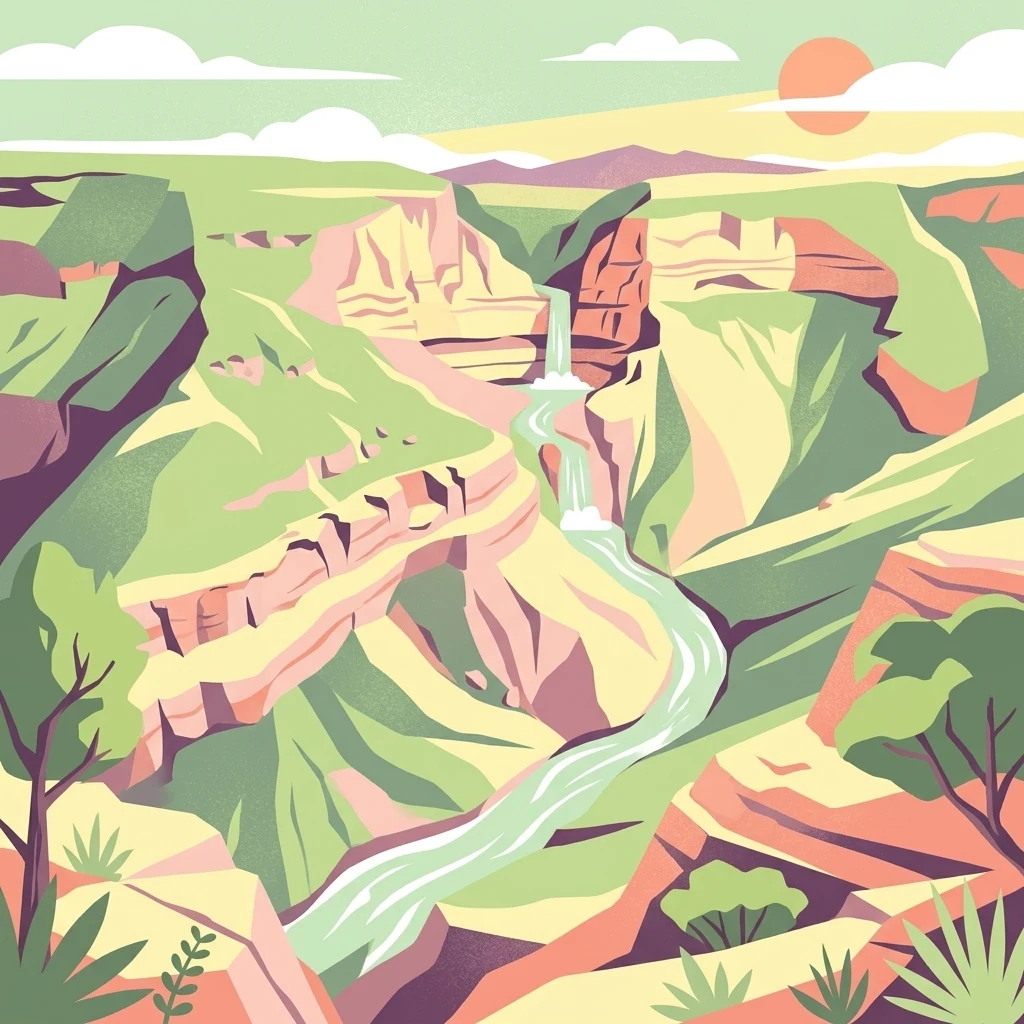
A flat-style digital illustration of a deep canyon with layered rock formations, a flowing river, and a small waterfall, with sparse vegetation under a warm sky.

Jabal Samhan Nature Reserve

Nature reserve

Park overview

Structured park overview, official facts, and landscape profile for Jabal Samhan Nature Reserve

Jabal Samhan Nature Reserve park facts, protected area profile, and essential visitor context

Review the core facts for Jabal Samhan Nature Reserve, including designation, size, terrain, visitor scale, habitats, and operating context in one park-focused overview.

About Jabal Samhan Nature Reserve

Jabal Samhan Nature Reserve lies at the heart of the Dhofar Mountains in southern Oman, an arc of rugged highlands that rise above the coastal plain near Salalah and descend toward the interior deserts of the Arabian Peninsula. The name Jabal Samhan refers to a specific mountain massif within this broader range, and the reserve encompasses a vast tract of arid and semi-arid mountain landscape stretching across the area where some of the region's most charismatic wildlife still clings to existence.

As a nature reserve, Jabal Samhan is defined primarily by its conservation purpose rather than by tourism or settlement. There is no permanent population within its borders, and human presence is largely limited to monitoring, research, and limited traditional land use in surrounding areas. This absence of permanent settlement has allowed the reserve to retain large expanses of relatively undisturbed habitat, including deep wadis, boulder-strewn slopes, and high rocky plateaus that are difficult to access. The terrain is harsh, but it supports an ecosystem that has adapted to the seasonal rhythms of southern Arabia, where the influence of the southwest monsoon brings occasional moisture to even these dry mountains.

The reserve's significance is closely tied to the survival of the Arabian leopard, a subspecies of leopard that once ranged widely across the mountains and wadis of the Arabian Peninsula but has been reduced to a handful of isolated populations. Jabal Samhan is widely regarded as one of the most important of these populations, both because of the apparent number of animals still present and because of the apparent health of the broader prey community that sustains them. In conservation terms, the reserve functions as a stronghold: a place where, with sufficient protection, the subspecies might still persist in the wild.

Beyond the leopard, the reserve protects a community of arid-zone wildlife that includes other large predators such as the caracal, striped hyena, and Arabian wolf, as well as prey species ranging from the Arabian gazelle to smaller mammals like the Cape hare, rock hyrax, Indian crested porcupine, and desert hedgehog. Birdlife adds another layer of diversity, with several bird species forming part of the leopard's prey base. Together, these species form a functioning mountain ecosystem that makes the reserve important not only for a single flagship animal but for broader regional biodiversity in southern Arabia.

Quick facts and research context for Jabal Samhan Nature Reserve

Jabal Samhan Nature Reserve is situated in the Dhofar Mountains of southern Oman, within the Dhofar Governorate, and lies inland from the regional capital of Salalah. The reserve covers roughly 4,500 square kilometres, making it one of the largest protected areas in Oman and one of the most significant mountain reserves on the Arabian Peninsula.

As a nature reserve rather than a national park, Jabal Samhan is managed primarily for the protection of wildlife and natural habitat rather than for public recreation. The area has no permanent human population, and its rugged terrain, deep canyons, and arid conditions have helped to keep it relatively undisturbed. The reserve's most important conservation role is the protection of the Arabian leopard and its prey base, including Arabian gazelle and Nubian ibex.

Park context

Deeper park guide and search-rich context for Jabal Samhan Nature Reserve

Jabal Samhan Nature Reserve history, landscape, wildlife, and travel context

Explore Jabal Samhan Nature Reserve through its history, landscape character, ecosystems, wildlife, conservation priorities, cultural context, and seasonal travel timing in a structured park guide built for atlas discovery and search intent.

Why Jabal Samhan Nature Reserve stands out

Jabal Samhan Nature Reserve is best known as one of the last remaining refuges of the Arabian leopard, a critically endangered big cat that once roamed much of the Arabian Peninsula. The reserve's remote Dhofar mountain terrain, with its steep escarpments, rocky outcrops, and rugged valleys, provides a combination of cover, elevation, and prey availability that few other areas in Arabia still offer the species. Estimates derived from field data suggest that only around twenty Arabian leopards remain in the reserve, making every surviving animal of exceptional conservation importance. The reserve is also recognized for protecting the prey community that sustains these predators. Arabian gazelles, Nubian ibex, Cape hares, rock hyraxes, and other native species inhabit the same mountains, creating a rare example of an intact Arabian mountain predator-prey system. In a region where leopard habitat has been heavily reduced elsewhere, Jabal Samhan's combination of size, remoteness, and ecological integrity sets it apart.
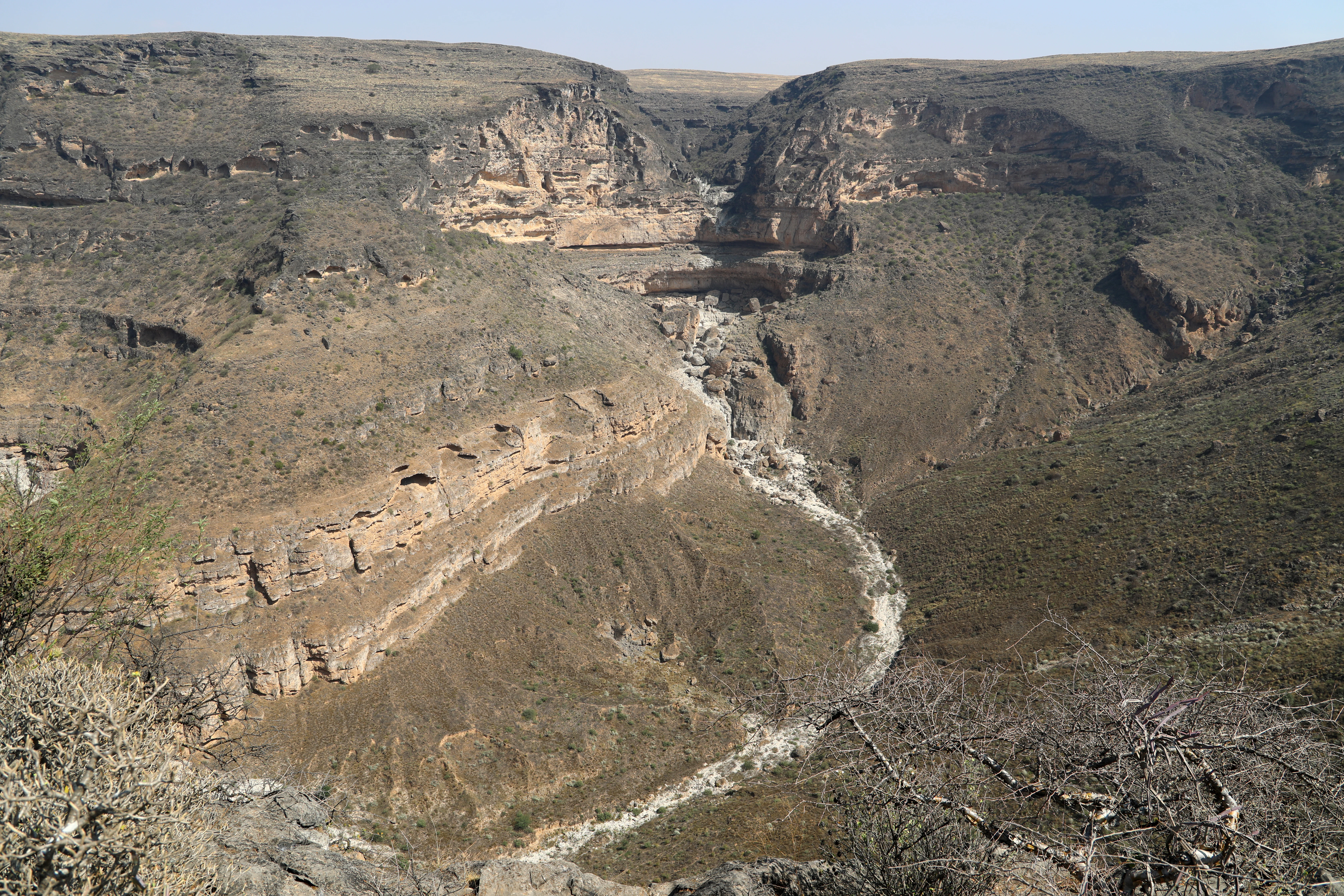
A wide, high-angle view looking down into a deep, rocky sinkhole crater with layered canyon walls and sparse desert vegetation.
The dramatic, rugged landscape of the Taiq Cave sinkhole in Jabal Samhan Nature Reserve.

Jabal Samhan Nature Reserve landscape and geographic character

Jabal Samhan lies within the broader Dhofar Mountains, a range that dominates the southern corner of Oman and defines much of the region's geography. The mountains rise sharply from the coastal plain near Salalah, forming steep escarpments, deep-cut valleys, and broad rocky plateaus that extend inland toward the central deserts of the Arabian Peninsula. Within this setting, Jabal Samhan itself represents a particularly rugged segment of the range, characterized by high ridges, exposed rock faces, and a network of wadis that channel seasonal runoff during the annual khareef monsoon period.

The terrain of the reserve is overwhelmingly arid, with sparse vegetation cover adapted to long dry seasons and limited rainfall. Vegetation tends to concentrate in sheltered wadi bottoms and along rocky ledges, while higher slopes and exposed uplands appear bare and skeletal. The combination of elevation, rock structure, and seasonal moisture creates a mosaic of microhabitats that is rare in the surrounding deserts. Despite the harshness of the environment, this landscape offers the cover and remoteness that large, wide-ranging predators need to survive, and the rugged topography itself is part of what makes the reserve ecologically distinctive in southern Arabia.

Jabal Samhan Nature Reserve ecosystems, habitats, and plant life

The ecosystems of Jabal Samhan reflect the transition between the more moisture-influenced coastal escarpment of Dhofar and the arid interior lands of southern Arabia. Vegetation is sparse but ecologically significant, consisting of drought-adapted shrubs, scattered trees in sheltered wadis, and patches of greenery that respond to seasonal moisture from the southwest monsoon. These plant communities, though limited in extent, sustain a herbivore community that in turn supports the predators for which the reserve is best known.

Ecologically, the reserve represents one of the few large, intact arid mountain ecosystems remaining in Oman. The interplay between elevation, rock shelter, seasonal runoff, and prey availability creates conditions that allow a wide range of species to coexist in a relatively small and challenging environment. This ecological integrity is a key reason why the reserve has been prioritized for protection, and it gives the area an outsized importance in regional biodiversity terms despite its harsh and uninviting appearance to casual observers.

Jabal Samhan Nature Reserve wildlife and species highlights

Wildlife is the defining feature of Jabal Samhan Nature Reserve, and the reserve has become almost synonymous with efforts to protect the Arabian leopard in Oman. Field evidence suggests that around twenty individual Arabian leopards still inhabit the mountains, making this one of the most important surviving populations of the subspecies on the Arabian Peninsula. The leopards are wide-ranging and elusive, using steep terrain and deep valleys as both hunting grounds and refuge, and their presence is the principal reason the reserve was established and continues to be protected.

The leopard's prey base in Jabal Samhan is unusually diverse for an arid mountain environment. Arabian gazelles and Nubian ibex are the most important larger prey species, while smaller mammals such as Cape hares, rock hyraxes, Indian crested porcupines, and desert hedgehogs add to the food supply. Several bird species also form part of the leopard's diet in the area. Where livestock is available in surrounding traditional grazing lands, leopards occasionally prey on domestic animals, which has historically created a source of conflict with local communities and is part of the reason the reserve is managed to limit human activity within its core.

In addition to the leopard, the reserve supports a small but ecologically significant community of other predators. Caracals, striped hyenas, and Arabian wolves have all been documented in or near the area, alongside the suite of herbivores and small mammals already mentioned. The combination of predators and prey in a single, relatively undisturbed mountain landscape makes the reserve unusual in a regional context where such intact systems have become increasingly rare.

Jabal Samhan Nature Reserve conservation status and protection priorities

Jabal Samhan Nature Reserve was established primarily to protect the Arabian leopard and the mountain ecosystem on which it depends. As one of the last known strongholds of this critically endangered subspecies, the reserve carries an outsized importance for leopard conservation not only in Oman but across the Arabian Peninsula. The survival of approximately twenty leopards in its mountains represents a population that, while small, is significant enough to anchor the long-term prospects of the subspecies in the wild.

Conservation value in the reserve goes beyond the leopard itself. The intact prey community, the presence of other large predators such as the caracal and striped hyena, and the largely undisturbed character of the habitat make Jabal Samhan an important reference site for arid mountain ecosystems in southern Arabia. The reserve's large size, lack of permanent settlement, and rugged terrain provide a buffer against many of the threats that have reduced leopard populations elsewhere, including habitat fragmentation, direct persecution, and competition with expanding human land use.

Management of the reserve centers on limiting human disturbance, controlling activities such as grazing and infrastructure development within its core, and supporting monitoring work that tracks leopard and prey populations over time. The reserve also plays a role in broader efforts to mitigate human-wildlife conflict in the region, particularly where leopards occasionally prey on livestock in adjacent traditional grazing areas. Its conservation significance is therefore both ecological, as a refuge for endangered wildlife, and institutional, as a protected area framework within which that refuge can be maintained.

Top sights and standout views in Jabal Samhan Nature Reserve

Jabal Samhan Nature Reserve is distinguished by three interconnected strengths: its size, its ecological integrity, and its role as a refuge for the Arabian leopard. At roughly 4,500 square kilometres, it ranks among the largest protected areas in Oman and offers the kind of continuous, undisturbed habitat that wide-ranging predators require. Within that expanses of Dhofar mountain terrain, the reserve sustains an unusually complete arid mountain ecosystem, with leopards, hyenas, caracals, wolves, gazelles, and ibex all coexisting in a setting shaped by deep wadis, rocky plateaus, and seasonal monsoon influence.

Equally important is what the reserve represents in regional conservation terms. In a part of the world where the Arabian leopard has disappeared from most of its former range, Jabal Samhan remains one of the places where the subspecies still has a viable future. The combination of large predator, diverse prey base, and rugged protected habitat gives the reserve a profile that extends well beyond its remote location in southern Oman.

Best time to visit Jabal Samhan Nature Reserve

Jabal Samhan Nature Reserve is a remote and ecologically sensitive area rather than a conventional visitor destination, and access is generally limited and managed for conservation purposes. For anyone with an interest in the reserve's landscapes and wildlife, the cooler months of the year are generally more favorable than the peak of summer, when temperatures across the Dhofar Mountains climb sharply. The annual khareef monsoon season, which brings periodic rain and mist to the Dhofar region between roughly mid-June and mid-September, transforms the broader landscape into a greener, lusher environment, though its effects inside the core mountain reserve are more limited and weather conditions can complicate movement in rugged terrain.

Outside the reserve itself, the city of Salalah and the surrounding Dhofar region, including the monsoon season and the cooler winter period, offer the most accessible context for understanding the landscapes that Jabal Samhan protects. Wildlife viewing within the reserve is not a casual activity: encounters with leopards and other species are rare and depend heavily on luck, patience, and proper guidance. Visitors interested in the reserve generally approach it as a conservation and wilderness experience rather than a typical sightseeing visit.

Monthly climate preview

Long term temperature ranges and monthly precipitation records from representative coordinate data

Jabal Samhan Nature Reserve Climate Normals and Annual Weather Patterns

Jabal Samhan Nature Reserve records measured monthly average temperatures spanning from 18.39 degrees Celsius to 29.44 degrees Celsius alongside low daily precipitation values across the coordinate sample. Accessing the complete monthly climate breakdown provides deeper analytical context for temperature variations and long term environmental normals across the protected area.
Annual mean25 °C
18 °C29 °C
Jan18°
Feb20°
Mar23°
Apr27°
May29°
Jun29°
Jul27°
Aug27°
Sep27°
Oct25°
Nov23°
Dec20°
Warmest month
June

29.4 °C

Coolest month
January

18.4 °C

Wettest month
March

1.2 mm/day

Driest month
January

0.1 mm/day

Park location guide

Geography guide, regional context, and park location map for Jabal Samhan Nature Reserve

Jabal Samhan Nature Reserve park geography, regions, and map view in Oman

Understand where Jabal Samhan Nature Reserve sits in Oman through a broader geographic reading of the surrounding landscape, nearby location context, and its mapped position within the national park landscape.

How Jabal Samhan Nature Reserve fits into Oman

Oman, officially the Sultanate of Oman, is a country in the southeastern Arabian Peninsula. It borders Saudi Arabia, the UAE, and Yemen, and has coastline along the Arabian Sea and Gulf of Oman. Ruled by the Al Bu Said dynasty since 1744, it is the oldest independent state in the Arab world and was historically a regional power controlling territory across the Persian Gulf to East Africa.

Wider geography shaping Jabal Samhan Nature Reserve in Oman

Oman occupies the southeastern Arabian Peninsula in West Asia. It shares land borders with Saudi Arabia, the UAE, and Yemen. The country has coastal access to the Arabian Sea to the southeast and the Gulf of Oman to the northeast. The Hajar Mountains run through the northern region, while the interior consists of desert plains and rocky plateaus. The Musandam Peninsula is an exclave separated from the rest of Oman by UAE territory.

Map view of Jabal Samhan Nature Reserve

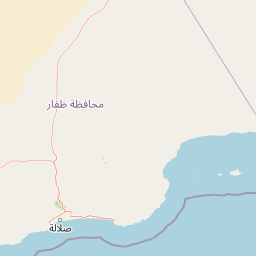
Use this park location map to pinpoint Jabal Samhan Nature Reserve in Oman, understand its exact geographic position, and read its mapped placement within the surrounding landscape more clearly.

Pigeon | © OpenStreetMap contributors

Location context for Jabal Samhan Nature Reserve

Dhofar Governorate

Visual reference for the arid terrain, escarpments, and protected habitats of southern Oman.

Jabal Samhan Nature Reserve Photos and Rugged Mountain Landscapes

Visual records capture the stark terrain, deep wadis, and rocky plateaus that define the protected landscape of Jabal Samhan Nature Reserve. Examining these field photographs helps reveal the remote mountain environment and rugged habitats supporting regional wildlife.

A wide, high-angle view looking down into a deep, rocky sinkhole crater with layered canyon walls and sparse desert vegetation.

Park atlas

Compare surrounding Dhofar mountain terrain and connected conservation landscapes

Other Parks Like Jabal Samhan Nature Reserve and Regional Protected Areas

Browsing other parks near Jabal Samhan Nature Reserve reveals similar rugged mountain terrain and arid upland ecosystems across southern Oman. Extending the geographic comparison helps trace broader protected-area networks and regional wildlife habitats.
Nature reserveYemen
About 247 km away#1 closest

Southwest

Hawf National Reserve: Protected Landscape and Mapped Nature Reserve in Yemen

Atlas exploration of Yemen's nature reserve geography.

Hawf National Reserve is a critical protected area within Yemen, recognized for its designation as a nature reserve. This detail page provides an atlas-driven perspective, focusing on the park's mapped boundaries, its unique landscape characteristics within the Arabian Peninsula, and its significance for protected area discovery. Understand the geographic context of Hawf National Reserve and its role in regional conservation through detailed map-based exploration.

Area
300 km²
IUCN
VI
Relief
Mountain
Climate
Tropical
A watercolor painting depicting a soft-toned mountain landscape with muted greens, pinks, and yellows, showing rolling hills and gentle peaks.
Nature reserveAd Dakhiliyah Governorate
About 669 km away#2 closest

North

Jebel Akhdar Mountains Nature Reserve: An Atlas of Oman's High Altitude Protected Landscapes

Geographic analysis of the Ad Dakhiliyah mountain massif

The Jebel Akhdar Mountains represent a critical protected nature reserve defined by dramatic limestone cliffs, deep wadis, and centuries of terraced agriculture. This elevated massif within the Ad Dakhiliyah Governorate sustains a rare montane ecology that serves as a cornerstone of regional Omani geography and environmental conservation.

Established
2011
Relief
Mountain
Climate
Arid
Access
Moderate access
Wildlife reserveOman
About 697 km away#3 closest

Northeast

Al Saleel National Park: A Protected Acacia Forest Wildlife Reserve in Oman

Explore its unique landscape and protected area geography.

Al Saleel National Park in Oman is distinguished by its exceptional acacia forest ecosystem, a scarce habitat type across the Arabian Peninsula. Covering 220 square kilometers, this wildlife reserve serves as a crucial sanctuary for at-risk species like the Arabian gazelle and the endemic Omani wild cat. Its landscape offers a compelling study of arid zone forest ecology and protected area management, providing valuable context for understanding Oman's commitment to natural heritage and conservation within its regional geography.

Area
220 km²
Climate
Arid
Scope
Terrestrial
Water
No major water
A soft watercolor painting of a tropical coastal landscape featuring a calm bay, low rolling hills in the background, and clusters of palm trees.
Nature reserveMuscat Governorate
About 769 km away#4 closest

Northeast

Qurm Nature Reserve: Protected Mangrove Ecosystems and Coastal Geography in Muscat

Coastal wetlands and avian habitats of the Gulf of Oman

Qurm Nature Reserve serves as a critical protected landscape within the Muscat Governorate, preserving expansive mangrove forests and intricate tidal channels. The reserve functions as a hub for coastal biodiversity, supporting numerous migratory bird species and maintaining ecological health within a major urban center. Explore the mapped boundaries and natural features of this significant wetland protected area.

Area
1.72 km²
Established
1975
IUCN
IV
Relief
Lowland
A watercolor painting showing a wide coastal scene with green low-lying hills in the distance, a calm body of water in the middle, and varied vegetation in the foreground.
Nature reserveMuscat Governorate
About 774 km away#5 closest

Northeast

Ad Dimaniyat Islands Nature Reserve: Protected Archipelago and Marine Biodiversity Map

Archipelago landscape and marine protected area in Muscat Governorate.

The Ad Dimaniyat Islands represent a critical nature reserve composed of nine distinct islands in the Gulf of Oman. The archipelago is known for its rare coral formations, nesting beaches for endangered sea turtles, and its role as a breeding site for various seabird species. This protected landscape combines complex underwater reef habitats with rocky and sandy terrain, forming a significant ecological zone within the Muscat Governorate.

Area
1 km²
Relief
Lowland
Access
Moderate access
Scope
Marine
Nature reserveDubai
About 811 km away#6 closest

North

Al Marmoom Desert Conservation Reserve: Nature Reserve and Desert Landscape in Dubai

Mapped Geography and Protected Area Context

Explore the Al Marmoom Desert Conservation Reserve, a designated nature reserve located near Dubai. This protected area is crucial for understanding the region's desert geography and landscape. MoriAtlas provides detailed mapping and geographic context, allowing for in-depth study of its protected boundaries and its significance within the UAE's conservation landscape.

Area
0.4 km²
Established
2018
Relief
Lowland
Climate
Arid
Nature reserveDubai
About 813 km away#7 closest

North

Dubai Desert Conservation Reserve: Nature Reserve, Mapped Geography, and Protected Landscape Context

Explore the natural terrain and conservation atlas of this UAE protected area.

This page details the Dubai Desert Conservation Reserve, a designated nature reserve situated within the geographic scope of Dubai, United Arab Emirates. Dive into its mapped boundaries, understand its role as a protected landscape, and gain insight into its unique natural terrain. MoriAtlas provides structured data to explore the park's place within regional geography and the broader atlas of protected areas.

Area
225 km²
Established
2003
Relief
Lowland
Climate
Arid
Nature reserveUnited Arab Emirates
About 842 km away#8 closest

North

Khor Kalba Nature Reserve: UAE Coastal Wetland and Mangrove Ecosystem Discovery

Mapped boundaries and regional landscape context for this Sharjah nature reserve.

Khor Kalba Nature Reserve showcases a rare and ecologically significant mangrove ecosystem on the eastern coast of the United Arab Emirates. This protected area features a dynamic intertidal landscape of creeks and lagoons vital for coastal conservation. Understanding its unique halophytic vegetation and bird habitats provides critical insight into the UAE's efforts to preserve its limited natural wetland environments and their distinctive geography.

IUCN
IV
Scope
Terrestrial

Common questions about visiting, size, designation, and location context for Jabal Samhan Nature Reserve

Jabal Samhan Nature Reserve FAQs for park facts, access, geography, and protected area context

Find quick answers about Jabal Samhan Nature Reserve, including protected-area facts, park geography, trail and visitor context, and how the park fits into its surrounding country and regional landscape.
MoriAtlas Explorer

Continue Your Protected Areas Search Across the Global Atlas

Deepen your exploration by continuing the structured search for national parks and protected areas worldwide. Utilize the comprehensive filtering capabilities to compare different conservation landscapes and refine your understanding of global park geography. Discover more about the distribution and characteristics of protected natural areas.

Global natural geography