Why Mgahinga Gorilla National Park stands out
Mgahinga is renowned as one of the last strongholds of the endangered mountain gorilla, with approximately 30 individuals residing in the park across one habituated and two unhabituated groups. The park is also the only known refuge for the golden monkey in Uganda, as this Albertine Rift endemic species now occurs only in the Virungas and one forest in Rwanda. The three volcanic peaks offer dramatic scenery and hiking opportunities, while the montane forest ecosystems support an exceptional concentration of Albertine Rift endemic bird species.
Mgahinga Gorilla National Park history and protected-area timeline
The area that now comprises Mgahinga Gorilla National Park was designated as a game reserve between the 1930s and 1950, though portions were subsequently converted to agricultural use at lower altitudes. Formal protection efforts accelerated in 1989 when biological surveys were initiated, wire traps destroyed, and ranger training programs established. Reforestation efforts through tree planting programs complemented these conservation measures. In the early 1990s, settlers who had established homes within the park boundaries were relocated to areas outside the national park, clearing the way for formal establishment as a national park in 1991. The park's history took an unusual turn in November 2013 when the M23 Movement, a Congolese rebel group, surrendered to authorities within the park following their defeat by the Congolese army in the M23 rebellion.
Mgahinga Gorilla National Park landscape and geographic character
The park's landscape is dominated by the three extinct volcanoes that give the Virunga range its distinctive character. Mount Muhabura rises to 4,127 meters as the highest peak within the Ugandan portion of the Virungas, while Mount Gahinga and Mount Sabyinyo complete the volcanic trio. The terrain features steep slopes descending from the volcanic summits into narrow valleys and the broader Rift floor. The park spans multiple ecological zones—bamboo forest occupies the middle elevations, transitioning to montane forest and then to the characteristic Ruwenzori-Virunga montane moorland with its dwarf tree heath vegetation at higher altitudes. The alpine zone at the summit regions represents the highest-elevation habitat in Uganda.
Mgahinga Gorilla National Park ecosystems, habitats, and plant life
The ecological significance of Mgahinga stems from its position within the Albertine Rift, one of Africa's most biodiverse regions and a recognized biodiversity hotspot. The park protects a rare constellation of habitats that includes African alpine bamboo forest, Albertine Rift montane forests, and Ruwenzori-Virunga montane moorlands. The bamboo forest zones are particularly critical as they form the primary foraging habitat for mountain gorillas. The montane moorland at higher elevations, characterized by tree heath and specialized alpine vegetation, represents one of the most restricted habitat types in Africa. The park lies within the Nile River watershed, connecting its conservation value to broader hydrological systems.
Mgahinga Gorilla National Park wildlife and species highlights
Mgahinga protects several primate species of outstanding conservation importance. The mountain gorilla population comprises approximately 30 individuals distributed across one habituated group accessible for gorilla trekking tourism and two unhabituated groups. The golden monkey, an Albertine Rift endemic whose global range is now restricted to the Virunga Mountains and a single forest in Rwanda, finds its only Ugandan population within this park. The mammal checklist of 76 species includes black-and-white colobus, leopard, African bush elephant, giant forest hog, bushpig, buffalo, Cape bushbuck, black-fronted duiker, and various rodents, bats, and small predators. The park supports an exceptional array of Albertine Rift endemic birds, with 18 species recorded during surveys in 2004 including the handsome spurfowl, dusky crimson-wing, Rwenzori turaco, and Kivu ground thrush.
Mgahinga Gorilla National Park conservation status and protection priorities
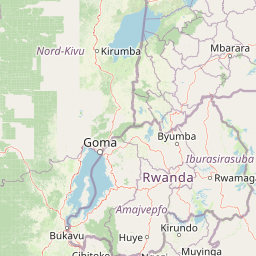
Mgahinga Gorilla National Park plays a critical role in the conservation of some of Africa's most threatened species and most restricted ecosystems. The park forms part of a transboundary conservation landscape that encompasses Volcanoes National Park in Rwanda and Virunga National Park in the Democratic Republic of the Congo, enabling the protection of wildlife populations that require large, contiguous habitats. Mountain gorillas in the Virunga massif remain endangered, and Mgahinga's population, while small, contributes to the overall viability of the regional population. The protection of the golden monkey is particularly significant given its highly restricted global range. The Albertine Rift montane forests and montane moorlands are themselves globally threatened habitats that receive formal protection within the park's boundaries.
Mgahinga Gorilla National Park cultural meaning and human context
The park is located in the Kisoro District of southwestern Uganda, an area inhabited by communities with deep cultural connections to the landscape. The local communities, including the Batwa and Bakiga peoples, have historical relationships with the Virunga Mountains that predate formal protected area establishment. The park's creation required relocation of settlers from the area in the early 1990s, a process that reflects the broader challenges of balancing conservation with community needs in Africa's mountainous border regions.
Top sights and standout views in Mgahinga Gorilla National Park
The mountain gorilla trekking experience represents Mgahinga's premier attraction, offering visitors the chance to observe these endangered primates in their natural bamboo forest habitat. The three volcanic peaks provide challenging but rewarding hiking opportunities for adventurous visitors, with the summit views offering perspectives across the Ugandan, Rwandan, and Congolese landscapes. The golden monkey encounters offer a secondary but equally memorable wildlife viewing experience in Africa's only population of this colorful Albertine Rift endemic. The transboundary location enables consideration of regional conservation significance and the interconnected nature of Virunga ecosystem protection.
Best time to visit Mgahinga Gorilla National Park
The park experiences two wet seasons—the first from February to May and the second from September to December—with rainfall varying significantly from approximately 250 millimeters in October down to just 10 millimeters in July. The drier periods, particularly June through August and January into early February, generally offer more favorable conditions for gorilla trekking and volcano hiking, as trails are less muddy and visibility is improved. The wet seasons bring lush vegetation but can make trail conditions challenging. Temperature remains relatively constant year-round due to the equatorial location, though higher elevations can be significantly cooler, especially at night.