Mori Atlas logo
National parkNorra Kvill National Park

Discover the unique mapped terrain and ancient landscape of this protected Swedish natural area.

Norra Kvill National Park: A Pristine Old-Growth Coniferous Forest in Kalmar County

(Norra Kvills nationalpark)

Norra Kvill National Park represents one of the few remaining tracts of genuinely natural old-growth coniferous forest in southern Sweden, meticulously preserved since its establishment. Situated within Kalmar County, this national park showcases a rare undisturbed ecosystem characterized by ancient pines, some over 350 years old, set against a backdrop of steep, fault-formed terrain and boulder fields. MoriAtlas provides the essential geographic context and mapped boundaries to understand this significant protected landscape, offering a detailed atlas view of its unique natural heritage.

old-growth forestconiferous forestnational parkSwedenSmålandnatural forest
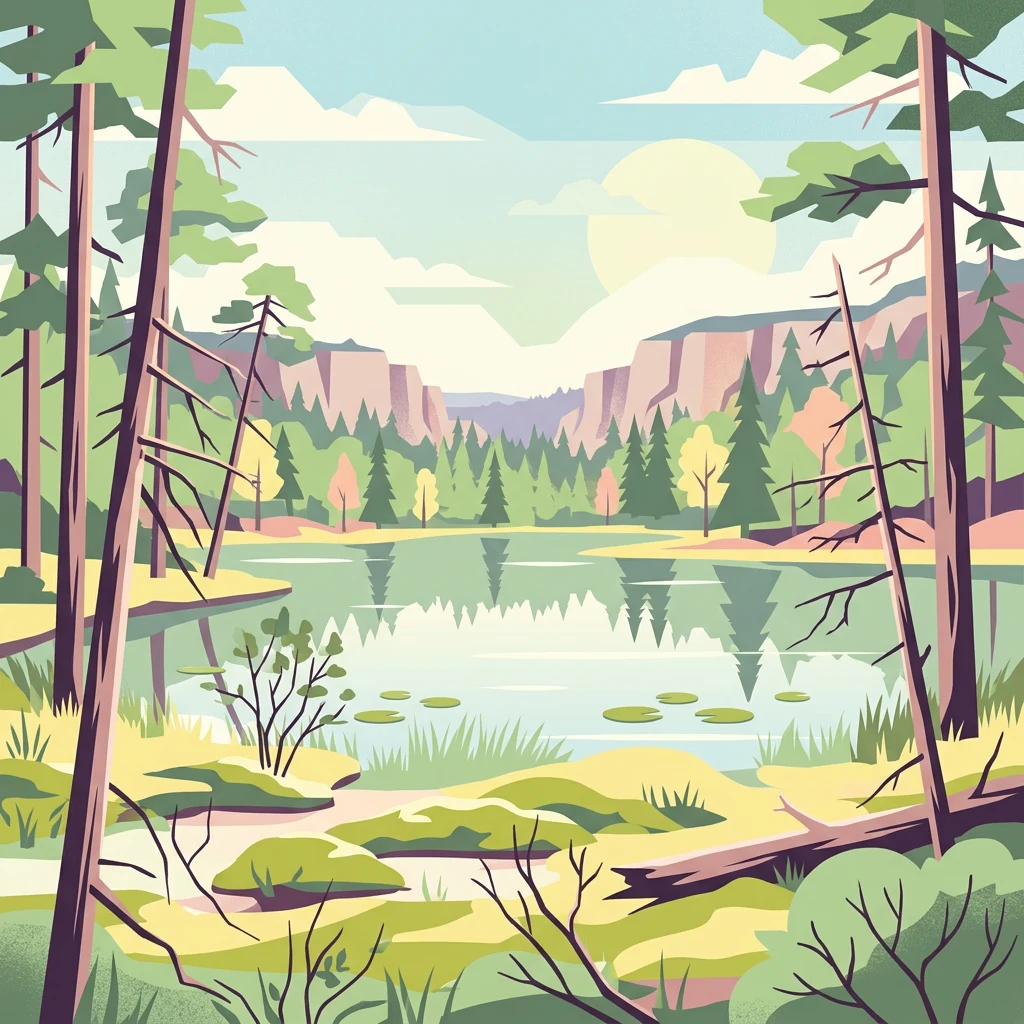
Stylized illustration showing a forest scene with a lake reflecting the sky and surrounding trees

Norra Kvill National Park

National park

Park overview

Structured park overview, official facts, and landscape profile for Norra Kvill National Park

Norra Kvill National Park park facts, protected area profile, and essential visitor context
Review the core facts for Norra Kvill National Park, including designation, size, terrain, visitor scale, habitats, and operating context in one park-focused overview.

About Norra Kvill National Park

Norra Kvill National Park occupies a distinctive place among Sweden's protected areas as one of the few surviving examples of old-growth forest in the densely populated southern part of the country. The park is situated in the Småland region, an area historically characterized by small-scale agriculture, granite bedrock, and extensive forests that were progressively cleared and replanted over centuries. What makes Norra Kvill remarkable is that its coniferous forest escaped the systematic clear-cutting that transformed much of Småland, preserving a living record of how the landscape appeared before industrial forestry. The terrain is defined by the underlying Småland granite, with fault scarps creating a characteristic hilly and steep topography. Large boulder fields dot the landscape, the result of weathering and frost action on the exposed bedrock. The two lakes at the park's heart, Stora Idgölen and Lilla Idgölen, sit in shallow depressions surrounded by marshy areas and coniferous forest that slopes down to the water's edge. A hiking trail allows visitors to explore the key features of the park, including the Idhöjden viewpoint that rises above the lake surface. The park's proximity to the famous Rumskulla oak—Europe's largest English oak with a circumference of about 14 meters and an estimated age of 1,000 years—adds to its significance as part of a landscape of extraordinary old-growth trees.

Quick facts and research context for Norra Kvill National Park

Norra Kvill National Park spans 114 hectares in Kalmar County, southeastern Sweden. The reserve was established in 1927 with a small core area and significantly expanded to its present size in 1994. The landscape is underlain by Småland granite, with faulting creating the characteristic steep, hilly terrain. The forest is dominated by coniferous species, with some pine trees exceeding 350 years in age and reaching heights of 35 meters. The park lies about 19 kilometers northwest of Vimmerby and forms part of the broader Småland plateau region. Management authority rests with Naturvårdsverket, the Swedish Environmental Protection Agency.

Park context

Deeper park guide and search-rich context for Norra Kvill National Park

Norra Kvill National Park history, landscape, wildlife, and travel context
Explore Norra Kvill National Park through its history, landscape character, ecosystems, wildlife, conservation priorities, cultural context, and seasonal travel timing in a structured park guide built for atlas discovery and search intent.

Why Norra Kvill National Park stands out

Norra Kvill is best known for its exceptionally old-growth coniferous forest, one of the few remaining tracts of genuinely natural woodland in southern Sweden. The undisturbed forest, which has never been logged for more than 150 years, represents a vanishing ecosystem type in a region where intensive forestry has transformed most landscapes. The ancient pines, some over 350 years old with fire scars from multiple historic wildfires, tell a story of ecological continuity rare in modern Europe. The park also protects a diversity of mosses and lichens, with over 200 moss species and 100 lichen species recorded within its boundaries.
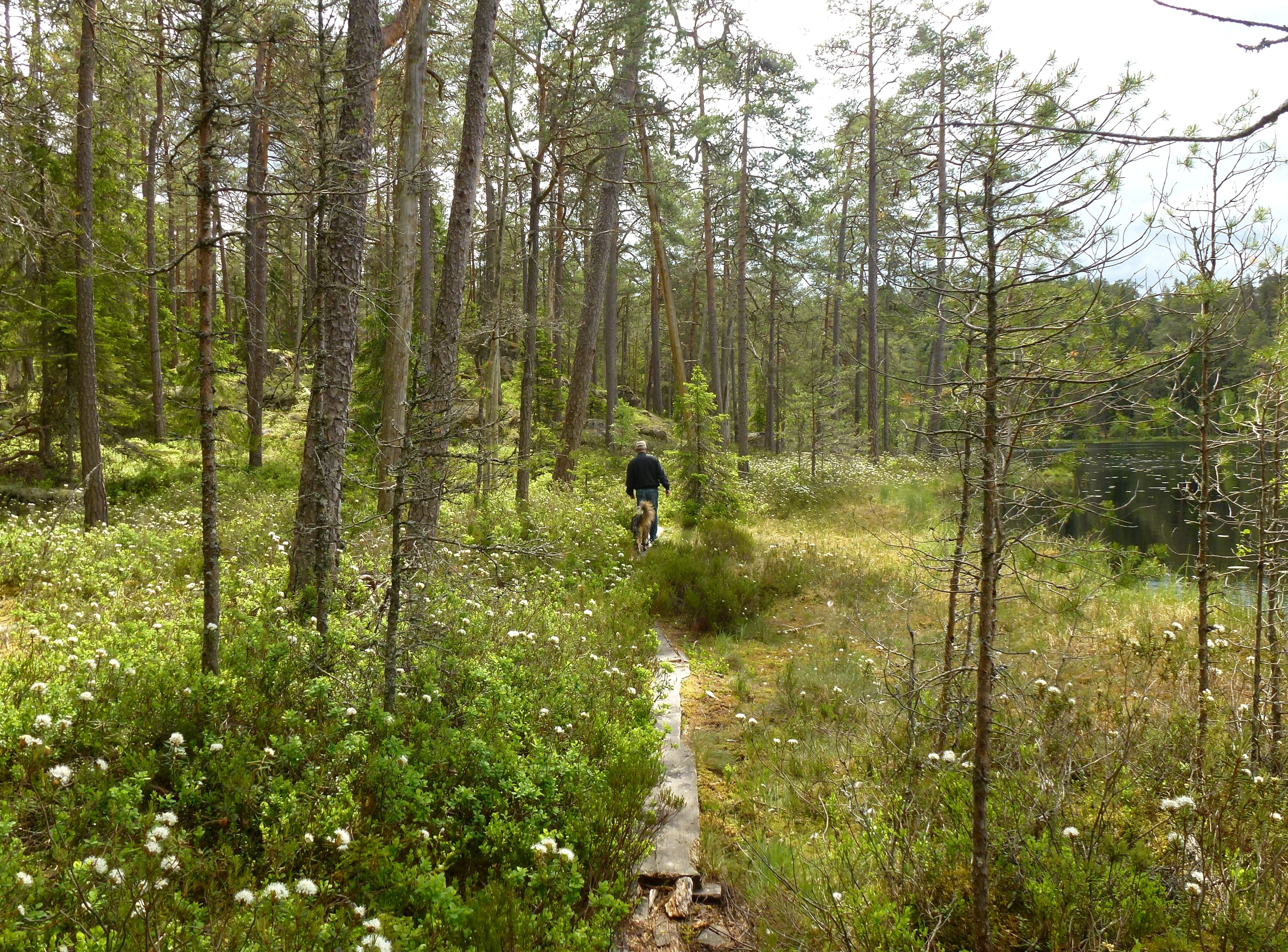
A person walking on a narrow wooden path through a forest with tall pine trees and green undergrowth.
A hiker walks along a narrow trail through the forest at Norra Kvill National Park.

Norra Kvill National Park history and protected-area timeline

Norra Kvill was established as Sweden's 28th national park in 1927, representing an early effort in the twentieth century to preserve remaining natural forests. The initial protected area covered 27 hectares as a core conservation zone. Over subsequent decades, recognition grew that the small reserve needed expansion to adequately protect the forest ecosystem and its ecological processes. The park was significantly extended in 1994, nearly quadrupling in size to the current 114 hectares. This expansion reflected both improved understanding of ecological requirements for old-growth forest protection and Sweden's broader commitment to biodiversity conservation. The land is owned by the Swedish state and managed by Naturvårdsverket through the county administrative board. The forest has been shaped by natural fire regimes, with fire scars on ancient pines documenting at least eight separate wildfires, the most recent occurring in the early 1900s before formal protection was established.

Norra Kvill National Park landscape and geographic character

The physical landscape of Norra Kvill is defined by the ancient geology of the Småland region, where hard granitic bedrock has shaped both the terrain and the human history of the area. The park sits on a plateau at roughly 230 meters above sea level, with the most prominent topographic feature being a series of steep slopes and ridges formed along fault lines. These fault scarps create a characteristically uneven terrain with hills, valleys, and rocky outcrops. Large accumulations of glacial boulders cover portions of the landscape, creating distinctive block fields that interrupt the forest floor. The two lakes, Stora Idgölen and Lilla Idgölen, are relatively small but occupy important positions in the park's hydrology and visual character. Stora Idgölen, also known locally as Trollsjön or Troll Lake, lies near the center of the reserve. The surrounding land includes marshy areas such as Dalskärret, where wetland vegetation thrives in the transition between open water and forested slopes.
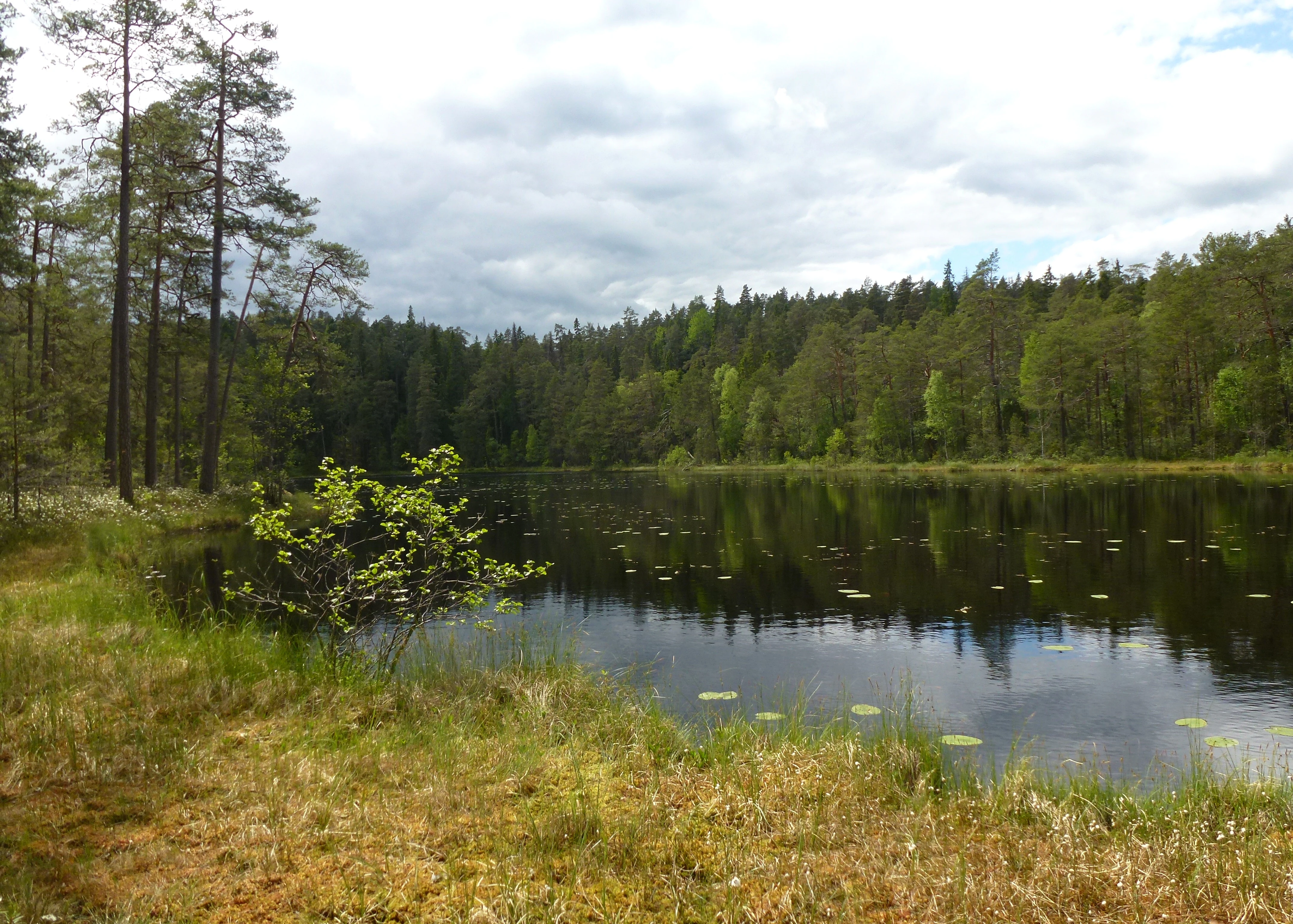
A calm lake reflecting trees under a partly cloudy sky, surrounded by grassy shore and dense forest
Stora Idgölen in Norra Kvill National Park, featuring a calm lake reflecting surrounding forest and grassy shoreline

Norra Kvill National Park ecosystems, habitats, and plant life

The ecological significance of Norra Kvill centers on its old-growth coniferous forest, a habitat type that has become extremely rare in southern Sweden. The forest here has developed without significant human interference for more than 150 years, allowing natural processes of death, decay, and regeneration to operate without interruption. The woodland is increasingly developing the characteristics of a true natural forest, with standing dead trees, fallen logs, and a complex structure of multiple canopy layers. The pine trees that dominate the forest include specimens of remarkable age and size—some exceeding 350 years, with circumferences over 2.5 meters and heights reaching 35 meters. The park supports exceptional biodiversity in smaller organisms, particularly bryophytes and lichens. More than 200 moss species and 100 lichen species have been recorded within the park's boundaries, reflecting the continuous forest cover and the variety of microhabitats created by the terrain, dead wood, and water bodies. The swamp forests in the northwest portion of the park support specialized wetland plants, while the ravine along the stream features rare grass species including skogssvingel and dvärghäxört.
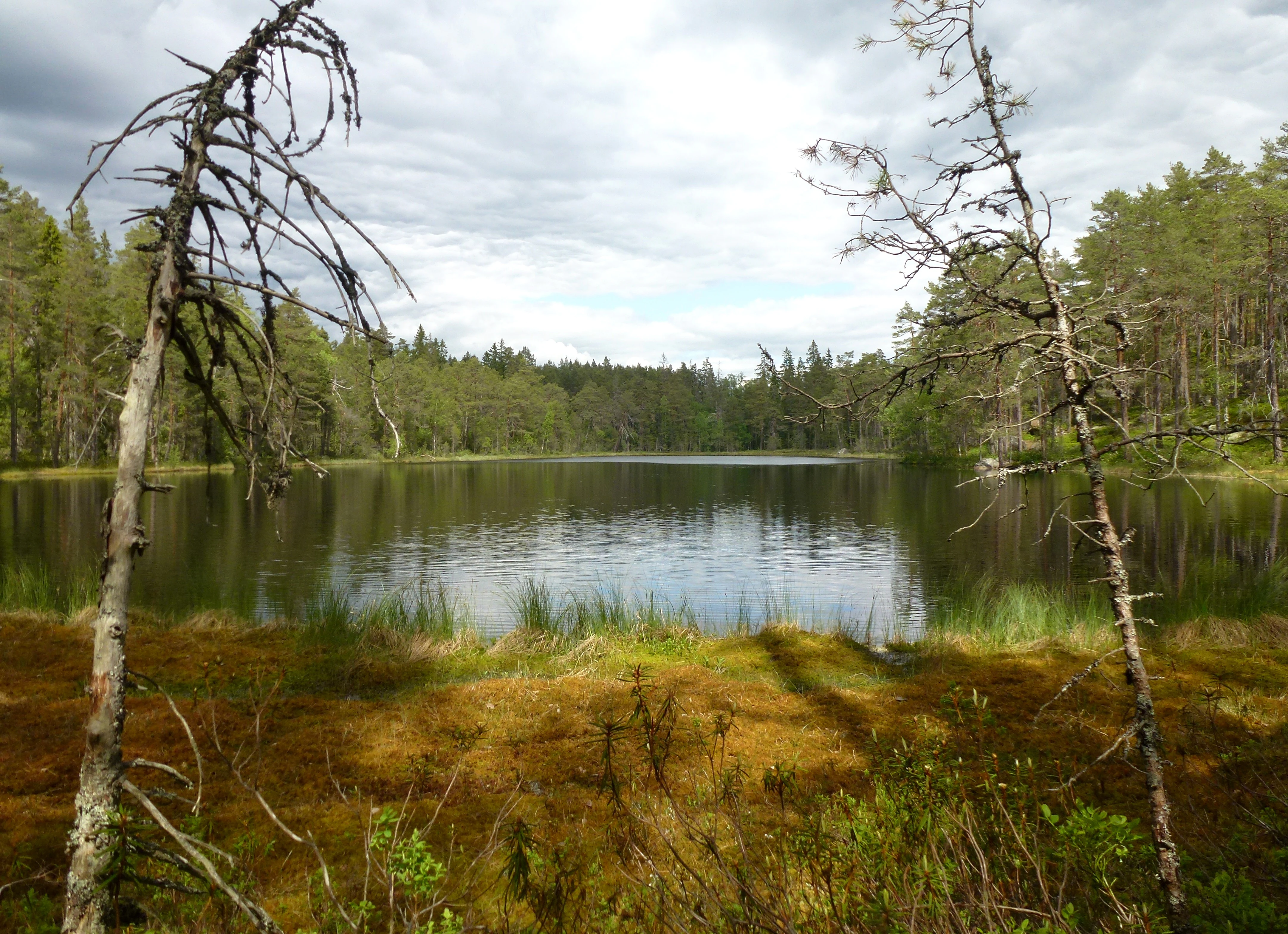
Lake surrounded by forest with two dead trees in foreground and overcast sky
Lake Stora Idgölen within Norra Kvill National Park

Norra Kvill National Park wildlife and species highlights

While Norra Kvill is not primarily known for large wildlife populations, the old-growth forest provides habitat for a range of species associated with decaying wood and natural forest dynamics. The dead and dying trees throughout the park support communities of invertebrates, fungi, and cavity-nesting birds that depend on veteran trees for survival. The mix of coniferous forest, marshland, and lake edges creates a diversity of microhabitats that supports bird species adapted to different forest structures and wetland edges. The standing dead trees and fallen logs characteristic of old-growth forests provide critical habitat for species that cannot survive in younger, more uniformly managed woodlands. While specific wildlife inventories are limited in the source material, the presence of such a well-preserved forest ecosystem in southern Sweden suggests the park serves as a refuge for species that have declined elsewhere in the region.
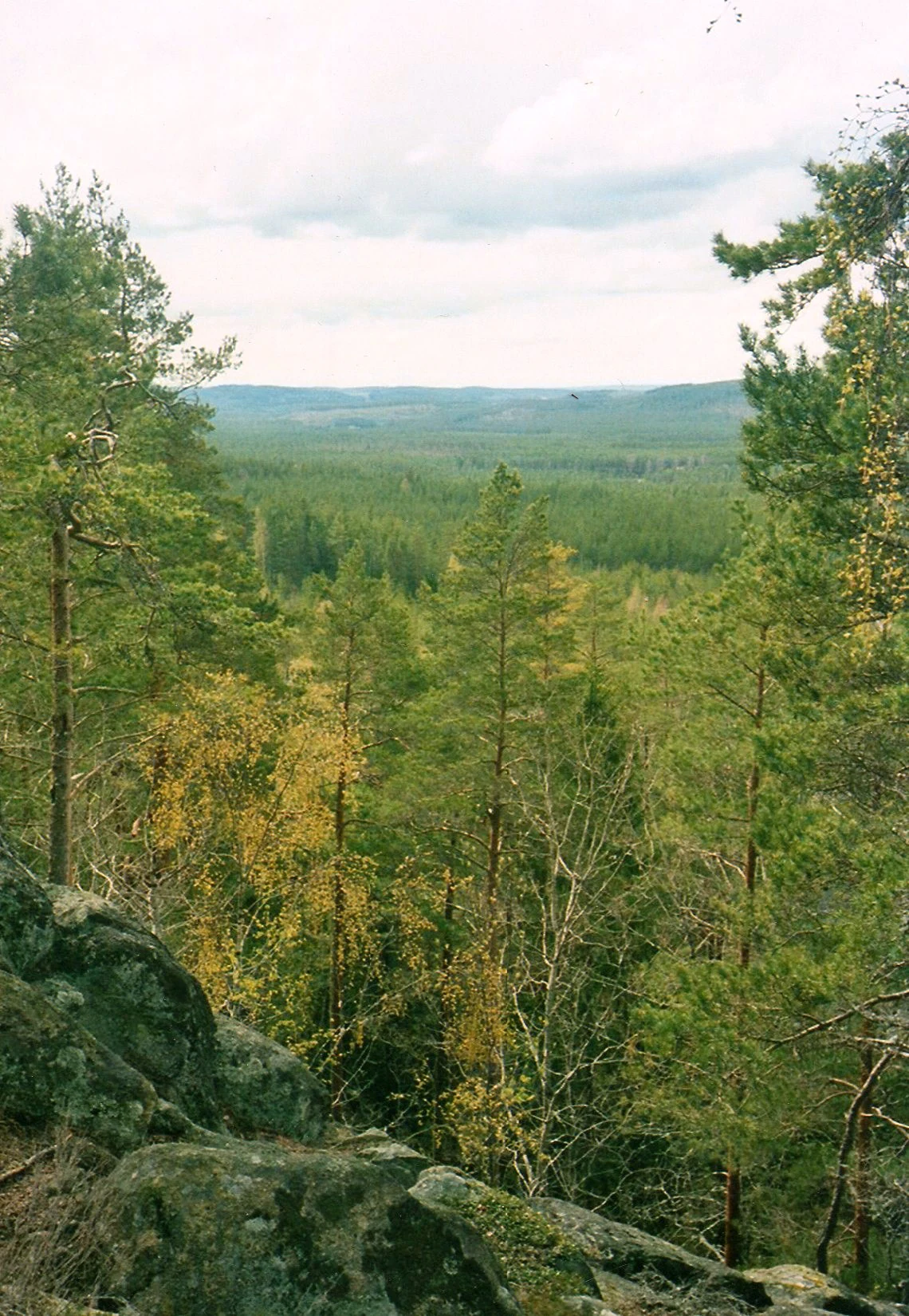
Green forest landscape with rocky foreground and distant hills under cloudy sky
Forest landscape view from Norra Kvill National Park in Sweden

Norra Kvill National Park conservation status and protection priorities

Norra Kvill National Park represents an important conservation asset as one of the few protected old-growth forest remnants in southern Sweden. The park's significance extends beyond its own boundaries as part of a network of protected areas working to maintain forest biodiversity in a heavily modified landscape. The conservation value is enhanced by the presence of rare species of mosses, lichens, and vascular plants that depend on the continuous forest cover and the variety of habitats found within the reserve. The old-growth character of the forest means the park also serves as a reference site for understanding natural forest dynamics in the boreo-nemoral transition zone of southern Scandinavia. Fire history recorded in the pine trees provides valuable ecological information about natural disturbance regimes that shaped these forests before active fire suppression became common.

Norra Kvill National Park cultural meaning and human context

The park is situated in Rumskulla socken, a historic parish within Vimmerby municipality in the Småland region. The landscape around the park reflects the traditional Småland character of small farms, forests, and rocky terrain. The nearby Rumskulla oak—an extraordinary ancient tree thought to be approximately 1,000 years old—demonstrates that this area has long been recognized for its remarkable natural features. The Swedish tradition of allemansrätt, the public right of access to nature, applies within the park, allowing visitors to explore the trails while respecting the protected status of the area. The park lies approximately 19 kilometers northwest of Vimmerby, a town known as the birthplace of Astrid Lindgren, the beloved children's author.

Top sights and standout views in Norra Kvill National Park

The defining highlight of Norra Kvill is its ancient pines, some exceeding 350 years old with visible fire scars documenting centuries of natural disturbance. The forest's old-growth character, with its veteran trees, dead wood, and natural regeneration, represents a rare window into how Scandinavian forests appeared before industrial forestry. The two lakes—Stora Idgölen and Lilla Idgölen—add aquatic and wetland diversity to the forest ecosystem. The Idhöjden viewpoint offers elevated views over the lake-studded landscape. Exceptional biodiversity in mosses and lichens, with over 300 combined species, reflects the ecological integrity of this long-protected forest.

Best time to visit Norra Kvill National Park

The park can be visited throughout the year, with each season offering different experiences. The dense coniferous forest is particularly atmospheric in late autumn and winter when the canopy is more open and the structure of the old trees is more visible. Spring and early summer bring bird activity and the emergence of wetland vegetation. The hiking trail is suitable for visits in any season, though wet ground in autumn and spring may require appropriate footwear. The compact size of the park allows for thorough exploration in a few hours, making it suitable for a half-day visit.
Park location guide

Geography guide, regional context, and park location map for Norra Kvill National Park

Norra Kvill National Park park geography, regions, and map view in Sweden
Understand where Norra Kvill National Park sits in Sweden through a broader geographic reading of the surrounding landscape, nearby location context, and its mapped position within the national park landscape.

How Norra Kvill National Park fits into Sweden

Sweden, formally the Kingdom of Sweden, is a highly developed Nordic country on the Scandinavian Peninsula in Northern Europe. With a population of 10.6 million and an area of 450,295 km², it is the largest Nordic country by both area and population. Sweden is a constitutional monarchy with Stockholm as its capital and largest city, known for its advanced economy, social welfare system, and membership in the European Union and NATO.

Wider geography shaping Norra Kvill National Park in Sweden

Sweden occupies the eastern portion of the Scandinavian Peninsula in Northern Europe. It borders Norway to the west and north, Finland to the east, and shares a maritime border with Denmark to the southwest across the Øresund. The country has an extensive coastline along the Baltic Sea and Gulf of Bothnia, dotted with thousands of islands. The terrain varies from mountainous regions in the northwest to low-lying coastal areas and inland lakes in the south and central parts.

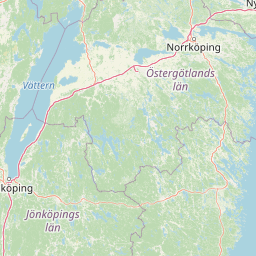
Map view of Norra Kvill National Park

Use this park location map to pinpoint Norra Kvill National Park in Sweden, understand its exact geographic position, and read its mapped placement within the surrounding landscape more clearly.

Pigeon | © OpenStreetMap contributors

Location context for Norra Kvill National Park

Kalmar County

Visually understand this Swedish protected area's untouched coniferous woodlands, unique glacial terrain, and serene forest lakes.

Norra Kvill National Park Photos: Explore Ancient Old-Growth Forest Landscapes
Explore the visual identity of Norra Kvill National Park through a curated gallery of its distinctive old-growth forest landscapes, glacial terrain, and protected habitats. This imagery reveals the ancient pines, deep forest ravines, boulder fields, and tranquil lakes, offering crucial context to understand the park's rare ecological significance and undisturbed character on the Småland plateau.

A person walking on a narrow wooden path through a forest with tall pine trees and green undergrowth.

Wooden entrance sign for Norra Kvill National Park displaying information panels, a mailbox, and a dog running on a forest path with large rocks and green trees in the background

A calm lake reflecting trees under a partly cloudy sky, surrounded by grassy shore and dense forest

Lake surrounded by forest with two dead trees in foreground and overcast sky

Green forest landscape with rocky foreground and distant hills under cloudy sky

Forest floor covered with moss and fallen tree trunks among tall pine trees

Park atlas

Explore surrounding protected landscapes and national parks in Småland, extending your discovery beyond Norra Kvill National Park's ancient forest.

Discover Other National Parks and Protected Areas Near Norra Kvill National Park in Småland, Sweden
After exploring Norra Kvill National Park's old-growth forest, discover other national parks and protected areas situated within the Småland region and across southern Sweden. Compare their distinct landscapes, from ancient coniferous woodlands to glacial terrain, to gain broader geographic context for conservation efforts in the region.
National park

Blå Jungfrun National Park: Baltic Sea Island National Park with Blue Granite Cliffs

Explore its mapped boundaries and distinct coastal terrain.

Blå Jungfrun National Park is a distinctive Swedish national park situated on a Baltic Sea island, immediately recognizable by its prominent blue-hued granite cliffs. As a protected landscape, it offers a unique glimpse into island ecosystems and rugged coastal geography. MoriAtlas provides detailed context for its mapped boundaries, showcasing the natural and geological significance of this solitary protected area within the regional atlas.

Relief
Mixed relief
Access
Moderate access
Scope
Mixed
Water
Major water bodies
Watercolor painting of a landscape featuring mountains, wetland, and forest
National parkJönköping County

Store Mosse National Park: Explore Sweden's Largest Bog Landscape & Protected Area

Detailed park map, geography, and peatland ecosystem context.

Delve into Store Mosse National Park, a significant protected landscape in Jönköping County, Sweden, celebrated for its vast peat bog, the largest south of Lapland. This page provides detailed geographic context, mapping its unique wetland terrain, interspersed lakes like Kävsjön, and surrounding pine forests. Understand the park's ecological importance as a Ramsar site and its place within the South Småland peneplain for structured natural area discovery.

Area
78.5 km²
Established
1982
IUCN
II
Relief
Lowland
Watercolor illustration of a forest landscape with rocks, trees, and distant hills
National park

Tiveden National Park: Sweden's Protected Granite Landscape and Ancient Forest

Explore protected wilderness, fracture valleys, and geological heritage.

Tiveden National Park is a protected area in southern Sweden renowned for its ancient forests and rugged granite landscape. The park's terrain features deep fracture valleys, formed by ancient geological events, and stands as one of the last large remnants of older forest in the region. Discover the park's unique topography, mapped boundaries, and its significance as a protected natural landscape for atlas-based exploration.

Area
20.3 km²
Established
1983
IUCN
II
Relief
Mixed relief
National parkVästra Götaland County

Djurö National Park: Sweden's Lake Archipelago National Park in Västra Götaland County

Mapped island geography and protected aquatic landscapes.

Djurö National Park stands as a singular example of Sweden's protected natural areas, characterized by its unique position as a national park comprising a complete archipelago within Lake Vänern. This page focuses on the geographic identity of Djurö National Park, detailing its island distribution, protected land status, and the distinct landscape it preserves. Users will find context for its place within Västra Götaland County, facilitating an atlas-based understanding of this exceptional aquatic environment and its mapped boundaries.

Area
24 km²
Established
1991
IUCN
II
Relief
Mixed relief
National parkÖrebro County

Garphyttan National Park: Pioneer Protected Landscape and Historic Swedish Terrain

Explore meadows, forests, and historic geography in Örebro County.

Garphyttan National Park, established in 1909, is a testament to early Swedish nature conservation efforts. This protected landscape features rolling forested terrain and distinctive flower-rich meadows, maintained through traditional practices that highlight Sweden's cultural heritage. Located within Örebro County, the park offers valuable insights into regional geography and the formation of mapped protected areas, making it a key destination for understanding historical landscape preservation.

Area
1.11 km²
Established
1909
IUCN
II
Relief
Lowland
National parkStockholm County

Tyresta National Park: Explore Protected Old-Growth Forest and Rift Valley Landscape

Stockholm County National Park, Sweden

Tyresta National Park stands as a crucial protected area, showcasing one of southern Sweden's largest expanses of old-growth coniferous forest, featuring trees up to 400 years old. Its distinctive rift valley terrain, lakes, and post-fire recovery zones offer a rich geographic profile for atlas exploration. Within Stockholm County, this national park provides essential context for understanding the preservation of ancient forest ecosystems and unique geological formations.

Area
20 km²
Established
1993
IUCN
II
Relief
Mixed relief
National parkSkåne County

Stenshuvud National Park: Discover Skåne County's Distinctive Baltic Headland National Park

Explore broadleaf forests, heathlands, and panoramic coastal geography.

Stenshuvud National Park is a notable national park in Sweden's Skåne County, characterized by a prominent hill that rises 97 meters above the Baltic Sea. This protected landscape offers a rich diversity of habitats within a small area, including dense broadleaf forests, open heathlands, and coastal terrains. Its unique geographic position and varied ecosystems make it a key destination for exploring protected natural areas, mapped terrain, and regional landscape context within the MoriAtlas platform.

Area
3.9 km²
Established
1986
IUCN
II
Relief
Lowland
National parkVästra Götaland County

Tresticklan National Park: Preserved Old-Growth Forest on Rocky Heathland

Explore the geographic context and mapped boundaries of this vital protected area.

Tresticklan National Park is a vital protected landscape in Västra Götaland County, Sweden, safeguarding one of southern Scandinavia's most significant old-growth forest ecosystems. The park's terrain is defined by exposed granite bedrock, sparse heath pine forests, and a wild, remote character. MoriAtlas provides a structured overview of Tresticklan National Park, detailing its geographic setting and protected area status for explorers and cartographers.

Area
28.97 km²
Established
1996
IUCN
II
Relief
Upland

Common questions about visiting, size, designation, and location context for Norra Kvill National Park

Norra Kvill National Park FAQs for park facts, access, geography, and protected area context
Find quick answers about Norra Kvill National Park, including protected-area facts, park geography, trail and visitor context, and how the park fits into its surrounding country and regional landscape.
MoriAtlas Explorer

Continue Your Protected Areas Search Across the Global Atlas

Deepen your exploration by continuing the structured search for national parks and protected areas worldwide. Utilize the comprehensive filtering capabilities to compare different conservation landscapes and refine your understanding of global park geography. Discover more about the distribution and characteristics of protected natural areas.

Global natural geography