
Why Norra Kvill National Park stands out
Norra Kvill is best known for its exceptionally old-growth coniferous forest, one of the few remaining tracts of genuinely natural woodland in southern Sweden. The undisturbed forest, which has never been logged for more than 150 years, represents a vanishing ecosystem type in a region where intensive forestry has transformed most landscapes. The ancient pines, some over 350 years old with fire scars from multiple historic wildfires, tell a story of ecological continuity rare in modern Europe. The park also protects a diversity of mosses and lichens, with over 200 moss species and 100 lichen species recorded within its boundaries.
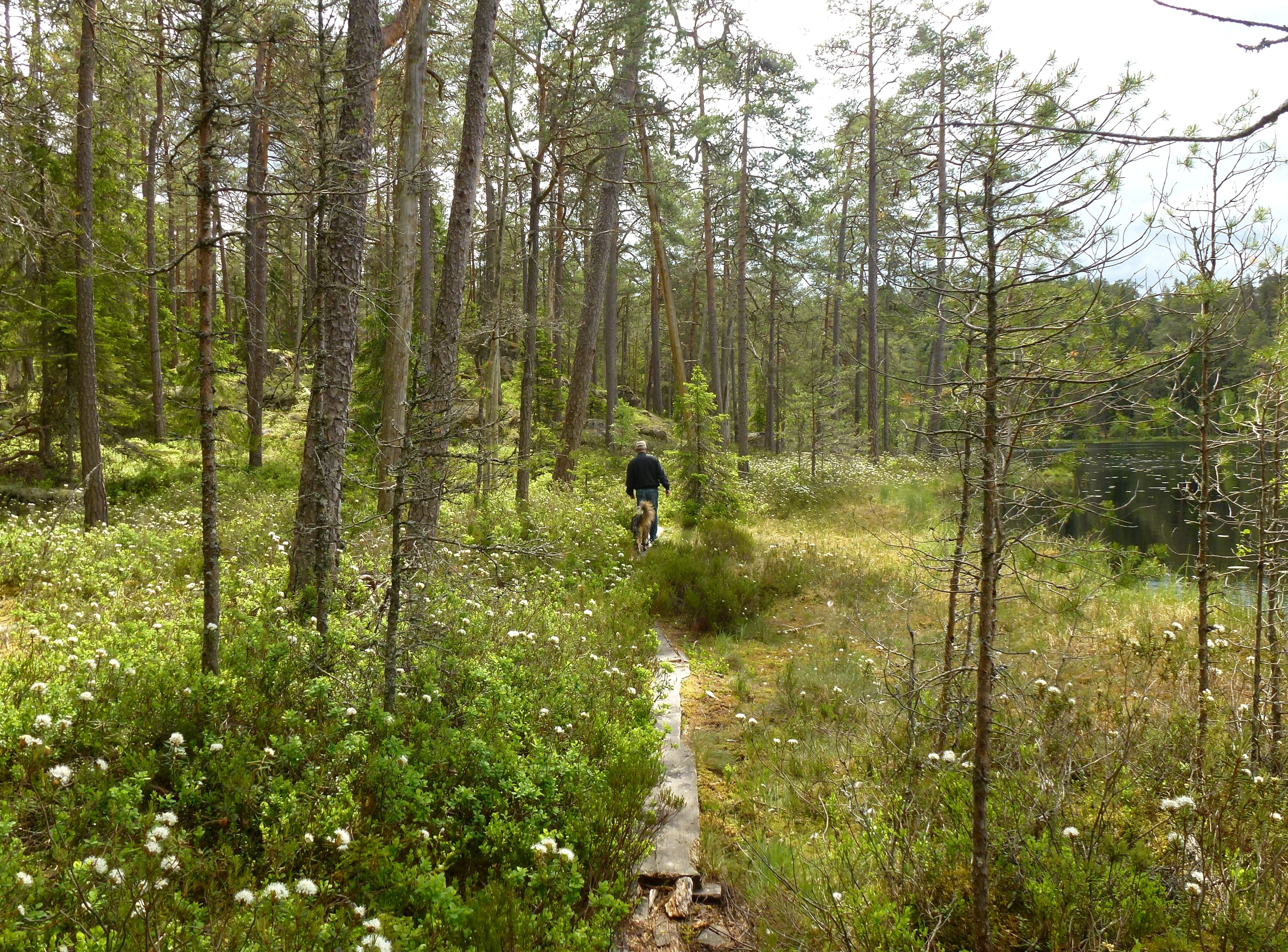
Norra Kvill National Park history and protected-area timeline
Norra Kvill was established as Sweden's 28th national park in 1927, representing an early effort in the twentieth century to preserve remaining natural forests. The initial protected area covered 27 hectares as a core conservation zone. Over subsequent decades, recognition grew that the small reserve needed expansion to adequately protect the forest ecosystem and its ecological processes. The park was significantly extended in 1994, nearly quadrupling in size to the current 114 hectares. This expansion reflected both improved understanding of ecological requirements for old-growth forest protection and Sweden's broader commitment to biodiversity conservation. The land is owned by the Swedish state and managed by Naturvårdsverket through the county administrative board. The forest has been shaped by natural fire regimes, with fire scars on ancient pines documenting at least eight separate wildfires, the most recent occurring in the early 1900s before formal protection was established.
Norra Kvill National Park landscape and geographic character
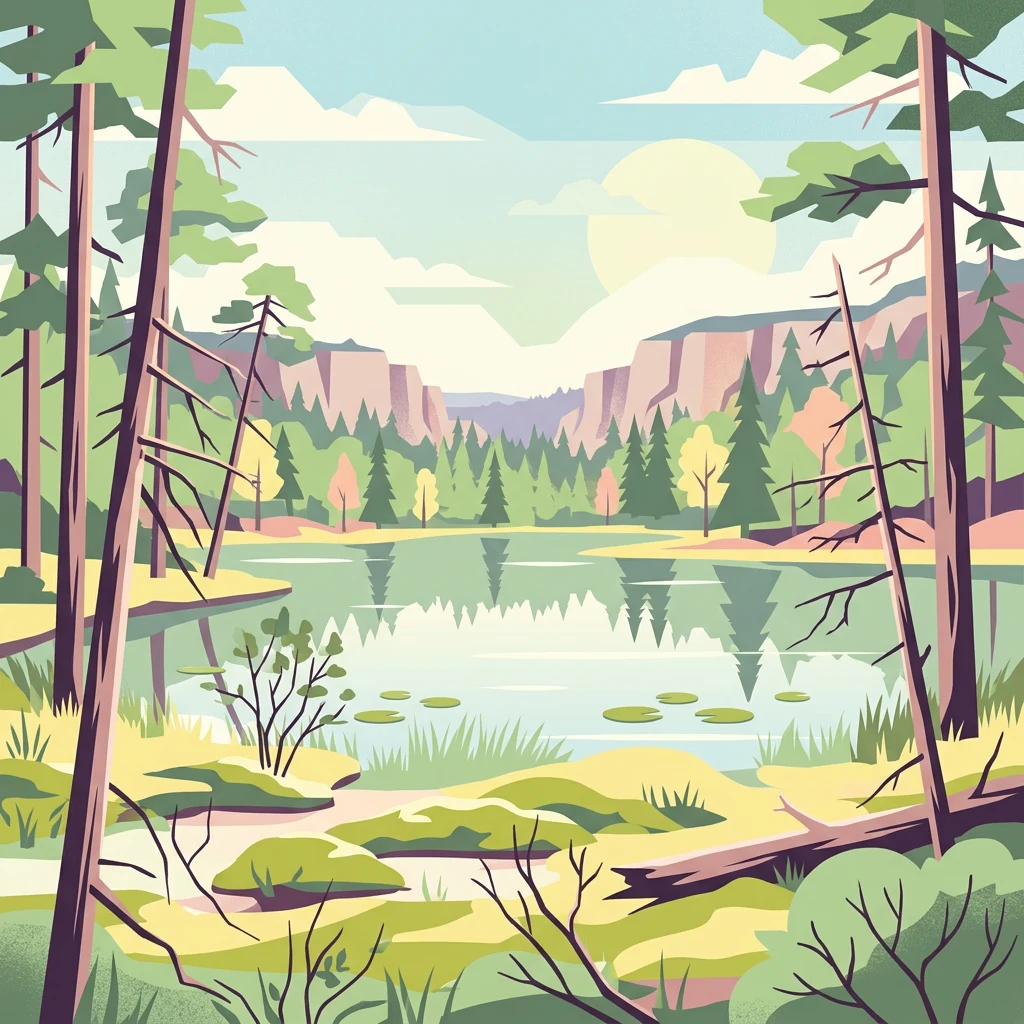
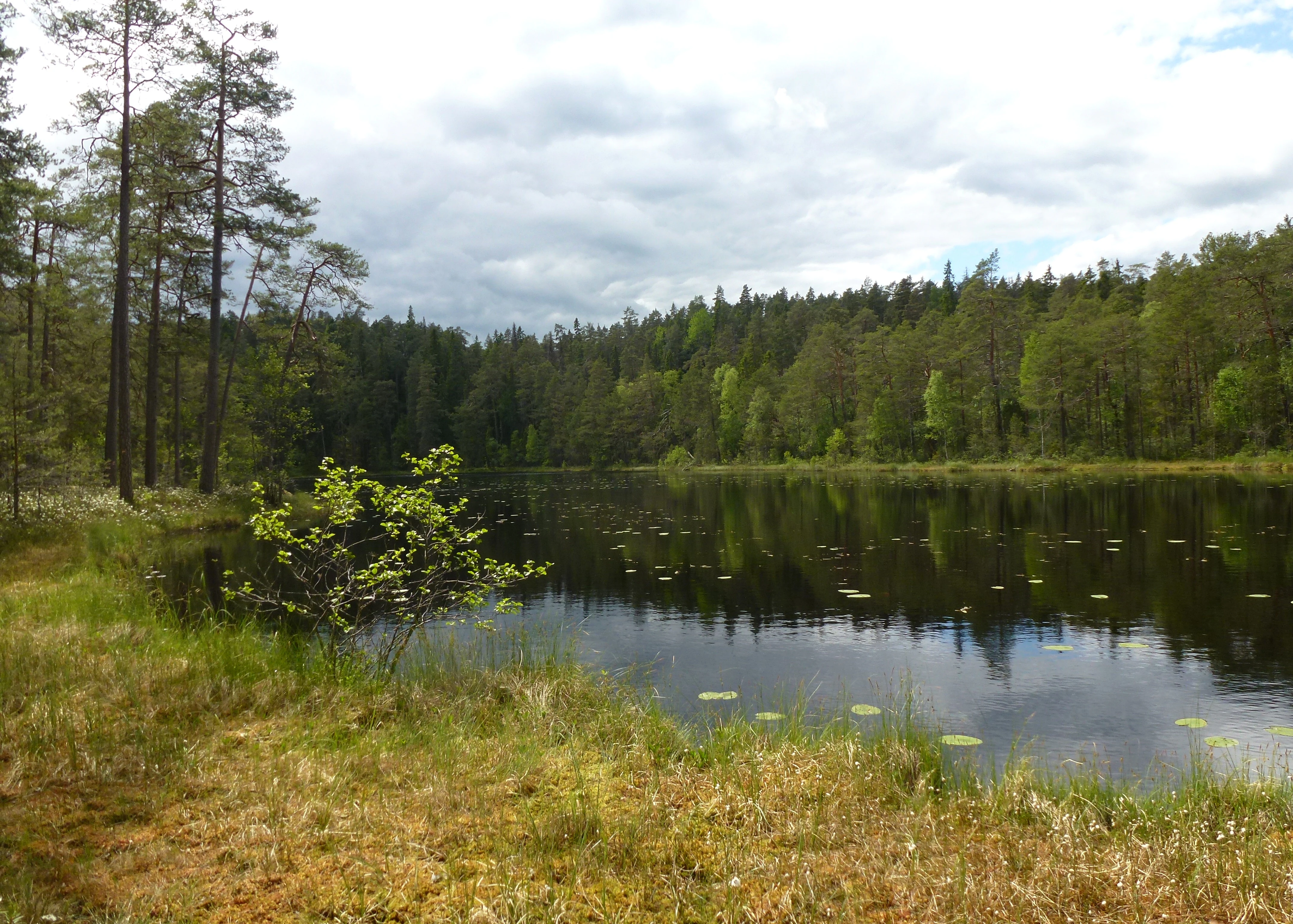
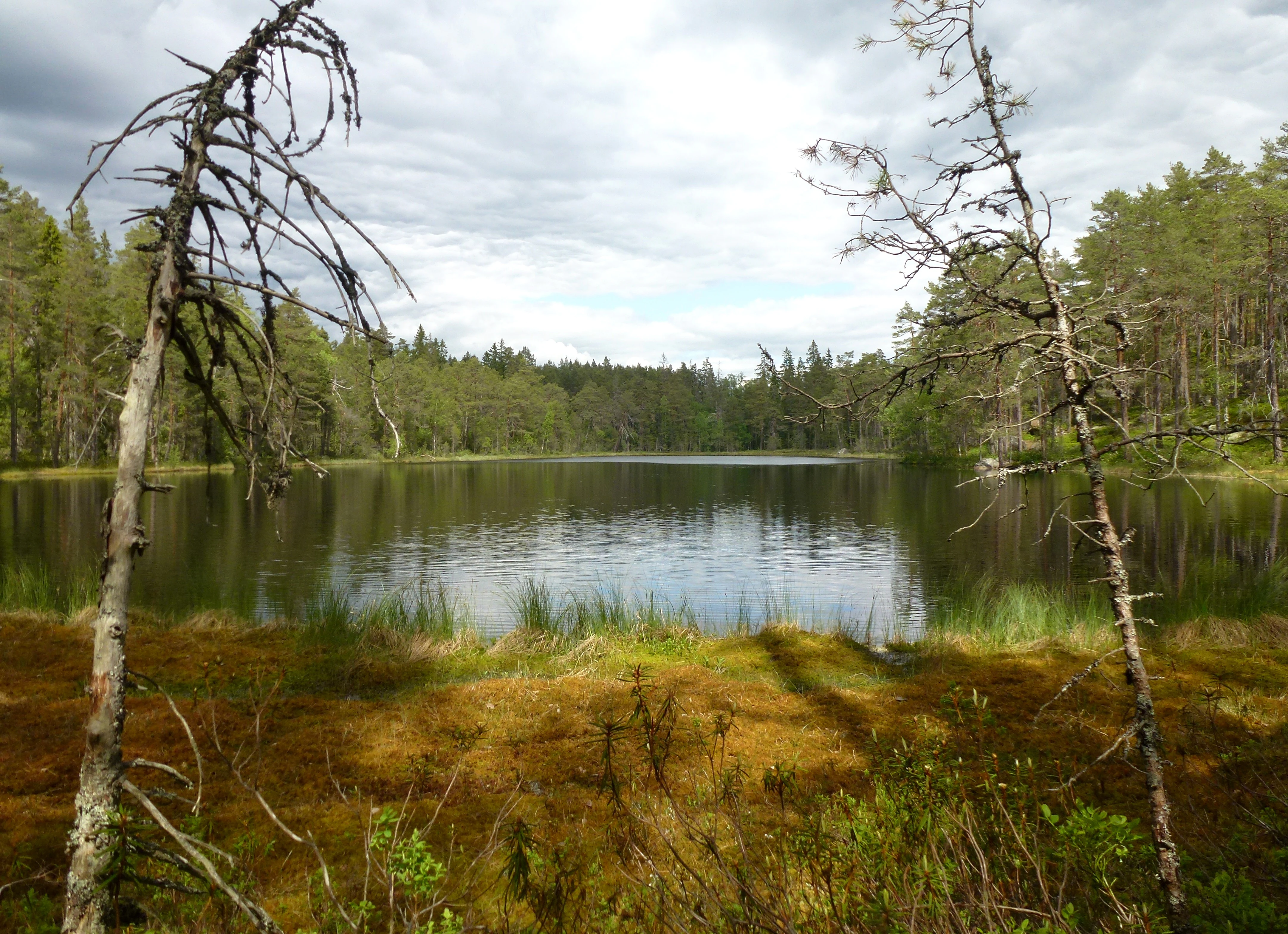
The physical landscape of Norra Kvill is defined by the ancient geology of the Småland region, where hard granitic bedrock has shaped both the terrain and the human history of the area. The park sits on a plateau at roughly 230 meters above sea level, with the most prominent topographic feature being a series of steep slopes and ridges formed along fault lines. These fault scarps create a characteristically uneven terrain with hills, valleys, and rocky outcrops. Large accumulations of glacial boulders cover portions of the landscape, creating distinctive block fields that interrupt the forest floor. The two lakes, Stora Idgölen and Lilla Idgölen, are relatively small but occupy important positions in the park's hydrology and visual character. Stora Idgölen, also known locally as Trollsjön or Troll Lake, lies near the center of the reserve. The surrounding land includes marshy areas such as Dalskärret, where wetland vegetation thrives in the transition between open water and forested slopes.
Norra Kvill National Park ecosystems, habitats, and plant life
The ecological significance of Norra Kvill centers on its old-growth coniferous forest, a habitat type that has become extremely rare in southern Sweden. The forest here has developed without significant human interference for more than 150 years, allowing natural processes of death, decay, and regeneration to operate without interruption. The woodland is increasingly developing the characteristics of a true natural forest, with standing dead trees, fallen logs, and a complex structure of multiple canopy layers. The pine trees that dominate the forest include specimens of remarkable age and size—some exceeding 350 years, with circumferences over 2.5 meters and heights reaching 35 meters. The park supports exceptional biodiversity in smaller organisms, particularly bryophytes and lichens. More than 200 moss species and 100 lichen species have been recorded within the park's boundaries, reflecting the continuous forest cover and the variety of microhabitats created by the terrain, dead wood, and water bodies. The swamp forests in the northwest portion of the park support specialized wetland plants, while the ravine along the stream features rare grass species including skogssvingel and dvärghäxört.
Norra Kvill National Park wildlife and species highlights
While Norra Kvill is not primarily known for large wildlife populations, the old-growth forest provides habitat for a range of species associated with decaying wood and natural forest dynamics. The dead and dying trees throughout the park support communities of invertebrates, fungi, and cavity-nesting birds that depend on veteran trees for survival. The mix of coniferous forest, marshland, and lake edges creates a diversity of microhabitats that supports bird species adapted to different forest structures and wetland edges. The standing dead trees and fallen logs characteristic of old-growth forests provide critical habitat for species that cannot survive in younger, more uniformly managed woodlands. While specific wildlife inventories are limited in the source material, the presence of such a well-preserved forest ecosystem in southern Sweden suggests the park serves as a refuge for species that have declined elsewhere in the region.
Norra Kvill National Park conservation status and protection priorities
Norra Kvill National Park represents an important conservation asset as one of the few protected old-growth forest remnants in southern Sweden. The park's significance extends beyond its own boundaries as part of a network of protected areas working to maintain forest biodiversity in a heavily modified landscape. The conservation value is enhanced by the presence of rare species of mosses, lichens, and vascular plants that depend on the continuous forest cover and the variety of habitats found within the reserve. The old-growth character of the forest means the park also serves as a reference site for understanding natural forest dynamics in the boreo-nemoral transition zone of southern Scandinavia. Fire history recorded in the pine trees provides valuable ecological information about natural disturbance regimes that shaped these forests before active fire suppression became common.
Norra Kvill National Park cultural meaning and human context
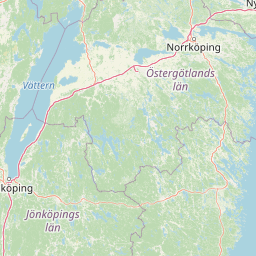
The park is situated in Rumskulla socken, a historic parish within Vimmerby municipality in the Småland region. The landscape around the park reflects the traditional Småland character of small farms, forests, and rocky terrain. The nearby Rumskulla oak—an extraordinary ancient tree thought to be approximately 1,000 years old—demonstrates that this area has long been recognized for its remarkable natural features. The Swedish tradition of allemansrätt, the public right of access to nature, applies within the park, allowing visitors to explore the trails while respecting the protected status of the area. The park lies approximately 19 kilometers northwest of Vimmerby, a town known as the birthplace of Astrid Lindgren, the beloved children's author.
Top sights and standout views in Norra Kvill National Park
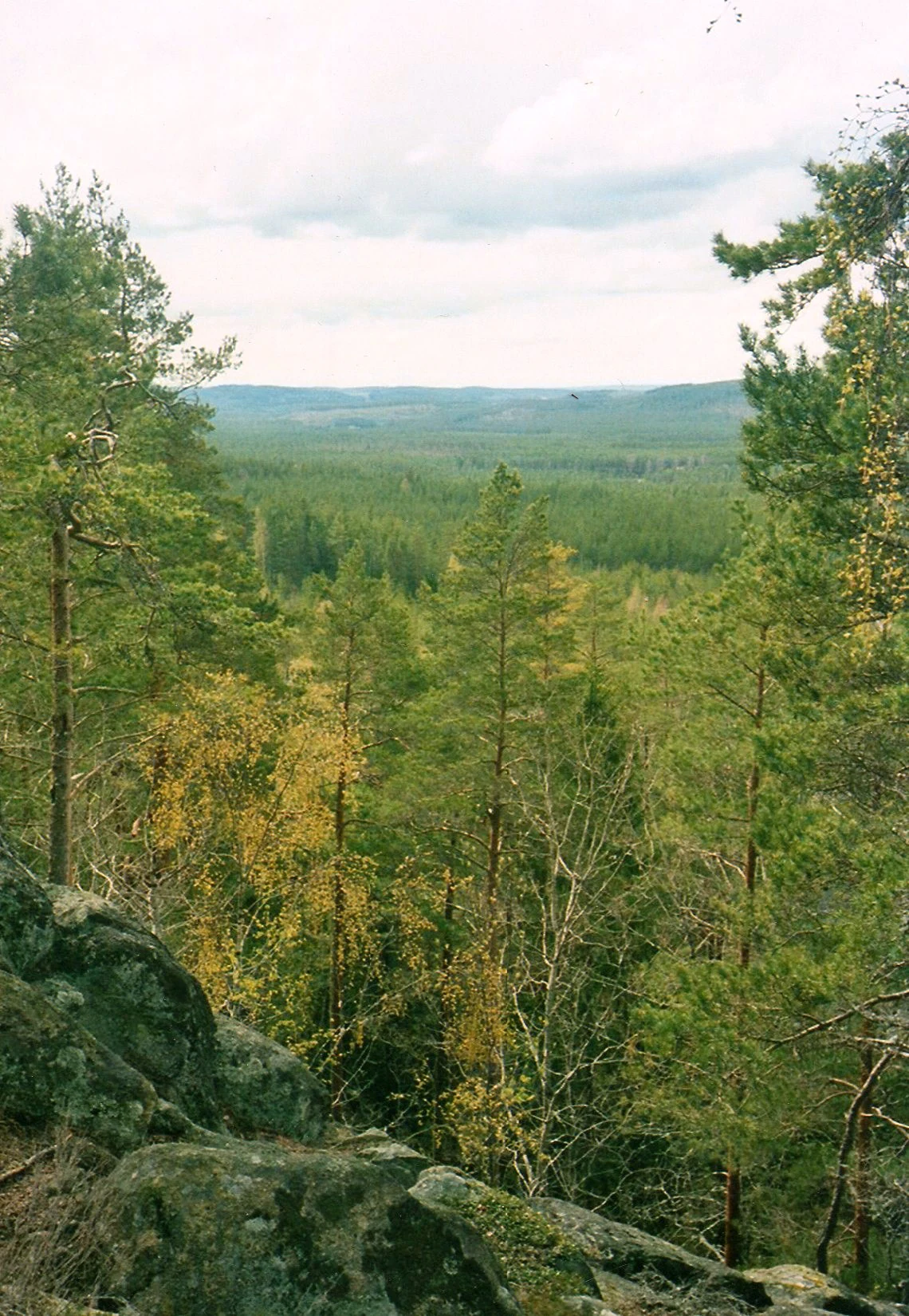
The defining highlight of Norra Kvill is its ancient pines, some exceeding 350 years old with visible fire scars documenting centuries of natural disturbance. The forest's old-growth character, with its veteran trees, dead wood, and natural regeneration, represents a rare window into how Scandinavian forests appeared before industrial forestry. The two lakes—Stora Idgölen and Lilla Idgölen—add aquatic and wetland diversity to the forest ecosystem. The Idhöjden viewpoint offers elevated views over the lake-studded landscape. Exceptional biodiversity in mosses and lichens, with over 300 combined species, reflects the ecological integrity of this long-protected forest.
Best time to visit Norra Kvill National Park
The park can be visited throughout the year, with each season offering different experiences. The dense coniferous forest is particularly atmospheric in late autumn and winter when the canopy is more open and the structure of the old trees is more visible. Spring and early summer bring bird activity and the emergence of wetland vegetation. The hiking trail is suitable for visits in any season, though wet ground in autumn and spring may require appropriate footwear. The compact size of the park allows for thorough exploration in a few hours, making it suitable for a half-day visit.