
Why Pyhä-Häkki National Park stands out
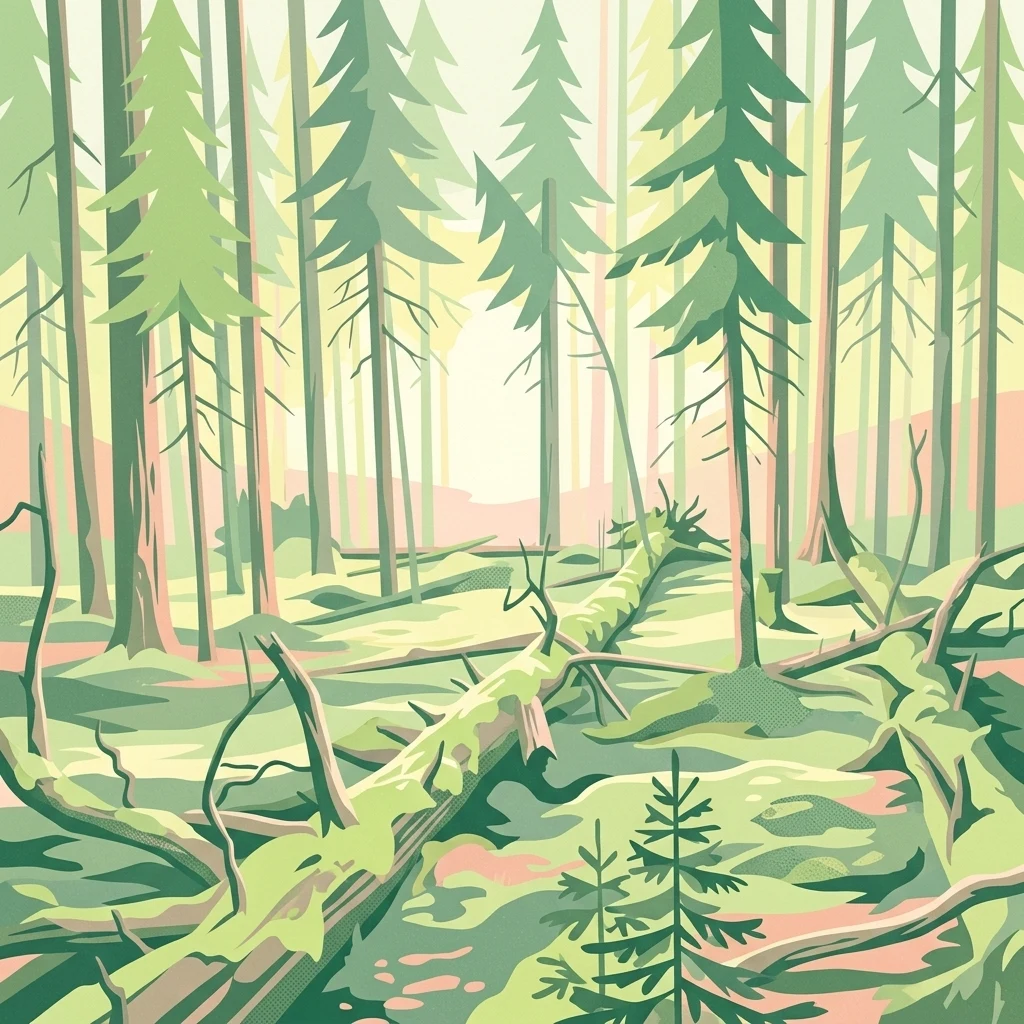
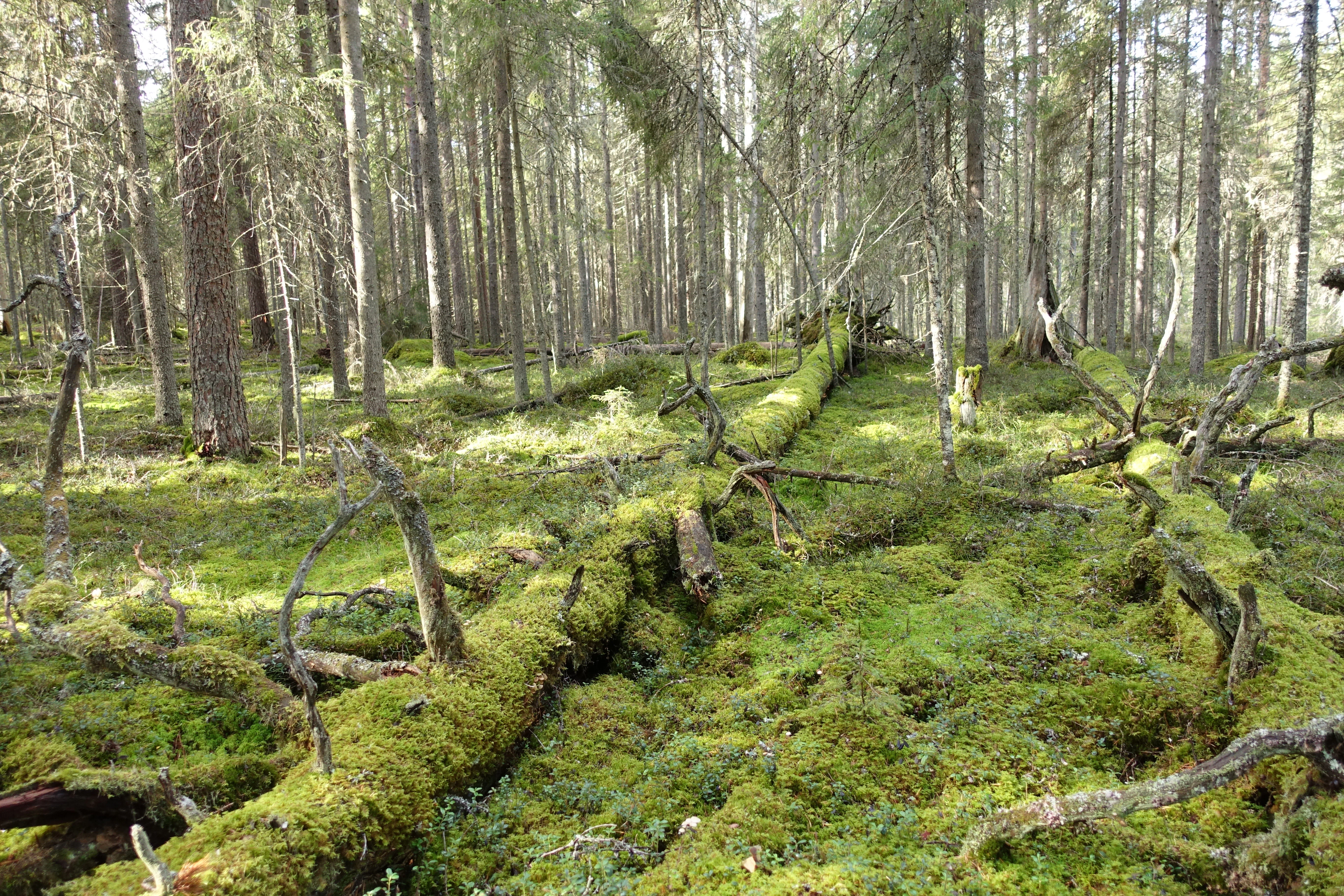
Pyhä-Häkki is renowned as the largest remaining old-growth forest area in southern Finland. The park protects ancient pine forests with trees often exceeding 250 years old, some surpassing 400 years. These moss-covered forests feature distinctive snag-covered trunks and kelo (dead standing trees) that bear witness to historical forest fires from the slash-and-burn cultivation era of the 1500s-1800s. The park also contains extensive peat bogs covering roughly half of its area, representing well-preserved examples of boreal wetland ecosystems.
Pyhä-Häkki National Park history and protected-area timeline
The history of Pyhä-Häkki's protection traces back to Finland's 18th-century land redistribution known as the isojako. The area proved unsuitable for agricultural assignment due to its lack of waterways for timber transport and its extensive bogs unsuitable for cultivation, leaving it as state-owned land. The first formal protection measures began in 1912 when the area was designated as a "säästömetsä" (reserve forest), effectively closed to all forestry and land use. Planning for national park status resumed in the late 1930s, but the outbreak of the Winter War and Continuation War interrupted these efforts. The park was finally established in 1956 and expanded in 1982 when the Kotaneva bog area was incorporated. The name Pyhä-Häkki derives from Mauno Häkkinen, who settled on the shores of Pyhäjärvi lake south of the park in 1554, giving the area its original name Pyhä-Häkkilä.
Pyhä-Häkki National Park landscape and geographic character
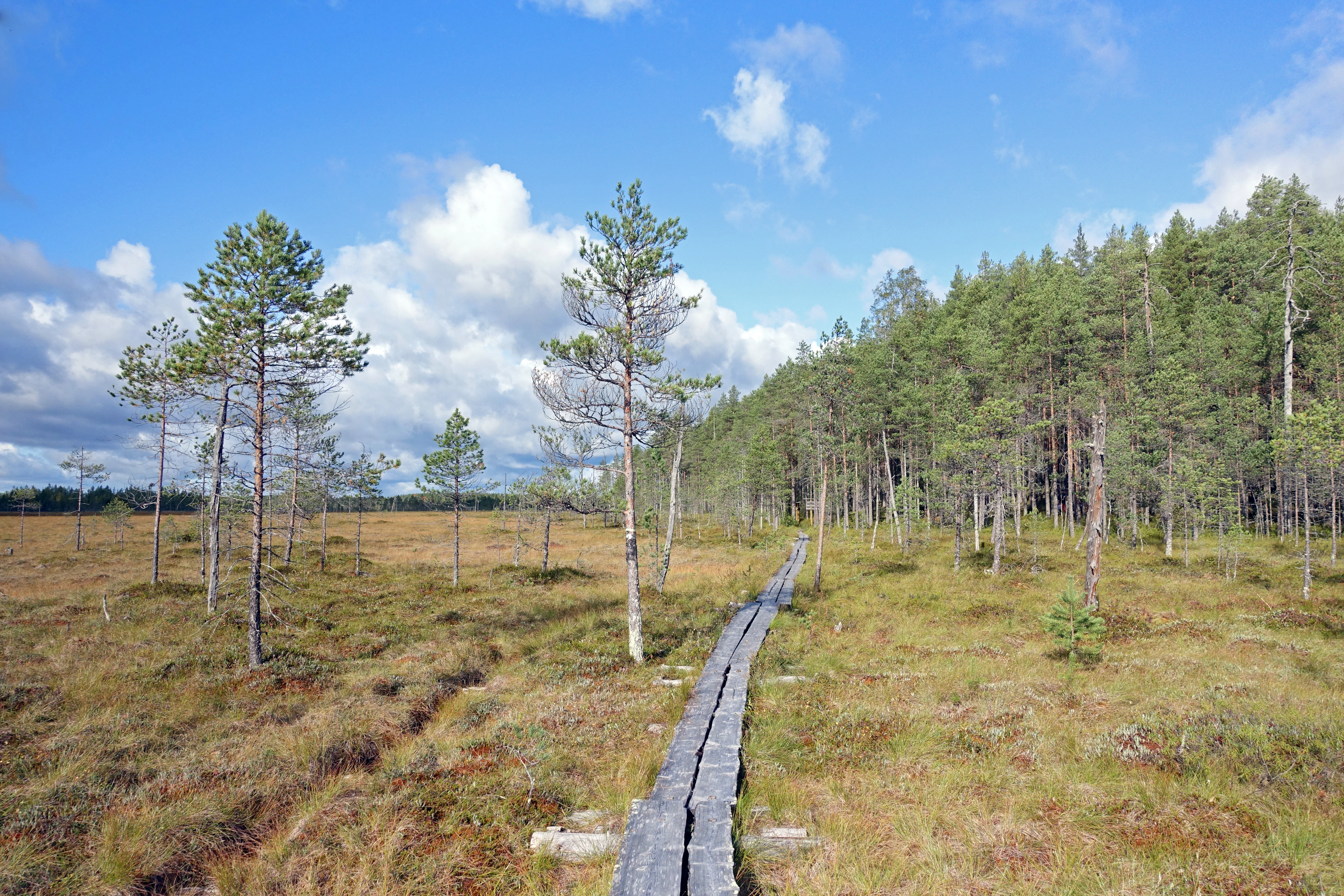
The physical landscape of Pyhä-Häkki National Park exemplifies the boreal wilderness character of Central Finland. The terrain is characterized by gently undulating till plains punctuated by numerous boulders and rocky exposures. The park lies on the Suomenselkä watershed divide, meaning water flows from here toward multiple river systems, ultimately joining the Kymijoki. The southern portion of the park is bordered by a distinctive esker formation consisting of several parallel ridges, some connected, with intervening kettle depressions. The area contains several small kettle lakes, and the overall elevation ranges from 165 to 185 meters above sea level. Roughly half the park consists of open and forested peat bogs, creating a mosaic of wet and dry habitats.
Pyhä-Häkki National Park ecosystems, habitats, and plant life
The ecological character of Pyhä-Häkki is defined by its old-growth forests and extensive peatland systems. The forest component features moss-covered pine stands with exceptionally old specimens—the oldest trees exceed 400 years, while many exceed 250 years. The distinctive "kelo" dead standing trees and thick-barked survivors of historical forest fires are characteristic features, with fire scars visible on numerous trunks despite the trees' survival. The bog vegetation is dominated by spruce in wet depressions and pine on drier hummocks, with common understory species including Labrador tea, cottongrass, and sphagnum mosses. The park supports over 70 species of bracket fungi, representing approximately one-third of Finland's total, highlighting the exceptional ecological value of the decaying wood habitat.
Pyhä-Häkki National Park wildlife and species highlights
Pyhä-Häkki's old-growth forests provide crucial habitat for cavity-nesting bird species. Woodpeckers are particularly well represented, with black woodpecker, great spotted woodplecker, and three-toed woodpecker among the notable species. Several owl species breed here, including Tengmalm's owl using black woodpecker cavities, pygmy owl in broken snags, and Eurasian pygmy owl occupying three-toed woodpecker holes. The bird fauna also includes numerous passerines such as titmice, treecreepers, goldcrest, and chaffinch. Grouse species including capercaillie, black grouse, and hazel grouse inhabit the forests, while open bogs support breeding cranes, snipe, and greenshank. Common mammals include red squirrel, root vole, water vole, and field mouse, though larger species like elk and bear prefer younger forest habitats.
Pyhä-Häkki National Park conservation status and protection priorities
Pyhä-Häkki National Park represents one of the most important conservation areas in southern Finland, protecting the largest remaining tract of virgin forest in this region. The old-growth forest ecosystem has been preserved largely because the area was considered unsuitable for agriculture and timber extraction due to its poor soils, extensive bogs, and lack of waterway access. The park is integrated into the Natura 2000 network as part of the Pyhä-Häkin alue, which extends to 21.3 square kilometers and continues into the municipality of Kannonkoski. The protection of such old-growth forest is particularly significant given the intensive forestry that has transformed most of Finland's southern landscapes, making this park a critical refuge for species dependent on ancient forest structures, dead wood, and uninterrupted ecological processes.
Pyhä-Häkki National Park cultural meaning and human context
The human history of the Pyhä-Häkki area reflects the challenging conditions that ultimately contributed to the land's preservation. During Finland's systematic land redistribution in the 18th century, this region was deemed worthless and remained unassigned because the forested till soils lacked waterways for timber transport and the extensive bogs were unsuitable for agriculture. The area thus remained as state-administered land. The name itself commemorates Mauno Häkkinen, who settled near the southern boundary of what is now the park in 1554, giving the locale its name. A former royal forest cottage built in 1854 at Poika-aho in the western part of the park stands as a historical structure from the era when the area was managed as crown forestland.
Top sights and standout views in Pyhä-Häkki National Park
Pyhä-Häkki stands as a living museum of Finland's original boreal forest, preserving ancient pine stands that predate modern forestry. The park's moss-draped trees, centuries-old snags, and extensive peat bogs create an evocative landscape of ecological continuity. Over 70 species of bracket fungi thrive here, one-third of Finland's total, reflecting exceptional biodiversity in decaying wood habitats. The park supports significant populations of woodpeckers and owls that require hollow trees for nesting. The network of wooden boardwalks allows visitors to traverse the bogs safely while minimizing impact on the sensitive wetland ecosystem.
Best time to visit Pyhä-Häkki National Park
The optimal season for visiting Pyhä-Häkki runs from May through October when the marked trails are accessible. Summer months offer full foliage and active wildlife, though the dense forest canopy limits wildlife viewing. The shoulder seasons of spring and autumn provide excellent conditions for birdwatching and experiencing the forest's seasonal transformations. Winter visits are possible but trails are not maintained, requiring appropriate winter equipment. The four marked loop trails range from 1.4 to 17 kilometers, offering options for different fitness levels and time constraints.