
Why Helvetinjärvi National Park stands out
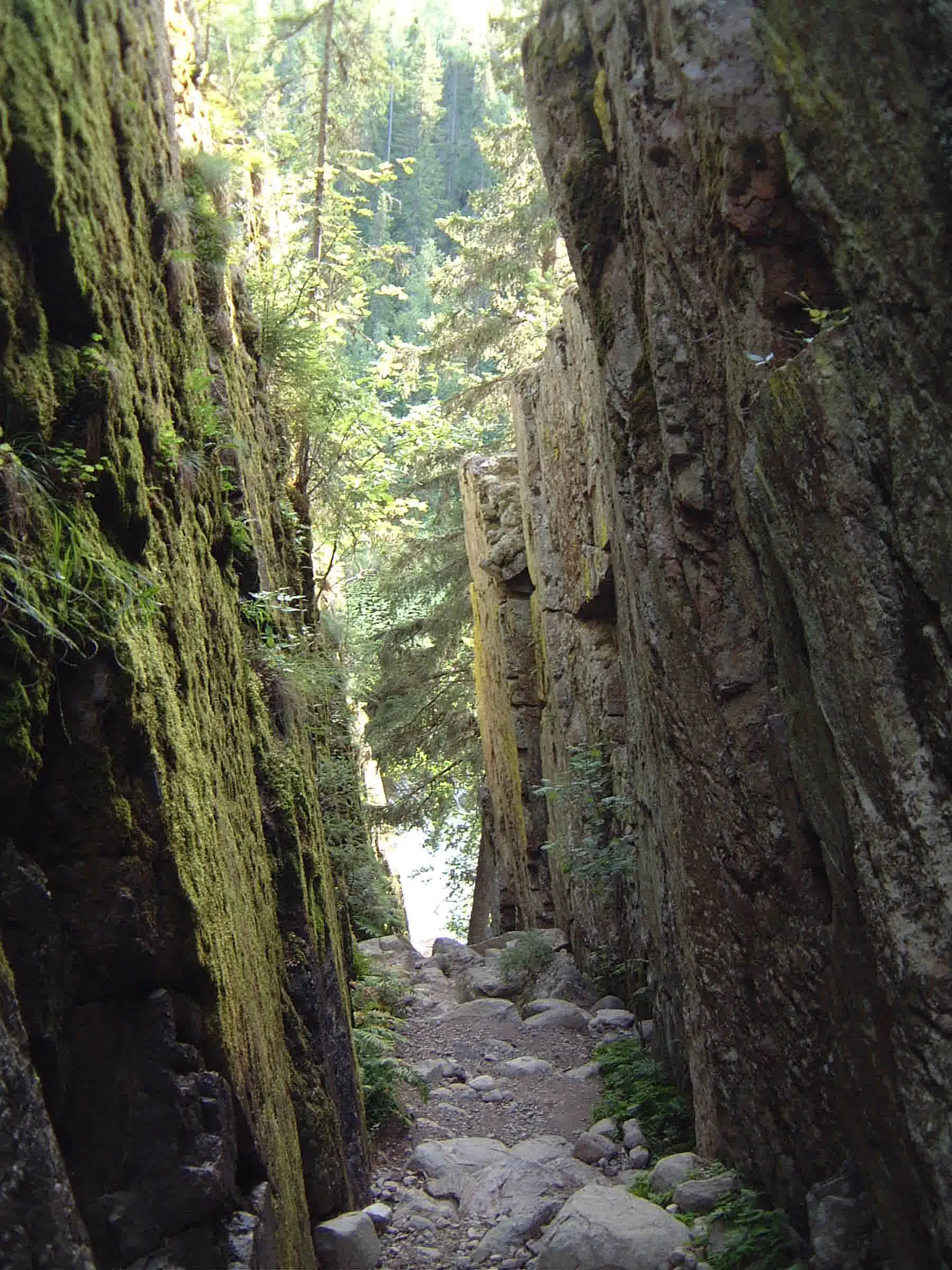
Helvetinjärvi is best known for its spectacular gorges, particularly Helvetinkolu, which is one of the most impressive geological features in Finnish protected areas. The park's deep ravines were formed by faults in the bedrock over millions of years, creating a dramatic landscape of sheer cliffs and rocky chasms within a typically flat Finnish terrain. The combination of ancient forest, rugged topography, and the iconic Helvetinkolu gorge makes this park distinctive among Finland's national parks.
Helvetinjärvi National Park history and protected-area timeline
Helvetinjärvi National Park was established in 1982 to protect the distinctive gorges and forest landscapes of the Ruovesi area. The creation of the park reflected a growing recognition in Finland of the need to preserve geologically unique areas alongside old-growth forests. Prior to protection, the area had been used for commercial forestry, and portions of the park remain on former managed forest land. The historical popularity of Helvetinkolu as a tourist attraction dates to the 1800s, when the dramatic gorge drew visitors from across Finland. A day hut with campfire facilities was built near the gorge, and a cabin was constructed on the lake shore in the 1920s by the Visuveden youth association. This cabin was later donated to the municipality and then to the state for inclusion in the national park. The park is now managed by Metsähallitus, Finland's state-owned forest and land management agency.
Helvetinjärvi National Park landscape and geographic character
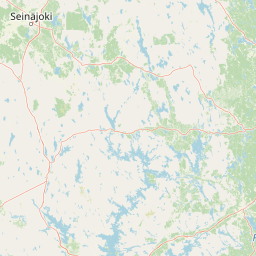
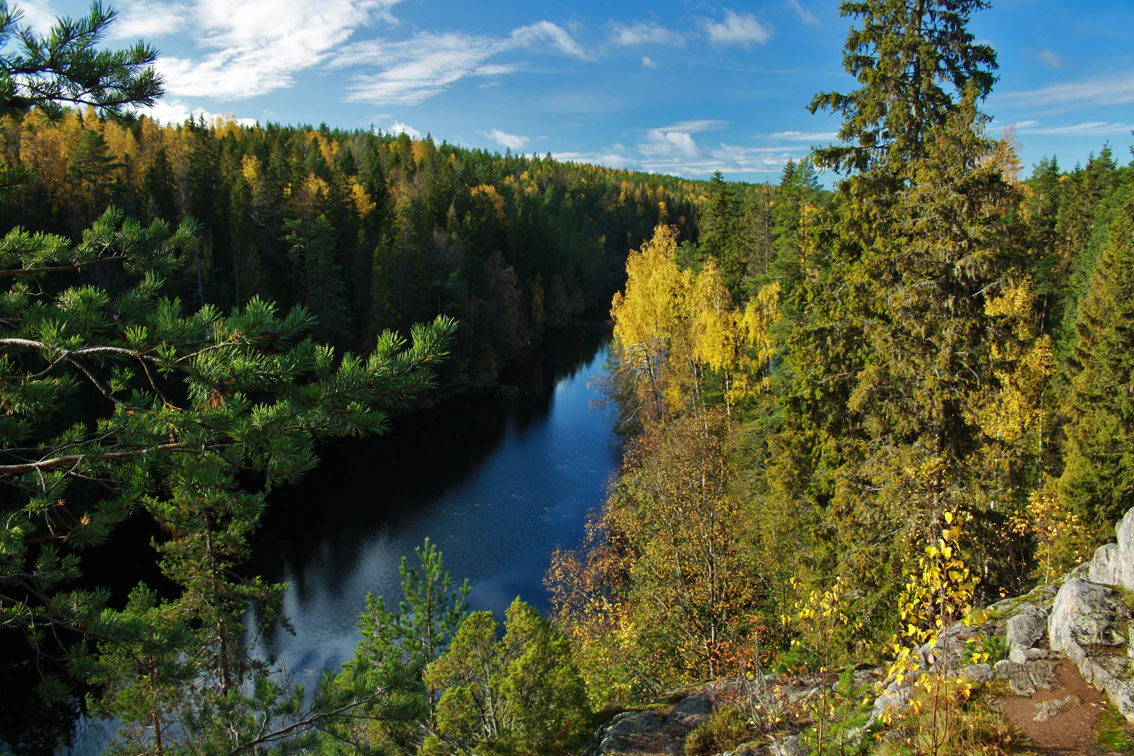
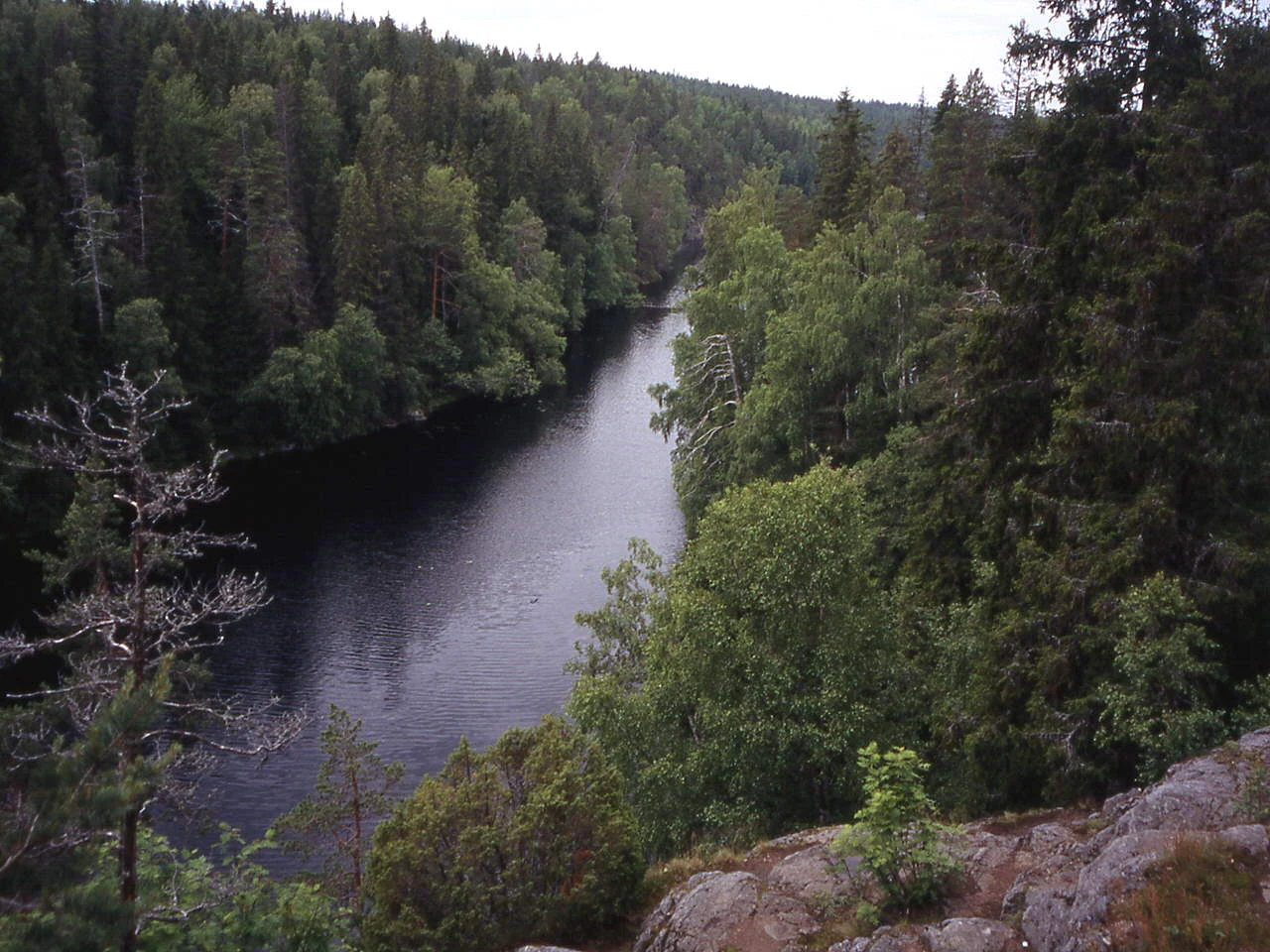
The landscape of Helvetinjärvi National Park is defined by its dramatic gorges and rugged terrain, which contrasts sharply with the gently rolling hills and lakes that dominate the surrounding Finnish lake district. The gorges were formed by geological faults running through the bedrock, creating deep ravines with steep rock walls. The most prominent feature, Helvetinkolu, is a spectacular cleft in the landscape at the southeastern end of Lake Helvetinjärvi. The terrain includes rocky cliffs, boulder fields, and forested slopes that descend into the gorge valleys. The park also encompasses the lake itself, which serves as a scenic focus for the landscape. Haukanhieta provides a sandy beach area along the lake shore, while the interior of the park features the rocky, forested terrain characteristic of Finnish boreal landscapes.
Helvetinjärvi National Park ecosystems, habitats, and plant life
The nature of Helvetinjärvi reflects the boreal forest ecosystems of southern central Finland. The park protects forest habitats that, while some areas were previously managed as commercial timber land, now contain elements of natural forest character. The 2010 storms that blew down considerable forest in the area have created new ecological opportunities, as fallen trees are left to decay within the park. This dead wood is crucial for many species, particularly beetles, flies, and other insects that depend on decaying timber. The forest composition includes typical Finnish species adapted to the continental climate, with the gorge environments creating microhabitats that support varied plant communities. The landscape's variation, from steep rock faces to lake margins, provides diverse ecological conditions within the relatively compact protected area.
Helvetinjärvi National Park wildlife and species highlights
The wildlife of Helvetinjärvi reflects the boreal forest communities of central Finland. The park's forests support populations of typical Finnish woodland species, and the varied habitat created by the combination of old-growth elements, storm-fallen timber, rocky areas, and lake shores provides conditions for diverse fauna. The dead wood created by the 2010 storms specifically benefits insects including beetles and two-winged flies, which in turn support bird species that feed on these invertebrates. The lake and its shoreline provide habitat for waterfowl and species associated with wetland edges. While specific notable species are not extensively documented in available sources, the park's ecological character supports the typical mammal and bird communities found in Finnish protected forest areas.
Helvetinjärvi National Park conservation status and protection priorities
Helvetinjärvi National Park contributes to the conservation of Finland's boreal forest ecosystems and geological heritage. The protected status preserves the gorges and forest landscapes that would otherwise face pressures from forestry and development. The park's management approach includes leaving storm-fallen timber to decay naturally, which supports biodiversity by creating habitat for invertebrates and the species that depend on them. This practice reflects a conservation philosophy that recognizes the ecological value of dead wood in forest ecosystems. The park also protects a landscape of significant geological interest, with the gorge formations representing unique features in the Finnish terrain.
Helvetinjärvi National Park cultural meaning and human context
The cultural context of Helvetinjärvi includes the long history of human appreciation for the area's dramatic landscape. The gorge known as Helvetinkolu has been a destination for visitors since the 1800s, making it one of Finland's older established tourism sites in a natural setting. The construction of a day hut and campfire areas near the gorge reflects this historic use of the landscape for recreation and appreciation. The Finnish name Helvetinjärvi, meaning "Hell's Lake," indicates a traditional naming that evokes the dramatic and somewhat forbidding character of the gorge landscape. The park lies within the historic Tavastia region, and its protection helps maintain the cultural landscape character of this part of central Finland.
Top sights and standout views in Helvetinjärvi National Park
The highlights of Helvetinjärvi National Park center on its exceptional geological features and recreational opportunities. Helvetinkolu gorge stands as the park's signature attraction, a dramatic cleft in the terrain that has drawn visitors for generations. The park offers two designated climbing areas: Sammakkolampi for rock climbing and Iso Helvetinjärven north shore for ice climbing. Haukanhieta beach provides a popular swimming and camping area. The Helvetin portti visitor area offers facilities including a restaurant, accommodation options, and an information point. The combination of deep gorges, boreal forest, and lake scenery creates a compact but distinctive Finnish wilderness experience.
Best time to visit Helvetinjärvi National Park
The best time to visit Helvetinjärvi National Park depends on the experience sought. The summer months of June through August offer the warmest conditions for hiking, swimming at Haukanhieta beach, and exploring the gorges on marked trails. Autumn provides the opportunity to experience the boreal forest in its colorful fall season. Winter offers a different character, with the snow-covered landscape and frozen lake creating a contrasts with the summer experience, and the ice climbing at Iso Helvetinjärven north shore becomes possible. The park is accessible year-round, though winter conditions require appropriate preparation for cold temperatures and shorter daylight hours.