
Mori Atlas logo
National parkHelvetinjärvi National Park

Explore the geographic boundaries and natural terrain of this Finnish National Park.

Helvetinjärvi National Park: A Mapped Protected Landscape in Pirkanmaa, Finland

(Helvetinjärven kansallispuisto)

Helvetinjärvi National Park is a designated national park situated within the Pirkanmaa region of southern-central Finland. This page serves as your atlas gateway to understanding the park's protected landscape, its mapped boundaries, and its place within the regional geography. Navigate Helvetinjärvi National Park's terrain and discover its unique characteristics as a significant natural area.

Boreal forestsGorgesGeological landmarksHikingFinlandPirkanmaa
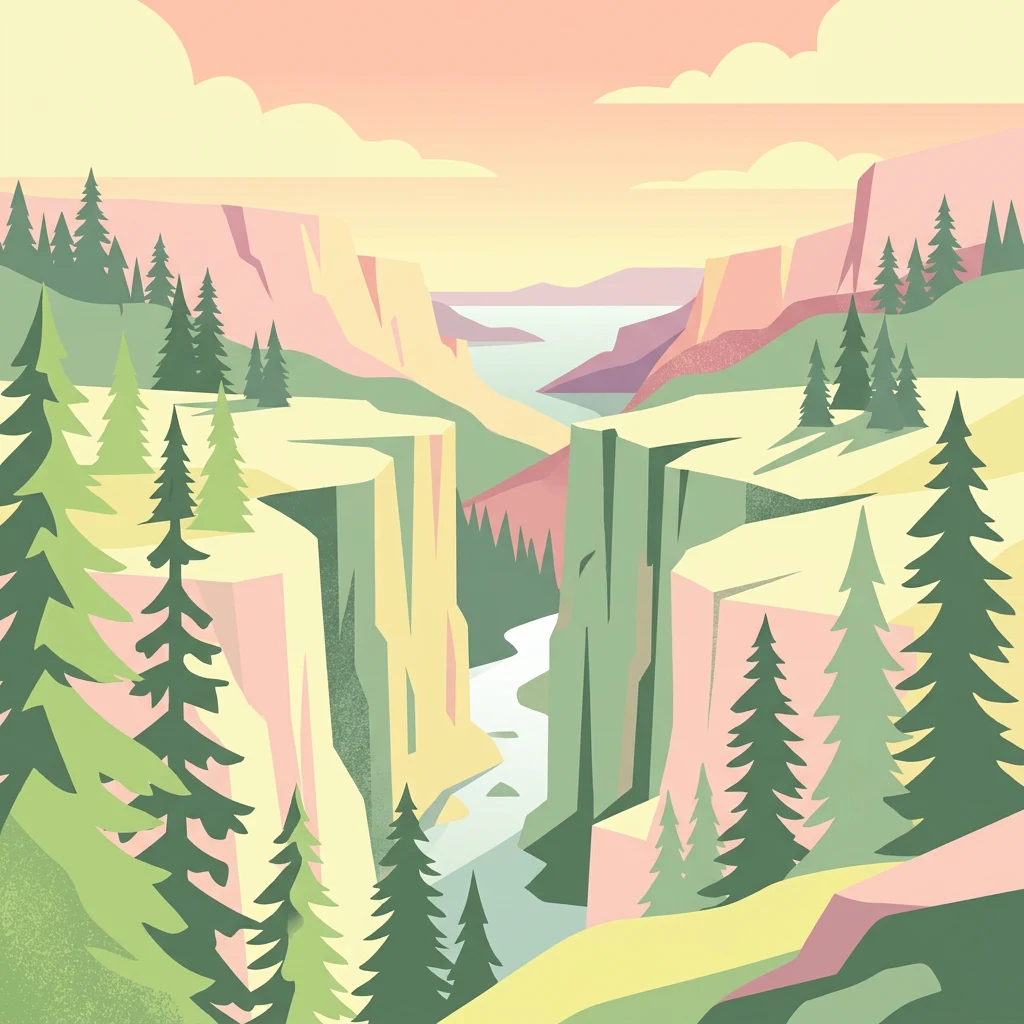
Stylized illustration of a deep canyon with steep cliffs, a river flowing through, and surrounding evergreen forests under a pastel sky

Helvetinjärvi National Park

National park

Park overview

Structured park overview, official facts, and landscape profile for Helvetinjärvi National Park

Helvetinjärvi National Park park facts, protected area profile, and essential visitor context
Review the core facts for Helvetinjärvi National Park, including designation, size, terrain, visitor scale, habitats, and operating context in one park-focused overview.

About Helvetinjärvi National Park

Helvetinjärvi National Park lies in the Pirkanmaa region of central Finland, approximately midway between Tampere and the village of Ruovesi. The park encompasses a landscape that stands in striking contrast to the surrounding flat terrain of the Finnish lake district. Its defining features are the deep gorges that cut through the ancient bedrock, with Helvetinkolu being the most renowned. The name Helvetinjärvi translates literally as "Hell's Lake," and the area has held an attraction for visitors since the 19th century when the gorge became a notable tourist destination. The park protects boreal forest ecosystems that represent the wild forests of historic Tavastia province. Visitors can explore marked trails that wind through the gorges and along the lake shores, with the landscape offering a sense of wilderness despite the relatively small size of the protected area. The park provides facilities at Helvetin portti (Hell's Gate), where visitors find a restaurant, accommodation options, and visitor services.

Quick facts and research context for Helvetinjärvi National Park

Helvetinjärvi National Park spans 49.8 km² in the Pirkanmaa region of central Finland, established in 1982. The park protects the wild forests of the Tavastia region, characterized by deep gorges carved through ancient bedrock. Helvetinkolu, the most famous gorge, has been a tourist attraction since the 1800s. The park features two official climbing areas and popular recreation sites including Haukanhieta beach and the Helvetin portti visitor area. The park is managed by Metsähallitus and receives around 44,000 visitors per year.

Park context

Deeper park guide and search-rich context for Helvetinjärvi National Park

Helvetinjärvi National Park history, landscape, wildlife, and travel context
Explore Helvetinjärvi National Park through its history, landscape character, ecosystems, wildlife, conservation priorities, cultural context, and seasonal travel timing in a structured park guide built for atlas discovery and search intent.

Why Helvetinjärvi National Park stands out

Helvetinjärvi is best known for its spectacular gorges, particularly Helvetinkolu, which is one of the most impressive geological features in Finnish protected areas. The park's deep ravines were formed by faults in the bedrock over millions of years, creating a dramatic landscape of sheer cliffs and rocky chasms within a typically flat Finnish terrain. The combination of ancient forest, rugged topography, and the iconic Helvetinkolu gorge makes this park distinctive among Finland's national parks.
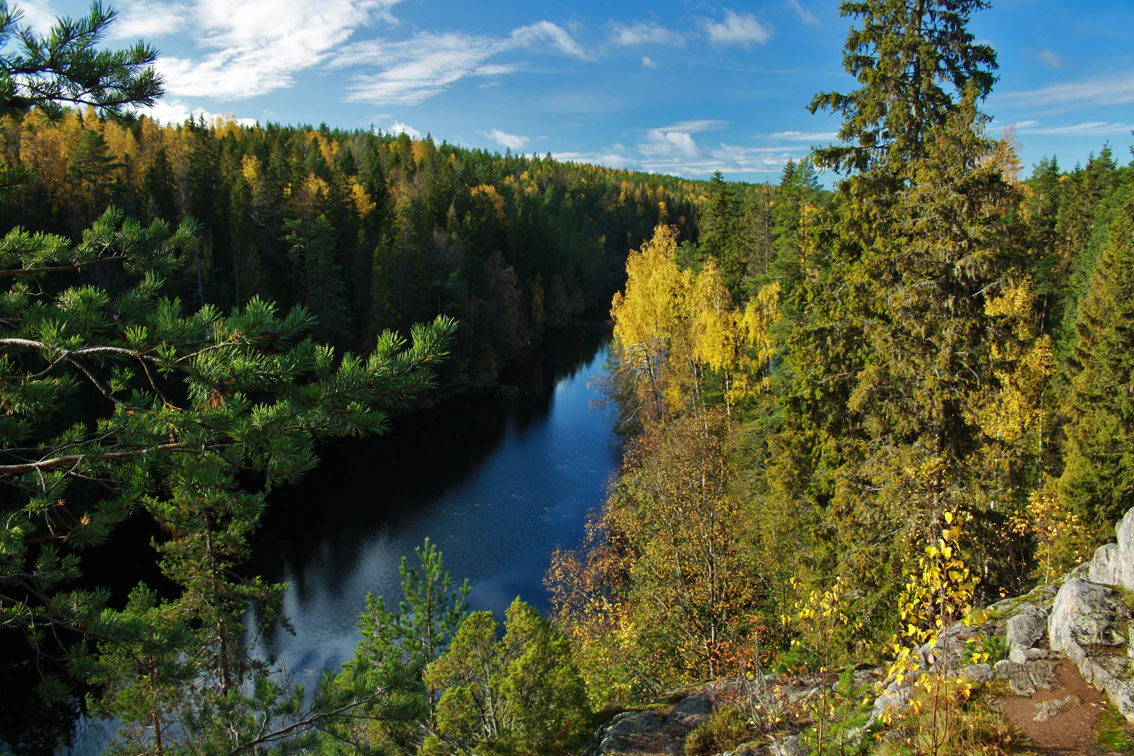
A river flowing through a forested gorge with rocky cliffs and autumn-colored trees under a clear blue sky
Scenic view of Helvetinkolu Gorge with river and autumn foliage

Helvetinjärvi National Park history and protected-area timeline

Helvetinjärvi National Park was established in 1982 to protect the distinctive gorges and forest landscapes of the Ruovesi area. The creation of the park reflected a growing recognition in Finland of the need to preserve geologically unique areas alongside old-growth forests. Prior to protection, the area had been used for commercial forestry, and portions of the park remain on former managed forest land. The historical popularity of Helvetinkolu as a tourist attraction dates to the 1800s, when the dramatic gorge drew visitors from across Finland. A day hut with campfire facilities was built near the gorge, and a cabin was constructed on the lake shore in the 1920s by the Visuveden youth association. This cabin was later donated to the municipality and then to the state for inclusion in the national park. The park is now managed by Metsähallitus, Finland's state-owned forest and land management agency.

Helvetinjärvi National Park landscape and geographic character

The landscape of Helvetinjärvi National Park is defined by its dramatic gorges and rugged terrain, which contrasts sharply with the gently rolling hills and lakes that dominate the surrounding Finnish lake district. The gorges were formed by geological faults running through the bedrock, creating deep ravines with steep rock walls. The most prominent feature, Helvetinkolu, is a spectacular cleft in the landscape at the southeastern end of Lake Helvetinjärvi. The terrain includes rocky cliffs, boulder fields, and forested slopes that descend into the gorge valleys. The park also encompasses the lake itself, which serves as a scenic focus for the landscape. Haukanhieta provides a sandy beach area along the lake shore, while the interior of the park features the rocky, forested terrain characteristic of Finnish boreal landscapes.
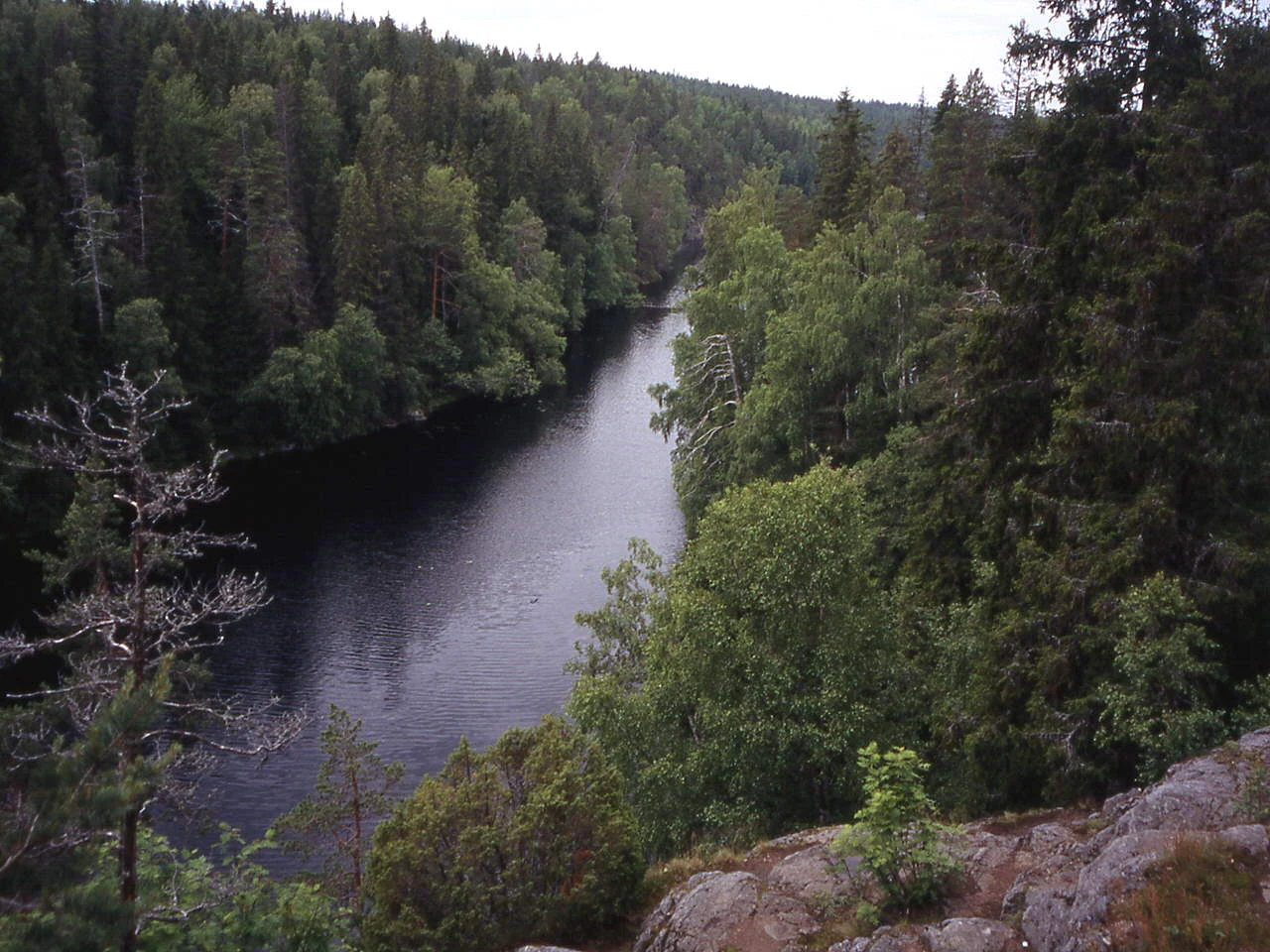
A river winding through dense forest with rocky terrain in the foreground
River flowing through dense forested landscape in Helvetinjärvi National Park, Finland

Helvetinjärvi National Park ecosystems, habitats, and plant life

The nature of Helvetinjärvi reflects the boreal forest ecosystems of southern central Finland. The park protects forest habitats that, while some areas were previously managed as commercial timber land, now contain elements of natural forest character. The 2010 storms that blew down considerable forest in the area have created new ecological opportunities, as fallen trees are left to decay within the park. This dead wood is crucial for many species, particularly beetles, flies, and other insects that depend on decaying timber. The forest composition includes typical Finnish species adapted to the continental climate, with the gorge environments creating microhabitats that support varied plant communities. The landscape's variation, from steep rock faces to lake margins, provides diverse ecological conditions within the relatively compact protected area.
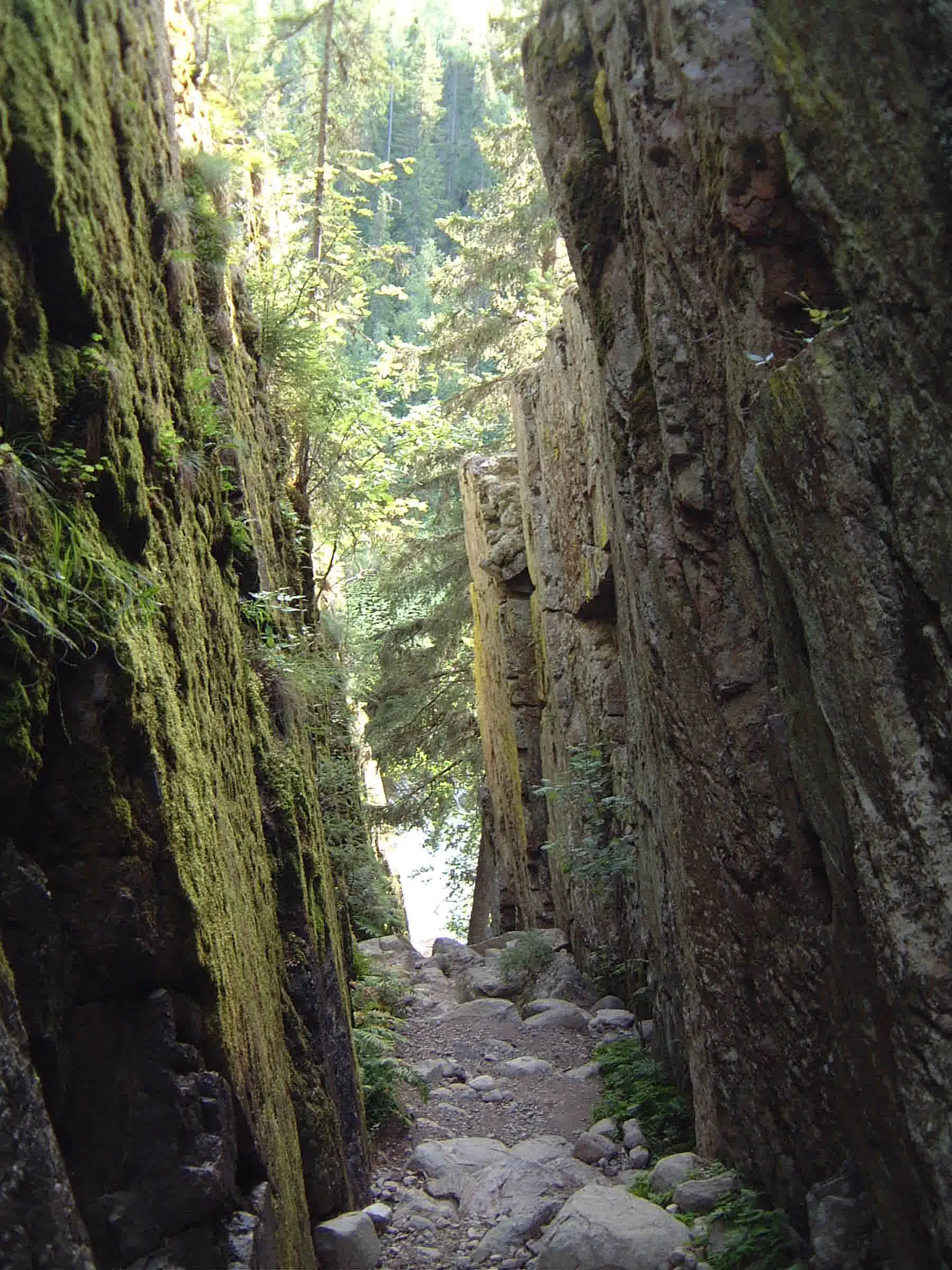
Narrow rocky gorge with moss-covered walls, a rocky trail, and green vegetation in Helvetinjärvi National Park
Helvetinkolu gorge with moss-covered rock walls and a narrow rocky trail in Helvetinjärvi National Park

Helvetinjärvi National Park wildlife and species highlights

The wildlife of Helvetinjärvi reflects the boreal forest communities of central Finland. The park's forests support populations of typical Finnish woodland species, and the varied habitat created by the combination of old-growth elements, storm-fallen timber, rocky areas, and lake shores provides conditions for diverse fauna. The dead wood created by the 2010 storms specifically benefits insects including beetles and two-winged flies, which in turn support bird species that feed on these invertebrates. The lake and its shoreline provide habitat for waterfowl and species associated with wetland edges. While specific notable species are not extensively documented in available sources, the park's ecological character supports the typical mammal and bird communities found in Finnish protected forest areas.

Helvetinjärvi National Park conservation status and protection priorities

Helvetinjärvi National Park contributes to the conservation of Finland's boreal forest ecosystems and geological heritage. The protected status preserves the gorges and forest landscapes that would otherwise face pressures from forestry and development. The park's management approach includes leaving storm-fallen timber to decay naturally, which supports biodiversity by creating habitat for invertebrates and the species that depend on them. This practice reflects a conservation philosophy that recognizes the ecological value of dead wood in forest ecosystems. The park also protects a landscape of significant geological interest, with the gorge formations representing unique features in the Finnish terrain.

Helvetinjärvi National Park cultural meaning and human context

The cultural context of Helvetinjärvi includes the long history of human appreciation for the area's dramatic landscape. The gorge known as Helvetinkolu has been a destination for visitors since the 1800s, making it one of Finland's older established tourism sites in a natural setting. The construction of a day hut and campfire areas near the gorge reflects this historic use of the landscape for recreation and appreciation. The Finnish name Helvetinjärvi, meaning "Hell's Lake," indicates a traditional naming that evokes the dramatic and somewhat forbidding character of the gorge landscape. The park lies within the historic Tavastia region, and its protection helps maintain the cultural landscape character of this part of central Finland.

Top sights and standout views in Helvetinjärvi National Park

The highlights of Helvetinjärvi National Park center on its exceptional geological features and recreational opportunities. Helvetinkolu gorge stands as the park's signature attraction, a dramatic cleft in the terrain that has drawn visitors for generations. The park offers two designated climbing areas: Sammakkolampi for rock climbing and Iso Helvetinjärven north shore for ice climbing. Haukanhieta beach provides a popular swimming and camping area. The Helvetin portti visitor area offers facilities including a restaurant, accommodation options, and an information point. The combination of deep gorges, boreal forest, and lake scenery creates a compact but distinctive Finnish wilderness experience.

Best time to visit Helvetinjärvi National Park

The best time to visit Helvetinjärvi National Park depends on the experience sought. The summer months of June through August offer the warmest conditions for hiking, swimming at Haukanhieta beach, and exploring the gorges on marked trails. Autumn provides the opportunity to experience the boreal forest in its colorful fall season. Winter offers a different character, with the snow-covered landscape and frozen lake creating a contrasts with the summer experience, and the ice climbing at Iso Helvetinjärven north shore becomes possible. The park is accessible year-round, though winter conditions require appropriate preparation for cold temperatures and shorter daylight hours.
Park location guide

Geography guide, regional context, and park location map for Helvetinjärvi National Park

Helvetinjärvi National Park park geography, regions, and map view in Finland
Understand where Helvetinjärvi National Park sits in Finland through a broader geographic reading of the surrounding landscape, nearby location context, and its mapped position within the national park landscape.

How Helvetinjärvi National Park fits into Finland

Finland, officially the Republic of Finland, is a Nordic country in Northern Europe with a population of 5.6 million. It borders Sweden, Norway, and Russia, with the Gulf of Bothnia to the west and the Gulf of Finland to the south. The country gained independence from Russia in 1917 and is a unitary parliamentary republic. Its landscape is characterized by extensive boreal forests and over 180,000 lakes.

Wider geography shaping Helvetinjärvi National Park in Finland

Finland is located in Northern Europe, occupying a peninsula bordered by the Gulf of Bothnia to the west and the Gulf of Finland to the south. It shares land borders with Sweden to the northwest, Norway to the north, and Russia to the east. The terrain is predominantly flat with extensive forest coverage and numerous lakes.

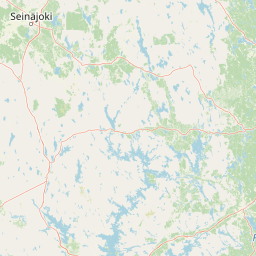
Map view of Helvetinjärvi National Park

Use this park location map to pinpoint Helvetinjärvi National Park in Finland, understand its exact geographic position, and read its mapped placement within the surrounding landscape more clearly.

Pigeon | © OpenStreetMap contributors

Location context for Helvetinjärvi National Park

Pirkanmaa

Explore detailed imagery revealing the park's unique geological features, rugged terrain, and distinct boreal forest environment.

Helvetinjärvi National Park Photos: Visualizing Finland's Dramatic Gorges and Boreal Forest Landscapes
Browse Helvetinjärvi National Park's diverse visual landscapes, including its iconic deep gorges, ancient boreal forests, and rugged Finnish terrain. These images provide essential context for understanding the park's geological character, unique habitats, and the scenic value of this protected natural area.

A river flowing through a forested gorge with rocky cliffs and autumn-colored trees under a clear blue sky

Panoramic view of rocky cliffs and forested gorge in Helvetinjärvi National Park

A river winding through dense forest with rocky terrain in the foreground

Narrow rocky gorge with moss-covered walls, a rocky trail, and green vegetation in Helvetinjärvi National Park

Park atlas

Compare the unique gorges and boreal forests of Helvetinjärvi with other Finnish protected landscapes.

Explore Nearby National Parks and Protected Areas Beyond Helvetinjärvi National Park
Continue your exploration of Finland's diverse protected areas by comparing national parks and reserves situated near Helvetinjärvi National Park. Gain valuable geographic context and trace the spread of unique landscapes, from deep gorges to ancient boreal forests, across the surrounding regions.
Watercolor painting of a lake surrounded by trees with a colorful sky.
National parkFinland

Seitseminen National Park: Ancient Boreal Forests and Vast Mire Systems in Finland

Explore mapped terrain and protected wilderness landscapes.

Seitseminen National Park represents a significant protected area in western Finland, characterized by classic boreal forest ecosystems interspersed with extensive mire and bog landscapes. The park's geography includes the notable Seitsemisharju esker, contributing to its diverse terrain. As a sanctuary for ancient forests, including the historic Multiharju primeval forest, Seitseminen offers a unique focus for understanding Finnish protected wilderness and its mapped geographic features within the Nordic context.

Area
45.5 km²
Established
1982
IUCN
II
Visitors
42.3K annual
National park

Isojärvi National Park: Finland's Protected Landscape with Dynamic Beaver-Shaped Terrain

Central Finland's boreal forest, ravines, and lake district geography.

Isojärvi National Park offers a unique atlas perspective on Central Finland's protected natural landscapes. This national park is characterized by a dynamic boreal environment, featuring steep hills, deep ravines, and varied topography shaped by both ancient geological processes and contemporary beaver activity. Discover the mapped boundaries of this protected area, its central role in the Finnish lake district's geography, and the distinctive wetland habitats created by beavers that enhance its ecological diversity. It serves as a key point for understanding regional landscape context and protected land exploration.

Area
19 km²
Established
1982
IUCN
II
Visitors
24.4K annual
National parkFinland

Lauhanvuori National Park: Finland's Protected Landscape and Geographic Identity

Mapped protected area within Finland's regional geography.

Delve into the protected landscape of Lauhanvuori National Park, a key national park in Finland. This atlas-focused entry details its geographic setting and mapped boundaries, offering structured insight into its protected area status and natural terrain. Understand how Lauhanvuori National Park contributes to Finland's broader conservation geography and landscape context.

Area
53 km²
Established
1982
IUCN
II
Visitors
21.7K annual
National parkPäijät-Häme

Päijänne National Park: Mapped Island Archipelago in Finland's Päijät-Häme Region

Explore unique glacial geology and boreal island wilderness.

Päijänne National Park presents a compelling protected landscape for atlas discovery, focusing on its distinct archipelago character within Lake Päijänne, Southern Finland. This national park features numerous islands showcasing ancient geological formations, from rocky outcrops to sandy beach ridges and moraine formations. Its mapped terrain offers insights into glacial processes and the development of boreal island ecosystems. Navigate its unique island settings to understand the geographic context of this protected area in the Päijät-Häme region.

Area
14 km²
Established
1993
IUCN
II
Visitors
67K annual
National parkPirkanmaa

Puurijärvi-Isosuo National Park: Protected Landscape Discovery in Pirkanmaa Region

Explore mapped protected areas and regional geography.

Puurijärvi-Isosuo National Park is a significant protected area in Finland's Pirkanmaa region. This entry provides detailed geographic context and maps the park's boundaries, offering a focused perspective for atlas-driven discovery of Finnish natural landscapes. Understand its place within the regional geography and the wider network of protected lands.

Area
27 km²
Established
1993
IUCN
II
Visitors
19.8K annual
National parkCentral Finland

Leivonmäki National Park: Mapped Protected Landscape in Central Finland

Detailed geographic context for this Finnish national park.

Leivonmäki National Park offers a specific focus on a single protected landscape within the broader geography of Central Finland. This page provides users with detailed information centered on the park's mapped boundaries and its role as a national park. It is designed to be a foundational entry within the MoriAtlas discovery platform, helping users understand the park's geographic setting and its protected area status for informed exploration.

Area
29 km²
Established
2003
IUCN
II
Visitors
29.1K annual
National parkCentral Finland

Pyhä-Häkki National Park: Central Finland's Ancient Forest Protected Landscape

Discover mapped boundaries, old-growth trees, and boreal peat bog ecosystems.

Pyhä-Häkki National Park is a crucial protected national park in Central Finland, safeguarding an exceptional expanse of old-growth forest and vital peat bog habitats. This protected landscape showcases ancient trees, some over 400 years old, and a unique boreal ecosystem largely untouched by human development. Explore its natural terrain, mapped park boundaries, and the ecological significance of this primeval forest environment through MoriAtlas's structured discovery platform.

Area
13 km²
Established
1956
IUCN
II
Visitors
17.9K annual
National parkFinland

Salamajärvi National Park: Explore Finland's Premier Mired Wilderness and Protected Landscape

Mapped boundaries and wetland ecosystems of this Finnish National Park.

Salamajärvi National Park is a critical protected area in Finland, celebrated for its unparalleled mire ecosystems, which represent some of the country's most extensive and intact peatland environments. The park's landscape is shaped by the Suomenselkä watershed, featuring a mosaic of old-growth forests, forest lakes, and rugged terrain, providing a vital sanctuary for forest reindeer. MoriAtlas details its geographic context and protected landscape features, offering users a structured way to explore its natural identity and mapped boundaries within Finland.

Area
62 km²
Established
1982
IUCN
II
Visitors
24.5K annual

Common questions about visiting, size, designation, and location context for Helvetinjärvi National Park

Helvetinjärvi National Park FAQs for park facts, access, geography, and protected area context
Find quick answers about Helvetinjärvi National Park, including protected-area facts, park geography, trail and visitor context, and how the park fits into its surrounding country and regional landscape.
MoriAtlas Explorer

Continue Your Protected Areas Search Across the Global Atlas

Deepen your exploration by continuing the structured search for national parks and protected areas worldwide. Utilize the comprehensive filtering capabilities to compare different conservation landscapes and refine your understanding of global park geography. Discover more about the distribution and characteristics of protected natural areas.

Global natural geography