Why Qausuittuq National Park stands out
Qausuittuq National Park is best known for protecting one of the most significant remaining habitats for the Peary caribou, a endangered subspecies adapted to high Arctic conditions. The park represents the Western High Arctic natural region, encompassing the harsh yet ecologically important landscapes of Bathurst Island in the Queen Elizabeth Islands. Its extreme Arctic character, defined by cold temperatures, minimal precipitation, and extended periods of winter darkness, makes it one of Canada's most remote and pristine national parks. The park also contains evidence of thousands of years of human occupation by prehistoric Dorset and later Thule Inuit peoples.
Qausuittuq National Park history and protected-area timeline
The Bathurst Island area has supported human occupation for approximately 4,500 years, with archaeological evidence of both prehistoric and historic Dorset culture, followed by Thule Inuit settlement. Human presence in the region fluctuated over millennia in response to changing climate conditions, ice cover patterns, and the availability of wildlife for subsistence hunting. Most historical human activity was concentrated in the southern and eastern portions of Bathurst Island rather than within the proposed park area itself. The area was explored by British naval expeditions during the mid-nineteenth century, particularly those searching for the lost Franklin expedition, and several cairns remain on the north coast as evidence of this exploration period. Scientific and commercial studies of the area began during the 1960s. The community of Resolute, located on Cornwallis Island to the southeast of the park, was established in 1953 and serves as the nearest population center. Inuit from Resolute continue to use the land and waters of the Bathurst Island area for hunting and fishing. The park feasibility study was initiated in 1994, including a Mineral and Energy Resources Assessment completed in 1999, with the overall feasibility study concluding in 2000. The federal government introduced legislation to create the park in 2015, receiving approval on June 24 with the park legally established on September 1, 2015. The original proposed name was Tuktusiuqvialuk National Park, but the Qausuittuq name was selected through a local contest. The park received its first visitors in 2016.
Qausuittuq National Park landscape and geographic character
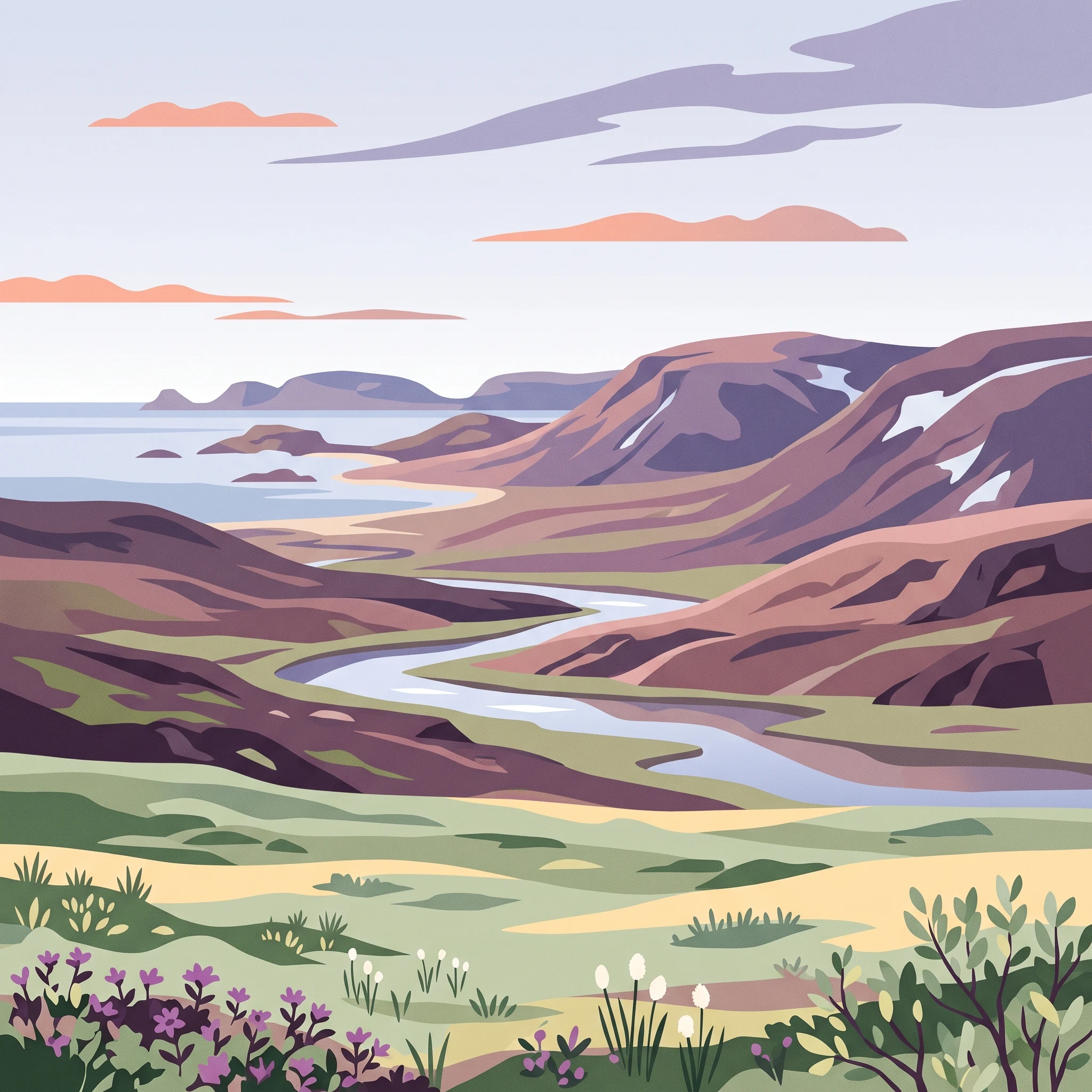
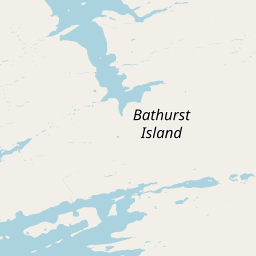
Qausuittuq National Park encompasses the northwestern portion of Bathurst Island, one of the larger islands in the Canadian Arctic Archipelago within the Queen Elizabeth Islands. The park's geology is composed primarily of sedimentary rocks including limestone, sandstone and dolomite, representing ancient marine deposits that have been exposed through millions of years of geological processes. The area shows clear evidence of past glaciation, with characteristic landforms including eskers, moraines and beach terraces scattered across the terrain. The landscape consists generally of rolling hills with tundra vegetation covering the terrain in the brief summer months. The island experiences a cold dry climate characteristic of the central Arctic, with almost unimpeded weather systems reaching the low-lying islands of the northwestern and north-central Queen Elizabeth Islands. The extreme climate, with temperatures remaining well below freezing for most of the year and minimal precipitation, shapes every aspect of the landscape and limits the development of soils and vegetation.
Qausuittuq National Park ecosystems, habitats, and plant life
The extreme Arctic climate of Qausuittuq severely limits soil and nutrient development, which in turn constrains the diversity and abundance of vegetation. This high Arctic region exhibits low vascular plant diversity, with vegetation dominated by herbaceous species adapted to harsh conditions. The plant community includes purple saxifrage, dwarf willow, various sedges and grasses, along with extensive coverage by lichens and mosses that carpet the tundra floor during the short growing season. These plants must survive extreme cold, minimal precipitation, permafrost conditions, and the challenges of a very short summer growing period. The terrestrial ecosystem supports wildlife species specifically adapted to this demanding environment, including Peary caribou, muskoxen, Arctic wolves and Arctic foxes. The marine environment surrounding Bathurst Island supports a range of species adapted to Arctic waters, including ringed seals, bearded seals, polar bears, walruses, and several whale species including bowhead whales, beluga whales and narwhals.
Qausuittuq National Park wildlife and species highlights
Qausuittuq National Park protects critical habitat for Peary caribou, one of the most endangered caribou subspecies in Canada and adapted exclusively to high Arctic conditions. These small, pale-colored caribou are found primarily on the islands of the Canadian Arctic Archipelago and have evolved to survive on the sparse vegetation of the tundra. The park also supports populations of muskoxen, large shaggy mammals that have survived in the Arctic since the Pleistocene era. Predators in the ecosystem include Arctic wolves and Arctic foxes, both specially adapted to hunt in the harsh Arctic environment. The bird population includes species such as snowy owls, snow geese, king eiders, jaegers, various gulls and shorebirds that migrate to the area during the brief summer breeding season. Marine mammals in the surrounding waters include ringed seals and bearded seals, important prey species for polar bears that also inhabit the area. The waters around Bathurst Island support several whale species including bowhead whales, beluga whales and narwhals, all of which have cultural and ecological significance in the Arctic.
Qausuittuq National Park conservation status and protection priorities
Qausuittuq National Park was established specifically to protect the Western High Arctic natural region, one of 39 distinct ecological regions identified by Parks Canada. The park plays a critical role in conserving habitat for the endangered Peary caribou, a subspecies that has suffered significant population declines and is considered at risk in Canada. By protecting this vast area of Bathurst Island, the park ensures that one of the most important remaining populations of this vulnerable subspecies has permanent conservation protection. The park also contributes to the broader conservation network of the Arctic Archipelago, sitting north of the Polar Bear Pass National Wildlife Area and contributing to a connected system of protected areas in the Queen Elizabeth Islands. The establishment of the park followed a comprehensive feasibility study including environmental and resource assessments, and was created in partnership with Inuit communities through an Inuit Impact and Benefit Agreement.
Qausuittuq National Park cultural meaning and human context
The Bathurst Island area has been inhabited by humans for approximately 4,500 years, with archaeological evidence of both prehistoric Dorset culture and later Thule Inuit peoples who are the ancestors of modern Inuit. These indigenous peoples adapted their lives to the extreme Arctic environment, relying on hunting and fishing for subsistence as climate and ice conditions allowed. Human presence in the region fluctuated over thousands of years in response to changing environmental conditions that affected the availability of wildlife for hunting. The nearby community of Resolute, established in 1953 on Cornwallis Island, maintains connections to the Bathurst Island area through traditional hunting and fishing activities. The park was created through negotiation with Inuit communities most closely connected to the proposed park, resulting in an Inuit Impact and Benefit Agreement. The name Qausuittuq was selected through a contest in the local area and reflects the Inuktitut language connection to this northern land.
Top sights and standout views in Qausuittuq National Park
Qausuittuq National Park represents one of Canada's most remote and least-visited national parks, offering access to a pristine high Arctic environment that few people will ever experience. The park protects critical Peary caribou habitat on Bathurst Island, one of the largest islands in the Queen Elizabeth Islands of the Canadian Arctic Archipelago. Visitors arriving in 2016 were among the first to experience this newly established protected area, which represents the Western High Arctic natural region in Canada's national park system. The park contains evidence of thousands of years of human history, from prehistoric Dorset sites to Thule Inuit occupation and nineteenth-century British exploration related to the search for the Franklin expedition. The extreme Arctic environment, with its cold temperatures, minimal precipitation, and extended periods of winter darkness, creates a landscape of stark beauty and ecological significance.
Best time to visit Qausuittuq National Park
Qausuittuq National Park can only be visited during the brief Arctic summer when temperatures rise above freezing and the landscape is accessible. The warmest period occurs in July when mean temperatures reach approximately 5°C, providing the only window for visitor activities. However, even during this peak period, conditions remain extremely cold by most standards and visitors must be prepared for harsh weather. The short summer season also corresponds with the midnight sun period, when the sun remains above the horizon for extended hours, and the brief burst of plant growth and wildlife activity that characterizes the Arctic summer. Winter visits are not practical due to the extreme cold, with mean January temperatures of -35°C and nearly complete darkness during the polar night period. Access to the park is extremely limited due to its remote location, requiring significant planning and resources.