Mori Atlas logo
National parkTunkinsky National Park

Mapping the protected boundaries and natural terrain within this significant Russian national park.

Tunkinsky National Park: National Park Protected Landscape and Regional Geography in Buryatia

Tunkinsky National Park represents a key protected natural landscape within the Republic of Buryatia, Russia. This page offers an atlas-oriented view, focusing on the park's mapped boundaries and its integral role within the broader regional geography. Understand the park's context as a designated national park, providing a foundation for exploring its unique natural features and their placement within the Siberian landscape.

Siberian wildernessSayan MountainsAlpine landscapesTaiga forestsBiodiversity hotspotHot springs

Tunkinsky National Park

National park

Park overview

Structured park overview, official facts, and landscape profile for Tunkinsky National Park

Tunkinsky National Park park facts, protected area profile, and essential visitor context
Review the core facts for Tunkinsky National Park, including designation, size, terrain, visitor scale, habitats, and operating context in one park-focused overview.

About Tunkinsky National Park

Tunkinsky National Park represents one of Siberia's most ecologically significant protected areas, spanning approximately 1.18 million hectares in the Republic of Buryatia. The park occupies the entire Tunkinsky District, creating a comprehensive protected zone that encompasses the Irkut River valley and surrounding mountain systems. This mountainous region forms a natural corridor between Lake Baikal, the world's deepest freshwater lake, and Lake Khövsgöl in Mongolia. The landscape is characterized by the Tunka Alps, a spectacular mountain range featuring dramatic glacial and rift valleys, cascading waterfalls, and mineral hot springs that have drawn visitors for centuries. The central valley around the Irkut River contains fertile agricultural land and small settlements where the indigenous Buryat people maintain traditional ways of life. The park's ecological significance is amplified by its position at a biological crossroads, where Siberian taiga forests meet Mongolian steppe and alpine tundra zones, creating unusual diversity within a single protected area.

Quick facts and research context for Tunkinsky National Park

Tunkinsky National Park covers approximately 1,183,662 hectares in the Tunkinsky District of Buryatia, Russia. The park is located about 200 kilometres southwest of Irkutsk and sits between two of Siberia's great lakes: Lake Baikal to the northeast and Lake Khövsgöl in Mongolia to the southwest. The park occupies the entire Tunkinsky District, with its boundaries coterminous with the district. The Irkut River flows through the central valley, which has fertile soil supporting agriculture and small settlements inhabited by the indigenous Buryat people. The park's elevation range spans from 668 metres in the valley floor to 3,172 metres in the surrounding mountains.

Park context

Deeper park guide and search-rich context for Tunkinsky National Park

Tunkinsky National Park history, landscape, wildlife, and travel context
Explore Tunkinsky National Park through its history, landscape character, ecosystems, wildlife, conservation priorities, cultural context, and seasonal travel timing in a structured park guide built for atlas discovery and search intent.

Why Tunkinsky National Park stands out

Tunkinsky National Park is best known for its dramatic alpine landscapes at the eastern edge of the Sayan Mountains, where rift and glacial valleys create spectacular scenery. The park is renowned for its hot springs and mineral spas, particularly at the resort town of Arshan. It is also significant as a biodiversity hotspot, serving as a habitat for snow leopards at the northern edge of their range, as well as Asiatic wild dogs (dholes). The park's position at the intersection of taiga, steppe, alpine forest, and lake ecosystems creates remarkable ecological diversity across a relatively compact area.
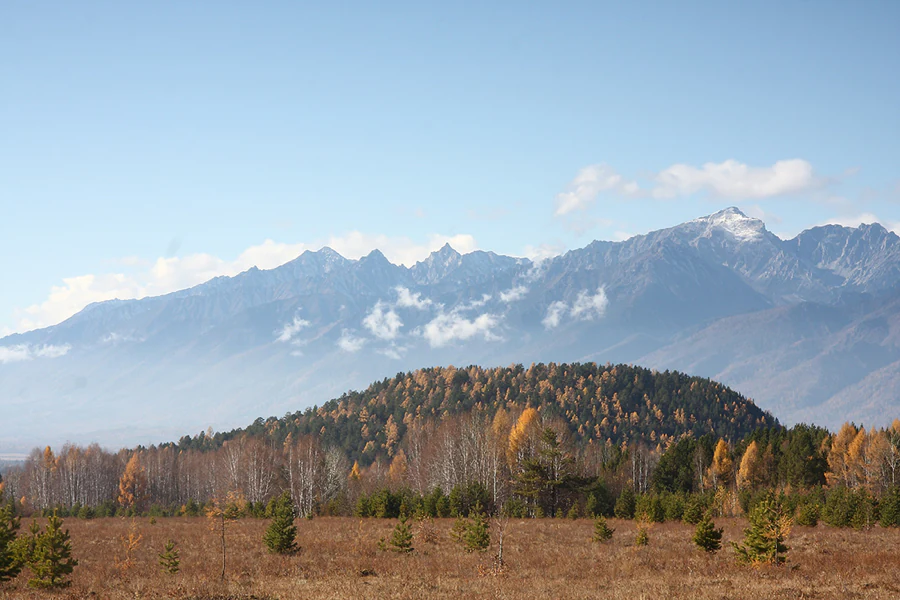
Wide landscape view of a mountainous region with forested hills, grassy plains in the foreground, and snow-capped mountains in the background under a clear sky
Mountainous landscape in Tunkinsky National Park with forested hills and snow-capped mountains in the background

Tunkinsky National Park history and protected-area timeline

Tunkinsky National Park was established as a protected area in 1991, designated under Russian federal law as a nature reserve of special significance. The park's creation reflected growing recognition of the region's ecological importance and the need to protect its unique combination of habitats, species, and landscapes. Prior to formal protection, the Tunkinsky District had long served as a traditional homeland for the Buryat people, an indigenous Mongolian-speaking group with deep cultural ties to the landscape. The establishment of the park coincided with broader environmental protection efforts in post-Soviet Russia and the development of sustainable tourism infrastructure in the region, particularly around the mineral springs of Arshan. The park's boundaries were designed to encompass the entire district, ensuring comprehensive protection of the valley and surrounding ecosystems.

Tunkinsky National Park landscape and geographic character

The physical landscape of Tunkinsky National Park is defined by its position at the eastern edge of the Sayan Mountains, where the massive mountain system meets the valleys leading toward Mongolia. The park features the Tunka Alps, a spectacular range of peaks reaching 3,172 metres, carved by ancient glacial activity into dramatic ridges, cirques, and U-shaped valleys. The Irkut River flows through a broad central valley with fertile soils, surrounded by forested mountain slopes that rise sharply to the north and west. Extinct volcanoes, such as the Talskaya volcano, punctuate the landscape, adding geological significance. The terrain encompasses rift valleys, glacial valleys, hot springs, alpine meadows, and forested slopes, creating a visually diverse and geologically complex environment. The contrast between the flat, productive valley floor and the rugged mountain backdrop defines the park's distinctive character.
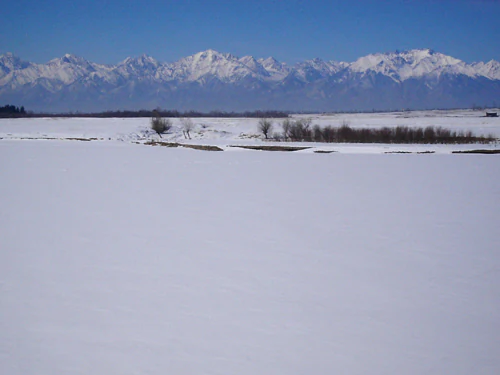
Snow-covered field with the Irkut River and distant snow-capped mountains under a clear blue sky
Snow-covered landscape of the Irkut River valley with distant snow-capped mountains under a clear blue sky

Tunkinsky National Park ecosystems, habitats, and plant life

The ecological character of Tunkinsky National Park is defined by its position at the intersection of multiple distinct biomes, creating remarkable habitat diversity within a single protected area. The mid-elevation mountain slopes support Sayan montane conifer forests, a transitional forest type containing species from both the Siberian taiga and the Mongolian steppe, primarily pine, cedar, and larch. The lower valley regions transition into forest-steppe vegetation, while higher elevations feature tundra and alpine glades. This ecological gradient supports exceptional plant diversity, with over 900 vascular plant species recorded and 43 endemic species listed in the Russian Red Book as endangered. The park's location between two of Siberia's great lakes and its variety of habitats create a unique ecological bridge across continental Asia.

Tunkinsky National Park wildlife and species highlights

Tunkinsky National Park supports exceptional wildlife diversity, with over 305 vertebrate species recorded within its boundaries. Of these, 62 species are classified as rare or endangered, making the park particularly significant for conservation. The park provides confirmed habitat for snow leopards at the northern edge of their global range, representing one of the northernmost populations of this endangered big cat. The Asiatic wild dog, or dhole, also reaches its northern range limit within the park. Mammal species include Siberian roe deer, wolverine, elk, and steppe polecat. The avifauna is particularly rich, with 207 nesting bird species and an additional 30 transitory species recorded. Fish populations include grayling, carp, dace, and roach, while the park also supports four amphibian and five reptile species.

Tunkinsky National Park conservation status and protection priorities

Tunkinsky National Park holds significant conservation importance as a protected area encompassing multiple threatened ecosystems and species at the edge of their geographic ranges. The park provides critical habitat for snow leopards and dholes, both species of conservation concern that reach their northern range limits in this region. Its designation as a Category II protected area under IUCN guidelines reflects its national park status and the formal protection it provides to Siberia's unique transitional ecosystems. The preservation of the Sayan montane conifer forests, forest-steppe, and alpine tundra habitats within a single protected unit helps maintain ecological connectivity across a biologically diverse landscape. The presence of 43 endemic plant species in the Russian Red Book further underscores the park's conservation significance for botanical heritage.

Tunkinsky National Park cultural meaning and human context

Tunkinsky National Park contains the traditional homeland of the Siberian Buryat people, an indigenous Mongolian-speaking community with deep historical roots in the Tunkinsky Valley. The valley has been inhabited for centuries, with Buryat settlements maintaining traditional agricultural practices and cultural traditions. The town of Arshan within the park is known for its carbonate mineral springs, which have been used for therapeutic purposes for generations, creating a cultural tradition of spa and wellness practices that continues today. The Buddhist Datsan temple near Arshan represents the spiritual heritage of the Buryat community, adding religious and architectural significance to the cultural landscape. This human dimension coexists with the natural environment, creating a landscape where cultural and ecological preservation are intertwined.

Top sights and standout views in Tunkinsky National Park

The highlights of Tunkinsky National Park include the spectacular alpine scenery of the Tunka Alps with their glacial valleys and dramatic peaks, the therapeutic mineral springs of Arshan spa town, and the opportunity to observe snow leopards in their northernmost habitat. The park offers diverse outdoor activities including backpacking through pristine taiga forests, kayaking on the Irkut River, mountaineering on volcanic peaks, and rock climbing on alpine cliffs. The ecological diversity created by the meeting point of taiga, steppe, and alpine habitats provides exceptional biodiversity viewing opportunities, while the cultural heritage of the Buryat people adds historical depth to the wilderness experience.

Best time to visit Tunkinsky National Park

The best time to visit Tunkinsky National Park depends on the desired experience, with the summer months of June through August offering the warmest conditions and maximum accessibility for hiking and outdoor activities. Summer brings the warmest temperatures to the valley and alpine zones, with precipitation maximum occurring during this season, creating lush meadow environments and active waterfalls. The subarctic climate means winters are cold and snowy, with temperatures dropping significantly in the mountain areas. The shoulder seasons of spring and autumn provide different characteristics, with spring bringing snowmelt and new growth while autumn offers fall colours in the larch and pine forests. For wildlife viewing, the summer months coincide with greater animal activity, while winter provides opportunities to observe species adapted to snowy conditions.


Park location guide

Geography guide, regional context, and park location map for Tunkinsky National Park

Tunkinsky National Park park geography, regions, and map view in Russia
Understand where Tunkinsky National Park sits in Russia through a broader geographic reading of the surrounding landscape, nearby location context, and its mapped position within the national park landscape.

How Tunkinsky National Park fits into Russia

Russia is a transcontinental nation spanning eleven time zones, bordered by fourteen countries. It is the world's largest country by area, covering 17,098,246 km². Moscow is the capital and largest city, while Saint Petersburg is the second-largest and a major cultural centre.

Wider geography shaping Tunkinsky National Park in Russia

Russia spans Eastern Europe and North Asia, covering 17,098,246 km². It shares land borders with fourteen countries, more than any other nation, and spans eleven time zones. The landscape includes vast plains, mountain ranges such as the Urals and Caucasus, and extensive coastlines along the Arctic Ocean, Pacific Ocean, Baltic Sea, Black Sea, and Caspian Sea.

Map view of Tunkinsky National Park

Use this park location map to pinpoint Tunkinsky National Park in Russia, understand its exact geographic position, and read its mapped placement within the surrounding landscape more clearly.

Pigeon | © OpenStreetMap contributors

Location context for Tunkinsky National Park

Buryatia

Visual reference of Tunkinsky's dramatic Sayan Mountain landscapes, glacial valleys, and taiga habitats

Tunkinsky National Park Photos: Visual Guide to Siberian Alpine Landscapes and Wilderness Scenery
Immerse yourself in the visual identity of Tunkinsky National Park through detailed imagery showcasing its rugged alpine terrain, expansive taiga forests, and pristine river valleys. Understanding the unique geographic features and distinct ecological zones, from high mountain peaks to biodiverse river ecosystems, provides a deeper appreciation of this Siberian protected area.

Wide landscape view of a mountainous region with forested hills, grassy plains in the foreground, and snow-capped mountains in the background under a clear sky

Golden lion statue adorned with blue scarves, set against a backdrop of distant mountains and a road under a clear blue sky

Snow-covered field with the Irkut River and distant snow-capped mountains under a clear blue sky

Park atlas

Expand your view from Tunkinsky's unique landscapes to trace other protected areas across southern Siberia and the Sayan Mountains

Discover Related National Parks and Protected Areas Near Tunkinsky National Park in Siberia
Explore additional national parks and protected areas across the Siberian wilderness, encompassing diverse alpine landscapes, taiga forests, and steppe environments near Tunkinsky National Park. This view supports geographic comparison, enabling a deeper understanding of regional protected-area patterns and connected conservation efforts across Siberia.
Watercolor illustration showing a lake, green vegetation, and mountains under a light sky
National parkIrkutsk Oblast

Pribaikalsky National Park: A Protected Siberian Landscape on Lake Baikal's Shores

Explore mapped boundaries and regional geography.

Pribaikalsky National Park is a key protected area in Irkutsk Oblast, critical for conserving the biodiversity and unique topography of Lake Baikal. This national park encompasses dramatic mountain terrain, coastal landscapes, and the significant Olkhon Island, offering a detailed geographic study for atlas exploration. Discover the mapped extent of this important natural reserve and its role in preserving one of Earth's most exceptional freshwater ecosystems and its surrounding Siberian environment.

Area
4,173 km²
Established
1986
IUCN
II
Visitors
400K annual
National parkBuryatia

Zaybaykalsky National Park: National Park Atlas and Protected Landscape Explorer

Buryatia's Protected Area and Geographic Context

Uncover the geographic identity of Zaybaykalsky National Park, a designated national park within the Republic of Buryatia. This platform facilitates a structured exploration of its protected landscape, emphasizing its mapped boundaries and its place within the regional geography of Siberia. Understand the park's significance through a dedicated atlas lens, focusing on its inherent natural terrain and protected status, aiding in detailed geographic discovery.

Area
2,690 km²
Established
1986
IUCN
II
Relief
Mountain
National parkZabaykalsky Krai

Chikoy National Park: Protected National Park with Highland Landscape and River Basin Geography

Explore its protected boundaries and unique taiga-steppe transition in Zabaykalsky Krai.

Chikoy National Park, a protected area in Russia's Zabaykalsky Krai, showcases the rugged geography of the Khentei-Daur Highlands. As a national park, it preserves the upper Chikoy River basin and represents a significant ecological borderland, marking the transition from Siberian taiga to Mongolian steppe. This page facilitates a structured understanding of the park's mapped landscape, its prominent natural monument Bystrinsky Golets, and its role within the broader atlas of protected natural areas.

Area
6,665 km²
Established
2014
IUCN
II
Relief
Mountain
Watercolor painting of green trees, rolling hills, a pink and yellow sunset sky, and a single tree on the right
National parkKrasnoyarsk Krai

Shushensky Bor National Park: Mapped Geography of a Siberian Protected Forest

Explore the protected landscape and regional context of Krasnoyarsk Krai.

Shushensky Bor National Park serves as a critical protected area within the vast geography of Krasnoyarsk Krai, Russia, offering detailed insights into Siberia's ecological transition zones. This national park meticulously maps the shift from the Minusinsk basin forest-steppe to the dramatic mountain taiga of the Western Sayan range. Users can explore its varied terrain, from gentler northern steppe-influenced lands to the rugged slopes of the Borus Massive, all within a defined protected landscape. The proximity to the Sayano-Shushenskoye Reservoir further defines its unique geographic setting, providing context for its conservation importance and natural beauty.

Area
392 km²
Established
1995
IUCN
II
Relief
Mountain
National parkKrasnoyarsk Krai

Krasnoyarsk Pillars National Park: Geographic Atlas and Protected Landscape Exploration

Discover mapped terrain and regional park context in Siberia.

This detailed entry for Krasnoyarsk Pillars National Park offers an in-depth look at its identity as a protected landscape within Krasnoyarsk Krai. It provides structured geographic information, focusing on mapped boundaries and the park's position within the vast Siberian terrain. Users can leverage this data for atlas exploration, gaining a clear understanding of the park's physical dimensions and its role in the regional geography of Russia. Explore the unique landscape character and mapped context of this significant national park.

Area
471.54 km²
Established
2019
IUCN
II
Visitors
200K annual
Watercolor illustration depicting layered mountains, green hills, and forested areas with purple and pink tones
National parkZabaykalsky Krai

Alkhanay National Park

Sacred Mountain & Forest Steppe

Alkhanay National Park in Russia protects a landscape where Siberian taiga meets Mongolian steppe. Explore its sacred Mount Alkhanai, diverse terrain, and protected natural features within a unique geographic setting.

Area
1,382 km²
Established
1999
IUCN
II
National parkTashtagolsky District

Shorsky National Park: Protected Landscape and National Park Geography

Discover the mapped terrain and regional context of Shorsky National Park.

Shorsky National Park is a key protected area within the Tashtagolsky District, nestled in the mountainous terrain of Southern Siberia. This page serves as an entry point for understanding its role as a national park, focusing on its geographic boundaries and landscape context. MoriAtlas allows for detailed map-based exploration of Shorsky National Park, highlighting its significance within the regional geography and the broader atlas of protected lands in Russia.

Area
4,180 km²
Established
1989
IUCN
II
National parkAltai Republic

Saylyugemsky National Park: Discover its Protected Landscape and Geographic Significance in Altai Republic

Mapped boundaries and regional landscape context within the Altai Republic.

Delve into Saylyugemsky National Park, a designated national park situated within the vast geographic expanse of Russia's Altai Republic. This canonical page provides detailed insights into its protected landscape, meticulously mapped boundaries, and its contribution to the regional geography. MoriAtlas focuses on structured geographic discovery, enabling a deeper understanding of Saylyugemsky National Park's place within the atlas of protected areas and natural landscapes.

Area
1,183.8 km²
Established
2012
IUCN
II
Relief
Mountain

Common questions about visiting, size, designation, and location context for Tunkinsky National Park

Tunkinsky National Park FAQs for park facts, access, geography, and protected area context
Find quick answers about Tunkinsky National Park, including protected-area facts, park geography, trail and visitor context, and how the park fits into its surrounding country and regional landscape.
MoriAtlas Explorer

Continue Your Protected Areas Search Across the Global Atlas

Deepen your exploration by continuing the structured search for national parks and protected areas worldwide. Utilize the comprehensive filtering capabilities to compare different conservation landscapes and refine your understanding of global park geography. Discover more about the distribution and characteristics of protected natural areas.

Global natural geography