Mori Atlas logo
National parkZaybaykalsky National Park

Discover the mapped boundaries and regional landscape context of this protected area.

Zaybaykalsky National Park: Protected National Park in Buryatia's Geographic Landscape

Zaybaykalsky National Park stands as a significant protected national park within the Republic of Buryatia, Russia. This page offers an atlas-driven view of its protected landscape, detailing its geographic position and the regional context it inhabits. Explore the mapped boundaries and understand how Zaybaykalsky National Park fits into the diverse terrain of Siberia, providing essential data for geographic discovery and landscape analysis.

Lake BaikalTaigaNational ParkPeninsulaIslandsEastern Siberia

Zaybaykalsky National Park

National park

Park overview

Structured park overview, official facts, and landscape profile for Zaybaykalsky National Park

Zaybaykalsky National Park park facts, protected area profile, and essential visitor context
Review the core facts for Zaybaykalsky National Park, including designation, size, terrain, visitor scale, habitats, and operating context in one park-focused overview.

About Zaybaykalsky National Park

Zaybaykalsky National Park represents one of Russia's most significant protected areas for conserving the unique ecosystems surrounding Lake Baikal, a UNESCO World Heritage Site. The park encompasses approximately 269,000 hectares along the eastern shore of Lake Baikal in the Republic of Buryatia, making it a substantial component of the Baikal region's protected area network. The park's boundaries are defined by Lake Baikal to the west, the Barguzin Nature Reserve to the north, and the Barguzin mountain range to the south and east. This positioning creates a contiguous protected corridor that spans from the lakeshore through mountain forests to alpine zones. The park's establishment in 1986 reflected growing recognition of the ecological and scenic importance of the Trans-Baikal region, the area lying beyond the Baikal watershed. The park is administered by Russia's Ministry of Natural Resources and Environment and operates visitor facilities including guest cabins and a floating ecotourist hostel. The park's management balances conservation objectives with sustainable tourism, requiring special permits for highly sensitive areas such as the Ushkany Islands while offering day-pass access to most of the park's recreational zones.

Quick facts and research context for Zaybaykalsky National Park

Zaybaykalsky National Park covers 269,000 hectares in Buryatia, Russia, along the eastern shore of Lake Baikal. The park was established in 1986 and is managed by Russia's Ministry of Natural Resources and Environment. Its landscape is dominated by the steep eastern slopes of the Barguzin mountain range, with the highest peak at 2,376 meters. The park includes the Svyatoy Nos peninsula, the Ushkany Islands, and the Chivyrkuisky isthmus connecting the peninsula to the mainland. The climate is subarctic with January averages of -18°C and July highs around 23°C. The park is part of the East Siberian taiga ecoregion and supports old-growth forest stands covering approximately 10,000 hectares.

Park context

Deeper park guide and search-rich context for Zaybaykalsky National Park

Zaybaykalsky National Park history, landscape, wildlife, and travel context
Explore Zaybaykalsky National Park through its history, landscape character, ecosystems, wildlife, conservation priorities, cultural context, and seasonal travel timing in a structured park guide built for atlas discovery and search intent.

Why Zaybaykalsky National Park stands out

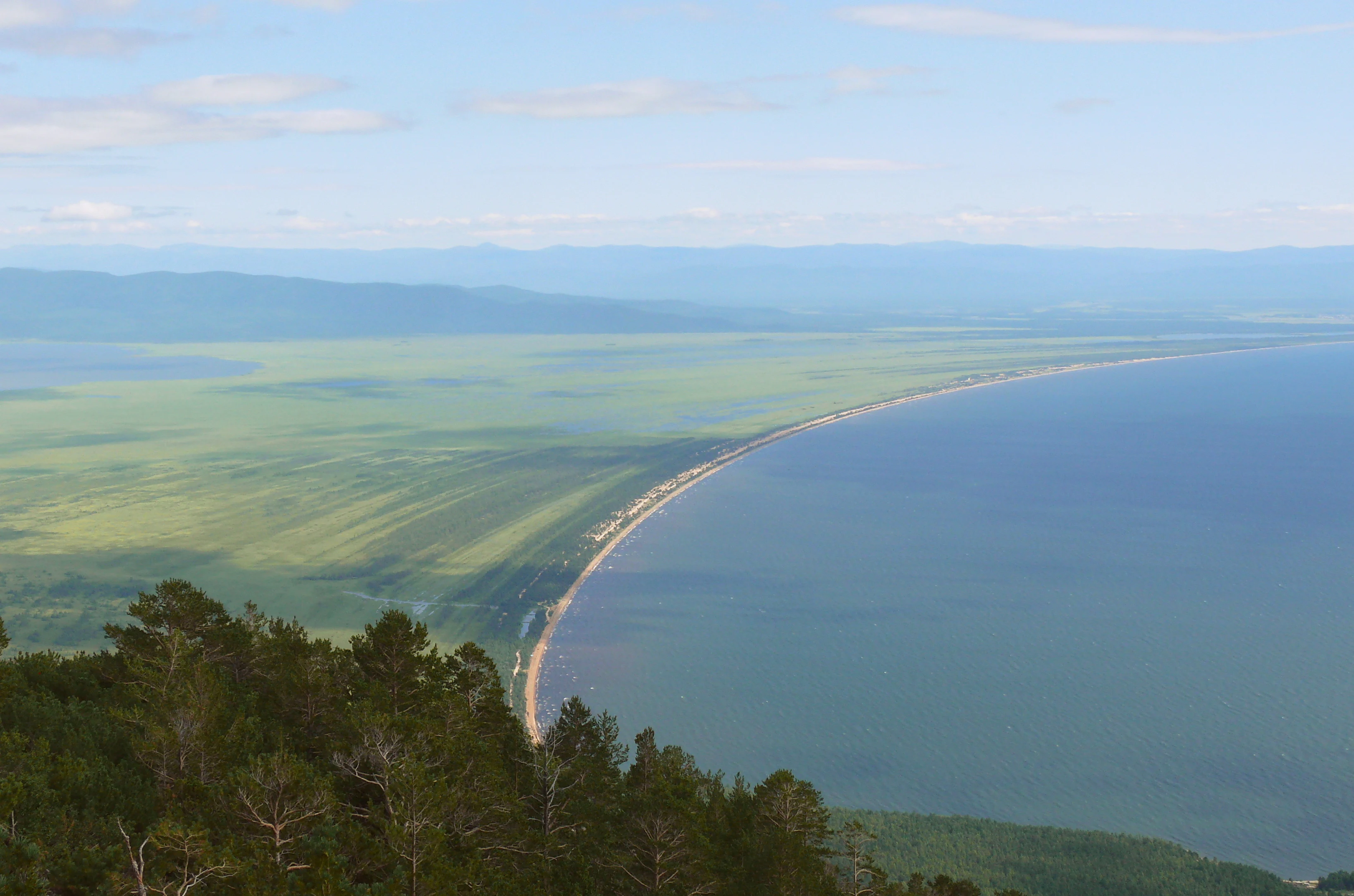
Zaybaykalsky National Park is best known for its remarkable geographic diversity along Lake Baikal, one of the world's oldest and deepest freshwater lakes. The park protects the Svyatoy Nos peninsula, the lake's only large peninsula, which offers panoramic views across the water to distant mountain ranges. The Ushkany Islands, an archipelago of four islands, serve as the central breeding ground for the Baikal seal, the only freshwater seal species in the world. The peninsula's Marokov beach features so-called "singing sand" that produces distinctive sounds when walked upon. The park's dramatic steep terrain, with 55% of its area on slopes exceeding 26 degrees, creates a rugged landscape of coniferous forests ascending from the lakeshore to alpine meadows. The Chivyrkuisky Isthmus provides a land connection between the peninsula and the mainland, while the underwater Academician Ridge links the islands to Olkhon Island in the southwest.
Zaybaykalsky National Park history and protected-area timeline

Zaybaykalsky National Park was established in 1986 to protect the distinctive landscapes and ecosystems of the Trans-Baikal region along Lake Baikal's eastern shore. The creation of this protected area reflected Soviet-era priorities for nature conservation and the recognition that the Baikal region required comprehensive protection beyond the existing Barguzin Nature Reserve to the north. The park was formed to encompass the diverse terrain between the lake shoreline and the Barguzin mountain range, including the unique Svyatoy Nos peninsula and the ecologically significant Ushkany Islands. The selection of this area for national park status acknowledged both its ecological value as part of the East Siberian taiga and its outstanding scenic qualities. Since establishment, the park has operated under the framework of Russian federal protected area legislation, managed by the Ministry of Natural Resources and Environment. The park's tourism infrastructure has developed over subsequent decades to support visitor access while maintaining protection of sensitive ecosystems, particularly the seal rookeries on the Ushkany Islands.

Zaybaykalsky National Park landscape and geographic character

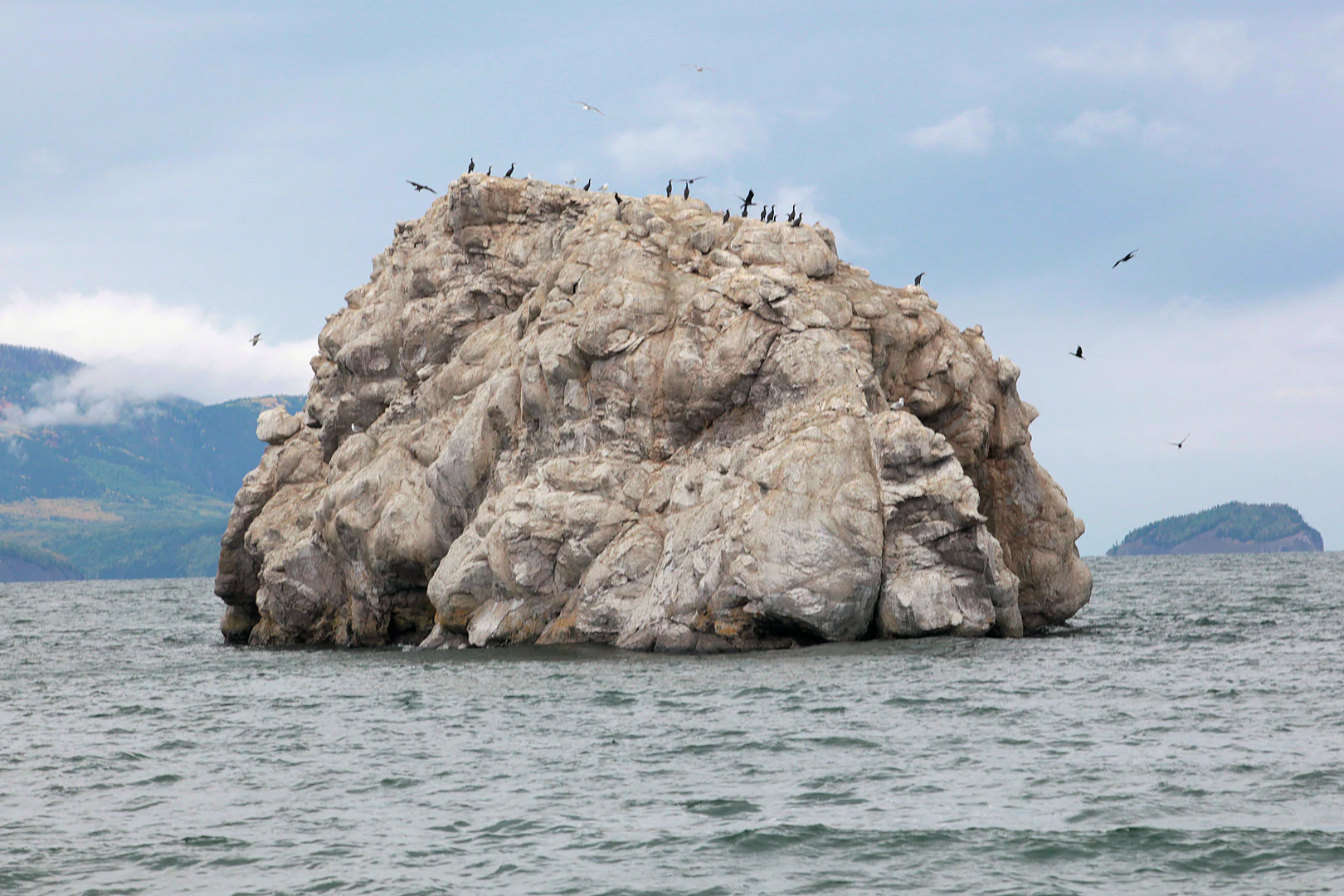
The landscape of Zaybaykalsky National Park is defined by its dramatic elevation changes from Lake Baikal's shoreline to the peaks of the Barguzin mountains. The park's topography is remarkably steep, with 55% of its area having slopes exceeding 26 degrees and an additional 28% between 16 and 25 degrees. Mt. Barmashovoe, the park's highest point, rises to 2,376 meters above sea level. The Svyatoy Nos peninsula extends 53 kilometers into Lake Baikal and is 35 kilometers at its widest, forming a distinct landform with its own mountain complex reaching 1,877 meters above sea level and 1,422 meters above the lake surface. The peninsula is connected to the mainland by the low-lying Chivyrkuisky isthmus. The Ushkany Islands, located in the middle of the lake, represent the above-water eastern extent of the submerged Academician Ridge, a geological feature that divides Lake Baikal into northern and southern basins. These four islands total approximately 10 square kilometers and are composed of marble and limestone. The peninsula's Marokov beach features the phenomenon known as "singing sand," where walking on the beach produces audible sounds. The islands contain caves with evidence of human occupation dating to the Neolithic period.
Zaybaykalsky National Park ecosystems, habitats, and plant life

Zaybaykalsky National Park lies within the East Siberian taiga ecoregion, a vast expanse of coniferous forest spanning the territory between the Yenisei and Lena Rivers. The park's sharp elevation gradients from lake shore to mountain peaks create distinct altitude zoning in vegetation. The forests are predominantly coniferous, with pine comprising 34% of tree cover, Siberian dwarf pine at 30%, Siberian pine at 14%, and larch at 9%. Approximately 10,000 hectares of old-growth forest stands persist within the park, representing relatively undisturbed examples of Eastern Siberian taiga. The subarctic climate, classified as Dwc under the Köppen system, features long very cold winters and cool summers, with the lake exerting a moderating influence on temperatures. Average January temperatures reach -18°C while July averages 23°C. Annual precipitation ranges from 450 millimeters along the lakeshore to 550 millimeters in the mountains, with prevailing winds from the south and southwest. The vegetation transitions from forest types on lower slopes through Siberian dwarf pine scrub to alpine meadows at higher elevations.

Zaybaykalsky National Park wildlife and species highlights

The fauna of Zaybaykalsky National Park represents the typical species assemblage of southern Siberian forests, with 249 bird species recorded within the territory. Large mammals include bear, wolf, fox, lynx, sable, otter, wolverine, moose, and musk deer, while smaller mammals such as squirrel, chipmunk, muskrat, and hare are widespread. The alpine meadows support the black-capped marmot. The park is particularly significant for its population of Baikal seals, the only freshwater seal species in the world, which gather in concentrations of up to 3,000 individuals on the rocks of the Ushkany Islands during summer months. The islands serve as the central breeding and hauling ground for this endemic species. Bolshoy Ushinsky island contains the largest concentration of large anthills in Russia, with thousands of nests reaching up to 1.5 meters in height. The great cormorant, once extirpated from the region, has returned to the park. The diverse habitats from lakeshore through forest to alpine zones support this variety of species.

Zaybaykalsky National Park conservation status and protection priorities

Zaybaykalsky National Park plays a crucial role in the conservation network protecting Lake Baikal's exceptional biodiversity. As an IUCN Category II protected area, the park maintains both ecological integrity and natural beauty while allowing sustainable use. The park's boundaries connect with the Barguzin Nature Reserve to the north, creating a contiguous protected corridor along Lake Baikal's eastern shore. The protection of the Ushkany Islands is particularly significant as the primary habitat for the Baikal seal, a species endemic to Lake Baikal and one of the world's few freshwater seal populations. The park's old-growth forests, spanning approximately 10,000 hectares, represent important carbon stores and biodiversity reservoirs within the East Siberian taiga. The protection of the Svyatoy Nos peninsula preserves both ecological values and outstanding scenic landscapes. The subarctic ecosystems face pressures from climate change and regional development, making the park's protected status vital for maintaining ecological processes and species populations.

Zaybaykalsky National Park cultural meaning and human context

While Zaybaykalsky National Park is primarily valued for its natural landscapes and ecological significance, the Ushkany Islands contain caves with archaeological evidence of human habitation dating to the Neolithic period. This indicates long-standing human presence in the region, though the park does not encompass significant contemporary indigenous communities or well-documented traditional cultural landscapes. The Svyatoy Nos peninsula derives its name from the Russian for "Holy Nose," reflecting historical naming conventions in the region. The park lies within Buryatia, a republic with strong ties to Tibetan Buddhism and a distinctive cultural heritage blending Siberian and Mongolian influences, though these cultural dimensions are centered in settlements outside the park's boundaries.

Top sights and standout views in Zaybaykalsky National Park

Zaybaykalsky National Park offers exceptional geographic and ecological diversity within a single protected area. The Svyatoy Nos peninsula provides the only large peninsula on Lake Baikal, creating unique vantage points for panoramic views across the lake to distant mountain ranges. The Marokov beach on the peninsula features singing sand, an unusual acoustic phenomenon. The Ushkany Islands support the world's only freshwater seal population, with summer congregations of up to 3,000 individuals. The park's dramatic steep terrain, with old-growth taiga forests ascending from the lakeshore to alpine meadows, exemplifies the East Siberian landscape. The Academician Ridge, partially visible as the Ushkany Islands, connects underwater to Olkhon Island, forming a geological feature that divides Lake Baikal into northern and southern basins. Winter visitors can experience ice fishing and cross-country skiing along the frozen lake margin.

Best time to visit Zaybaykalsky National Park

The optimal visiting season for Zaybaykalsky National Park is summer, from June through August, when average temperatures reach 23°C and the park's trails and recreational areas are fully accessible. This period offers the best conditions for hiking, wildlife viewing, and exploring the peninsula and islands. The brief summer provides the narrow window for observing Baikal seals hauled out on the Ushkany Islands. Spring and autumn provide transitional seasons with fewer visitors but more limited facilities. Winter, from December through February, offers a completely different experience with temperatures dropping to -18°C and Lake Baikal freezing solid, enabling ice fishing and cross-country skiing along the shore. The harsh subarctic climate with its long, very cold winters means that most visitor activities are concentrated in the warm season. Annual precipitation averages 450-550mm, with relatively low snowfall in winter despite the cold temperatures, creating conditions for winter recreation on the ice.
Park location guide

Geography guide, regional context, and park location map for Zaybaykalsky National Park

Zaybaykalsky National Park park geography, regions, and map view in Russia
Understand where Zaybaykalsky National Park sits in Russia through a broader geographic reading of the surrounding landscape, nearby location context, and its mapped position within the national park landscape.

How Zaybaykalsky National Park fits into Russia

Russia is a transcontinental nation spanning eleven time zones, bordered by fourteen countries. It is the world's largest country by area, covering 17,098,246 km². Moscow is the capital and largest city, while Saint Petersburg is the second-largest and a major cultural centre.

Wider geography shaping Zaybaykalsky National Park in Russia

Russia spans Eastern Europe and North Asia, covering 17,098,246 km². It shares land borders with fourteen countries, more than any other nation, and spans eleven time zones. The landscape includes vast plains, mountain ranges such as the Urals and Caucasus, and extensive coastlines along the Arctic Ocean, Pacific Ocean, Baltic Sea, Black Sea, and Caspian Sea.

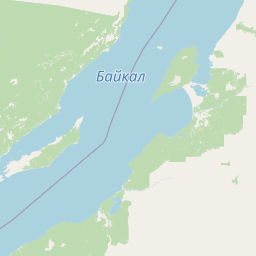
Map view of Zaybaykalsky National Park

Use this park location map to pinpoint Zaybaykalsky National Park in Russia, understand its exact geographic position, and read its mapped placement within the surrounding landscape more clearly.

Pigeon | © OpenStreetMap contributors

Location context for Zaybaykalsky National Park

Buryatia
Park atlas

Trace nearby protected landscapes and geographic context around Zaybaykalsky National Park in Eastern Siberia.

Explore Nearby National Parks and Protected Areas Beyond Zaybaykalsky National Park
Explore national parks and protected areas geographically close to Zaybaykalsky National Park, including other sites along Lake Baikal or within the expansive East Siberian taiga ecoregion. Comparing these protected landscapes provides valuable context for understanding regional conservation efforts and mapping diverse terrains across Eastern Siberia.
Watercolor illustration showing a lake, green vegetation, and mountains under a light sky
National parkIrkutsk Oblast

Pribaikalsky National Park: A Protected Siberian Landscape on Lake Baikal's Shores

Explore mapped boundaries and regional geography.

Pribaikalsky National Park is a key protected area in Irkutsk Oblast, critical for conserving the biodiversity and unique topography of Lake Baikal. This national park encompasses dramatic mountain terrain, coastal landscapes, and the significant Olkhon Island, offering a detailed geographic study for atlas exploration. Discover the mapped extent of this important natural reserve and its role in preserving one of Earth's most exceptional freshwater ecosystems and its surrounding Siberian environment.

Area
4,173 km²
Established
1986
IUCN
II
Visitors
400K annual
Watercolor illustration depicting layered mountains, green hills, and forested areas with purple and pink tones
National parkZabaykalsky Krai

Alkhanay National Park

Sacred Mountain & Forest Steppe

Alkhanay National Park in Russia protects a landscape where Siberian taiga meets Mongolian steppe. Explore its sacred Mount Alkhanai, diverse terrain, and protected natural features within a unique geographic setting.

Area
1,382 km²
Established
1999
IUCN
II
National parkZabaykalsky Krai

Chikoy National Park: Protected National Park with Highland Landscape and River Basin Geography

Explore its protected boundaries and unique taiga-steppe transition in Zabaykalsky Krai.

Chikoy National Park, a protected area in Russia's Zabaykalsky Krai, showcases the rugged geography of the Khentei-Daur Highlands. As a national park, it preserves the upper Chikoy River basin and represents a significant ecological borderland, marking the transition from Siberian taiga to Mongolian steppe. This page facilitates a structured understanding of the park's mapped landscape, its prominent natural monument Bystrinsky Golets, and its role within the broader atlas of protected natural areas.

Area
6,665 km²
Established
2014
IUCN
II
Relief
Mountain
National parkBuryatia

Tunkinsky National Park National Park: Protected Landscape and Geographic Context in Buryatia

Discover mapped park boundaries and regional terrain.

Delve into Tunkinsky National Park, a significant protected national park situated in the Buryatia region of Russia. This detail page provides a geographic overview, highlighting the park's mapped boundaries and its place within the surrounding natural landscape. Understand its designation as a protected area, offering a focused entry point for atlas-based discovery of its specific terrain and regional importance.

Area
11,837 km²
IUCN
II
Relief
Mountain
Climate
Boreal
National parkZabaykalsky Krai

Kodar National Park: Protected National Park with Zabaykalsky Krai Geographic Context

Atlas exploration of mapped boundaries and regional landscape.

Delve into the protected landscape of Kodar National Park, a significant national park located in Zabaykalsky Krai, Russia. This resource provides detailed insights into its geographic setting, offering users a clear view of its mapped boundaries and its position within the regional atlas. Understand the protected-area nature of Kodar National Park and its contribution to the mapped natural landscapes of its geographical vicinity.

Area
4,917 km²
Established
2016
IUCN
II
Relief
Mountain
National parkKrasnoyarsk Krai

Krasnoyarsk Pillars National Park: Geographic Atlas and Protected Landscape Exploration

Discover mapped terrain and regional park context in Siberia.

This detailed entry for Krasnoyarsk Pillars National Park offers an in-depth look at its identity as a protected landscape within Krasnoyarsk Krai. It provides structured geographic information, focusing on mapped boundaries and the park's position within the vast Siberian terrain. Users can leverage this data for atlas exploration, gaining a clear understanding of the park's physical dimensions and its role in the regional geography of Russia. Explore the unique landscape character and mapped context of this significant national park.

Area
471.54 km²
Established
2019
IUCN
II
Visitors
200K annual
Watercolor painting of green trees, rolling hills, a pink and yellow sunset sky, and a single tree on the right
National parkKrasnoyarsk Krai

Shushensky Bor National Park: Mapped Geography of a Siberian Protected Forest

Explore the protected landscape and regional context of Krasnoyarsk Krai.

Shushensky Bor National Park serves as a critical protected area within the vast geography of Krasnoyarsk Krai, Russia, offering detailed insights into Siberia's ecological transition zones. This national park meticulously maps the shift from the Minusinsk basin forest-steppe to the dramatic mountain taiga of the Western Sayan range. Users can explore its varied terrain, from gentler northern steppe-influenced lands to the rugged slopes of the Borus Massive, all within a defined protected landscape. The proximity to the Sayano-Shushenskoye Reservoir further defines its unique geographic setting, providing context for its conservation importance and natural beauty.

Area
392 km²
Established
1995
IUCN
II
Relief
Mountain
National parkAmur Oblast

Tokinsko-Stanovoy National Park: Protected Landscape Geography and Atlas Context

National Park in Amur Oblast, Russia

Delve into the specifics of Tokinsko-Stanovoy National Park, a designated national park within Amur Oblast. This entry provides essential context on its protected landscape characteristics and its place in the regional geography. Understand the park's mapped boundaries and discover its natural terrain as part of a larger atlas-driven exploration of protected areas in the Russian Far East.

Area
2,430 km²
Established
2019
IUCN
II

Common questions about visiting, size, designation, and location context for Zaybaykalsky National Park

Zaybaykalsky National Park FAQs for park facts, access, geography, and protected area context
Find quick answers about Zaybaykalsky National Park, including protected-area facts, park geography, trail and visitor context, and how the park fits into its surrounding country and regional landscape.
MoriAtlas Explorer

Continue Your Protected Areas Search Across the Global Atlas

Deepen your exploration by continuing the structured search for national parks and protected areas worldwide. Utilize the comprehensive filtering capabilities to compare different conservation landscapes and refine your understanding of global park geography. Discover more about the distribution and characteristics of protected natural areas.

Global natural geography