Mori Atlas logo
National parkAlaungdaw Kathapa National Park

Understanding the geographic identity and protected landscape of this national park.

Alaungdaw Kathapa National Park: Mapped Protected Area in Sagaing Region, Myanmar

Alaungdaw Kathapa National Park represents a significant protected landscape within the Sagaing Region of Myanmar. As a designated national park, its primary focus is the preservation of natural terrain and ecological significance. This entry provides detailed atlas-style context, focusing on the park's mapped boundaries and its role within the regional geography, offering a clear geographic perspective for exploration and understanding.

ASEAN Heritage ParkNational ParkMyanmar Protected AreaMixed Deciduous ForestEvergreen ForestPine Forest

Alaungdaw Kathapa National Park

National park

Park overview

Structured park overview, official facts, and landscape profile for Alaungdaw Kathapa National Park

Alaungdaw Kathapa National Park park facts, protected area profile, and essential visitor context
Review the core facts for Alaungdaw Kathapa National Park, including designation, size, terrain, visitor scale, habitats, and operating context in one park-focused overview.

About Alaungdaw Kathapa National Park

Alaungdaw Kathapa National Park represents one of Myanmar's premier protected areas, encompassing a diverse landscape of forested mountains and river valleys in the country's northern Sagaing Region. The park straddles the Kani and Mingin Townships, occupying a strategic position between two of Myanmar's major river systems, the Chindwin and Myittha Rivers. This geographic positioning contributes to the park's ecological diversity, supporting multiple forest types across its elevation gradient. The protected area was formally established following surveys conducted in the early 1980s by the Food and Agriculture Organization and the United Nations Development Programme, which identified the region as suitable for national park status. Originally proposed at a larger extent of over 1,600 square kilometers, the final gazetted area was reduced to approximately 617 square kilometers, though current reporting indicates a functional area of around 542 square kilometers. The park's designation as an ASEAN Heritage Park reflects its significance not only within Myanmar but across the broader Southeast Asian region, recognizing the biodiversity value it protects.

Quick facts and research context for Alaungdaw Kathapa National Park

Alaungdaw Kathapa National Park is located in Sagaing Region of northern Myanmar, occupying terrain between the Chindwin and Myittha Rivers. The protected area covers roughly 542 square kilometers and was officially established as a national park in 1989, though its conservation history dates back to 1893 when it was first designated as a reserved forest. The park features elevations ranging from 135 to 1,335 meters and is managed by Myanmar's Nature and Wildlife Conservation Division. It is recognized as an ASEAN Heritage Park, highlighting its regional importance for biodiversity conservation.

Park context

Deeper park guide and search-rich context for Alaungdaw Kathapa National Park

Alaungdaw Kathapa National Park history, landscape, wildlife, and travel context
Explore Alaungdaw Kathapa National Park through its history, landscape character, ecosystems, wildlife, conservation priorities, cultural context, and seasonal travel timing in a structured park guide built for atlas discovery and search intent.

Why Alaungdaw Kathapa National Park stands out

Alaungdaw Kathapa National Park is best known for its extensive mixed deciduous, evergreen, and pine forests that shelter a remarkable diversity of wildlife. The park supports significant populations of Asian elephants, as well as other notable species including gaur, Himalayan black bear, sun bear, dhole, and leopard. It hosts over 165 tree species and 39 medicinal plant species, making it botanically rich. The discovery of the bent-toed gecko Cyrtodactylus annandalei as a new species within the park in 2000 further underscores its importance for herpetological diversity.

Alaungdaw Kathapa National Park history and protected-area timeline

The conservation history of Alaungdaw Kathapa National Park spans more than a century, beginning in 1893 when this mountainous region between the Chindwin and Myittha Rivers was first declared a reserved forest known as the Patolon Reserved Forest. During this early period, the forest was subject to selective logging operations focused on teak extraction, though the mountainous terrain limited extensive disturbance to the area. The region remained relatively undisturbed through the mid-twentieth century, maintaining its ecological integrity despite historical logging activities. In the early 1980s, surveyors from the Food and Agriculture Organization and the United Nations Development Programme, invited by the Government of Myanmar to assist in identifying suitable areas for national parks and nature reserves, visited the area and recognized its exceptional conservation potential. Their 1984 proposal recommended establishing a tract of approximately 1,606 square kilometers as Alaungdaw Kathapa National Park. The name chosen for the park honors a legendary monk who lived in the area during historical times, connecting the protected landscape to Myanmar's cultural heritage. The national park was officially gazetted in 1989 with a demarcated area of 617 square kilometers, though subsequent reporting by Myanmar's Ministry of Natural Resources and Environmental Conservation indicates the current area as approximately 541.6 square kilometers.

Alaungdaw Kathapa National Park landscape and geographic character

Alaungdaw Kathapa National Park occupies a mountainous landscape characterized by rugged terrain and significant elevation variation. The park spans elevations from approximately 443 feet at its lowest points to 4,380 feet at higher elevations, creating diverse microclimates and habitat conditions across its extent. Located between two major river systems, the Chindwin and Myittha Rivers, the park encompasses valleys, ridges, and forested slopes that define its physical character. The landscape supports multiple forest types, including mixed deciduous forest, evergreen forest, and pine forest, each contributing to the visual and ecological diversity of the protected area. The combination of elevation range, river proximity, and forest diversity creates a landscape of considerable topographic and ecological complexity.

Alaungdaw Kathapa National Park ecosystems, habitats, and plant life

The ecological character of Alaungdaw Kathapa National Park is defined by its diverse forest communities and the biodiversity they support. The park contains three primary forest types: mixed deciduous forest, evergreen forest, and pine forest, each providing distinct habitat conditions for different species assemblages. Botanical surveys have documented 165 tree species within the park, alongside 39 species of medicinal plants, indicating significant floristic diversity. This forest composition places the park among Myanmar's botanically rich protected areas. The elevation range from 135 to 1,335 meters supports ecological zonation, with different species adapted to various altitude bands. As an ASEAN Heritage Park, the area is recognized for maintaining ecological processes and biodiversity of regional significance.

Alaungdaw Kathapa National Park wildlife and species highlights

Alaungdaw Kathapa National Park supports a notable assemblage of mammalian species, with surveys and camera trap recordings documenting diverse fauna. The park is home to Asian elephants, with population estimates ranging from 2 to 41 individuals based on dung surveys conducted in 2003. Other significant mammals include gaur, Himalayan black bear, sun bear, dhole, sambar deer, Indian muntjac, wild boar, and Indian crested porcupine. Camera trap surveys in 1999 recorded additional species including yellow-throated marten, Asian palm civet, large Indian civet, small Indian civet, hog badger, crab-eating mongoose, leopard, Asiatic golden cat, and leopard cat. The park also supportsreptile diversity, most notably the discovery of the bent-toed gecko Cyrtodactylus annandalei in 2000, described as a new species in 2003. This gecko is sympatric with Cyrtodactylus slowinskii within the park, alongside several other gecko species including Oriental leaf-toed gecko, Brooke's house gecko, common house gecko, Indo-Pacific gecko, and flat-tailed house gecko.

Alaungdaw Kathapa National Park conservation status and protection priorities

Alaungdaw Kathapa National Park holds significant conservation importance both within Myanmar and across Southeast Asia. Its designation as an ASEAN Heritage Park places it among a select group of protected areas recognized for their exceptional biodiversity value and ecological significance at the regional level. The park protects substantial tracts of mixed deciduous, evergreen, and pine forests that otherwise face pressure from logging and agricultural expansion in Myanmar. The presence of viable Asian elephant populations within the park underscores its importance for flagship species conservation, while the documented diversity of carnivores, including leopard, Asiatic golden cat, and dhole, indicates a functioning predator-prey system. The discovery of new species within its boundaries, such as Cyrtodactylus annandalei, demonstrates the park's continued relevance for biodiversity discovery and scientific study. Management under Myanmar's Nature and Wildlife Conservation Division provides institutional framework for ongoing protection.

Alaungdaw Kathapa National Park cultural meaning and human context

The name Alaungdaw Kathapa carries cultural significance, honoring a legendary monk who historically lived in the mountainous region now protected by the park. This naming connects the protected landscape to Myanmar's spiritual and religious heritage, reflecting the traditional relationship between sacred sites and natural environments in Burmese culture. The park's location in Sagaing Region places it within an area of historical and cultural importance in northern Myanmar, though the primary value of the source material focuses on ecological rather than cultural dimensions.

Top sights and standout views in Alaungdaw Kathapa National Park

Alaungdaw Kathapa National Park stands out as one of Myanmar's oldest and most significant protected areas, with conservation history dating to 1893. The park's ASEAN Heritage Park status reflects its regional importance for biodiversity conservation. Its forest diversity, supporting 165 tree species, combined with mammalian diversity including Asian elephants, gaur, and leopards, creates a ecologically significant protected landscape. The discovery of new gecko species within its boundaries demonstrates ongoing scientific importance. The mountainous terrain between the Chindwin and Myittha Rivers provides scenic and ecological diversity uncommon among Myanmar's protected areas.

Best time to visit Alaungdaw Kathapa National Park

The optimal time to visit Alaungdaw Kathapa National Park aligns with Myanmar's dry season, typically from November to February, when cooler temperatures and reduced rainfall facilitate wildlife observation and forest exploration. The wet season from May to September brings heavier precipitation that can affect accessibility and visibility within the park's mountainous terrain. The transition months of March and April offer warmer conditions but may provide different wildlife viewing opportunities as vegetation becomes less dense. Visitors interested in elephant sightings should note that population estimates remain low, with between 2 and 41 individuals estimated in the park.

Park location guide

Geography guide, regional context, and park location map for Alaungdaw Kathapa National Park

Alaungdaw Kathapa National Park park geography, regions, and map view in Myanmar
Understand where Alaungdaw Kathapa National Park sits in Myanmar through a broader geographic reading of the surrounding landscape, nearby location context, and its mapped position within the national park landscape.

How Alaungdaw Kathapa National Park fits into Myanmar

Myanmar is a Southeast Asian country with a rich history dating back to the Pagan Kingdom era. It is the largest country by area in Mainland Southeast Asia and is characterized by diverse ethnic groups, with the Bamar as the majority. The country operates under a military-led government and uses the Burmese language as its official language.

Wider geography shaping Alaungdaw Kathapa National Park in Myanmar

Myanmar is located in northwest Southeast Asia, bordered by India and Bangladesh to the northwest, China to the northeast, Laos and Thailand to the east and southeast, and the Andaman Sea and Bay of Bengal to the south and southwest. The terrain includes mountains, plains, and river valleys centered around the Irrawaddy River.

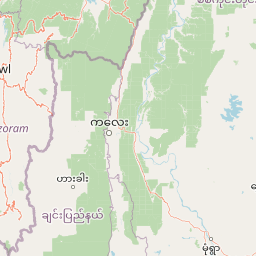
Map view of Alaungdaw Kathapa National Park

Use this park location map to pinpoint Alaungdaw Kathapa National Park in Myanmar, understand its exact geographic position, and read its mapped placement within the surrounding landscape more clearly.

Pigeon | © OpenStreetMap contributors

Location context for Alaungdaw Kathapa National Park

Sagaing Region
Park atlas

Trace the regional park geography and protected landscape spread surrounding Alaungdaw Kathapa National Park.

Discover More National Parks and Protected Areas Near Alaungdaw Kathapa National Park
Explore additional national parks and protected areas geographically associated with Alaungdaw Kathapa National Park, tracing connected conservation landscapes across the surrounding region in Myanmar. This broader geographic context enables users to compare diverse protected habitats, understand regional ecosystem variations, and plan further atlas-based park discovery efficiently.
National parkChin State

Natmataung National Park: Protected Mountain Landscape and Biodiversity Atlas in Chin State

Explore the mapped terrain and elevational gradients of Mount Victoria.

Natmataung National Park, located in Chin State, Myanmar, offers a profound encounter with dramatic mountainous terrain and exceptional biodiversity. As a protected national park, it safeguards Mount Victoria, the highest peak in the region, and a remarkable ecological gradient spanning diverse forest types. This page provides an atlas-focused view of its geography, highlighting the steep ridgelines, deep valleys, and unique habitats that define this significant protected landscape and its role in watershed protection.

Area
723 km²
Established
2010
IUCN
II
Relief
Mountain
National parkIndia

Phawngpui National Park: An Indian National Park's Protected Landscape and Geography

Explore its mapped boundaries and regional natural terrain.

Phawngpui National Park stands as a distinct protected area within India, contributing significantly to the nation's atlas of natural landscapes. Its designation as a national park underscores its importance for understanding regional geography and mapped terrain. This profile focuses on the park's specific protected-area identity and its role in the broader geographic context of India, offering clear insights for landscape and park map discovery.

Area
50 km²
Established
1992
IUCN
II
Visitors
469 annual
National parkChamphai

Murlen National Park: Mapped Protected Landscape and Regional Geographic Context

National Park discovery in Champhai, India.

Delve into the specifics of Murlen National Park, a key protected area situated in the Champhai region. This entry focuses on its identity as a National Park, providing critical information about its geographic placement and mapped boundaries. Understanding Murlen National Park within its regional landscape context is fundamental for comprehensive atlas-based exploration of India's protected areas.

Area
200 km²
Established
1991
IUCN
II
Relief
Mountain
National parkManipur

Shirui National Park: Detailed Protected Landscape and Regional Geography in Manipur

Mapped boundaries and atlas context for this national park.

Shirui National Park serves as a vital protected area within the state of Manipur, offering a unique focal point for geographic exploration. This profile details its identity as a national park, emphasizing its mapped boundaries and landscape context. For users interested in atlas-based discovery and understanding the distribution of protected lands, Shirui National Park provides critical data on regional geography and conservation. Examine its position within India's natural terrain and protected area network.

Area
41.3 km²
Established
1982
IUCN
II
Relief
Mountain
National parkRangamati District

Kaptai National Park: Protected Landscape and Geographic Context in Rangamati District

Explore its mixed evergreen forest and lakeside terrain.

Kaptai National Park is a crucial protected area located in Bangladesh's Rangamati District, renowned for its mixed evergreen forests and unique position adjacent to Kaptai Lake. This detail page provides an atlas-oriented perspective on the park's geographic identity, mapped boundaries, and its role within the diverse Chittagong Hill Tracts region. Understand the terrain, from rolling hills to lakeside environments, and appreciate its conservation significance as a national park.

Area
54.64 km²
Established
1999
IUCN
II
Climate
Subtropical
National parkManipur

Keibul Lamjao National Park: Mapped Boundaries and Protected Landscape Identity

Explore Manipur's unique national park geography and terrain.

Keibul Lamjao National Park represents a key protected area within the state of Manipur, India, offering critical insights into regional geography and protected landscape dynamics. This national park's unique environmental setting provides an excellent opportunity for structured atlas exploration, allowing users to understand its mapped boundaries and its significance within the subcontinent's network of conservation areas. Discover the specific geographic context and natural terrain that define Keibul Lamjao National Park.

Area
40 km²
Established
1977
IUCN
II
Relief
Lowland
National parkCox's Bazar District

Medhakachhapia National Park: Protected Mangrove Landscape and Geography in Cox's Bazar

Mapping the boundaries of a unique coastal Bangladesh National Park.

Medhakachhapia National Park is a distinct protected area in Cox's Bazar District, Bangladesh, renowned for its old-growth Rhizophora apiculata mangrove forest. Spanning approximately 396 hectares, it serves as a crucial habitat and represents a specific type of tropical coastal landscape. This park's designation as a national park highlights its conservation importance, particularly its role in protecting some of Bangladesh's most mature mangrove stands. Explore its geographic context and protected status for a deeper understanding of its natural landscape.

Area
3.959 km²
Established
2008
IUCN
IV
Relief
Lowland
National parkBangladesh

Himchari National Park: A Protected National Park within Bangladesh's Delta Geography

Mapped protected area and landscape context in South Asia.

Himchari National Park represents a vital protected natural area contributing to the rich geography of Bangladesh. As a national park, it offers users a focal point for understanding mapped landscapes and the distribution of conservation lands within the South Asian delta region. Exploring this entity provides insight into the country's protected areas and their unique environmental settings for structured atlas discovery.

Area
17.29 km²
Established
1980
IUCN
IV
Relief
Upland

Common questions about visiting, size, designation, and location context for Alaungdaw Kathapa National Park

Alaungdaw Kathapa National Park FAQs for park facts, access, geography, and protected area context
Find quick answers about Alaungdaw Kathapa National Park, including protected-area facts, park geography, trail and visitor context, and how the park fits into its surrounding country and regional landscape.
MoriAtlas Explorer

Continue Your Protected Areas Search Across the Global Atlas

Deepen your exploration by continuing the structured search for national parks and protected areas worldwide. Utilize the comprehensive filtering capabilities to compare different conservation landscapes and refine your understanding of global park geography. Discover more about the distribution and characteristics of protected natural areas.

Global natural geography