Why Altyaghach National Park stands out
Altyaghach National Park is best known for its extensive temperate deciduous broadleaved forests, which dominate the landscape and represent a significant conservation value within the Caucasus region. The park protects populations of the East Caucasian tur, a rare mountain-dwelling goat antelope found only in the eastern half of the Caucasus Mountains. It also provides habitat for several other notable species including lynx and brown bear, both protected under Azerbaijan's Red Book. The forest composition is distinctive, featuring species such as Persian Ironwood, Caucasian Oak, and Oriental Beech that characterize the southern Caucasus ecological zone.
Altyaghach National Park history and protected-area timeline
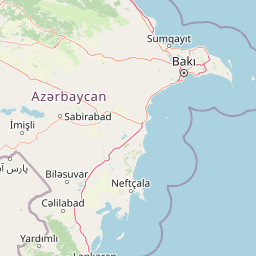
Altyaghach National Park was formally established on August 31, 2004, through official government action to protect the natural landscapes of the Greater Caucasus southeastern slopes in Azerbaijan. The park was created on the territorial foundation of the former Altyaghach State Nature Reserve, which had already provided a degree of protection to the area's ecosystems, combined with surrounding state forest fund lands that were incorporated into the new protected area. The establishment of the park reflected Azerbaijan's broader commitment to biodiversity conservation and sustainable natural resource management in the post-Soviet period. The founding mandate specifically identified the restoration of flora and fauna diversity as a primary objective, acknowledging that the region had experienced ecological pressures from human activity and land-use changes. The park's creation also aligned with national strategies to develop environmental education opportunities and promote eco-tourism in appropriate settings.
Altyaghach National Park landscape and geographic character
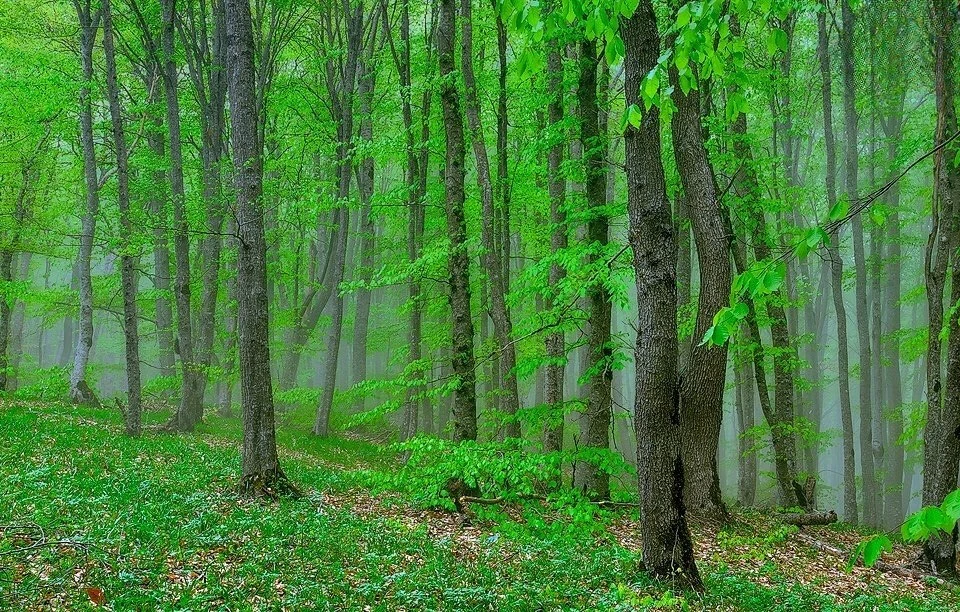
The landscape of Altyaghach National Park is characterized by its position on the southeastern slopes of the Greater Caucasus Mountains, featuring rolling to steep terrain that rises from lower elevations toward the mountain proper. The park's elevation gradient creates varied microclimates and habitat conditions across its extent. Forest dominates the visual character of the area, with dense deciduous broadleaved stands covering approximately 90% of the terrain. The forest canopy creates a layered landscape of mature trees, understory vegetation, and forest floor. The park sits at approximately 941 meters in elevation at its higher points, with the terrain supporting diverse vegetation communities that transition with changing elevation and aspect. The landscape represents a typical Caucasus mountain-forest environment, with well-developed soils supporting the extensive tree cover.
Altyaghach National Park ecosystems, habitats, and plant life
The nature of Altyaghach National Park is defined by its extensive temperate deciduous broadleaved forests, which represent the dominant ecological characteristic of the protected area. About 90.5% of the park's territory is covered by these forest ecosystems, making it one of the more heavily forested protected areas in Azerbaijan. The forest composition includes several tree species of particular significance: Persian Ironwood forms a distinctive component of the canopy, while Caucasian Oak, Caucasian Ash, European Hornbeam, Oriental Hornbeam, Oriental Beech, Silver Birch, and White Birch create a diverse forest structure. The understory supports various shrub species including Various-Leaved Hawthorn, Dog Rose, and Blackberry. The park's climate exhibits characteristics of both winter-dry mild-hot and summer-dry mild-hot types, with average annual temperatures around 10.1°C and annual precipitation of approximately 430 millimeters. This climate regime supports the deciduous forest ecosystem despite moderate moisture limitations.
Altyaghach National Park wildlife and species highlights
The wildlife of Altyaghach National Park includes several mammal species of conservation significance within the Caucasus region. The East Caucasian tur represents the park's most notable faunal element, a mountain-dwelling goat antelope species endemic to the eastern Caucasus that inhabits the rocky terrain and alpine meadows. Other significant mammals include lynx, a secretive feline predator of the forests, and brown bear, which occupies the deeper forest areas. The park supports populations of wild boar, wolf, golden jackal, jungle cat, red fox, roe deer, badger, and otter. The Azerbaijani source indicates that the region's fauna is somewhat less diverse than other parts of the Greater Caucasus, primarily due to increased human activity and poaching in the surrounding areas. Several species found in the park are listed in Azerbaijan's Red Book, including the brown bear and steppe eagle, indicating their protected status at the national level. The park also supports various bird species including grey partridge, quail, and birds of prey such as the steppe eagle.
Altyaghach National Park conservation status and protection priorities
Altyaghach National Park serves as an important conservation area within Azerbaijan's protected area system, focusing on the preservation of temperate deciduous forest ecosystems that have been degraded in many surrounding lowland areas. The park was established specifically to restore and protect the rich diversity of flora and fauna in the Greater Caucasus southeastern slopes region. Conservation objectives include maintaining the integrity of existing forest communities, supporting populations of rare and endemic species such as the East Caucasian tur, and restoring degraded habitats where possible. The park's management framework incorporates ecological monitoring activities and aims to balance conservation with sustainable tourism and recreation uses. The protection of this area also contributes to broader regional conservation goals, as the Caucasus Mountains represent a critical biodiversity hotspot supporting numerous endemic species with limited global distributions.
Altyaghach National Park cultural meaning and human context
Altyaghach National Park occupies a region that has been part of the broader Caucasus landscape where human communities and natural ecosystems have interacted over generations. The park's name, Altıağac, reflects the Azerbaijani terminology for the area. The surrounding Khizi and Siazan districts have traditional connections to the land, though the specific cultural heritage dimension of the park itself is not extensively documented in available sources. The establishment of the protected area has influenced land-use patterns in the region, shifting from potential forest exploitation toward conservation-focused management. The park's proximity to Baku positions it as a potential destination for environmental education and nature-based recreation for the capital's population, creating connections between urban communities and the natural heritage of the Caucasus region.
Top sights and standout views in Altyaghach National Park
Altyaghach National Park offers visitors an opportunity to experience the forests of the Greater Caucasus in a protected setting, with the park's extensive deciduous stands representing a relatively intact forest ecosystem within Azerbaijan. The presence of East Caucasian tur provides potential for wildlife observation of this rare endemic species, while the diverse forest composition creates seasonal interest as trees change through the year. The park's elevation provides a cooler mountain environment compared to the lowlands, offering escape from summer heat. The combination of forest protection, species conservation, and recreation potential makes the park a representative example of Caucasus mountain conservation in Azerbaijan.
Best time to visit Altyaghach National Park
The best time to visit Altyaghach National Park would be during the spring and summer months when the forest is in full foliage and wildlife is more active. The spring season brings new growth to the deciduous trees and provides good conditions for observing the park's flora. Summer offers warm temperatures appropriate for exploring the trail networks and experiencing the forest environment. Autumn can also be rewarding as the deciduous trees display fall coloration, creating distinctive visual interest throughout the forest. Winter conditions would be more challenging due to colder temperatures and potentially reduced access, though the forest structure remains visible. The park's location at moderate elevation means it can be visited throughout the warmer months of the year.