Why Bieszczady National Park stands out
Bieszczady is best known for its extensive old-growth beech forests that form part of a UNESCO World Heritage inscription, its population of large carnivores including brown bears, wolves, and lynx, and the distinctive połoniny alpine meadows that create a mosaic of open grassland amid forested peaks. The park is distinguished by its remarkable wilderness character, sparsely populated with less than one person per square kilometer, allowing wildlife to roam freely across a landscape that has largely escaped intensive development. The Eurasian lynx serves as the park's emblematic species, symbolizing the wild character of this Carpathian refuge. The park also contains Poland's largest wild mountain herd of European bison, numbering around 280 individuals.
Bieszczady National Park history and protected-area timeline
Bieszczady National Park was established in 1973, initially covering 59.55 square kilometers centered on the Tarnica, Krzemień, and Halicz massifs along with the sub-summit areas of Połonina Caryńska. The concept of a national park in the Bieszczady region had been discussed since the mid-1950s, and prior to formal establishment, the połoniny grassland areas had been administered by the Tatra National Park as potential summer grazing grounds for sheep from the Podhale region.
The park was enlarged four times: in 1989, 1991, 1996, and 1999. The 1996 expansion incorporated the former villages of Bukowiec, Beniowa, and Carynskie, while the 1999 addition brought Dzwiniacz, Tarnawa, and Sokoliki into the park's boundaries. These expansions reflected a growing recognition of the need to protect the broader ecological values of the Bieszczady region.
In 1992, the park became part of the East Carpathian Biosphere Reserve under UNESCO auspices, a transboundary conservation initiative linking protected areas in Poland, Slovakia, and Ukraine. That same year, the park received its first visitors to its newly established nature museum in Ustrzyki Dolne. In 1998, Bieszczady became only the second protected area in Poland—after Białowieża National Park—to receive the European Diploma from the Council of Europe, recognizing outstanding conservation achievements. The park was inscribed on the UNESCO World Heritage List in 2007 as part of the Ancient and Primeval Beech Forests of the Carpathians and Other Regions of Europe, with extensions added in 2011, 2017, and 2021, the latter specifically including Bieszczady's beech forest components.
Bieszczady National Park landscape and geographic character
Bieszczady National Park protects the high mountain terrain of the Polish Carpathians, characterized by a series of parallel ridges and deep valley systems that define the Western Bieszczady landscape. The park's highest peak, Tarnica, rises to 1,346 meters above sea level, while several other summits exceed 1,300 meters, including Krzemień (1,335 meters) and Halicz (1,333 meters). The terrain is predominantly composed of sandstone and flysch geological formations that have been shaped by glacial and periglacial processes.
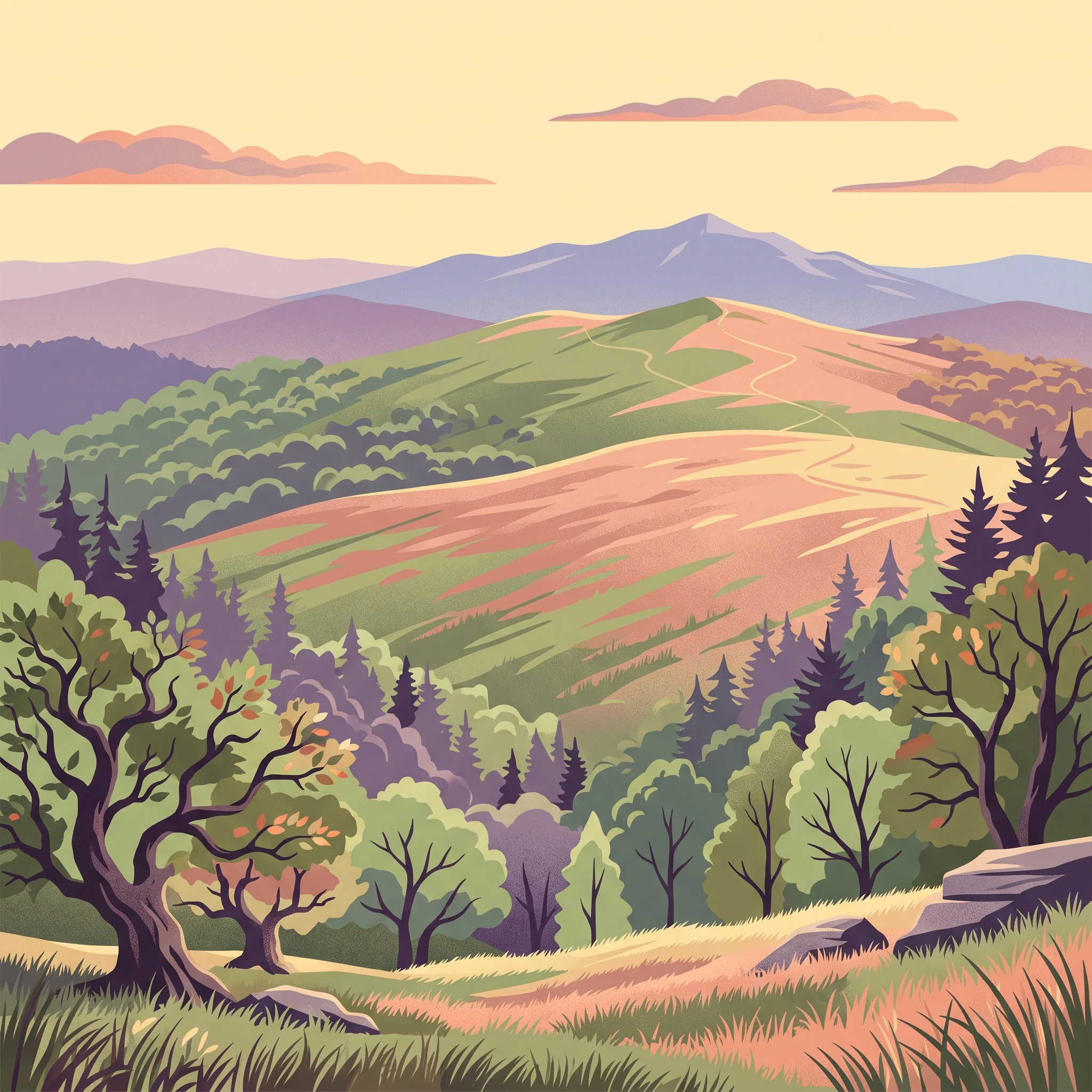
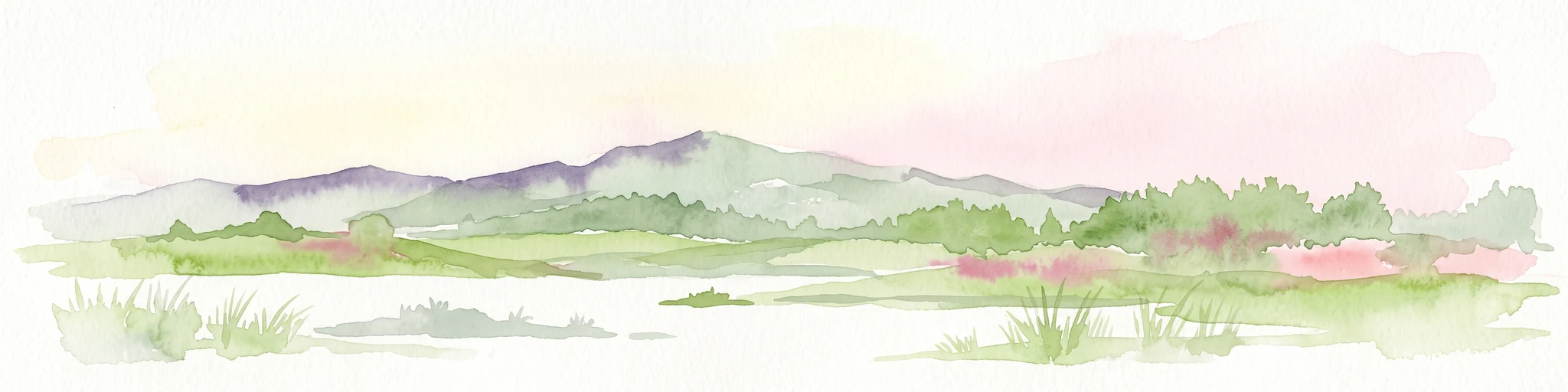
The landscape exhibits a clear vertical zonation of vegetation and land cover. Below approximately 1,150 to 1,250 meters, the slopes are covered in forest—primarily beech forests in the lower zones transitioning to mixed forests with spruce, fir, and maple at higher elevations. Above the treeline, the distinctive połoniny open, the park's signature Carpathian grassland meadows. These open alpine meadows, covering approximately 1,800 hectares, create a dramatic contrast to the surrounding forested slopes and represent a cultural and ecological landscape shaped historically by transhumance grazing practices.
The park contains numerous stream valleys radiating from the main ridgelines, with the upper San River valley representing one of the most significant. The combination of steep terrain, exposed ridgelines, forested slopes, and open meadows creates a visually diverse landscape that is characteristic of the Eastern Carpathian mountain system.
Bieszczady National Park ecosystems, habitats, and plant life
The ecological character of Bieszczady National Park is defined by its position at the intersection of multiple biogeographic influences and its extensive old-growth forest ecosystems. The park protects nearly 80% of its area with natural forest cover, of which approximately 15% consists of old-growth stands with a primeval character—among the most significant remaining examples of such forests in the Polish Carpathians. These forests, dominated by European beech alongside gray alder, sycamore maple, spruce, and fir, represent the full range of Carpathian forest communities and have been recognized as worthy of World Heritage status.
Above the tree line, the park protects the unique Carpathian połoniny ecosystem—a grassland and heath community found only in the Eastern Carpathians. These alpine meadows, covering roughly 1,800 hectares, represent a semi-natural landscape that developed through centuries of traditional grazing but has been maintained through conservation management since grazing ceased in the 1940s. The park contains nearly 780 species of vascular plants, including approximately 30 Carpathian-endemic species such as the Eastern Carpathian monkshood, Carpathian pink, and white melic grass, with seven of these being endemic to the Eastern Carpathians. The flora also includes about 250 moss species, 500 lichen species, and 1,000 fungus species, making the park botanically one of the richest in Poland.
Bieszczady National Park wildlife and species highlights
Bieszczady National Park supports an exceptional diversity of wildlife, representing one of the most significant conservation areas in Poland for large mammals and predatory species. The park provides habitat for all four of Poland's large carnivores: brown bears, grey wolves, European lynx, and European wildcats. The Eurasian lynx serves as the park's symbolic species, with the park supporting a significant population of this elusive feline. The wilderness character of Bieszczady, with its low human population density of less than one person per square kilometer, allows these species to maintain natural movement patterns and behaviors.
The park is also home to approximately 280 European bison, representing the largest wild mountain population of this iconic species in the world. This herd, established from individuals introduced from breeding centers in Pszczyna and Niepołomice in the 1960s, has thrived in the mountainous conditions. Additional large mammals include red deer, moose, and wild boar. The avifauna is equally notable, with over 140 breeding bird species including golden eagles, eagle owls, Ural owls, and the rare three-toed woodpecker and white-backed woodpecker—species of high conservation concern in Europe. The park also contains the largest Polish population of Aesculapian snakes, a species that reaches the northwestern edge of its range in the Bieszczady region.
Bieszczady National Park conservation status and protection priorities
Bieszczady National Park represents one of Poland's most important conservation achievements, with nearly 70% of its area designated as strict nature reserve—the highest proportion of any Polish national park. This strict protection approach allows natural ecological processes to proceed without significant human intervention, supporting the maintenance of old-growth forest dynamics and natural population processes for large carnivores and other species. The park's beech forests were inscribed on the UNESCO World Heritage List in 2021 as part of the Ancient and Primeval Beech Forests of the Carpathians and Other Regions of Europe, recognizing these ecosystems as irreplaceable components of European natural heritage.
The park forms the core of the East Carpathian Biosphere Reserve, established under UNESCO auspices in 1992 to coordinate conservation across national boundaries in Poland, Slovakia, and Ukraine. In 1998, Bieszczady received the European Diploma from the Council of Europe, becoming only the second Polish protected area to achieve this distinction. The broader Bieszczady region is also covered by the Natura 2000 network of European ecological sites. Conservation challenges include managing invasive species such as Sosnowski's hogweed, which has been targeted for control in recent years, and maintaining the open character of the połoniny meadows through active conservation measures including the grazing of Hucul horses.
Bieszczady National Park cultural meaning and human context
The cultural landscape of Bieszczady reflects a complex history of human settlement and displacement that has profoundly shaped the current character of the region. Prior to and during the Second World War, the area was home to a significant Ukrainian population living in numerous villages scattered throughout the mountain valleys. Following the war, between 1944 and 1947, this population was forcibly displaced, and the villages were largely abandoned. The subsequent natural regeneration of these former agricultural lands created the extensive forested landscape that now defines the park.
The landscape retains visible traces of this human history—terraced fields, stone walls, collapsed cellars, and the foundations of houses can still be found throughout the valley areas. To maintain the open character of the traditional cultural landscape, the park conducts regular mowing and, since 1993, maintains herds of Hucul horses—a hardy mountain breed originating from the Eastern Carpathians—in Wołosate and Tarnawa Niżna. These horses help maintain the open grassland areas that would otherwise succeed to forest. The park's cultural context thus represents a unique blend of historical human activity, post-war depopulation, and ongoing conservation management designed to preserve elements of the traditional Carpathian landscape.
Top sights and standout views in Bieszczady National Park
Bieszczady National Park offers exceptional wilderness experiences in one of Europe's least-developed mountain regions. The park contains an extensive network of hiking trails, including the European walking route E8 that traverses the main ridgeline from Cisna through Ustrzyki Górne to Tarnica and beyond. The Połonina Caryńska and Połonina Wetlińska represent the most spectacular grassland areas, offering sweeping views across the mountain landscape. The park's wildlife viewing opportunities are outstanding—brown bears, wolves, and lynx are present, though sightings require patience and luck. The European bison herds are more reliably observable, particularly in the upper San valley. The park's network of nature trails, including interpretive routes with detailed guides, provides structured opportunities to understand the park's ecology and history. The visitor center in Lutowiska and the nature museum in Ustrzyki Dolne offer additional educational resources.
Best time to visit Bieszczady National Park
The summer months of June through September offer the most reliable conditions for exploring Bieszczady, with warm temperatures and well-maintained trail access. July and August bring the fullest trail network and the peak visitor season, though the park's vast size means that solitude can still be found even during this period. The połoniny are at their most vibrant during early summer when the alpine flowers bloom. Autumn in Bieszczady brings golden foliage in the beech forests and fewer visitors, though trail conditions can deteriorate with increased precipitation. Winter access is limited to certain trails, and the mountain environment requires appropriate equipment and experience. Spring brings snowmelt and flowing streams but can be wet and muddy. Regardless of season, visitors should be prepared for changeable mountain weather and the fact that much of the park operates as strict nature reserve with limited infrastructure.