Why Borail Wildlife Sanctuary stands out
Borail Wildlife Sanctuary is best known for its populations of primates and hornbills set within extensive moist tropical evergreen and semi-evergreen forest. The sanctuary supports species such as the hoolock gibbon, capped langur, clouded leopard, and several hornbills including the great pied, oriental pied, rufous-necked, wreathed, and Austen's brown hornbill. It is also notable as a botanical area where several endemic plant species of northeast India, including orchids, ginger relatives, and trees of the ebony and laurel families, were first described from within the sanctuary's forests.
Borail Wildlife Sanctuary history and protected-area timeline
The idea of protecting the forests of the Barail range dates back to the 1980s, when field surveys proposed the area for designation as either a national park or a wildlife sanctuary. Although the full Barail range straddles administrative boundaries, the Cachar portion, formed by the historically recognized North Cachar Reserved Forest and Barail Reserved Forest, was later selected for protected-area status.
In 2004, both reserved forests were formally merged under the new designation of Borail Wildlife Sanctuary, creating a unified protected area of approximately 326 square kilometers within the Cachar district of southern Assam. The consolidation brought together previously separate administrative forest units into a single sanctuary with consistent habitat management.
Since its establishment, Borail Wildlife Sanctuary has been recognized for its role in conserving primate populations, hornbills, and endemic plant species, while also serving as a recreational forest destination for residents and visitors to the Barak valley region. The sanctuary's foundation combined older colonial-era forest protection frameworks with modern wildlife conservation priorities.
Borail Wildlife Sanctuary landscape and geographic character
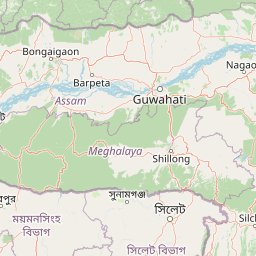
Borail Wildlife Sanctuary is set within the foothills and slopes of the Barail range, where terrain rises from the broader plains of the Surma valley system into hill country bordering Dima Hasao. Elevations span an impressive range, from approximately 55 meters above mean sea level along the lower forest valleys to around 1,500 meters on the higher slopes, producing a varied topography of ridges, stream valleys, and forested hillsides.
The landscape is shaped by heavy monsoon rainfall, which feeds numerous streams and supports dense vegetation cover across most of the sanctuary. Lower elevations carry more tropical evergreen character, while higher slopes show a shift toward semi-evergreen and montane-influenced forest, reflecting the climatic gradient created by altitude. Steep forested slopes, narrow valleys, and persistent humidity give the sanctuary a deeply wooded, layered appearance.
Although not a typical tourism-focused landscape, Borail presents the kind of visually undisturbed forest scenery that is increasingly rare in the Barak valley, with continuous canopy broken only by rivers, ridges, and the occasional clearing.
Borail Wildlife Sanctuary ecosystems, habitats, and plant life
The sanctuary protects extensive tracts of moist tropical evergreen and semi-evergreen forest, a habitat type that has become increasingly fragmented across the southern Assam landscape. These forests are characterized by tall canopy trees, multilayered understory, and abundant epiphytes that thrive in the persistently humid conditions.
Botanically, Borail is significant as a refuge for several endemic species of northeast India. The epiphytic orchid Ornithochilus cacharensis, the terrestrial ginger relative Larsenianthus assamensis, the small deciduous tree Diospyros cacharensis of the ebony family, and the large tree Alseodaphne keenanii of the laurel family were all described as new species based on material from within the sanctuary. This level of botanical novelty highlights how poorly explored and biologically distinctive the forests of the Barak valley remain.
Faunal diversity mirrors the habitat complexity. Primate species dominate the canopy across multiple elevations, while ground-dwelling mammals, large forest birds, and reptiles occupy different layers of the ecosystem. The combination of high rainfall, varied terrain, and continuous forest cover creates conditions favorable for an unusually rich mix of Indo-Burmese plant and animal species.
Borail Wildlife Sanctuary wildlife and species highlights
Borail Wildlife Sanctuary supports a notably diverse mammal community for an area of its size. Primates are particularly well represented, with records of slow loris, hoolock gibbon, capped langur, Assamese macaque, pig-tailed macaque, stump-tailed macaque, and rhesus monkey. Carnivores documented in the sanctuary include the Himalayan black bear, Malayan sun bear, leopard cat, jungle cat, golden cat, and clouded leopard. Other mammals of note include barking deer, red serow, and wild pig.
Birdlife is one of the sanctuary's strongest features, with more than 300 recorded species making it a significant destination for birdwatchers in northeast India. Among its most distinctive birds are the white-backed vulture, slender-billed vulture, rufous-throated and white-cheeked hill partridges, grey peacock pheasant, kaleej pheasant, great pied hornbill, oriental pied hornbill, rufous-necked hornbill, wreathed hornbill, and Austen's brown hornbill. The presence of multiple hornbill species, in particular, signals the integrity of the sanctuary's tall evergreen canopy.
Reptile life also contributes to the sanctuary's biodiversity, with species such as the Burmese rock python and king cobra recorded within its boundaries. The combination of primates, forest carnivores, hornbills, pheasants, vultures, and large reptiles underscores Borail's role as a multi-layered wildlife refuge in southern Assam.
Borail Wildlife Sanctuary conservation status and protection priorities
Borail Wildlife Sanctuary has conservation significance that extends well beyond its protected-area designation. By merging the North Cachar and Barail Reserved Forests into a single block, the sanctuary preserved forest connectivity that would otherwise have been vulnerable to encroachment, fragmentation, and shifting land use in the Barak valley. The resulting continuous habitat supports species that require large, undisturbed forest ranges, including the hoolock gibbon, capped langur, clouded leopard, and several hornbill species.
The sanctuary's documented role as a habitat for threatened and endemic species adds to its conservation value. Newly described endemic plant species, combined with important populations of primates and large forest birds, mark Borail as a priority site for understanding and protecting the biodiversity of northeast India. Its recognition as an IUCN Category IV area reflects its purpose as a managed habitat for species conservation rather than a strictly restricted nature reserve.
Ongoing significance lies in maintaining the integrity of its moist tropical evergreen forest cover, protecting water sources that originate within the sanctuary, and supporting regional biodiversity pipelines between Assam's southern hill forests and adjacent protected landscapes.
Top sights and standout views in Borail Wildlife Sanctuary
Borail Wildlife Sanctuary stands out as one of southern Assam's most ecologically significant protected areas, distinguished by its combination of primate-rich evergreen forest, abundant hornbill populations, and endemic plant discoveries. Its merger of two historic reserved forests into a single sanctuary in 2004 preserved a continuous habitat block that supports more than 300 bird species and a wide range of mammals.
Just as importantly, Borail represents a relatively accessible entry point into the natural landscape of the Barak valley for visitors based in or near Silchar, offering trekking and birdwatching opportunities within a forest that retains strong ecological character despite the pressures affecting much of the surrounding region.
Best time to visit Borail Wildlife Sanctuary
The best time to visit Borail Wildlife Sanctuary generally falls outside the heaviest monsoon months, when rainfall can limit access and make forest trails difficult. The cooler and drier months of late autumn through early spring are typically the most comfortable period, offering more stable weather for trekking and improved visibility for birdwatching.
Spring can be a rewarding season for observing hornbills and other forest birds, while winter often brings cooler nights and pleasant daytime temperatures in the lower elevations of the sanctuary. Visitors should generally expect high humidity throughout much of the year, given the area's heavy annual rainfall.