Mori Atlas logo
National parkCangandala National Park

Discover the mapped boundaries and regional park geography of this Angola national park.

Cangandala National Park: Protected Landscape and Geographic Context in Malanje Province

Cangandala National Park represents a key protected natural area within Angola's Malanje Province, offering a distinct geographic identity for atlas-based exploration. This national park serves as a focal point for understanding conservation landscapes and mapped terrains within the region. Users can delve into its specific park geography, compare its protected boundaries against the surrounding terrain, and gain a structured view of its place in the broader Angolan atlas.

national parksavanna ecosystemmiombo woodlandgiant sable antelope conservationriverine habitatcritical endangered species

Cangandala National Park

National park

Park overview

Structured park overview, official facts, and landscape profile for Cangandala National Park

Cangandala National Park park facts, protected area profile, and essential visitor context
Review the core facts for Cangandala National Park, including designation, size, terrain, visitor scale, habitats, and operating context in one park-focused overview.

About Cangandala National Park

Cangandala National Park occupies a significant position in Angola's protected area network as the principal sanctuary for the giant sable antelope. Located in the heart of Malanje Province, the park's strategic position between the Cuanza River and its tributary streams creates a rich mosaic of habitats ranging from seasonally flooded grasslands to dense woodland areas. The miombo ecosystem that dominates the park represents one of central Africa's most extensive woodland types, characterized by a canopy dominated by Brachystegia and Julbernardia species that lose their leaves during the dry season, creating a distinctive landscape of golden grasses and skeletal trees. This habitat complexity supports a range of wildlife beyond the park's flagship species, including various antelope species adapted to the savanna environment, plains zebras grazers, and numerous bird species that inhabit the open woodlands and wetland areas. The park's creation in the late 1960s marked a deliberate effort by the Angolan government to establish a dedicated conservation area for species facing severe pressure across their range.

Quick facts and research context for Cangandala National Park

Cangandala National Park spans roughly 600 square kilometers in Malanje Province, approximately 9.8 degrees south and 16.75 degrees east. The protected area lies between the Cuanza River and two tributaries, the Maúndo and Cuije rivers. The landscape consists primarily of flat to undulating tropical savanna with miombo woodland vegetation dominated by Brachystegia and Julbernardia tree species. The climate follows a tropical pattern with distinct wet and dry seasons, influencing the park's ecological character and wildlife behavior throughout the year.

Park context

Deeper park guide and search-rich context for Cangandala National Park

Cangandala National Park history, landscape, wildlife, and travel context
Explore Cangandala National Park through its history, landscape character, ecosystems, wildlife, conservation priorities, cultural context, and seasonal travel timing in a structured park guide built for atlas discovery and search intent.

Why Cangandala National Park stands out

Cangandala National Park is renowned as the primary conservation stronghold for the giant sable antelope, one of Africa's most iconic and critically endangered large mammals. This park represents the last refuge for the remaining wild populations of Hippotragus niger variani, a distinctive subspecies recognized for its impressive curved horns and dark coloration. Beyond this flagship species, the park protects significant stretches of intact miombo woodland ecosystem, a biome that spans much of southern Africa and supports unique biodiversity. The combination of riverine habitats along the Cuanza system with adjacent savanna and woodland creates a diverse ecological mosaic that supports multiple wildlife communities.

Cangandala National Park history and protected-area timeline

Cangandala National Park was established in 1970 by the Angolan government specifically to protect the last remaining wild populations of the giant sable antelope. The park's creation represented a proactive conservation response to growing concerns about the status of this distinctive subspecies, which was already recognized as facing significant threats across its limited range in central Angola. The timing of the park's establishment placed it directly in the path of one of Africa's longest and most devastating conflicts. The Angolan Civil War, which lasted from 1975 to 2002, had catastrophic consequences for the park's wildlife populations. Poaching intensified dramatically during the conflict years, and habitat disruption from landmines and uncontrolled human movement through the area further degraded the environment. The giant sable population was pushed to the brink of extinction, leading to serious fears that the subspecies might be lost entirely. Following the end of hostilities in 2002, concentrated conservation efforts began to stabilize and recover the remaining populations, including the establishment of highly protected sanctuary zones within the park boundaries.

Cangandala National Park landscape and geographic character

The physical landscape of Cangandala National Park reflects the characteristic terrain of central Angola's savanna biome. The topography consists primarily of flat to gently undulating plains, typical of the region where the Cuanza River system has laid down alluvial sediments over geological time. The park's position between the Cuanza River and its tributaries, the Maúndo and Cuije rivers, creates a landscape where watercourses play a defining role in shaping the local environment. Riverine corridors support denser vegetation and create seasonal wetlands that contrast with the more open miombo woodlands covering the higher ground. The vegetation follows the classic miombo woodland pattern, with a semi-open canopy of deciduous trees allowing sunlight to reach a grassy understory that greens dramatically during the wet season and turns golden and dry through the long dry months.

Cangandala National Park ecosystems, habitats, and plant life

The ecological character of Cangandala National Park is defined by the miombo woodland ecosystem, one of the most extensive forest types in southern Africa. The dominant tree species, Brachystegia and Julbernardia, create a distinctive landscape where trees spread their canopies in a relatively open configuration, permitting a dense ground layer of grasses and forbs. This habitat structure supports remarkable biodiversity, with the woodland serving as home to numerous species adapted to the seasonal contrasts between wet and dry periods. The presence of the Cuanza River system adds an important dimension to the park's ecology, with riverine forests providing more shaded and moisture-retentive habitats that contrast sharply with the surrounding woodland. Seasonal wetlands form along the river margins during the wet season, creating temporary habitats that attract waterbird species and provide grazing for larger mammals. The combination of woodland, grassland, and riverine habitats within a single protected area creates ecological diversity that supports multiple wildlife communities.

Cangandala National Park wildlife and species highlights

The wildlife community of Cangandala National Park centers on the critically endangered giant sable antelope, a subspecies that represents the park's primary conservation significance. These large antelopes, characterized by their dark chestnut to blackish coats and spectacularly curved horns that can reach over a meter in length, inhabit the miombo woodlands and adjacent grasslands. Beyond the flagship sable populations, the park supports various other antelope species adapted to the savanna environment, including smaller forest-dwelling and open-country species. Plains zebras maintain populations in the grassland areas, adding to the diverse large mammal community. The birdlife is particularly noteworthy, with numerous species occupying the various habitat types, from woodland interior species to wetland-associated waterbirds that follow the seasonal fluctuations of the river system. The river corridors also support specialized species that depend on the denser vegetation and water availability.

Cangandala National Park conservation status and protection priorities

Cangandala National Park holds exceptional conservation importance as the primary refuge for one of Africa's most threatened large mammal species. The giant sable antelope, classified as critically endangered by global conservation bodies, survives in the wild primarily within the boundaries of this protected area. The park's establishment created a dedicated sanctuary for this subspecies at a time when its numbers were already declining across its limited range. Conservation challenges intensified dramatically during the Angolan Civil War, when poaching and habitat degradation pushed the species toward extinction. Post-war conservation efforts have focused on strengthening protection within the park, including the designation of core sanctuary areas with enhanced security and management. The miombo woodland ecosystem itself represents a conservation priority, as this habitat type faces pressure across its range from agricultural expansion and logging. Protecting these woodlands within the park contributes to broader biodiversity conservation in central African savanna regions.

Cangandala National Park cultural meaning and human context

Cangandala National Park is situated in Malanje Province, a region with historical significance in Angola's colonial and post-colonial history. The park's name derives from local naming traditions, reflecting the geographic and cultural identity of the area. The broader Malanje region has been influenced by Portuguese colonial presence, with historical connections to the Cuanza River as a transport route during the colonial period. The local communities in the surrounding area have traditional connections to the land, though the park's strict protection status has limited direct human use within its boundaries. The conservation of the giant sable antelope carries cultural significance beyond its ecological value, as this species has become a symbol of Angolan natural heritage and a flagship for the country's conservation aspirations.

Top sights and standout views in Cangandala National Park

Cangandala National Park represents one of Africa's most significant conservation priorities, protecting the last wild populations of the giant sable antelope in a dedicated sanctuary setting. The park's miombo woodland landscape, traversed by the Cuanza River and its tributaries, creates a diverse habitat mosaic that supports multiple wildlife communities. The contrast between dry season golden grasslands and the seasonal greening during rains transforms the park's appearance throughout the year, offering different visual experiences. The riverine environments provide crucial water sources and more lush vegetation that contrasts sharply with the surrounding woodland. The park's historical significance as a conservation area established specifically to save a species from extinction demonstrates the potential for protected areas to serve as last-line defenses for threatened wildlife.

Best time to visit Cangandala National Park

The optimal time to experience Cangandala National Park depends on what visitors hope to observe and the seasonal conditions of the landscape. The dry season, typically from May through October, offers easier wildlife viewing as animals concentrate around remaining water sources and the vegetation is less dense. The landscape at this time displays the characteristic golden color of dried grasses beneath the canopy of deciduous miombo trees. The wet season, roughly November through April, transforms the park with fresh green growth and ephemeral water bodies, creating a different but equally compelling visual experience. Birdlife is particularly active during the wet months when migratory species arrive and resident birds become more vocal and visible. The timing of visits should consider the park's conservation status and the need to support ongoing protection efforts.

Park location guide

Geography guide, regional context, and park location map for Cangandala National Park

Cangandala National Park park geography, regions, and map view in Angola
Understand where Cangandala National Park sits in Angola through a broader geographic reading of the surrounding landscape, nearby location context, and its mapped position within the national park landscape.

How Cangandala National Park fits into Angola

Angola is a unitary presidential republic on the western coast of Southern Africa. Gaining independence from Portugal in 1975, it borders Namibia, the Democratic Republic of the Congo, Zambia, and the Atlantic Ocean. The country has an exclave province called Cabinda. With a population of over 36 million, Angola is rich in oil and mineral resources.

Wider geography shaping Cangandala National Park in Angola

Angola is located on the western coast of Southern Africa along the Atlantic Ocean. It is bordered by Namibia to the south, the Democratic Republic of the Congo to the north, Zambia to the east, and the Atlantic Ocean to the west. The country includes the exclave province of Cabinda, which borders the Republic of the Congo and the Democratic Republic of the Congo. The terrain includes coastal lowlands, highland plateaus, and interior plains.

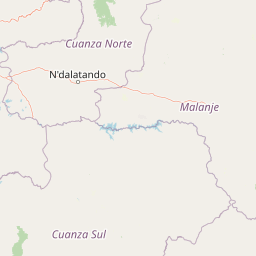
Map view of Cangandala National Park

Use this park location map to pinpoint Cangandala National Park in Angola, understand its exact geographic position, and read its mapped placement within the surrounding landscape more clearly.

Pigeon | © OpenStreetMap contributors

Location context for Cangandala National Park

Malanje Province
Park atlas

Expand your protected area discovery by tracing Angola's diverse savanna, woodland, and riverine habitats surrounding Cangandala National Park.

Explore Other National Parks and Protected Areas Near Cangandala National Park
From Cangandala National Park, browse an expanded atlas view of other national parks and protected areas across central Angola, focusing on savanna, miombo woodland, and riverine conservation landscapes. This geographic context allows for detailed comparison of conservation priorities and diverse ecosystems, tracing the spread of similar critical endangered species habitats.
National parkAngola

Quiçama National Park: A National Park in Angola's Protected Landscape Atlas

Explore its mapped geography and regional natural context.

Quiçama National Park represents a significant protected area within Angola, contributing to the nation's atlas of natural landscapes. This page provides detailed geographic information, focusing on the park's protected status and its integration within the broader regional geography. Users can explore the mapped terrain and understand the specific landscape characteristics that define this important national park, facilitating structured discovery of Angola's protected lands.

Area
9,960 km²
Established
1957
IUCN
II
Access
Access unknown
National parkMoxico Leste Province

Cameia National Park: Unique Zambezi Basin Wetlands and Miombo Woodlands in Angola

Explore the mapped geography of Angola's sole Zambezi basin ecological sample.

Cameia National Park is a significant protected area in Moxico Leste Province, Angola, distinguished by its status as the country's only representation of Zambezi River basin ecosystems. The park features extensive seasonally inundated plains and characteristic miombo woodlands, offering a unique mosaic of wetland and forest landscapes. Understanding its geographic setting, hydrological connections to the Chifumage, Lumege, and Luena rivers, and its position within the broader Zambezi drainage system provides essential context for this irreplaceable protected territory.

Area
1,445 km²
Established
1938
IUCN
II
Relief
Lowland
National parkCunene Province

Mupa National Park National Park: Exploring Protected Landscapes and Geographic Context

Discover the mapped terrain and boundaries in Cunene Province.

Mupa National Park is a vital protected area within Cunene Province, Angola, serving as a key component of the region's conservation atlas. This national park represents a distinct geographic entity, offering detailed insights into its mapped landscape and protected boundaries. Users can explore Mupa National Park to understand its specific contribution to the protected lands of southern Angola and to appreciate its unique position within the broader regional geography and natural terrain.

Area
6,600 km²
Established
1964
Access
Access unknown
Scope
Terrestrial
National parkAngola

Mavinga National Park: Protected Landscape Identity and Geographic Mapping in Angola

Explore mapped boundaries and regional context of this national park.

Mavinga National Park stands as a designated protected area within Angola, offering insights into the nation's natural landscapes and conservation efforts. This entry details the park's geographic footprint and its role as a national park. It provides users with essential map-based discovery tools to understand the park's setting, its physical geography, and its significance as a protected natural landscape in southern Africa.

Area
46,076 km²
Established
2011
IUCN
II
Relief
Lowland
National parkWestern Province

Liuwa Plain National Park National Park: Mapped Protected Landscape Explorer

Explore regional geography and protected park boundaries.

Liuwa Plain National Park, designated as a national park in Zambia's Western Province, serves as a crucial point for understanding protected land distribution and regional geography. This dedicated page provides detailed insights into its mapped protected landscape, allowing for focused atlas-style exploration. Discover the park's role within the larger geographic context of Western Province and its significance as a conservation area through structured mapping and landscape analysis.

Area
3,369 km²
Established
1972
IUCN
II
Relief
Lowland
Watercolor painting showing a river with green hills and pink flowers in the foreground
National parkKouilou Department

Conkouati-Douli National Park: Mapping Protected Landscape Boundaries and Regional Geography

Explore its national park status and geographic context.

Conkouati-Douli National Park is a protected area situated in the Kouilou Department, offering a focused point for geographic and landscape discovery. This detail provides an atlas-style perspective on its mapped boundaries and its contribution to the regional geography. Understand the park as a distinct natural landscape and a key component of conservation within its geographic setting.

Area
7,955 km²
Established
1999
IUCN
II
Relief
Lowland
National parkHaut-Ogooué Province

Batéké Plateau National Park: Mapped Geography of a Central African Forest-Savanna Mosaic

Discover the terrain and protected landscape of Haut-Ogooué Province.

Batéké Plateau National Park is defined by its expansive forest-savanna mosaic, a rare ecological formation across Central Africa. Located within Haut-Ogooué Province, this national park showcases unique terrain characterized by savanna grasslands interspersed with woodlands and forested corridors. Understanding its geographic context and protected boundaries provides valuable insight into the region's natural heritage and conservation significance.

Area
2,034 km²
Established
2002
IUCN
II
Relief
Upland
National parkNamibe Province

Iona National Park: Mapped Protected Landscape in Namibe Province, Angola

Explore the geographic extent and regional context of this national park.

Iona National Park stands as a protected natural area within the administrative region of Namibe Province, Angola. This atlas-focused entry provides detailed insights into the park's mapped boundaries, its regional geographic positioning, and its role as a conservation landscape. Users can engage with specific data to understand the terrain and protected land distribution within this significant Angolan national park.

Area
15,200 km²
Established
1964
IUCN
II
Relief
Mixed relief

Common questions about visiting, size, designation, and location context for Cangandala National Park

Cangandala National Park FAQs for park facts, access, geography, and protected area context
Find quick answers about Cangandala National Park, including protected-area facts, park geography, trail and visitor context, and how the park fits into its surrounding country and regional landscape.
MoriAtlas Explorer

Continue Your Protected Areas Search Across the Global Atlas

Deepen your exploration by continuing the structured search for national parks and protected areas worldwide. Utilize the comprehensive filtering capabilities to compare different conservation landscapes and refine your understanding of global park geography. Discover more about the distribution and characteristics of protected natural areas.

Global natural geography