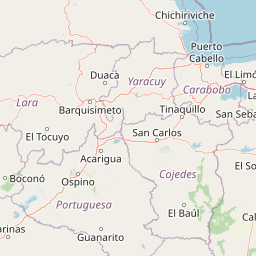
Why Cerro Saroche National Park stands out
Cerro Saroche is best known for protecting one of Venezuela's significant semi-arid highland ecosystems within the Carora Depression. The park preserves specialized dryland habitats that are otherwise poorly represented in Venezuela's protected area network. Notable for the orchid Schoromburquia humboldtiana, a characteristic species of the higher humid regions within the park, the area also faces conservation challenges from invasive exotic plants including Kalanchoe daigremontana and Stapelia gigantea, which threaten native plant recruitment.
Cerro Saroche National Park history and protected-area timeline
Cerro Saroche National Park was formally established on December 7, 1989, making it one of the more recent additions to Venezuela's national park system. The creation of the park reflected growing recognition of the ecological importance of preserving semi-arid habitats in the Venezuelan interior, an ecosystem type that had received limited protection through earlier conservation designations. The park was established under the governance of the Instituto Nacional de Parques (INPARQUES), the federal agency responsible for managing Venezuela's protected areas.
The establishment came during a period when Venezuela was expanding its protected area network to better represent the country's diverse ecological regions. Prior to national park status, the area likely functioned as general countryside with mixed agricultural use and grazing pressure. The formal protection designation aimed to conserve the distinctive dryland ecosystems while also providing a framework for sustainable use and environmental education.
Cerro Saroche National Park landscape and geographic character
The physical landscape of Cerro Saroche National Park is defined by its position within the Carora Depression, a broad valley surrounded by higher terrain in northwestern Venezuela. The terrain features rolling hills that transition into more defined mountain ranges, creating a visually varied topography across the park's 91 square kilometers. Elevations range from approximately 300 meters in the lower lying areas to around 1,300 meters in the higher peaks and ridgelines.
The park's semi-arid character is expressed in its generally open landscapes, where vegetation cover is more sparse than in wetter tropical regions. Plains and lower slopes support herbaceous vegetation adapted to seasonal drought, while the higher elevations and more protected valleys retain greater moisture and support more dense plant communities. The absence of permanent rivers or significant waterways on the surface reflects the limited precipitation and the semi-arid climate regime that characterizes the region.
Cerro Saroche National Park ecosystems, habitats, and plant life
The ecological character of Cerro Saroche is defined by its semi-arid tropical conditions and the specialized species that have evolved to thrive in this environment. Mean annual temperatures of 27°C combined with annual precipitation between 300 and 600 millimeters create conditions favoring drought-tolerant vegetation. The dual rainy seasons, with the more intense period occurring in the final months of the year, concentrate moisture availability into distinct periods that shape plant phenology and wildlife activity.
The park's botanical identity includes notable endemism in the higher, more humid zones where the orchid Schoromburquia humboldtiana serves as an indicator species for these specialized microhabitats. These humid pockets within the broader semi-arid matrix support plant communities distinct from the surrounding dryland flora, creating ecological mosaics that increase the park's overall biodiversity value. The transition between dry and more humid zones within the park illustrates the ecological complexity present in this transitional landscape.
Cerro Saroche National Park wildlife and species highlights
The wildlife of Cerro Saroche National Park reflects the adaptations required to survive in semi-arid conditions. The park's fauna has evolved behaviors and physiological adaptations to cope with seasonal water scarcity and high temperatures. While the Wikipedia source does not provide detailed species inventories, the presence of the orchid Schoromburquia humboldtiana indicates the presence of specialized pollinator relationships and ecological interactions that support the park's biodiversity.
The park's position in the Carora Depression places it along potential migratory pathways and within a regional context that includes both lowland and highland species. The varied terrain, from plains to mountain slopes, creates multiple habitat types that support different wildlife communities. Conservation of this area is important for maintaining habitat connectivity in a landscape where natural areas are otherwise limited.
Cerro Saroche National Park conservation status and protection priorities
Cerro Saroche National Park faces significant conservation challenges from invasive plant species that have colonized portions of the protected area. The exotic plants Kalanchoe daigremontana and Stapelia gigantea have invaded parts of the park and pose a threat to native plant communities by influencing the recruitment of indigenous species. This invasive pressure represents one of the primary management concerns for the park's ecological integrity.
The conservation value of the park stems from its role as a protected representative of semi-arid ecosystems that are underrepresented in Venezuela's protected area network. Maintaining the ecological character of this landscape requires active management to control invasive species and prevent further degradation of native habitats. The park also provides important ecosystem services to the surrounding agricultural landscape in the Carora region, including watershed protection and soil conservation.
Top sights and standout views in Cerro Saroche National Park
Cerro Saroche National Park stands out as a protected area preserving Venezuela's semi-arid highland ecosystems in the Carora Depression. The park's elevation range from 300 to 1,300 meters creates diverse terrain of rolling hills, plains, and mountains within a relatively compact area. The higher humid zones support the distinctive orchid Schoromburquia humboldtiana, a characteristic plant species of these microhabitats. Conservation challenges include management of invasive exotic plants that threaten native species recruitment. The park provides important ecological services to the surrounding region while serving as a refuge for dryland biodiversity.
Best time to visit Cerro Saroche National Park
The best time to visit Cerro Saroche National Park is influenced by its dual rainy seasons, with the primary wet period occurring from October through December when precipitation is most intense. Visitors during these months can expect greener landscapes but should be prepared for occasional access restrictions or muddy trail conditions. The secondary rainy season between May and June offers a shorter period of increased moisture. The drier months between these periods may offer more consistent access but feature more arid landscape conditions. The hot climate with mean temperatures around 27°C means visitors should plan for warm conditions year-round.