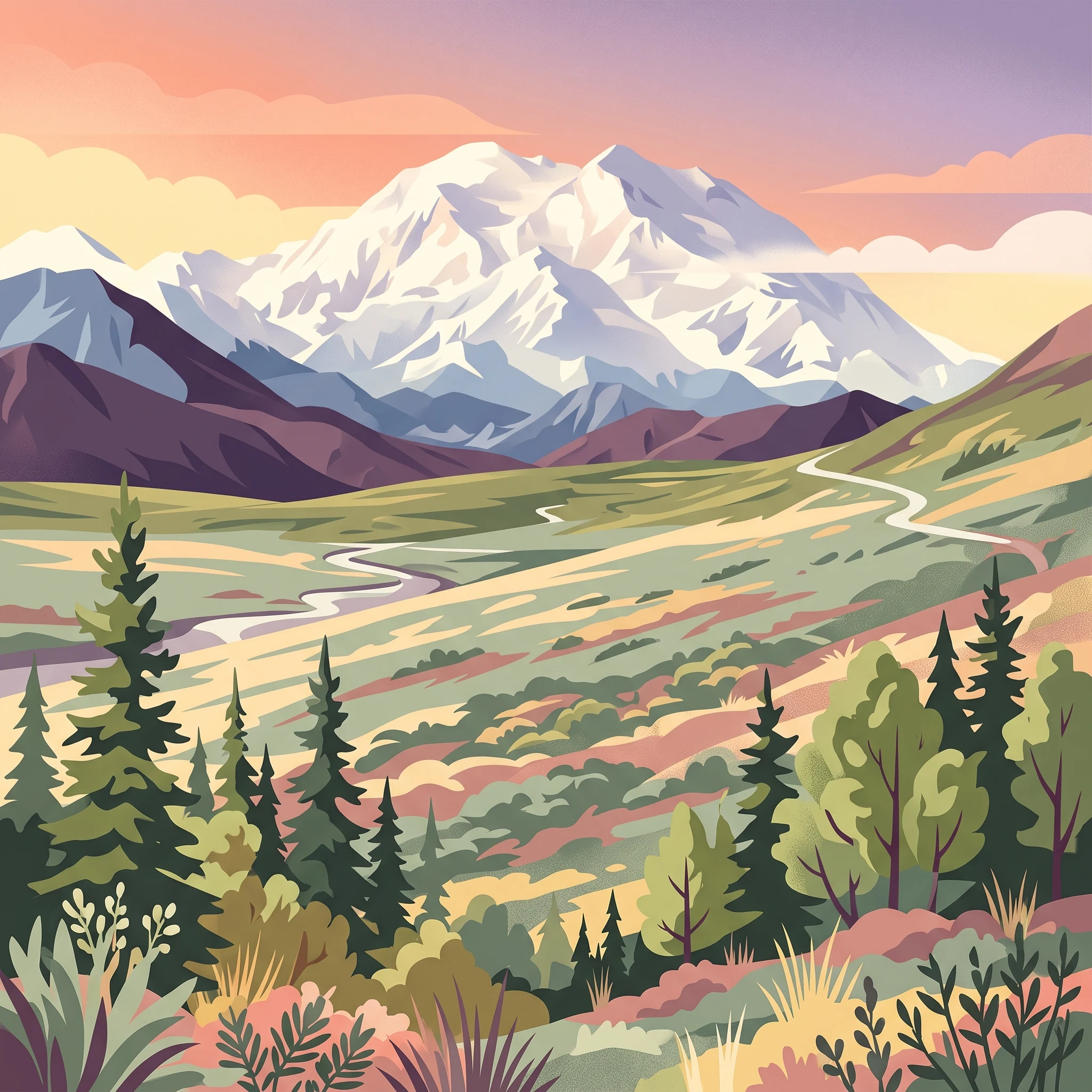
Why Denali National Park and Preserve stands out
Denali National Park is best known for Denali itself, a massive granite mountain that rises 18,000 feet from base to summit, the greatest vertical relief of any mountain in the world. The park protects a complete ecological gradient from taiga forest through alpine tundra to glacial ice fields, creating exceptional biodiversity. It is renowned for its wildlife viewing opportunities, particularly the chance to see grizzly bears, Dall sheep, and caribou against the backdrop of the Alaska Range. The park's 92-mile Park Road provides access to some of the most spectacular subarctic landscapes in North America, while the mountain's notorious weather patterns create the famous phenomenon where locals say 'the mountain is out' only when it visibly appears through the clouds.
Denali National Park and Preserve history and protected-area timeline
The history of Denali National Park and Preserve reflects the broader story of American conservation and the evolving relationship between indigenous peoples and federal land management. Human habitation in the region extends back more than 11,000 years, with the Athabaskan peoples including the Koyukon, Tanana, and Dena'ina maintaining traditional connections to the land for at least 1,500 years. The campaign to establish the park began in 1906 when Charles Alexander Sheldon proposed preserving the Denali region and secured support from the Boone and Crockett Club. After years of advocacy, President Woodrow Wilson signed the legislation creating Mount McKinley National Park on February 26, 1917. The park expanded several times throughout the 20th century, with boundary additions in 1922, 1932, and 1947. In 1980, the Alaska National Interest Lands Conservation Act combined the original park with Denali National Monument and renamed the combined unit, while the Alaska State Board of Geographic Names changed the mountain's name to Denali. The naming dispute continued for decades until President Barack Obama restored the name Denali in 2015 using executive authority. Recent decades have seen the park grapple with climate change impacts, including accelerated permafrost thaw affecting road stability and shifting ecosystems.
Denali National Park and Preserve landscape and geographic character
The landscape of Denali National Park and Preserve is defined by the central Alaska Range, a mountain chain extending 600 miles across Alaska. Denali itself rises as a massive granite monolith, still gaining height at approximately 1 millimeter per year due to ongoing tectonic activity where the Pacific Plate converges with the North American Plate. The park contains numerous glaciers covering about 16 percent of its area, with the largest including the Kahiltna Glacier at 30 miles long and the Muldrow Glacier at 32 miles long. The terrain features classic glacial地貌 including cirques, arêtes, cols, and horns carved by millions of years of ice action. Glacial deposits are visible throughout the park, with massive granite erratics sometimes the size of houses scattered across the landscape. The northern side of the range features river valleys including the McKinley, Toklat, and Foraker Rivers, while the south side contains the dramatic glacial canyons and peak-filled landscape that defines the park's most rugged character.
Denali National Park and Preserve ecosystems, habitats, and plant life
The ecological diversity of Denali National Park and Preserve reflects its dramatic elevation gradient and subarctic climate. Vegetation follows distinct zones determined by elevation and exposure, with treeline occurring at approximately 2,500 feet, leaving most of the park above as alpine tundra. The lowland areas support spruce and willow forests in a mosaic pattern shaped by periodic fire, while the tundra features mosses, ferns, grasses, and over 450 species of flowering plants including wild blueberries and soap berries that provide essential food for bears. The permafrost underlying much of the park creates unique landscape features including thermokarst thaw lakes and the famous 'Drunken Forest' where leaning white spruce indicate soil movement from freeze-thaw cycles. The park's designation as an international biosphere reserve in 1976 recognizes its importance as a living laboratory for understanding subarctic ecosystem dynamics.
Denali National Park and Preserve wildlife and species highlights
Denali supports remarkable wildlife populations in a relatively intact subarctic ecosystem. The park is home to an estimated 300 to 350 grizzly bears on the north side of the Alaska Range, one of the highest densities of this iconic species in North America, along with approximately 2,700 black bears. Wolf populations are actively monitored, with about 51 individuals in 13 packs tracked by park biologists. The park supports significant populations of large mammals including an estimated 2,230 caribou and 1,477 moose, with Dall sheep commonly visible on mountain slopes throughout the summer. Smaller mammals including hoary marmots, Arctic ground squirrels, pikas, and snowshoe hares are abundant, while more elusive species like wolverines, Canada lynx, and Arctic foxes inhabit the deeper wilderness. The park provides critical habitat for migratory birds including golden eagles, ptarmigan, tundra swans, and numerous songbirds that return each summer to raise their young.
Denali National Park and Preserve conservation status and protection priorities
Denali National Park and Preserve represents a landmark conservation achievement in North America, protecting one of the most ecologically significant subarctic landscapes on the continent. The park's designation as an international biosphere reserve in 1976 reflects its importance as a living ecosystem and research natural area. The Denali Wilderness, comprising approximately 2.1 million acres, provides the highest level of federal wilderness protection for the central Alaska Range. However, the park faces significant conservation challenges from climate change, including accelerating permafrost thaw that has destabilized road surfaces and triggered increased landslide activity. Glacier retreat is documented throughout the park, with measurements indicating glaciers are losing approximately 6.6 feet of vertical water equivalent annually. The park maintains active management against invasive species, with 28 non-native plant species documented and 15 considered significant threats. Conservation efforts also focus on maintaining wildlife wild through strict regulations against human feeding and encouraging safe wildlife viewing distances.
Denali National Park and Preserve cultural meaning and human context
The cultural landscape of Denali National Park and Preserve is deeply rooted in the indigenous heritage of the Athabaskan peoples who have inhabited the region for thousands of years. The name Denali itself derives from the Athabaskan language, meaning 'the high one,' reflecting the central place this mountain holds in the indigenous understanding of the landscape. Archaeological evidence documents human presence in the region for over 11,000 years, though relatively few sites exist within the park boundaries due to the harsh conditions at high elevations. The Koyukon, Tanana, and Dena'ina peoples maintained active connections to the area for hunting and seasonal resource use, with these communities still authorized for subsistence hunting within portions of the park. The park also contains significant historical infrastructure from the early 20th century, including the network of fourteen log cabins built in the late 1920s and early 1930s for patrolling rangers, now listed on the National Register of Historic Places. The story of Christopher McCandless and the 'Magic Bus 142' has become part of the park's cultural narrative, representing a different kind of American connection to wild spaces.
Top sights and standout views in Denali National Park and Preserve
Denali National Park and Preserve offers exceptional experiences centered on North America's highest peak and one of the continent's most pristine subarctic wilderness areas. The park road provides access to sweeping vistas of the Alaska Range and opportunities to view grizzly bears, Dall sheep, and caribou in their natural habitat. The Eielson Visitor Center, located four hours into the park, offers spectacular views of Denali on clear days and ranger-led programs explaining the park's natural history. The park's sled dog kennel represents a unique piece of American conservation history, with the only federal government-owned sled dog operation in the National Park System. Visitors can experience the full ecological gradient from taiga forest through alpine tundra to glacial environments, while the park's status as an international biosphere reserve provides assurance of ongoing research and monitoring of this remarkable ecosystem.
Best time to visit Denali National Park and Preserve
The best time to visit Denali National Park and Preserve is during the short subarctic summer season from late May through early September, when temperatures are mild and daylight hours are long. July and August typically offer the warmest conditions, though temperatures in the 70s Fahrenheit are common and snowstorms can occur even in August. Summer brings the highest visitor numbers and the most reliable access along the park road, though the famous weather patterns mean that only about 30 percent of visitors actually see Denali unobscured by clouds. Winter visits offer a completely different experience, with the mountain more frequently visible and opportunities for dog sledding, cross-country skiing, and snowshoeing. The shoulder seasons of May and September offer fewer crowds but potentially more accessible wildlife viewing as animals are more active during transitional periods. Regardless of season, visitors should be prepared for unpredictable weather and the possibility that the mountain may remain hidden during their visit.