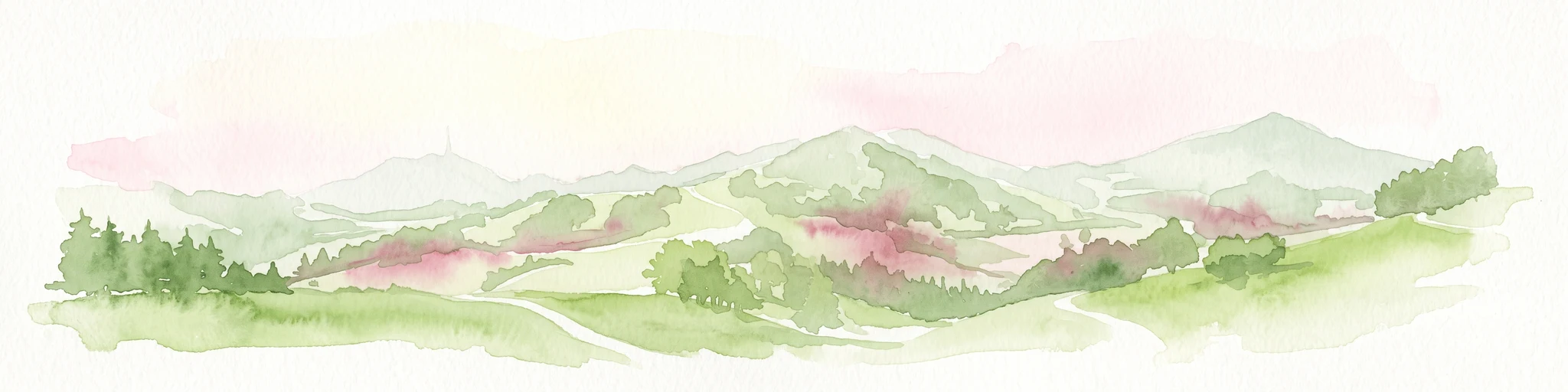
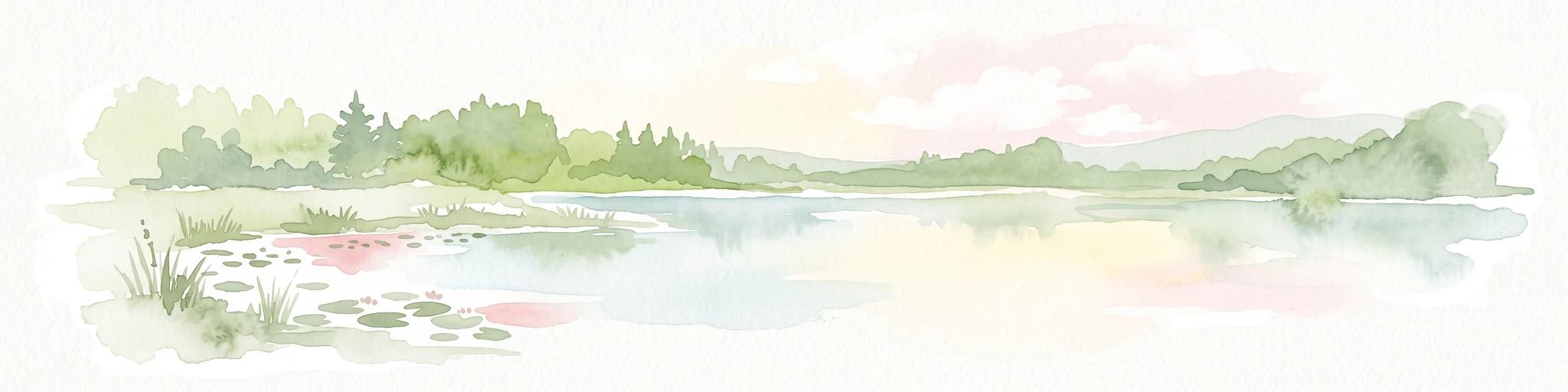
A Swiss glacial landscape of moraines, forested ranges, river valleys, and raised bogs at the Mittelland to Pre-Alps transition.
Lorze, Sihl Glacial Landscape with Höhronen Chain and Schwantenau
The Lorze – Sihl Glacial Landscape is a nationally protected landscape area in central Switzerland, registered as object 1307 in the Federal Inventory of Landscapes and Natural Monuments of National Significance (BLN). It sits at the transition between the Swiss Mittelland and the Pre-Alps, where the cantons of Zug, Zürich, and Schwyz meet south of Lake Zürich. The area combines a strikingly well-shaped glacial landscape with extensive forests, river valleys and a mosaic of nature reserves, alongside gently populated cultural land crossed by important transport corridors.
Geologically, the region bears the imprint of multiple advances of the Reuss and Rhine-Linth glaciers, along with a short local Sihl glacier. Their deposits produced a distinctive terrain of elongated moraine ridges, drumlins, rounded hills, dead-ice hollows and small lakes, of which Lake Hüttner and Lake Wilen near Menzingen are the most prominent. The valleys of the Lorze and Sihl rivers highlight how glacial sediment redirected former drainage routes, including the rerouting of the Sihl away from its earlier path toward Lake Zürich.
Ecologically, the area is notable for its mix of habitats: riparian forests in the Sihl gorge and Lorze gorge, dry orchid pine woodland on marl slopes near Menzingen, raised and intermediate bogs in the Schwantenau, and large coniferous forests covering the ten-kilometre Höhronen ridge of the Pre-Alps. Together, these landscapes give the protected area a distinctive profile as a compact glacial, hydrological, and ecological ensemble of national importance.