
Why Glenveagh National Park stands out
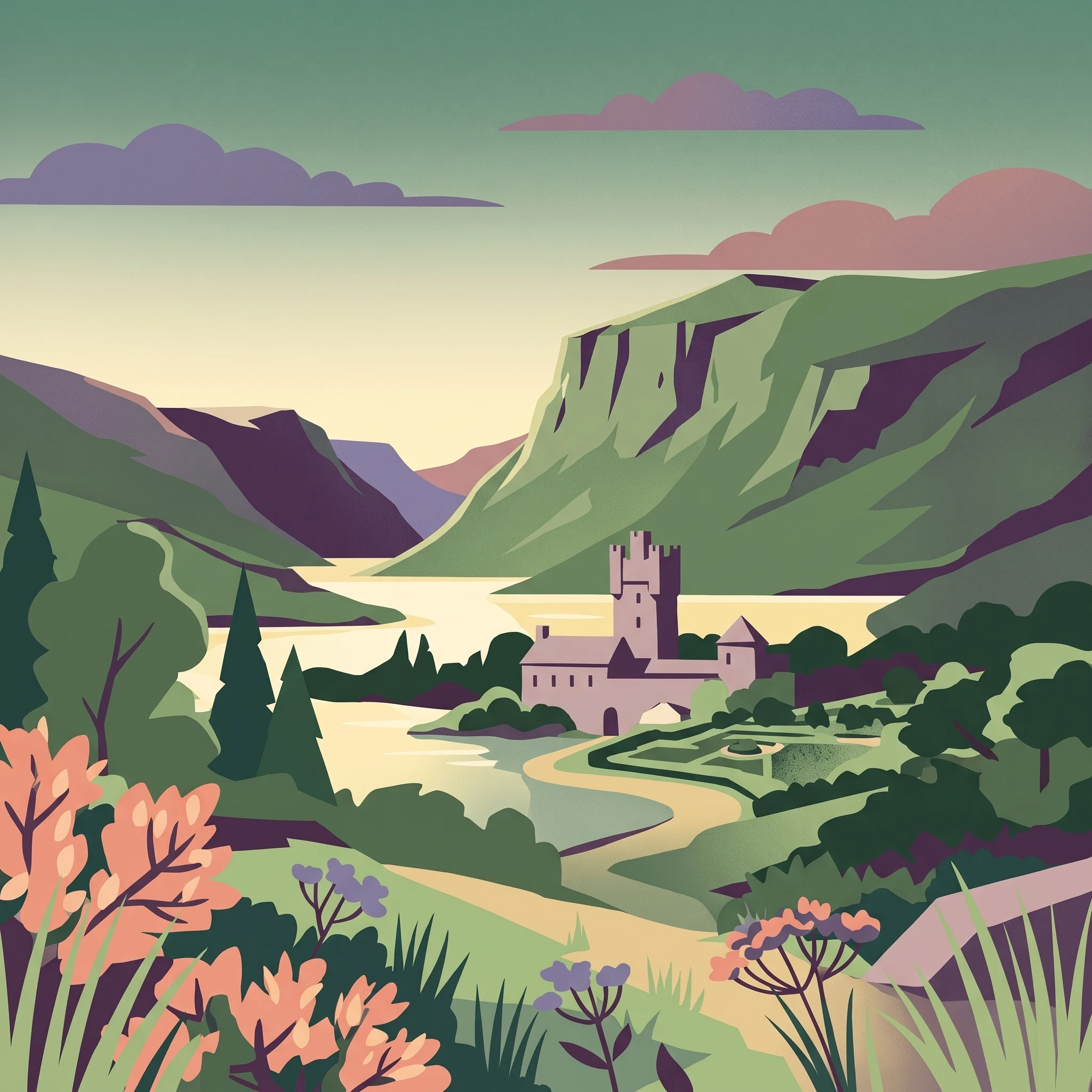
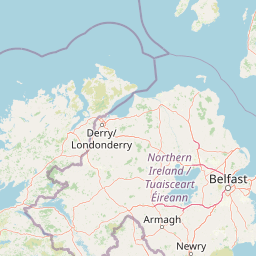
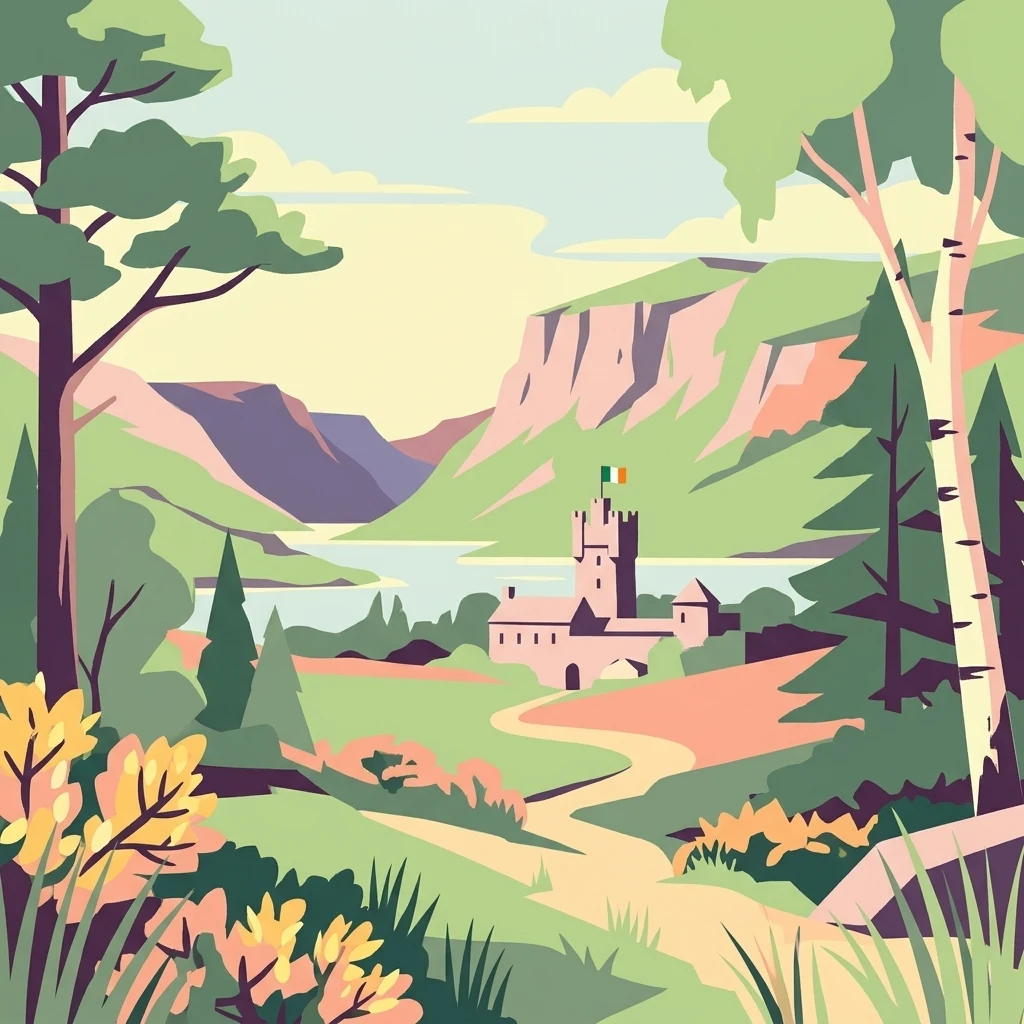
Glenveagh is particularly known for two remarkable wildlife populations: the largest herd of red deer in Ireland and the reintroduced golden eagles that have been present since 2000. The Derryveagh Mountains provide the backbone of the park's dramatic landscape, while Lough Veagh offers a central aquatic feature surrounded by Castle and woodland. The estate's Victorian-era gardens at Glenveagh Castle contain exotic plantings that contrast sharply with the surrounding wild mountain terrain. As Ireland's only national park in Ulster, the park serves as the primary protected area for this northern province.
Glenveagh National Park history and protected-area timeline
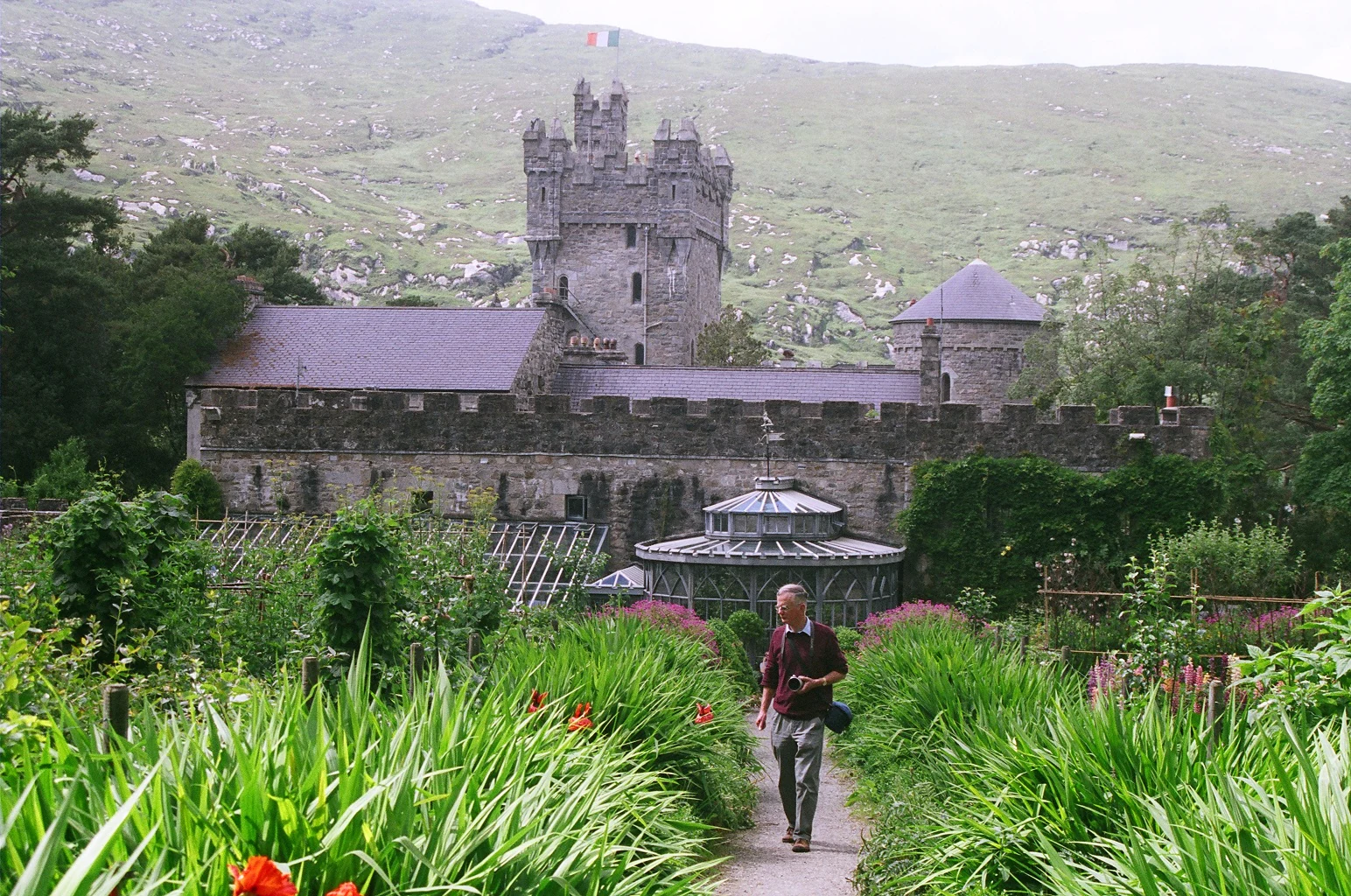
The Glenveagh estate traces its origins to Captain John George Adair, an Anglo-Irish businessman who constructed Glenveagh Castle in the mid-19th century and assembled the surrounding lands into a shooting estate. Adair's tenure was marked by controversy, most notably his 1861 eviction of 44 families totaling 224 people from their blackhouses during a period of famine, an action that earned him the derisive nickname "Black Jack Adair." Following Adair's death, the estate passed to his widow Cornelia Adair and was subsequently acquired in 1929 by Arthur Kingsley Porter, an American scholar. In 1937 the property was purchased by Henry Plumer McIlhenny of Philadelphia, who developed the gardens to their present form. McIlhenny bequeathed the estate to the Irish state in the 1970s, though he continued to reside at the castle until 1982. The land was formally established as a national park in 1986, preserving this significant mountain landscape for public benefit and conservation.
Glenveagh National Park landscape and geographic character
The Derryveagh Mountains form the core of Glenveagh's dramatic topography, a range of quartzite peaks rising steeply from the valley floors to heights exceeding 600 meters. These mountains were shaped by glacial processes during the last Ice Age, leaving behind the characteristic U-shaped valleys, corries, and rock-strewn ridges visible throughout the park. Lough Veagh, a long narrow lake constrained by the valley walls, provides the park's central water feature and reflects the surrounding peaks in its still waters. The terrain alternates between exposed mountain ridges and sheltered valleys where woodland has established, while extensive areas of blanket bog and heath cover the flatter ground between the peaks. The landscape possesses a wild, remote character that distinguishes it from Ireland's more domesticated central lowlands.
Glenveagh National Park ecosystems, habitats, and plant life
Glenveagh protects a diversity of habitats ranging from montane heath and blanket bog on the mountain slopes to mixed woodland in the lower valleys and the aquatic environment of Lough Veagh. The park's position in northwest Ireland subjects it to a wet, Atlantic-influenced climate that supports lush vegetation and prevents the extensive drying that affects eastern areas. Native woodland, though limited in extent compared to historical coverage, occurs along watercourses and in sheltered glens, providing habitat for various woodland species. The open moorland and heath communities support characteristic bird species and a range of invertebrates adapted to these conditions. The lake itself supports populations of brown trout and other freshwater species.
Glenveagh National Park wildlife and species highlights
The red deer herd at Glenveagh represents Ireland's largest population of this native species, descended from animals that have occupied the Irish landscape since prehistoric times. These deer are most readily observed in the more open areas of the park, particularly during the autumn rut when stags can be heard bellowing across the valleys. The reintroduction of golden eagles in 2000 marked a significant conservation milestone, as these birds had been locally extinct in Ireland for decades. The eagles now breed within the park and have expanded their range, bringing a top predator back to the Irish mountain landscape. The birdlife of the park also includes species such as peregrine falcon, merlin, and red grouse, while the woodlands host various songbirds and the lake supports waterfowl.
Glenveagh National Park conservation status and protection priorities
Glenveagh National Park plays a crucial role in protecting Ireland's mountain ecosystems and the species they support. The park's designation under IUCN Category II ensures the maintenance of natural processes while allowing for public enjoyment and education. The golden eagle reintroduction program represents one of Ireland's most ambitious wildlife recovery projects, demonstrating the potential for restoring species that have been lost from the wild. The protection of the red deer population preserves genetic diversity within Ireland's only native deer species. The blanket bogs and heath communities within the park store significant quantities of carbon and represent habitats that have been extensively modified elsewhere in Ireland.
Glenveagh National Park cultural meaning and human context
The Glenveagh estate carries a complex historical legacy that includes both the development of an important Victorian garden and the controversial social history of 19th-century land ownership. The castle itself, though not ancient, has become an established feature of the Donegal landscape and serves as a visitor center and museum. The evicted communities whose ancestors were forced from the land during Adair's ownership represent a painful chapter in the region's history that forms part of the broader narrative of Irish rural life during the famine period. The Irish-language name Gleann Bheatha, meaning "glen of the birches," reflects the pre-estate identity of this landscape.
Top sights and standout views in Glenveagh National Park
The combination of wild mountain scenery, historic castle, significant wildlife populations, and the sense of remoteness makes Glenveagh distinctive among Ireland's national parks. The opportunity to observe red deer in their natural habitat and the chance to see golden eagles soaring over the Derryveagh Mountains offer wildlife experiences found nowhere else in Ireland. The castle gardens provide a contrast of cultivated exotic planting within the wild mountain setting, while Lough Veagh offers scenic value and recreational opportunity. As Ulster's sole national park, Glenveagh fills a critical geographic gap in Ireland's protected area network.
Best time to visit Glenveagh National Park
The park can be visited throughout the year, though each season offers a different character. Summer brings longer days and the warmest conditions for walking the mountain trails, with the heather in bloom transforming the moorland into purple moorland. Autumn offers the red deer rut, providing excellent opportunities to observe this iconic species, while the changing leaf colors in the castle gardens add visual interest. Winter can bring snow to the higher ground, creating dramatic mountain scenery, though conditions can be challenging. Spring sees the return of breeding birds and the fresh green growth characteristic of the Irish landscape. The wet climate means that waterproof clothing is advisable at any time of year.