Why Grand Meadow National Nature Park stands out
Grand Meadow is best known as one of Eastern Europe's most significant waterbird migration, nesting, and foraging areas. The park's position along the Dnieper flyway creates extraordinary bird concentrations during spring and autumn migrations. The karst sinkholes provide unique filtration systems that support clean water in the floodplain, while limestone cliffs offer prime nesting habitats for colonial waterbirds. The Sim Maiakiv Floodplain within the park is designated as a Ramsar wetland site, recognizing its international importance. The islands of the Great and Little Kuchuhury archipelago host substantial breeding colonies of herons, egrets, spoonbills, and rare species including the endangered white-tailed eagle and the globally significant yellow heron populations.
Grand Meadow National Nature Park history and protected-area timeline
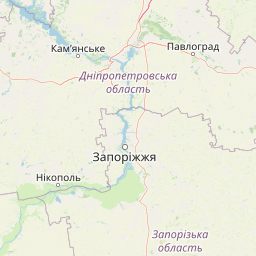
Grand Meadow National Nature Park was established on February 10, 2006, through a decree issued by the President of Ukraine. The park was created to preserve, restore, and sustainably utilize typical and unique natural landscape and historical-cultural complexes of the steppe zone that hold significant conservation, scientific, aesthetic, recreational, and health value. The new national park consolidated several pre-existing protected areas, including the regional landscape park Panai, the state ornithological reserve Veliki ta Mali Kuchuhury (Great and Little Kuchuhury), and the state landscape reserve Krutoshkly Kakhovskoho Vodoshkhovyshcha (Steep Slopes of the Kakhovka Reservoir). In 2021, the protected area expanded by more than 10,000 hectares, with wetland areas increasing by 217,000 hectares. Plans were underway in 2022 to further expand the park by over 9,274 hectares to include portions of the Vasylivka Bay and eastern sections of the Kakhovka Reservoir. However, since March 2022, the park has been under Russian occupation following the full-scale invasion of Ukraine. On June 6, 2023, the destruction of the Kakhovka Dam caused the reservoir to drain, fundamentally altering the park's hydrology and devastating two internationally important wetland sites: the Archipelago of Veliki ta Mali Kuchuhury (7,674 hectares) and the Floodplain of 7 Mayakov (2,140 hectares).
Grand Meadow National Nature Park landscape and geographic character
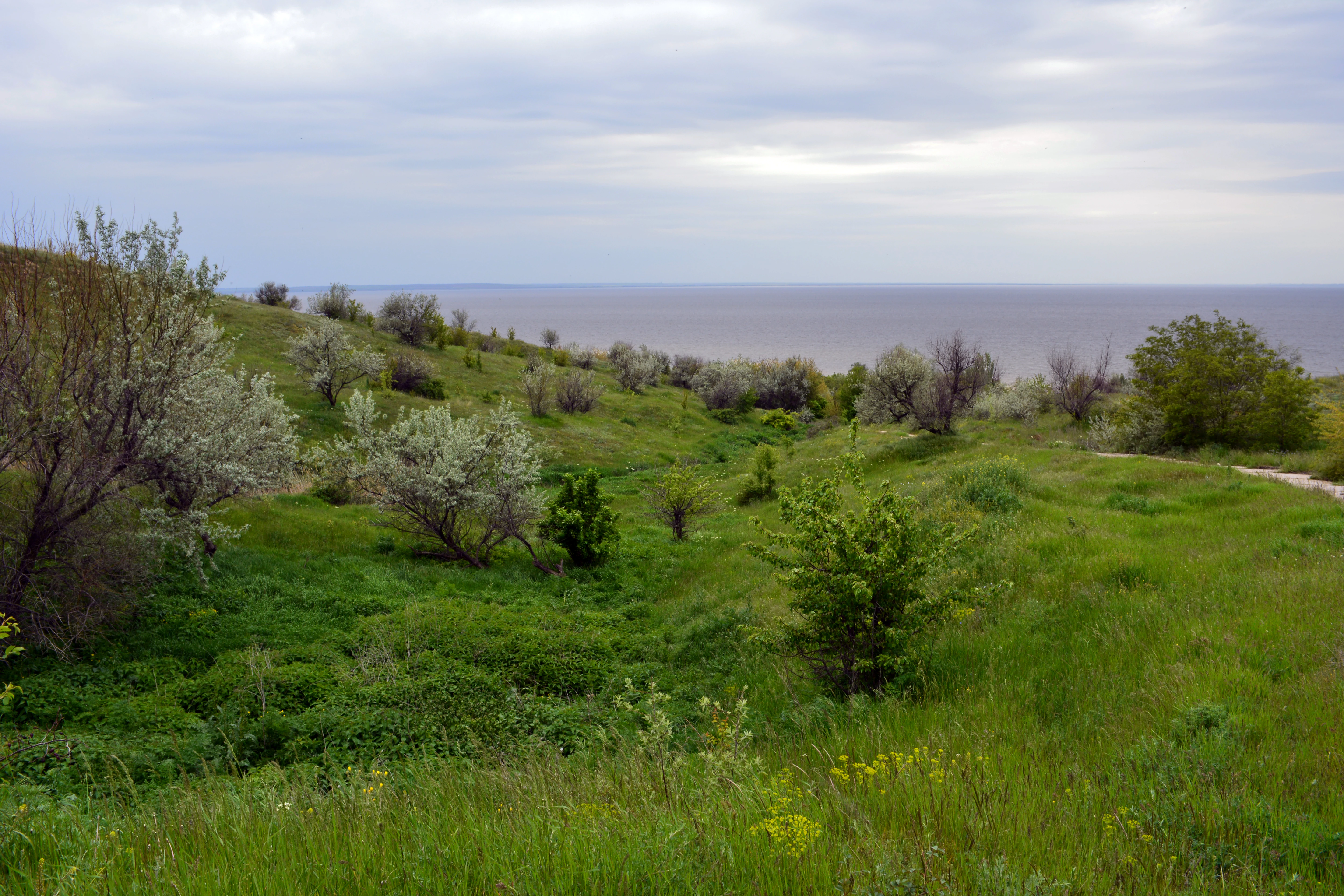
The park's landscape is defined by the remnants of a vast river floodplain transformed by the creation of a large reservoir. The terrain is predominantly flat and lies at low elevation, characterized by the terrace floodplain of the Dnieper River's southern bank. The park's territory extends along the reservoir shoreline, consisting of elevated ridges, narrow coastal strips, and a chain of islands formed when the reservoir was created in 1956. The karst topography of the region is particularly notable, with sinkholes and underground drainage systems providing natural water filtration. Limestone cliffs rise along portions of the coast, creating distinctive nesting habitats for colonial waterbirds. The floodplain areas feature highly variable water coverage depending on seasonal conditions and reservoir levels, creating dynamic wetland environments that shift between open water, marsh, and exposed mudflat. Steppe vegetation appears on the higher ground and ridges, contrasting with the aquatic habitats of the lower-lying areas.
Grand Meadow National Nature Park ecosystems, habitats, and plant life
Grand Meadow National Nature Park occupies a critical position within the Pontic-Caspian steppe ecoregion, protecting remnants of what was once an extensive floodplain ecosystem. The park's wetland habitats, which include reed beds, marshes, shallow channels, and the floodplain areas around tributary mouths, support extraordinary biodiversity despite their relatively limited extent compared to the original Great Meadow. The karst geological features play a crucial ecological role by filtering water through underground systems before it reaches the surface wetlands. This process helps maintain water quality in the floodplain, supporting both aquatic life and the birds that depend on these habitats. The warm, shallow, flat areas of the submerged terrace provide extensive feeding grounds for fish, which in turn support populations of fish-eating birds including herons, cormorants, and diving ducks. The variability of water coverage across the floodplain creates a diversity of habitat conditions that benefit different species at different times, making the area valuable throughout the annual cycle.
Grand Meadow National Nature Park wildlife and species highlights
The park is internationally significant for its waterbird populations, serving as a major transmigration, nesting, and foraging area along the East Atlantic Flyway. The limestone coastal cliffs provide ideal nesting sites for colonial species, while the floodplain's variable water conditions offer feeding opportunities for a wide range of waterbirds. The karst sinkholes support substantial bat colonies, representing an important component of the park's mammalian fauna. The islands of the Great and Little Kuchuhury archipelago have become particularly important breeding grounds following the establishment of a strict protection zone in 2007, which banned hunting, fishing, recreational access, grazing, and logging that had previously impacted wildlife. Conservation successes include dramatic population increases in rare species: yellow heron pairs grew from 12 in 2007 to 47 by 2013, the globally rare avocet increased from 2 to 5 breeding pairs, and the black-headed gull grew from 1-2 to 23 pairs. The park also provides crucial habitat for the white-tailed eagle, grey goose, middle spotted woodpecker, spoonbill, and numerous other species listed in Ukraine's Red Book.
Grand Meadow National Nature Park conservation status and protection priorities
Grand Meadow National Nature Park represents one of Ukraine's most important conservation areas for wetland and waterbird protection. The park contains Ramsar-designated wetland sites of international importance, recognizing the significant ecological functions the area provides as a migratory bird corridor. The establishment of a strict reserve zone on the Kuchuhury islands in 2007 demonstrated the park's effectiveness at protecting sensitive wildlife, with documented increases in rare bird populations within just six years. The park was designed with multiple protection zones, including areas for strict nature preservation, recreation, cultural-historical tourism and study, and buffer zones. However, the destruction of the Kakhovka Dam in June 2023 represents a catastrophic conservation setback, having drained the reservoir and destroyed two internationally important wetland sites totaling nearly 10,000 hectares. The park remains occupied and faces uncertain conservation prospects under current circumstances, though it retains significance as a symbol of environmental protection and hope for restoration in Ukraine.
Grand Meadow National Nature Park cultural meaning and human context
The area holds deep historical and cultural significance in Ukraine. The Great Meadow, or Velykyi Luh, has been known by this name for centuries and was traditionally referred to as Kinskyi Plavni (Kinsky Marshes) in local usage. This vast floodplain was historically an important landscape for local communities, providing natural resources and shaping regional identity. The park's establishment in 2006 built upon earlier conservation efforts, incorporating the regional landscape park Panai and other protected areas that had been established to preserve the remaining fragments of this historic wetland. The park's creation reflected growing recognition of the need to protect both natural and historical-cultural complexes of the steppe zone. Educational and ecological awareness activities are conducted for local communities, helping to maintain connections between residents and this culturally significant landscape.
Top sights and standout views in Grand Meadow National Nature Park
The park's defining feature is its role as one of Eastern Europe's most important bird migration corridors, where enormous concentrations of waterbirds pass through during spring and autumn migrations. The Ramsar-designated Sim Maiakiv Floodplain represents one of the region's premier wetland conservation sites. The karst topography with its sinkholes provides unique geological features alongside ecological function. The limestone cliffs create dramatic coastal scenery while serving as nesting habitat for rare colonial birds. The islands of the Great and Little Kuchuhury archipelago support remarkable breeding colonies that have shown impressive recovery under protection. The combination of steppe, wetland, and coastal habitats within a single protected area creates exceptional ecological diversity. The park's location within the Pontic-Caspian steppe ecoregion adds continental significance to its local conservation value.
Best time to visit Grand Meadow National Nature Park
The park is most vibrant during spring and autumn migration periods when waterbird populations reach their peak, making these seasons ideal for birdwatching and wildlife observation. The warm summer months from May through August offer the best conditions for exploring the park's trails and enjoying the diverse landscapes, though summer temperatures can be high. The winter months present a dramatically different character as the landscape transforms, though access may be limited. The park's climate features large seasonal temperature differentials, with warm summers having at least four months averaging above 10 degrees Celsius. Visitors interested in seeing breeding waterbirds should aim for late spring and early summer when colonies are most active. Autumn migration typically produces spectacular bird congregations as birds stage before heading south. Given the current circumstances affecting the park's accessibility, visitors should check current conditions before planning any trip.