Why Haut Atlas Oriental National Park stands out
Haut Atlas Oriental National Park is best known for its dramatic transition from dense cedar and pine forests on wetter northern slopes to open juniper steppe on drier southern slopes, all within a single protected area. The twin lakes of Isli and Tislit near Imilchil represent the park's most iconic landscape feature, while the area's cultural significance stems from its location within traditional Berber territory and the famous Imilchil Marriage Festival. The park's status as an Important Bird Area and the presence of species including Barbary sheep, Cuvier's gazelle, and Barbary macaques further distinguish its ecological character.
Haut Atlas Oriental National Park history and protected-area timeline
Haut Atlas Oriental National Park was formally established to protect the significant natural and cultural values of Morocco's eastern High Atlas region. The park's designation as a Ramsar site in 2005, under the official name Lacs Isly-Tislite, recognized the importance of its wetland components, particularly the twin lakes of Isli and Tislit. This international recognition under the Ramsar Convention added a layer of protection to the area's aquatic ecosystems and reinforced Morocco's commitment to preserving important wetland habitats. The park's creation acknowledged that conservation in this region cannot be separated from the cultural practices of the Berber communities who have inhabited these mountains for generations, leading to a management approach that seeks to balance ecological preservation with recognition of traditional land use.
Haut Atlas Oriental National Park landscape and geographic character
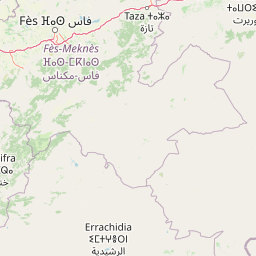
The landscape of Haut Atlas Oriental National Park is defined by its dramatic mountain terrain within the High Atlas range. The park encompasses elevations spanning nearly 1,500 meters, from valley floors at 1,645 meters to the summit of Jbel Tanrhourt at 3,102 meters. Limestone forms the predominant base rock, with igneous intrusions adding geological variety to the terrain. The twin lakes of Isli and Tislit, located near the village of Imilchil at the park's western end, represent the most distinctive surface water features and contribute significantly to the area's scenic character. The park's topography creates a sharp ecological division between its northern and southern slopes, with the wetter northern aspects supporting forest cover while the drier southern slopes transition into open steppe. Winter snow accumulates abundantly at higher elevations, contributing to seasonal landscape changes and serving as an important water source for downstream areas.
Haut Atlas Oriental National Park ecosystems, habitats, and plant life
The nature of Haut Atlas Oriental National Park displays remarkable diversity across its relatively compact area, shaped primarily by the stark precipitation differences between northern and southern slopes. The northern aspects receive 400-600mm of annual rainfall, supporting dense forests of Atlas cedar and Moroccan pine, as well as oak woodland and open juniper stands. At lower elevations, Aleppo pine appears in scattered formations. The higher elevations and plateaus support xerophytic steppe vegetation adapted to harsher conditions, with some grassland in wetter microsites. The southern slopes, receiving only 200-300mm annually, feature more open vegetation where cedar woodland has largely disappeared, replaced by sparse oak and pine stands with steppe vegetation dominated by Stipa tenacissima at lower altitudes. This gradient from humid forest to arid steppe within a single protected area makes the park a valuable example of Mediterranean mountain ecology.
Haut Atlas Oriental National Park wildlife and species highlights
Haut Atlas Oriental National Park supports significant wildlife populations across multiple taxonomic groups, justifying its designation as an Important Bird Area by BirdLife International. The park's bird communities include notable species such as Barbary partridge, Levaillant's woodpecker, subalpine warbler, spectacled warbler, and Tristram's warbler. Moussier's redstart and both black-eared and black wheatears are also present, representing the diverse avifauna adapted to the park's various habitat zones. Mammalian fauna includes Barbary sheep, Cuvier's gazelle, and Barbary macaques, the latter representing an important population of this endangered primate species. Historically, leopards inhabited the region, though confirmed records have been absent since 1993, suggesting possible local extinction. The park's varied elevation zones and habitat types create conditions supporting this biological diversity, from forest-dwelling species to those adapted to open mountain terrain.
Haut Atlas Oriental National Park conservation status and protection priorities
Haut Atlas Oriental National Park represents an important conservation priority in Morocco due to its combination of ecological diversity, Ramsar-protected wetlands, and cultural significance. The park's designation as an Important Bird Area acknowledges its role in supporting significant populations of several bird species, while the Ramsar listing since 2005 recognizes the international importance of its wetland components, particularly the Isli-Tislite lake system. Conservation challenges include the tension between traditional land use practices of local Berber communities and protection objectives, a issue that came to prominence in August 2024 when protests occurred regarding restrictions on traditional farming, herding, and resource use. The park's management must navigate the broader global challenge of balancing indigenous community rights with conservation goals in mountain ecosystems where human presence and natural systems have co-evolved over extended periods.
Haut Atlas Oriental National Park cultural meaning and human context
Haut Atlas Oriental National Park lies within territory traditionally inhabited by Berber peoples, whose communities have shaped the landscape through generations of agriculture, grazing, and other subsistence practices. The park's establishment explicitly recognized the cultural values of the region alongside its natural significance, reflecting an understanding that effective conservation in this area must account for human dimensions. The nearby village of Imilchil hosts the famous Berber Marriage Festival, an annual event that draws thousands of visitors and represents one of the most significant cultural gatherings in the Moroccan High Atlas. This festival illustrates the deep connections between local communities and the land, connections that conservation policies must consider. Local Berber guides regularly lead trekking and wildlife observation tours, providing visitors with insights into both natural and cultural heritage while maintaining traditional knowledge systems.
Top sights and standout views in Haut Atlas Oriental National Park
The twin lakes of Isli and Tislit near Imilchil represent the park's most recognizable feature, offering scenic beauty and ecological importance as Ramsar-designated wetlands. The dramatic transition from cedar and pine forests on northern slopes to open steppe on southern slopes provides a compact demonstration of Mediterranean mountain ecological zonation. The presence of Barbary macaques, an endangered primate species, offers wildlife viewing opportunities uncommon in North African protected areas. The park's cultural dimension, including proximity to the Imilchil Marriage Festival and traditional Berber communities, adds a human heritage component to the natural landscape. The elevation range from 1,645 to 3,102 meters creates diverse recreational opportunities from valley hiking to high-altitude exploration.
Best time to visit Haut Atlas Oriental National Park
The best time to visit Haut Atlas Oriental National Park depends on the experience sought, with each season offering distinct advantages. Spring and early summer, from April through June, bring moderate temperatures and flowering vegetation, making landscape observation pleasant and wildlife more active. The summer months of July and August can be warm at lower elevations but provide the opportunity to experience the high-altitude areas and escape heat found in lower terrain. Autumn offers another favorable period, typically with comfortable temperatures and the potential for fall coloration in forested areas. Winter brings significant snow at higher elevations, creating dramatic winter scenery but potentially limiting access to some trails. The park's mountain setting means that weather can change rapidly, and visitors should prepare for temperature variations across elevation zones regardless of season.