Why Hiidenportti National Park stands out
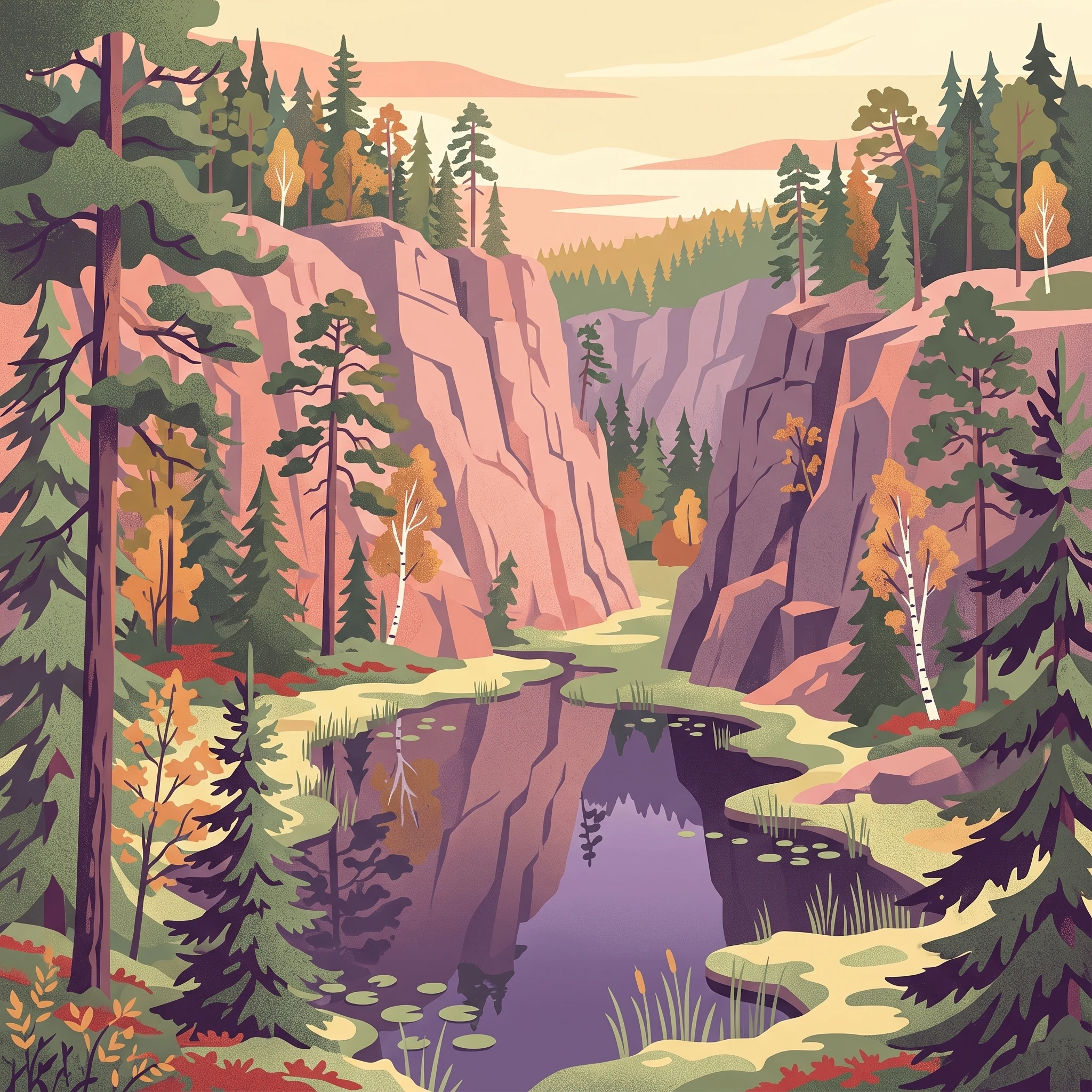
Hiidenportti National Park is best known for its dramatic Hiidenportti gulley, a steep-sided ravine that cuts through the forest landscape with vertical cliff walls reaching up to 20 meters. This distinctive geological feature gives the park its name and serves as its primary attraction. The park is also renowned for its near-natural boreal forest ecosystem, with old-growth coniferous stands that represent some of the most mature forests remaining in the Kainuu region. The combination of mires and dry forests creating a mosaic landscape is characteristic of the park's ecological identity. Additionally, the park is notable for its population of large carnivores, including brown bears, wolverines, and lynx, which thrive in the quiet, protected wilderness environment.
Hiidenportti National Park history and protected-area timeline
Hiidenportti National Park was established in 1982 as part of Finland's broader initiative to protect representative samples of the nation's natural landscapes and wilderness areas. The creation of the park reflected a growing recognition in the late twentieth century of the need to preserve the remaining near-natural forest landscapes in eastern Finland, where extensive logging had altered much of the original forest cover during the nineteenth and early twentieth centuries. The forests within what became the park had remained largely untouched since logging operations ceased in the early 1900s, allowing the stands to develop the old-growth characteristics that now define the area. The decision to protect this particular landscape also recognized the ecological significance of the mires and forest mosaic, as well as the presence of the dramatic Hiidenportti gulley that would become the park's signature feature. Management of the park falls to Metsähallitus, Finland's state-owned enterprise responsible for managing state-owned recreational areas and wilderness reserves. The park has developed incrementally since its establishment, with visitor facilities and trail infrastructure added to support sustainable recreational use while maintaining the protection of the area's ecological values.
Hiidenportti National Park landscape and geographic character
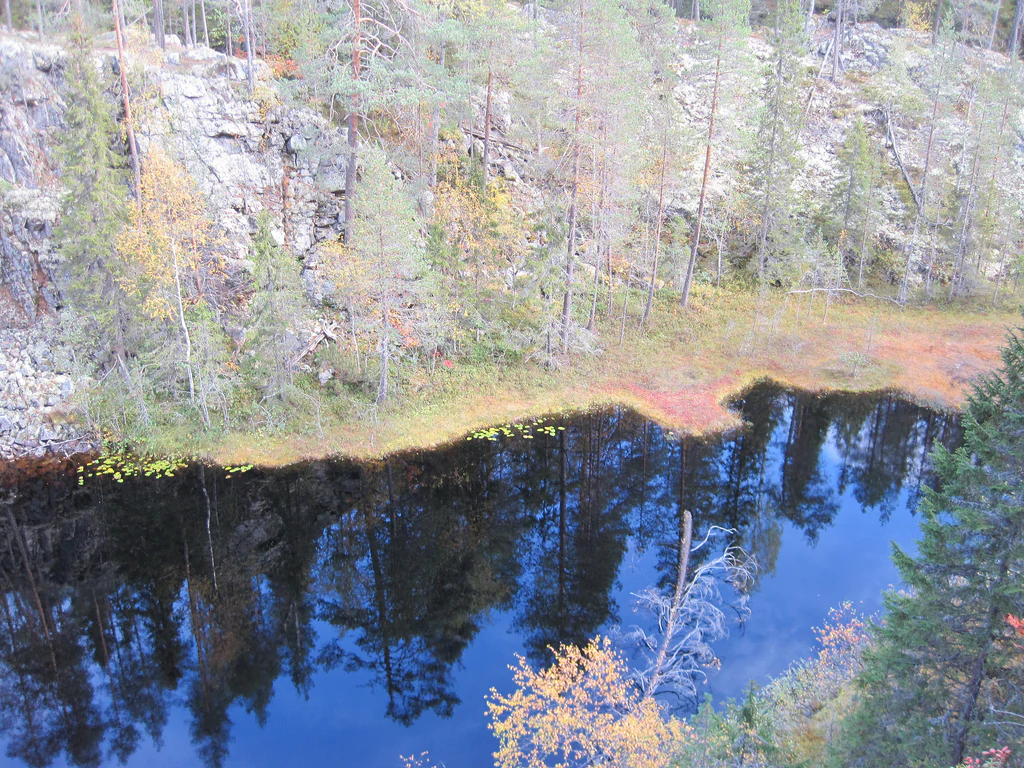
The landscape of Hiidenportti National Park is defined by a distinctive mosaic of mires and dry coniferous forests that creates a varied and visually interesting terrain across its 45 square kilometers. The forests are predominantly coniferous, dominated by spruce and pine species typical of the boreal zone, with approximately two-thirds of the park area covered by forest. These forests are not uniform but vary in character from drier upland stands to more sheltered areas, with the age structure reflecting the history of protection, with most trees reaching 100 to 150 years old. The mire systems, which include both open bogs and more confined wetland areas, add further diversity to the landscape and create important ecological boundaries within the park. The most dramatic landscape feature is the Hiidenportti gulley itself, a steep-sided ravine that cuts approximately one kilometer through the forested terrain. The cliffs rise to heights of 20 meters, exposing rock faces that contrast sharply with the surrounding woodland. This gulley represents a significant geological incision in the landscape and serves as the park's most recognizable landmark. The overall terrain reflects the glacially influenced topography of the Kainuu region, with relatively subdued relief punctuated by the more dramatic feature of the ravine.
Hiidenportti National Park ecosystems, habitats, and plant life
The nature of Hiidenportti National Park exemplifies the boreal forest ecosystem that dominates much of Finland's landscape, while the presence of both upland forests and extensive mire systems creates a diversity of habitats within a relatively compact area. The near-natural state of the forests represents one of the park's most significant ecological characteristics, with the old-growth coniferous stands providing habitat structures and deadwood that support diverse communities of species. The mire systems add another dimension to the park's ecological character, with wetland plants, peat-forming mosses, and adapted animal species creating distinct communities from the surrounding forest. The combination of these habitat types in a mosaic pattern supports a rich overall biodiversity despite the relatively northern latitude. The near-pristine condition of the forests, which have not been significantly logged since the early twentieth century, means that natural processes such as windthrow, disease, and succession continue to operate without significant human interference. This allows for the development of natural forest dynamics that are increasingly rare in Finland's managed landscape.
Hiidenportti National Park wildlife and species highlights
Hiidenportti National Park supports a notable population of large carnivores that represent some of the most emblematic species of the Finnish wilderness. The area provides sufficient quiet and habitat complexity to support breeding populations of brown bear, wolverine, and lynx, with gray wolves occurring as occasional visitors. These species represent the apex of the park's food web and indicate the ecological health and relative wilderness character of the area. The American beaver has colonized the Porttijoki river that flows through the park, and signs of beaver activity can be observed along the watercourse, demonstrating the park's capacity to support species reintroduced to Finland in recent decades. The bird fauna reflects the northern character of the location, with species such as brambling and rustic bunting being common, alongside the Siberian jay. The capercaillie and hazel grouse represent the most abundant game birds in the area. Rare bird species including bean goose, common crane, osprey, black-throated diver, great grey owl, and red-flanked bluetail also occur, with the great grey owl having been chosen as the park's emblematic species. The invertebrate fauna includes an impressive diversity of butterflies, with a 1992 survey recording 164 species of larger butterflies and 186 species of smaller butterflies, including the endangered Xestia sincera.
Hiidenportti National Park conservation status and protection priorities
Hiidenportti National Park serves an important conservation function as a protected area preserving representative boreal forest and mire ecosystems in the Kainuu region. The protected status ensures the continuation of natural forest dynamics in an area where most of Finland's forests have been intensively managed for timber production. The near-natural state of the forests, with their old-growth characteristics and accumulation of deadwood, provides habitat for species dependent on these conditions, including many lichens, fungi, and invertebrates that are indicators of ecological continuity. The populations of large carnivores that the park supports represent a conservation success, as these species require large areas of suitable habitat and are sensitive to human disturbance. The designation as a national park places the area within Finland's highest category of protected areas, providing formal legal protection and management for conservation purposes. The park also contributes to the broader network of protected areas in Finland that supports ecological connectivity across the landscape.
Hiidenportti National Park cultural meaning and human context
The cultural context of Hiidenportti National Park is most clearly expressed in the name of the park's signature feature. The Hiidenportti gulley takes its name from Hiisi, a figure from Finnish mythology associated with wild, untamed natural places. The translation of 'Hiisi's gate' connects the landscape to traditional cultural narratives and the historical relationship between Finnish people and the natural environment. The broader Kainuu region has a history of human settlement and land use, though the specific area of the park remained relatively undeveloped due to its challenging terrain and the marginal productivity of the soils for agriculture. The cessation of logging in the early twentieth century marked a transition from extractive use to conservation, reflecting changing attitudes toward the value of wild landscapes. Today, the park represents both the continuation of Finnish traditions of outdoor recreation and access to natural areas, and the contemporary commitment to preserving wilderness for future generations.
Top sights and standout views in Hiidenportti National Park
The Hiidenportti gulley stands as the park's most distinctive highlight, a dramatic ravine with 20-meter cliff walls that gives the area its name and cultural identity. The old-growth coniferous forests, with trees reaching 100 to 150 years of age, represent some of the most mature woodland remaining in the Kainuu region and provide a window into the forest character that once dominated eastern Finland. The presence of breeding populations of brown bear, wolverine, and lynx makes the park a destination for those interested in encountering Finland's iconic large carnivores in their natural habitat. The mosaic landscape of mires and dry forests creates ecological diversity within a relatively compact area, supporting a range of species from wetland birds to old-growth forest specialists. The great grey owl, featured in the park's emblem, represents the special birdlife that the protected area supports.
Best time to visit Hiidenportti National Park
The best time to visit Hiidenportti National Park depends on the type of experience sought, with each season offering distinct qualities. The summer months of June through August bring long daylight hours, relatively warm temperatures, and the full accessibility of the trail network, making this the most popular period for hiking and wildlife observation. The extended twilight of Finnish summer allows for extended outdoor activities and provides opportunities to experience the nocturnal wildlife activity in the park. Autumn brings the changing colors of the boreal forest, with the conifers maintaining their green while deciduous species add golden and red hues to the landscape. This season can offer excellent wildlife viewing opportunities as animals become more active in preparation for winter. The winter season transforms the park into a snowy wilderness, with cross-country skiing and winter hiking possible on maintained trails, though the cold temperatures and limited daylight require appropriate preparation. The spring season witnesses the melting of snow and the return of migratory birds, offering a different character as the landscape emerges from winter dormancy.