Mori Atlas logo
Marine protected areaIsla Bastimentos National Marine Park

Discover the mapped marine protected area boundaries within Bocas del Toro Province, Panama.

Isla Bastimentos National Marine Park: Protected Landscape and Geographic Atlas

(Parque Nacional Marino Isla Bastimentos)

Isla Bastimentos National Marine Park stands as a significant marine protected area, offering a unique focus for geographic discovery within Panama. Located in the Bocas del Toro Province, this park provides valuable context for understanding regional protected landscapes. Explore its mapped boundaries and natural terrain, contributing to a structured atlas of conservation areas and enhancing your comprehension of the archipelago's geography.

Marine National ParkCaribbean IslandsCoral ReefsSea Turtle NestingBiodiversity HotspotTropical Islands

Isla Bastimentos National Marine Park

Marine protected area

Park overview

Structured park overview, official facts, and landscape profile for Isla Bastimentos National Marine Park

Isla Bastimentos National Marine Park park facts, protected area profile, and essential visitor context
Review the core facts for Isla Bastimentos National Marine Park, including designation, size, terrain, visitor scale, habitats, and operating context in one park-focused overview.

About Isla Bastimentos National Marine Park

Isla Bastimentos National Marine Park represents Panama's pioneering effort in marine conservation, created in 1988 to protect the extraordinary natural resources of the Bocas del Toro Archipelago. The archipelago sits in the warm Caribbean waters off Panama's western coast, forming a cluster of islands, mangroves, and coral reefs that support remarkable biodiversity. The park encompasses not only marine environments but also the forested islands themselves, creating a comprehensive protected landscape that bridges terrestrial and oceanic ecosystems. The park's location within the Bocas del Toro Province places it in one of Panama's most ecologically diverse regions, where Caribbean influences shape both the marine life and the lush tropical vegetation that covers the islands. Visitors to the park encounter a landscape where dense jungle meets turquoise waters, where coral gardens teem with fish, and where endangered sea turtles return each year to nest on sandy shores that have served as breeding grounds for millennia.

Quick facts and research context for Isla Bastimentos National Marine Park

The park occupies the Bocas del Toro Archipelago in Bocas del Toro Province, western Panama. It was established in 1988 and covers 132.26 square kilometers of combined marine and island ecosystems. The marine park includes the main island of Isla Bastimentos along with smaller islands such as Cayo Zapatilla Major. The area features nearly 80 coral species believed to be over 10,000 years old, supports more than 250 species of fish, and provides nesting grounds for four species of endangered sea turtles. The park protects diverse habitats including tropical forests, mangrove swamps, and sandy beaches.

Park context

Deeper park guide and search-rich context for Isla Bastimentos National Marine Park

Isla Bastimentos National Marine Park history, landscape, wildlife, and travel context
Explore Isla Bastimentos National Marine Park through its history, landscape character, ecosystems, wildlife, conservation priorities, cultural context, and seasonal travel timing in a structured park guide built for atlas discovery and search intent.

Why Isla Bastimentos National Marine Park stands out

Isla Bastimentos National Marine Park is best known for its exceptional marine biodiversity and as a critical nesting site for endangered sea turtles. The park's Playa Larga (Long Beach) on the northern side of Isla Bastimentos serves as a vital nesting ground for four species of threatened sea turtles from April through September each year. The park also features one of the most extensive and ancient coral reef systems in the Caribbean, with coral formations estimated to be over 10,000 years old. Its combination of accessible beaches like Wizard Beach and Red Frog Beach, coupled with rich terrestrial wildlife including monkeys and sloths in the forest interior, makes it a distinctive destination where marine and terrestrial ecosystems intermingle within a single protected area.

Isla Bastimentos National Marine Park history and protected-area timeline

The park was established in 1988 through legislation that designated the Bocas del Toro Archipelago's marine and island environments as a protected national park. Management responsibility was assigned to Panama's National Environmental Authority (ANAM), which has overseen conservation efforts and visitor management within the park since its creation. The establishment of the park represented Panama's commitment to preserving its Caribbean marine resources at a time when coral reef ecosystems across the Caribbean faced increasing pressure from development and climate change. The park was designated under IUCN Category II, recognizing its national park status and the need to protect both marine and terrestrial ecosystems within its boundaries. Since its creation, the park has become a focal point for conservation efforts in the region and serves as a reference site for marine protected area management in Central America.

Isla Bastimentos National Marine Park landscape and geographic character

The park encompasses a diverse landscape of islands, beaches, mangroves, and coral reefs set within the crystalline Caribbean waters of the Bocas del Toro Archipelago. The terrain ranges from the sandy shores of beaches like Playa Larga, Wizard Beach (also known as Playa Primera), and Red Frog Beach to the dense tropical forests that cover the interior of Isla Bastimentos. The coastline features both sheltered coves and more exposed beach sections, with fine yellow sand characteristic of Caribbean shores. The marine environment includes extensive coral reef formations that have developed over thousands of years, creating complex underwater structures that support vast arrays of marine life. Mangrove forests fringe the island margins, providing important nursery habitat for juvenile fish and crustaceans while stabilizing shorelines. The overall landscape creates a visually striking contrast between the verdant green of the island forests and the brilliant blue of the surrounding Caribbean Sea.

Isla Bastimentos National Marine Park ecosystems, habitats, and plant life

The park protects a remarkable range of terrestrial and marine ecosystems within a relatively compact area. The marine environment features extensive coral reef systems with nearly 80 species of corals, forming underwater gardens that support extraordinary fish diversity. These coral formations are among the oldest in the Caribbean, with some estimated at over 10,000 years of age. The park's waters host more than 250 species of fish and various marine mammals, creating one of the most biodiverse marine environments in Central America. Terrestrially, the park protects tropical forest habitats that blanket the islands, interspersed with mangrove systems along the coast. The park supports 28 species of amphibians and reptiles, reflecting the healthy forest ecosystems that remain intact within its boundaries. This combination of marine and terrestrial habitats makes the park a living laboratory where different ecosystem types interact and support each other.

Isla Bastimentos National Marine Park wildlife and species highlights

The wildlife in Isla Bastimentos National Marine Park includes both remarkable marine species and terrestrial animals that inhabit the island forests. The park is particularly significant for sea turtles, with four endangered species using Playa Larga as a nesting site from April through September each year. The waters surrounding the islands support more than 250 fish species and marine mammals, creating exceptional opportunities for underwater observation. On land, visitors commonly encounter monkeys and sloths in the forest canopy, particularly in the area around Quebrada de Sal (Salt Creek). The park also protects populations of caiman and crocodile in its freshwater and brackish areas. The strawberry poison-dart frog (rana rojo) adds to the park's terrestrial amphibian diversity. This combination of marine and terrestrial wildlife, along with the presence of endangered species, makes the park a significant conservation area for Caribbean biodiversity.

Isla Bastimentos National Marine Park conservation status and protection priorities

Isla Bastimentos National Marine Park serves as a critical conservation area for Caribbean marine and terrestrial ecosystems. The park protects one of the oldest coral reef systems in the region, providing refuge for fish species and marine invertebrates that depend on healthy coral habitats. The protection of Playa Larga as a sea turtle nesting site ensures that endangered turtle species have a secure location for reproduction, counteracting pressures from egg collection and habitat loss that threaten turtle populations throughout their range. The forest protection within the park maintains habitat for terrestrial species including monkeys, sloths, and amphibians, preserving ecological connections between land and sea that are essential for overall ecosystem health. The park's designation under IUCN Category II and its management by Panama's national environmental authority provide institutional frameworks for ongoing conservation work.

Isla Bastimentos National Marine Park cultural meaning and human context

The Bocas del Toro Archipelago has a rich human history that predates the establishment of the marine park. The islands have been home to indigenous communities for centuries, and traditional fishing practices have shaped local relationships with the marine environment. The park includes the community of Old Bank on Isla Bastimentos, where residents maintain connections to the land and sea that inform the cultural landscape of the area. The park's name derives from Isla Bastimentos itself, which has been an important location within the archipelago's history. Visitor access to areas like Wizard Beach involves paths through the forest from Old Bank, maintaining traditional connections between communities and the natural landscape.

Top sights and standout views in Isla Bastimentos National Marine Park

Isla Bastimentos National Marine Park stands out for its combination of accessible natural beauty and ecological significance. The ancient coral reef system, believed to be over 10,000 years old, represents a living underwater monument and one of the Caribbean's most significant coral formations. The sea turtle nesting at Playa Larga, where four endangered species return each year from April through September, provides one of the most reliable wildlife viewing opportunities in Central America. The park offers diverse experiences from swimming and snorkeling in crystal-clear waters to hiking through jungle to reach secluded beaches like Wizard Beach. Red Frog Beach remains a popular destination accessible by water taxi, while the mangroves and forests support populations of monkeys and sloths that visitors can observe in their natural habitat.

Best time to visit Isla Bastimentos National Marine Park

The optimal time to visit Isla Bastimentos National Marine Park depends on the experiences visitors seek. Sea turtle nesting season runs from April through September, with Playa Larga providing the best opportunities to observe nesting activity during these months. The dry season generally offers more predictable weather and calmer seas, making it easier to access beaches and enjoy water activities. However, the wet season brings different ecological experiences and fewer crowds. Water visibility for snorkeling and diving is typically best during the drier months when less sediment runs into the coastal waters. Visitors interested in seeing both marine and terrestrial wildlife will find the park rewarding year-round, though conditions can vary significantly between seasons.
Park location guide

Geography guide, regional context, and park location map for Isla Bastimentos National Marine Park

Isla Bastimentos National Marine Park park geography, regions, and map view in Panama
Understand where Isla Bastimentos National Marine Park sits in Panama through a broader geographic reading of the surrounding landscape, nearby location context, and its mapped position within the national park landscape.

How Isla Bastimentos National Marine Park fits into Panama

Panama is a presidential republic located at the southern end of Central America in North America. It gained independence from Spain in 1821 and from Colombia in 1903, the latter enabling the construction of the Panama Canal under U.S. supervision between 1904 and 1914. The canal was transferred to Panamanian control in 1999 following the Torrijos-Carter Treaties. With a population of approximately 4.3 million and an area of about 75,400 km², Panama has a high-income economy driven primarily by canal tolls, banking, commerce, and tourism.

Wider geography shaping Isla Bastimentos National Marine Park in Panama

Panama is located at the southern end of the Central American isthmus, stretching from the Caribbean coast in the north to the Pacific coast in the south. The country shares land borders with Costa Rica to the west and Colombia to the southeast. The terrain consists of coastal plains, mountain ranges including the Cordillera Central and Cordillera de Talamanca, and river valleys. The Panama Canal bisects the country, connecting the Atlantic and Pacific Oceans.

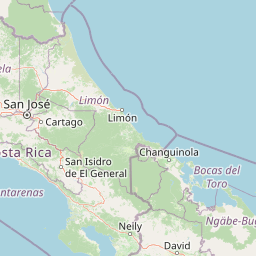
Map view of Isla Bastimentos National Marine Park

Use this park location map to pinpoint Isla Bastimentos National Marine Park in Panama, understand its exact geographic position, and read its mapped placement within the surrounding landscape more clearly.

Pigeon | © OpenStreetMap contributors

Location context for Isla Bastimentos National Marine Park

Bocas del Toro Province
Park atlas

Compare diverse marine and terrestrial protected areas within the Bocas del Toro Archipelago and wider Caribbean region.

Discover Other National Parks and Protected Areas Near Isla Bastimentos National Marine Park in Panama
Continue your exploration from Isla Bastimentos National Marine Park by browsing other protected areas and national parks across the Bocas del Toro Archipelago and the broader Caribbean coastal region. Compare different conservation landscapes, including marine ecosystems, island forests, and coastal habitats, to understand the regional spread of protected natural areas.
National parkCosta Rica

La Amistad International Park National Park: Mapped Protected Area in Costa Rica

Explore its geographic boundaries and landscape context.

La Amistad International Park represents a vital component of Costa Rica's protected land network. This detail provides an atlas-centric view, highlighting the park's mapped boundaries and its contribution to the regional geography. Understand the park's identity as a national park and explore its natural terrain context, crucial for any structured geographic discovery of protected areas within Central America.

Area
1,992 km²
Established
1988
IUCN
II
Relief
Mountain
National parkLimón Province

Cahuita National Park National Park: Geographic Atlas and Protected Landscape Identity

Explore mapped boundaries and regional context within Limón Province.

Gain an atlas perspective on Cahuita National Park, a designated national park situated in Limón Province, Costa Rica. This detailed entry focuses on its protected landscape character and geographic setting, offering insights into its mapped boundaries and its role within the region's natural geography. Understand the park's specific contribution to the protected area network through detailed geographic data.

Area
234.679 km²
Established
1982
IUCN
II
Relief
Lowland
National parkPuntarenas Province

Piedras Blancas National Park: Costa Rica National Park Protected Landscape

Explore Puntarenas Province's mapped protected areas and terrain.

Piedras Blancas National Park is a key protected area within Puntarenas Province, Costa Rica, identified for its national park status. This entry serves as a geographic anchor, detailing the park's mapped landscape and its contribution to the regional protected areas atlas. Understand its specific geographic setting and the importance of its protected boundaries for natural landscape exploration and research, contributing vital context to Costa Rica's conservation geography.

Area
140.19 km²
Established
1991
IUCN
II
Relief
Mountain
National parkCartago Province

Chirripó National Park: A Protected Landscape within Cartago Province's Geography

Explore its mapped boundaries and natural terrain.

This page provides detailed geographic context for Chirripó National Park, a designated national park located in the Cartago Province of Costa Rica. It focuses on the park's protected landscape identity, its position within the regional geography, and its distinct mapped boundaries. Understanding Chirripó National Park through its geographic and atlas-centric attributes offers a foundational insight into its natural significance.

Area
508.49 km²
Established
1975
IUCN
II
Climate
Alpine
National parkLimón Province

Barbilla National Park: National Park Atlas Exploration and Geographic Context

Mapped protected landscape in Limón Province, Costa Rica

Barbilla National Park offers a focused view into Costa Rica's protected natural areas, specifically within the Limón Province. This entry provides an atlas-centric understanding of its geographic footprint and the character of its protected landscape. Explore the mapped boundaries and regional setting of this national park to enhance your structured geographic discovery.

Area
119 km²
Established
1982
IUCN
II
Relief
Mountain
National parkCosta Rica

Corcovado National Park National Park: Costa Rica's Protected Landscape Geography and Map

Explore its mapped protected area boundaries and terrain.

Corcovado National Park offers a deep dive into its identity as a protected national park within Costa Rica. This atlas entry focuses on its specific geographic placement, the visual representation of its park boundaries on maps, and the character of its natural terrain. It provides essential structured data for understanding the park's role in the national protected area network and its unique position within the regional geography.

Area
424 km²
Established
1975
IUCN
II
Relief
Mixed relief
National parkCosta Rica

Tapantí National Park: Costa Rica National Park Atlas and Mapped Landscape Exploration

Explore protected boundaries and natural terrain within its geographic setting.

Tapantí National Park is a designated national park in Costa Rica, offering specific insights into the country's protected natural landscapes. This page provides an atlas-style view of its geographic placement, the extent of its protected area, and the character of its natural terrain. Users can investigate the park's mapped context and understand its significance within the broader geography of Costa Rica, facilitating focused exploration of protected lands and regional landscape features.

Area
583.2 km²
Established
1982
IUCN
II
Relief
Mountain
National parkCosta Rica

Los Quetzales National Park: Costa Rica National Park Landscape and Mapped Geography

Explore protected area boundaries and regional terrain context.

Los Quetzales National Park, a designated national park within Costa Rica, offers a focused entry point for exploring protected landscapes. This page provides detailed insight into the park's geographic setting, emphasizing its mapped boundaries and its role within the national atlas. Users can discover the specific landscape characteristics and regional terrain that define Los Quetzales National Park, enriching their understanding of Costa Rican protected areas.

Area
50 km²
Established
2006
IUCN
II
Relief
Mountain

Common questions about visiting, size, designation, and location context for Isla Bastimentos National Marine Park

Isla Bastimentos National Marine Park FAQs for park facts, access, geography, and protected area context
Find quick answers about Isla Bastimentos National Marine Park, including protected-area facts, park geography, trail and visitor context, and how the park fits into its surrounding country and regional landscape.
MoriAtlas Explorer

Continue Your Protected Areas Search Across the Global Atlas

Deepen your exploration by continuing the structured search for national parks and protected areas worldwide. Utilize the comprehensive filtering capabilities to compare different conservation landscapes and refine your understanding of global park geography. Discover more about the distribution and characteristics of protected natural areas.

Global natural geography