Why Kaw-Roura Marshland Nature Reserve stands out
Kaw-Roura is best known for its exceptional biodiversity and as the premier wetland conservation area in France. The reserve harbors 535 bird species, representing 74% of all bird species recorded in French Guiana, making it a globally significant area for waterbird populations and a critical breeding and wintering habitat. It is particularly famous for supporting concentrations of herons, egrets, and the striking agami heron. The reserve also protects substantial populations of black caiman, the largest member of the alligator family in South America, and serves as a sanctuary for this species. The coexistence of diverse ecosystems including mangrove, savanna, marshland, and rainforest within a single protected area creates a unique ecological landscape that distinguishes Kaw-Roura from other protected areas in the region.
Kaw-Roura Marshland Nature Reserve history and protected-area timeline
The protection history of Kaw-Roura Marshland reflects evolving French environmental policy toward Amazonian territories. The site received initial protection through a prefectoral biotope protection order in 1989, establishing the first formal recognition of the area's ecological significance. This initial protection was superseded by the formal creation of the national nature reserve through decree 98-166 on March 13, 1998, elevating the site to full national protection status. The reserve had already achieved international recognition through its designation as a Ramsar site on December 8, 1993, making it part of the global network of wetlands of international importance. The reserve's management has undergone transitions, initially managed by the Regional Natural Park of French Guiana, with the reserve house opening to visitors in 2015 following two years of renovation work after a period of closure. In 2022, management transferred to a consortium formed by the Conservatoire d'espaces naturels de Guyane and two local municipalities, reflecting a shift toward decentralized conservation management. The Montagne de Kaw area within the reserve holds particular historical significance, having served as a refuge for flora and fauna during Pleistocene dry periods when surrounding lowlands likely became inhospitable.
Kaw-Roura Marshland Nature Reserve landscape and geographic character
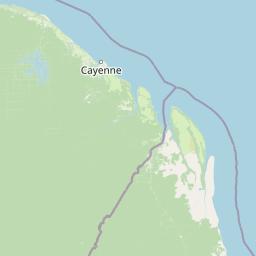
The physical landscape of Kaw-Roura Marshland Nature Reserve presents a complex mosaic of wetland and forest environments shaped by the interaction of fluvial and coastal processes. The reserve spans from the Atlantic coastline inland, incorporating a transition zone where coastal mangrove ecosystems give way to extensive freshwater marshes and ultimately to tropical rainforest. The floating savanna marshes, characterized by vegetation adapted to permanent or seasonal inundation, represent the most distinctive landscape feature, with emergent herbaceous plants creating a visually striking environment that changes dramatically with water levels. The mangrove forests occupy the coastal fringe where saltwater and freshwater mixing creates unique halophytic vegetation communities. Rolling savanna areas within the reserve provide relief from the wetlands, supporting grassland ecosystems that flood seasonally. The Montagne de Kaw rises as a prominent topographic feature within the reserve, receiving the highest rainfall in French Guiana and supporting distinct montane vegetation communities. The network of rivers and creeks, particularly the Kaw River and its tributaries, dissects the landscape and provides the hydrological foundation for the wetland system.
Kaw-Roura Marshland Nature Reserve ecosystems, habitats, and plant life
The ecological character of Kaw-Roura is defined by the coexistence of multiple distinct habitat types within a single protected landscape. The marshland ecosystem represents the core of the reserve, with floating savanna vegetation dominated by Cyperus species and the arborescent mucoucou creating a unique wetland environment. The mangrove forests along the coastal margin support specialized salt-tolerant species and provide critical habitat for coastal and marine species. The tropical rainforest that adjoins the wetland areas represents the northern extension of the Amazonian forest, adding another dimension to the reserve's ecological diversity. This habitat mosaic supports extraordinary biodiversity, with the reserve containing more than half of all protected species in French Guiana. The aquatic carnivorous plants including various Utricularia species represent a particularly noteworthy component of the wetland flora, adapted to nutrient-poor conditions. Water hyacinth (Eichhornia) occurs naturally within the ecosystem, unlike its invasive status in many other tropical regions, demonstrating the ecological balance maintained within this protected area.
Kaw-Roura Marshland Nature Reserve wildlife and species highlights
The wildlife community of Kaw-Roura Marshland Nature Reserve is exceptionally diverse, with the protected area supporting significant populations of flagship and endemic species. The reptile fauna is particularly noteworthy, with four caiman species present including the black caiman, which reaches significant population sizes within the reserve. The amphibian community includes 74 species while reptiles total 103 species, reflecting the exceptional herpetofaunal diversity of this wetland system. Mammal populations are substantial, with 98 species recorded including remarkable representatives such as the Amazonian manatee, giant otter, and jaguar, all three representing conservation priorities. The bird fauna is especially significant, with 535 species recorded representing 74% of French Guiana's avifauna, making the reserve a critical area for waterbird conservation. Notable bird species include the cocoi heron, agami heron, great egret, cock-of-the-rock, and crested eagle, with the reserve serving as an important breeding and wintering location for migratory waterbirds. The fish community includes the electric eel (gymnotus), and the region supports unusual species such as the hoatzin, a primitive bird species.
Kaw-Roura Marshland Nature Reserve conservation status and protection priorities
Kaw-Roura Marshland Nature Reserve holds significant conservation importance at both national and international levels, serving as a flagship protected area for wetland conservation in France and the wider Amazon region. The Ramsar designation since 1993 recognizes the site's international importance as a wetland ecosystem, committing France to maintaining the ecological character of this area. The reserve protects more than half of all protected species in French Guiana, demonstrating its exceptional role in biodiversity conservation within the department. The black caiman population represents a particular conservation success, with the reserve serving as a sanctuary for this large predator that has been extirpated from many parts of its former range. The protected area also contributes to broader conservation objectives by maintaining connectivity between coastal and inland ecosystems, supporting seasonal migrations of wildlife, and preserving genetic diversity in an era of accelerating habitat loss. The transition to management by the Conservatoire d'espaces naturels de Guyane and local municipalities represents a commitment to integrating conservation with local community involvement.
Kaw-Roura Marshland Nature Reserve cultural meaning and human context
The human dimension of Kaw-Roura Marshland Nature Reserve includes both historical and contemporary cultural elements that shape the landscape's identity. The region of Kaw was originally inhabited by Amerindian peoples, who were the first human inhabitants of this wetland environment. European exploration of the area began in the late sixteenth century, with colonization of the Kaw region occurring from the eighteenth century onward. The village of Kaw, located within the reserve's boundaries, represents a unique case of a inhabited settlement within a French national nature reserve, creating a relationship between human community and protected landscape that requires careful management. Traditional activities such as fishing and small-scale agriculture have historically been practiced in the area, though these activities are now regulated within the reserve's management framework. The reserve house, which opened in 2015 and subsequently experienced closures including during the COVID-19 pandemic, serves as an interface between visitors and the protected area, providing educational context about the reserve's natural and cultural values.
Top sights and standout views in Kaw-Roura Marshland Nature Reserve
The Kaw-Roura Marshland Nature Reserve stands out as the largest and most ecologically diverse wetland in France, offering visitors an immersive experience in a tropical wetland environment that rivals the famous Everglades of North America. The opportunity to explore the marshland by traditional pirogue or canoe provides access to a pristine aquatic environment where wildlife observation opportunities are exceptional, particularly for waterbirds, caimans, and aquatic mammals. The reserve's location within the Amazon basin places it at the intersection of South American and Guianan biogeographic provinces, creating conditions that support extraordinary species diversity. The presence of the village of Kaw within the reserve offers a unique cultural dimension, allowing visitors to experience a traditional community living within a protected natural area. The Ramsar designation provides international recognition of the wetland's significance, while the presence of Montagne de Kaw with its exceptional rainfall adds a distinctive topographic element to the reserve.
Best time to visit Kaw-Roura Marshland Nature Reserve
The optimal time to visit Kaw-Roura Marshland Nature Reserve depends on the experience sought, with different seasons offering distinct advantages for exploration. The dry season, typically from August to November, generally provides easier navigation through the wetland channels and greater visibility for wildlife observation as water levels are lower and animals concentrate around remaining water sources. This period often offers more comfortable conditions for outdoor activities and boat excursions. The wet season brings higher water levels that flood extended areas of savanna, creating a different landscape character and potentially offering opportunities to observe aquatic species in their flooded forest habitats. The transitional periods between seasons can also provide rewarding visits, though visitors should be aware that the reserve's accessibility is always dependent on water conditions given its wetland character. The morning hours typically offer the best wildlife viewing opportunities as animals are most active and misty conditions over the water create evocative scenes for photography and observation.